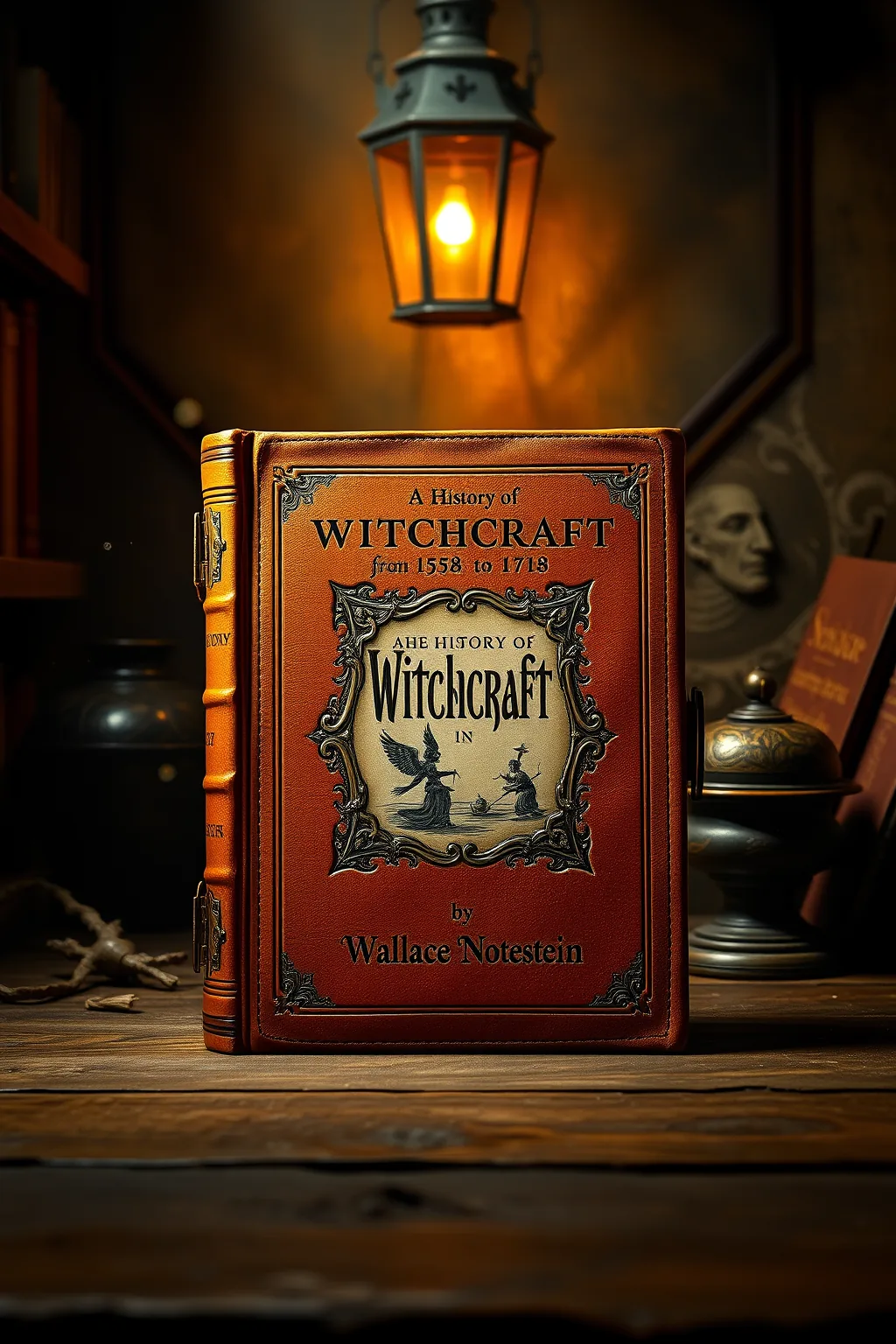
A History of Witchcraft in England From 1558 to 1718
 73
73

A History of Witchcraft in England From 1558 to 1718
Wallace Notestein’s study offers a starkly detailed look at the legal machinery and societal anxieties that fueled England’s witch trials. It avoids romanticism, instead presenting a granular examination of statutes, judicial decisions, and the prevalent beliefs that condemned individuals, often women, as agents of malevolence. The strength of the work lies in its rigorous reliance on primary sources, allowing the reader to grasp the procedural realities of the trials. A particular point of clarity emerges when discussing the shift in legal interpretation, moving from charges of maleficium (harmful magic) to pacts with the Devil, a crucial distinction in the evolution of witchcraft accusations.
However, the sheer density of legal and historical detail, while commendable for its thoroughness, can occasionally make the narrative feel remote. The human element, the personal testimonies and individual suffering, sometimes recedes behind the weight of legislative and judicial exposition. Despite this, the book remains an indispensable resource for understanding the mechanics of historical persecution.
Read more ↓
Notestein provides an essential, albeit dry, foundation for understanding a dark chapter in English history.
📝 Description
73
Wallace Notestein's 1948 history details English witchcraft prosecutions from 1558 to 1718.
Wallace Notestein's history examines the legal, social, and religious conditions that shaped the persecution of alleged witches in England for over 150 years. The work moves past sensationalized accounts to offer a scholarly analysis of court records, theological arguments, and societal attitudes during a period of intense witch hunting. This study is valuable for students of early modern history, legal history, and the history of religion. It also interests those who study the social construction of deviance, the evolution of belief systems, and the examination of mass hysteria. Anyone wanting a thorough understanding of the mechanisms behind historical persecution and the societal factors that fueled witch trials will find this book useful.
The period covered, 1558 to 1718, spans several English reigns and significant religious upheaval. This era saw a growing interest in the supernatural, often tied to theological anxieties. The Witchcraft Act of 1563 provided a legal basis for prosecution, reinforced by James I's writings on demonology. The eventual repeal of these acts in the 18th century signaled a change in legal and intellectual perspectives.
While not strictly an esoteric text, Notestein's work provides critical historical context for understanding the beliefs and societal forces that underpinned historical notions of magic and witchcraft. It details the legal and theological frameworks that defined heresy and malevolent supernatural influence during a period of intense religious anxiety. The book illuminates how anxieties about the supernatural, demonology, and perceived threats to social order were codified into law and shaped communal responses, offering a factual basis for later examinations of folk magic, pagan survivals, and occult traditions.
💡 Why Read This Book?
• Gain a precise understanding of the legal statutes, such as the Witchcraft Act of 1563, that defined and prosecuted witchcraft in England, offering clarity unavailable in generalized histories. • Explore the specific theological underpinnings, like the concept of a pact with the Devil, that justified the persecution of individuals during this era, revealing the intellectual climate of the time. • Analyze the socio-economic pressures and local disputes that frequently instigated accusations, providing concrete examples of how community tensions manifested in the witch trials of the period.
⭐ Reader Reviews
Honest opinions from readers who have explored this book.
❓ Frequently Asked Questions
What was the primary legal framework for witchcraft accusations in England during the period covered by Notestein's book?
The primary legal framework was established by the Witchcraft Act of 1563, which defined witchcraft as a felony punishable by death. This act, and later legislation, guided the prosecution of accused witches throughout the period studied.
Did Notestein's book cover the witch trials in Scotland or other parts of Britain?
No, Wallace Notestein's *A History of Witchcraft in England* specifically focuses on England between 1558 and 1718, examining the legal and social dynamics unique to that region during that timeframe.
What role did religious beliefs play in the witch trials discussed?
Religious beliefs, particularly Calvinist theology and the concept of a pact with the Devil, were central. The work details how these doctrines provided a theological justification for viewing accusations as a battle against Satanic forces.
When did England finally repeal its witchcraft laws?
England repealed its witchcraft laws in 1735, well after the period covered by Notestein's work. This repeal marked a significant shift away from the legal prosecution of witchcraft.
What is 'spectral evidence' as discussed in the context of these trials?
Spectral evidence refers to testimony about the alleged witch's spirit or apparition appearing to the victim and causing harm. This form of evidence was controversial and its acceptance varied, playing a significant role in many trials.
Does the book discuss specific famous witch trials or accused individuals?
While providing a broad overview, the work often references specific cases and figures that exemplify the legal and social trends of the era, allowing for detailed examination of the trial processes.
🔮 Key Themes & Symbolism
Legal Framework and Procedure
The work meticulously details the evolution of English law concerning witchcraft between 1558 and 1718. It examines how statutes like the Witchcraft Act of 1563 shaped the legal definition of witchcraft, moving from charges of maleficium to the more serious accusation of a pact with the Devil. Notestein analyzes judicial practices, courtroom procedures, and the role of various courts in prosecuting alleged witches, highlighting the procedural aspects that underpinned the era's persecutions.
Theological Underpinnings of Witchcraft Beliefs
Central to the historical understanding of witchcraft is the theological interpretation of the Devil's influence. This book explores how prevailing Calvinist doctrines and a widespread belief in the active malevolence of Satan fueled the conviction that individuals could enter into pacts with demonic forces. Notestein illustrates how these religious anxieties provided a moral and spiritual justification for the intense fear and subsequent persecution of those accused of witchcraft.
Social and Economic Motivations
Beyond legal and theological explanations, the study investigates the social and economic factors that contributed to the witch-hunts. It considers how local disputes, personal animosities, poverty, and the social positioning of accused individuals, particularly women, often played a critical role in initiating accusations. The work demonstrates that the phenomenon was not solely driven by abstract beliefs but was deeply embedded in the fabric of everyday community life and its inherent tensions.
The Decline of Witch Persecution
The latter part of the period covered by Notestein witnesses a gradual shift in attitudes towards witchcraft. The book examines the intellectual currents, including the rise of rationalism and Enlightenment philosophy, that began to erode the foundations of demonological belief. It also touches upon the eventual repeal of the witchcraft statutes in 1735, marking a significant turning point in legal and societal approaches to such accusations.
💬 Memorable Quotes
Direct passages from the work, attributed to the author.
“The law against witchcraft was not an obsolete relic; it was actively enforced.”
— This highlights that during the 1558-1718 period, witchcraft was not a theoretical concept but a crime with tangible legal consequences, underscoring the seriousness with which accusations were treated by the English legal system.
“The Devil was believed to be most active in the lives of those who had renounced God.”
— This points to the theological core of witch beliefs: the idea that individuals could enter into a pact with Satan, thereby becoming his agents. This concept was crucial in justifying the persecution.
“Accusations often stemmed from neighborly disputes or personal grievances.”
— This interpretation emphasizes the social dimension of witch trials, suggesting that many accusations were not based on actual supernatural acts but were rather manifestations of mundane conflicts within communities.
“The evidence presented in court could include spectral visions and confessions.”
— This indicates the nature of proof accepted during these trials, where testimony about apparitions (spectral evidence) and coerced or genuine confessions played a significant role in convictions.
“By the early 18th century, skepticism towards witchcraft accusations began to grow.”
— This suggests the intellectual shift occurring towards the end of the period, where rationalist thought and changing societal views led to a decline in the belief and prosecution of witchcraft.
🌙 Esoteric Significance
Tradition
While Notestein's work is primarily a historical and legal study, it touches upon the historical roots of Western esotericism by examining the societal and theological conditions that fostered belief in magic and demonic influence. It indirectly relates to traditions that explore the nature of spiritual warfare and the manipulation of unseen forces, providing the historical context for how such beliefs were once legally codified and socially enforced.
Symbolism
The book implicitly deals with symbols of the Devil's pact: the witch's mark, familiars (often depicted as animals), and the act of renouncing Christian faith. These elements served as tangible 'proof' within the belief system, symbolizing a perceived betrayal of divine order and an allegiance to malevolent spiritual powers that permeated the era's worldview.
Modern Relevance
Contemporary witchcraft practitioners and scholars of modern paganism draw upon historical accounts like Notestein's to understand the origins of negative stereotypes and the historical persecution of individuals associated with folk magic and nature-based spirituality. It provides crucial context for the evolution of witchcraft from a feared crime to a recognized spiritual path.
👥 Who Should Read This Book
• Students of early modern English history and legal history seeking a detailed account of witch trials and their legislative underpinnings. • Researchers of religious history and demonology interested in the theological justifications and societal anxieties that fueled witch persecutions. • Individuals curious about the social construction of deviance and the historical mechanisms of mass hysteria and persecution.
📜 Historical Context
Wallace Notestein's *A History of Witchcraft in England* situates its study within a turbulent era for English society and thought. The period from 1558 to 1718 witnessed the English Reformation's lingering effects, the rise of Puritanism, and the eventual Enlightenment's questioning of older beliefs. Key figures like King James I, a fervent believer in demonology whose own work *Daemonologie* (1597) influenced policy, loomed large. The passing of the Witchcraft Act of 1563 provided a legislative basis for prosecutions, which intensified throughout the 17th century, particularly during times of political and religious instability like the English Civil War. Contemporaries like the influential theologian William Perkins also wrote extensively on the nature of the Devil and witchcraft. The work's eventual reception saw it become a foundational text for understanding the legal and social history of English witchcraft, despite the intellectual currents of the Enlightenment beginning to challenge such persecutions by the period's end.
📔 Journal Prompts
The legal definition of witchcraft as a felony.
The concept of a pact with the Devil in 17th-century England.
Social grievances leading to accusations of maleficium.
The role of James I's writings on demonology.
The eventual repeal of witchcraft statutes in 1735.
🗂️ Glossary
Maleficium
Latin for 'mischief' or 'harm'. In the context of witchcraft, it referred to the use of magical means to cause damage, illness, or misfortune to people, livestock, or property.
Witchcraft Act of 1563
An English statute that defined witchcraft as a felony, punishable by death. It made it illegal to practice witchcraft or sorcery, and also criminalized conjuration and invocation.
Spectral Evidence
Testimony in witch trials concerning the alleged apparition or spirit of the accused person appearing to the victim and causing harm. Its acceptance varied and was a significant point of contention.
Pact with the Devil
A central tenet in demonology, this was the belief that an individual had made a formal agreement with Satan, renouncing their faith in exchange for supernatural powers or benefits.
Demonology
The study of demons or beliefs about demons. In the historical context of witchcraft, it encompassed theological and philosophical treatises on the nature of Satan, his influence, and his earthly agents.
Familiars
Supernatural entities, often depicted as animals (cats, dogs, toads), believed to attend upon witches and serve them, acting as their assistants in carrying out harmful magic.
Malleus Maleficarum
Latin for 'Hammer of Witches,' this infamous witch-hunting manual was published in 1487. While not English in origin, its ideas heavily influenced European and, to some extent, English views on witchcraft.