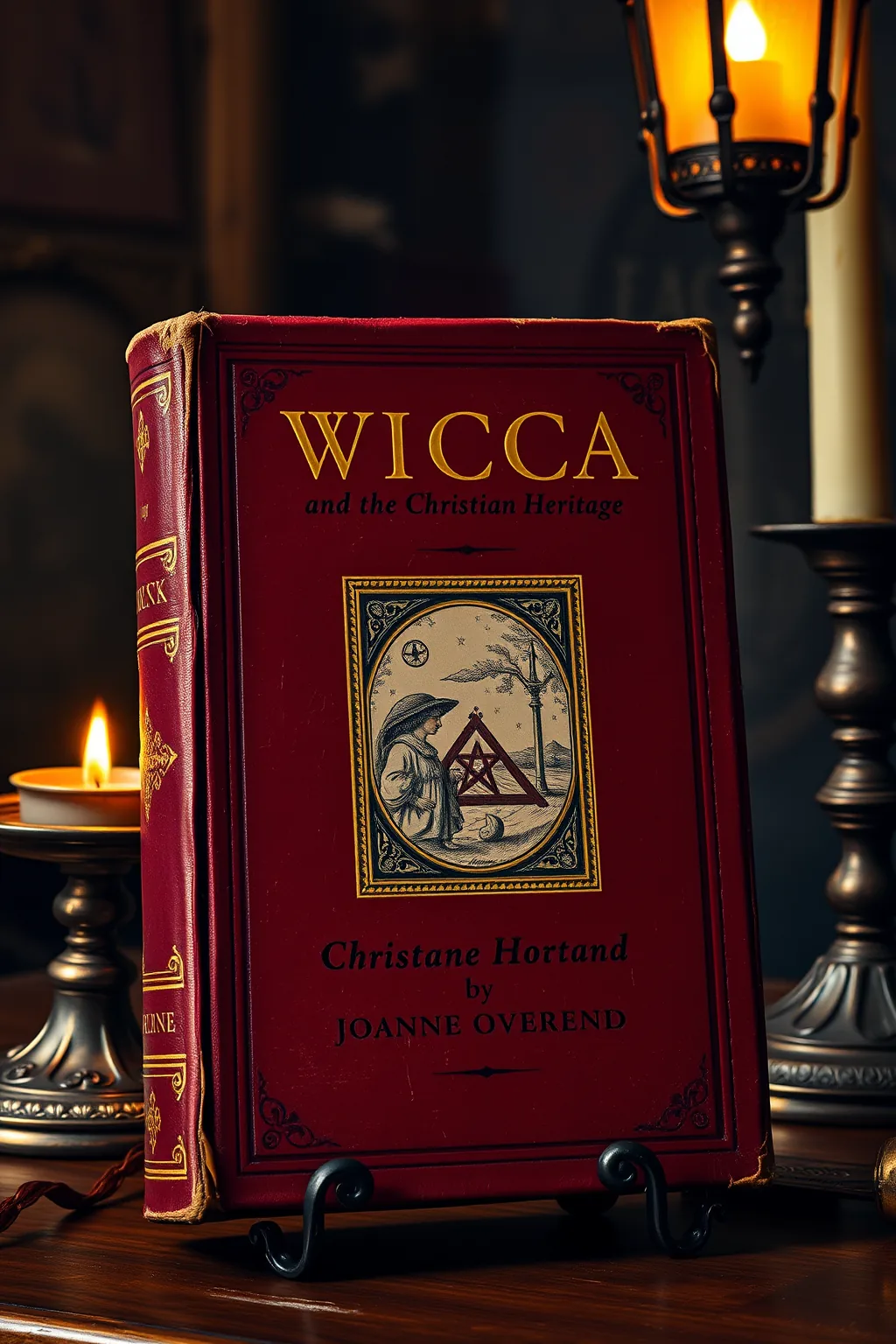
Wicca and the Christian Heritage
 71
71

Wicca and the Christian Heritage
Joanne Overend’s *Wicca and the Christian Heritage* offers a refreshingly grounded perspective on the often-contentious relationship between Witchcraft and Christianity. Instead of focusing on conflict, Overend systematically unpacks shared symbolic ground and historical influences, particularly evident in the reinterpretation of Christian imagery within Wiccan practice. A notable strength is the book's refusal to accept facile narratives of complete opposition, instead tracing nuanced threads of influence and adaptation that have shaped modern Wicca. However, the work occasionally feels like an academic treatise, which might make its dense prose less accessible to casual readers seeking straightforward practical applications. The exploration of the 'Horned God' concept and its potential parallels with certain Christian depictions of saints or even Christological symbolism is particularly compelling, though the book could benefit from more direct engagement with the lived experiences of practitioners from both traditions. Ultimately, it serves as a valuable scholarly resource for understanding the complex genealogies of contemporary spiritual paths.
📝 Description
71
Joanne Overend's 2011 book examines Wicca's surprising links to Christian history and theology.
This book investigates the often overlooked connections between Wicca and Christian theological ideas, historical practices, and symbolic language. It goes beyond simple comparisons to look at shared ritual structures and how Western esotericism developed. The work shows how modern pagan revivals, including Wicca, have used and changed elements that came from or were influenced by Christian traditions.
It is written for students and practitioners of Wicca who want a deeper understanding of their tradition's historical and symbolic origins. The book also appeals to scholars of comparative religion, Western esotericism, and anyone interested in post-Christian spirituality. Readers who appreciate detailed analyses of religious syncretism and the way old motifs appear in new spiritual movements will find this work valuable.
Joanne Overend's work appeared in the early 21st century, a time of increased academic and public interest in new religious movements. Scholarship on Wicca was shifting from simple descriptions to historical lineages and inter-religious dialogue. This followed earlier work by figures like Doreen Valiente, who had already suggested links between folk magic and modern Witchcraft. Overend's book contributes to this ongoing inquiry into the broader cultural and religious currents that shaped these developments, placing modern Wicca within a complex historical and theological dialogue.
💡 Why Read This Book?
• Gain a nuanced understanding of how Wicca has historically engaged with and reinterpreted Christian symbolism, moving beyond simplistic notions of opposition, as discussed in the examination of shared motifs. • Discover the evolution of esoteric thought in the early 21st century, providing context for Overend's analysis of post-Christian spiritualities and their historical influences. • Explore specific concepts like the 'Old Religion' and the divine principles within Wicca, grounding abstract ideas in concrete historical and theological frameworks presented in the text.
⭐ Reader Reviews
Honest opinions from readers who have explored this book.
❓ Frequently Asked Questions
When was Wicca and the Christian Heritage first published?
Wicca and the Christian Heritage by Joanne Overend was first published in 2007, reflecting scholarship and interest in Wicca during the early 21st century.
Does the book claim Wicca is derived from Christianity?
No, the book explores the historical and symbolic *intersections* and reinterpretations between Wicca and Christian traditions, rather than asserting direct derivation. It examines how certain elements have been adapted.
What kind of historical context does the book provide?
It situates the study within the early 21st-century academic interest in new religious movements and the history of Western esotericism, referencing the ongoing dialogue about Wicca's roots.
Are there specific examples of shared symbolism discussed?
Yes, the work touches upon the re-appropriation of Christian imagery within Wiccan cosmology and discusses concepts like divine masculine and feminine principles as understood in both traditions.
Who is the primary audience for this book?
The book is aimed at practitioners and students of Wicca, scholars of comparative religion and Western esotericism, and anyone interested in the syncretic nature of spiritual movements.
What is the author's approach to the relationship between Wicca and Christianity?
Joanne Overend takes an analytical approach, focusing on historical influences, shared symbolic language, and ritual structures, rather than emphasizing conflict or direct lineage.
🔮 Key Themes & Symbolism
Symbolic Reinterpretation
The work investigates how Wicca has actively reinterpreted symbols and narratives historically associated with Christianity. This includes examining how archetypes, such as the divine feminine and masculine, are understood and expressed within Wiccan practice, often drawing parallels or contrasts with their Christian theological counterparts. It highlights the dynamic process of cultural and religious adaptation, where existing symbolic languages are employed to articulate new spiritual understandings, particularly concerning creation, divinity, and salvation narratives.
Historical Dialogue
This theme focuses on the historical threads that link esoteric traditions, including Wicca, to the broader range of Western religious thought, which has been heavily influenced by Christianity. Overend explores how the concept of the 'Old Religion' has been articulated and how it might relate to or diverge from established Christian doctrines and historical movements. The discussion acknowledges the complex reception of pagan revivals and their engagement with dominant religious structures throughout history.
Ritual and Practice
The book analyzes the structural and thematic elements present in Wiccan rituals, considering potential influences or echoes from Christian liturgical forms and mystical practices. It examines how certain ritual actions, invocations, and seasonal observances within Wicca might be understood in light of, or as a departure from, historical Christian worship. This theme emphasizes the performative and experiential aspects of spirituality and how they evolve across different traditions.
Esoteric Evolution
This theme positions Wicca within the broader evolution of Western esoteric traditions. It considers how modern paganism, particularly Wicca, interacts with and responds to centuries of Christian dominance and the subsequent rise of secularism and alternative spiritualities. The work touches upon the intellectual currents of the early 21st century that fostered a renewed interest in paganism and its historical connections to earlier mystical and folk traditions.
💬 Memorable Quotes
Direct passages from the work, attributed to the author.
“The work explores how certain pagan revivals have engaged with and reinterpreted elements originating from or influenced by Christian traditions.”
— This highlights the book's central thesis: that the relationship between Wicca and Christianity is not one of simple opposition but involves complex processes of adaptation and re-signification of existing cultural and religious symbols.
“Shared symbolic language and ritual structures are examined.”
— This points to the methodology employed, focusing on concrete elements of practice and belief that can be compared across traditions, suggesting a basis for understanding Wicca's place within Western spiritual history.
“Joanne Overend analyzes the concept of the 'Old Religion' in relation to Christian influences.”
— This indicates a specific area of inquiry within the book, focusing on the historical narratives surrounding Wicca and how they engage with or diverge from dominant religious histories shaped by Christianity.
“The book discusses the re-appropriation of Christian imagery within Wiccan cosmology.”
— This suggests that the author identifies specific instances where Wiccan practitioners have taken symbols or concepts traditionally associated with Christianity and given them new meanings within their own belief system.
“The post-Christian spiritual landscape provides a context for understanding Wicca's development.”
— This frames the book's relevance, situating the study of Wicca within a broader societal shift away from traditional religious structures and towards diverse forms of contemporary spirituality.
🌙 Esoteric Significance
Tradition
This work engages with the broad lineage of Western esotericism, specifically focusing on contemporary pagan traditions like Wicca. It departs from purely historical accounts by analyzing the symbolic and theological dialogue between Wicca and its historically dominant predecessor, Christianity. Rather than fitting neatly into a singular esoteric school, it bridges the study of folk magic, Neopaganism, and comparative religious studies, highlighting the complex evolution of spiritual practices in a post-Christian West.
Symbolism
The book likely explores the reinterpretation of Christian symbols, such as the cross or specific saintly iconography, within Wiccan cosmology. It may also examine the symbolism of the Horned God and the Goddess, examining how these figures and their associated myths interact with or diverge from Christian narratives of divinity, creation, and redemption. The concept of the 'sacred feminine' and its re-emergence in contemporary spirituality is another key symbolic motif.
Modern Relevance
Contemporary practitioners and scholars of Neopaganism, particularly those interested in the historical roots and syncretic nature of Wicca, draw upon this work. It remains relevant for understanding the ongoing dialogue between older religious forms and newer spiritual expressions, informing discussions on religious pluralism and the adaptation of tradition in the 21st century. Thinkers exploring the spiritual implications of secularization and the resurgence of interest in pre-Christian European cultures find its analysis pertinent.
👥 Who Should Read This Book
• Beginning students of Wicca seeking to understand the historical and symbolic relationship between their practice and Christianity, moving beyond surface-level conflicts. • Scholars of comparative religion and Western esotericism interested in the evolution of spiritual traditions and the reinterpretation of religious motifs in contemporary contexts. • Individuals curious about the impact of Christianity on other spiritual paths and how traditions adapt and transform in response to dominant cultural and religious landscapes.
📜 Historical Context
Joanne Overend’s *Wicca and the Christian Heritage*, published in 2007, emerged during a period of burgeoning academic and popular engagement with Western esoteric traditions. The early 21st century saw a growing scholarly interest in new religious movements, including Wicca, moving beyond purely ethnographic studies to explore historical influences and inter-religious dialogue. This context was shaped by earlier works that began articulating connections between older folk magic and modern Witchcraft, prompting further inquiry into the broader cultural currents influencing these developments. Overend's work fits within this intellectual milieu, which was also characterized by a critical examination of post-Christian spiritualities. At the time, contemporaries like Ronald Hutton were publishing influential histories of Witchcraft and Paganism, providing a robust academic backdrop against which Overend’s specific focus on Christian heritage could be situated. The reception of such works often involved navigating established academic paradigms and challenging simplistic narratives of religious continuity or opposition.
📔 Journal Prompts
Reflect on the re-appropriation of Christian imagery within Wiccan cosmology as discussed.
Consider the historical dialogue between esoteric traditions and dominant religious structures.
Analyze the concept of the 'Old Religion' and its potential connections or divergences from Christian narratives.
Explore the evolution of divine masculine and feminine principles as presented in the text.
Examine the influence of Christian liturgical forms on the structure of Wiccan rituals.
🗂️ Glossary
Wicca
A modern Pagan, neopagan, and esoteric religion. It was popularized in the 1950s by Gerald Gardner and is often characterized by its reverence for nature, belief in a divine feminine and masculine, and practice of magic.
Esotericism
Systems of thought and practice that emphasize esoteric knowledge, often involving hidden meanings, spiritual initiation, and a focus on inner transformation, distinct from exoteric or public religious teachings.
Neopaganism
A modern religious movement characterized by the revival of ancient polytheistic, animistic, and nature-centered religions of pre-Christian Europe. Wicca is one of the most prominent forms of Neopaganism.
Syncretism
The merging or blending of different religions, cultures, or schools of thought. In spiritual contexts, it refers to the combination of beliefs and practices from various traditions.
Old Religion
A term often used within Wicca and other Neopagan traditions to refer to pre-Christian European folk religions and nature-based spiritualities, suggesting a continuity or revival of ancient practices.
Cosmology
A theory or doctrine concerning the origin, evolution, and structure of the universe. In a religious or spiritual context, it refers to a belief system about the nature of the cosmos and humanity's place within it.
Liturgical Forms
The established rites, ceremonies, and forms of worship used in a religious tradition. This refers to the prescribed order and content of religious services.
🔮 Readers Also Liked
Browse all →







More by Joanne Overend
All books →
More Free Witchcraft & Paganism Books
View all →