Champat Rai Jain
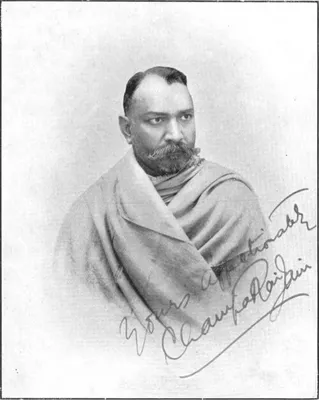
Champat Rai Jain was a Digambara Jain scholar, lawyer, and writer who interpreted Jain texts and defended Jainism in the early 20th century.
Champat Rai Jain (1867-1942) was a prominent scholar and writer on Jainism, particularly from the Digambara tradition. Born in Delhi, he pursued law in England, becoming a barrister. Upon returning to religious activity in India in the 1920s, he became a prolific author and essayist, focusing on interpreting Digambara texts and defending Jain principles against criticisms from Christian missionaries of the colonial era. He also sought to bridge the divide between North and South Indian Digambara communities, founding the Akhil Bharatvarsiya Digambara Jain Parisad in 1923 to promote reform and unity. Jain traveled to Europe to lecture on Jainism, aiming to present it as a rational and scientific philosophy.
Scholarly Work and Apologetics
Champat Rai Jain was a significant figure in the early 20th-century discourse on Jainism. He dedicated himself to translating and interpreting Digambara Jain texts, though some scholars suggest his personal interpretations sometimes altered the original meaning. A key aspect of his work involved defending Jainism against misrepresentations by colonial-era Christian missionaries. He meticulously contrasted Jain tenets with Christian beliefs, aiming to clarify Jain philosophy for a wider audience, including the Christian world. This apologetic stance positioned him as an early activist within the Jain community, engaging in the colonial-era debates about Jain identity and its relationship with Hinduism.
Reform and Pan-Indian Unity
Beyond scholarly pursuits, Champat Rai Jain was deeply involved in the reform and unification of the Digambara Jain community. In 1923, he established the Akhil Bharatvarsiya Digambara Jain Parisad. This organization was founded with the explicit goals of enacting activist reforms within the community and bridging the cultural and geographical divisions between the Digambara Jains of South India and North India. His efforts aimed to foster a more cohesive and dynamic Jain society, addressing internal divisions such as caste distinctions. Jain's activism extended to international platforms, as he lectured on Jainism in various European countries.
Presenting Jainism as Science and Philosophy
Champat Rai Jain endeavored to present Jainism not as a system of dogma or mysticism, but as a rational and scientific philosophy. He believed that Jain principles were founded on empirical knowledge attained by perfected beings, likening its validity to that of scientific thought. He sought to explain Jainism using modern psychological and scientific terminology, making it accessible and appealing to a contemporary audience. His lectures and writings often emphasized the logical underpinnings and universal applicability of Jain doctrines, aiming to demonstrate its relevance to global issues like peace and human welfare.
Key Ideas
- Jainism as a science, founded on knowledge and rational thought.
- Defense of Jain doctrines against colonial-era missionary critiques.
- Unification and reform of the Digambara Jain community.
- Comparative religion, contrasting Jainism with Christianity.
Notable Quotes
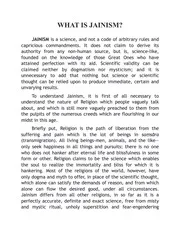
“Jainism is a science, and not a code of arbitrary rules and capricious commandments. It does not claim to derive its authority from any non-human source, but is, science-like, founded on the knowledge of those Great Ones who have attained perfection with its aid. Scientific validity can be claimed neither by dogmatism nor mysticism; and it is unnecessary to add that nothing but science and scientific thought can be relied upon to produce immediate, certain and unvarying results.”
Books by Champat Rai Jain
1 free public domain book · Read online or download