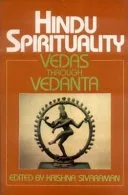
Hindu Spirituality
 75
75

Hindu Spirituality
Krishna Sivaraman's "Hindu Spirituality" presents a dense, academic survey of its subject, a welcome contrast to more superficial treatments. The author's strength lies in his meticulous dissection of complex philosophical concepts, particularly the interplay between Brahman and Atman, which he renders with admirable clarity. However, the book’s primary limitation is its austere tone; it feels more like a scholarly monograph than an inviting exploration. A particularly illuminating section details the evolution of the concept of Avataras, tracing its development through various Puranic texts. While undeniably informative for the dedicated student, its academic rigor may alienate those seeking a more experiential or devotional connection to the subject matter. It is a work of significant scholarship, best suited for the library of the serious researcher.
📝 Description
75
Krishna Sivaraman's "Hindu Spirituality," published in 1989, analyzes India's religious and philosophical traditions.
Krishna Sivaraman's "Hindu Spirituality," first published in 1989, is an analytical work examining the philosophical and religious traditions of India. It is not a devotional text but rather a scholarly study of the core concepts, deities, and practices that have defined Hinduism over centuries. The book systematically clarifies complex theological ideas and historical developments, making them understandable for a serious readership.
This volume is suited for students of comparative religion, philosophy, and esoteric traditions. Those looking for a structured academic overview of Hindu thought, rather than a simple introduction or a manual for practice, will find it valuable. It is for individuals with a background in philosophy or a consistent interest in non-Western spiritual systems who appreciate detailed explanations.
Published in 1989, "Hindu Spirituality" emerged as Western academic interest in Eastern religions grew. Sivaraman's work contributed to this by detailing a tradition often oversimplified in popular understanding. It built upon earlier scholarship and theosophical studies, offering a specific perspective on Hindu thought during a time when understanding non-Western spiritual systems was gaining traction.
💡 Why Read This Book?
• Gain a structured understanding of Brahman, the ultimate reality in Hindu philosophy, as presented through Sivaraman's analytical framework, offering a precise conceptual grasp distinct from devotional interpretations. • Explore the historical evolution of the concept of Avatars, a key motif in Hindu mythology, learning how its interpretation shifted across different scriptural traditions and historical periods. • Grasp the philosophical underpinnings of Dharma, the concept of cosmic and social order, and its practical implications within Hindu ethical systems as detailed in the text.
⭐ Reader Reviews
Honest opinions from readers who have explored this book.
❓ Frequently Asked Questions
When was Krishna Sivaraman's Hindu Spirituality first published?
Krishna Sivaraman's "Hindu Spirituality" was first published in 1989, placing it within a period of significant academic engagement with Eastern religious thought.
What are the primary philosophical concepts discussed in Hindu Spirituality?
The book primarily discusses concepts such as Brahman (the ultimate reality), Atman (the self), Karma (action and consequence), and Dharma (cosmic and social order), offering detailed philosophical analyses.
Does the book focus on specific deities within Hinduism?
Yes, "Hindu Spirituality" examines the iconography and mythological roles of major deities including Shiva, Vishnu, and Devi, contextualizing their significance within various philosophical schools.
Who is the intended audience for this book?
The book is aimed at serious students of comparative religion, philosophy, and esoteric traditions, particularly those who appreciate a scholarly and analytical approach to religious studies.
What historical period does the book cover in relation to Hindu thought?
While not strictly chronological, the book explores concepts that have evolved over millennia, addressing foundational scriptures and the development of philosophical schools within Hindu tradition.
Does Sivaraman discuss the paths to liberation in Hinduism?
Yes, the work likely addresses the different paths to achieving moksha (liberation), such as Jnana Yoga (path of knowledge), Bhakti Yoga (path of devotion), and Karma Yoga (path of action).
🔮 Key Themes & Symbolism
The Nature of Brahman
The work meticulously unpacks the concept of Brahman, the supreme, unchanging reality in Hindu philosophy. Sivaraman likely differentiates between Nirguna Brahman (without attributes) and Saguna Brahman (with attributes), exploring how this abstract principle underpins all existence. This theme is crucial for understanding the monistic or qualified monistic viewpoints within Hinduism, moving beyond simplistic polytheism to grasp the underlying unity.
The Cycle of Karma and Rebirth
Central to Hindu thought is the law of Karma, the principle of cause and effect governing actions and their consequences across lifetimes. Sivaraman's analysis explores how Karma dictates one's Samsara (cycle of birth, death, and rebirth) and the ultimate goal of Moksha (liberation) from this cycle. The intricate mechanics of Karma are presented as a fundamental aspect of the spiritual journey.
Deities as Manifestations
Rather than treating deities as separate entities, the book likely interprets figures like Vishnu, Shiva, and Devi as distinct manifestations or aspects of the singular Brahman. This section would explore their associated mythologies, iconography, and the specific devotional paths (Bhakti) that center around them, illustrating how the divine is perceived and worshipped in its myriad forms.
Dharma and Cosmic Order
The concept of Dharma, encompassing righteousness, duty, and natural law, is explored as the organizing principle of the universe and society. Sivaraman's examination likely connects Dharma to social roles, ethical conduct, and the maintenance of cosmic balance. Understanding Dharma is presented as essential for living a purposeful life and progressing spiritually.
💬 Memorable Quotes
Direct passages from the work, attributed to the author.
“Actions create karmic imprints that shape future existences.”
— This interpretation highlights the law of Karma, emphasizing that every action generates consequences that extend beyond the present life, influencing the individual's journey through the cycle of rebirth.
“The goal is liberation from the cycle of Samsara.”
— This statement expresses the ultimate spiritual aspiration in many Hindu traditions: to achieve Moksha, freedom from the endless cycle of birth, death, and suffering that constitutes Samsara.
“Deities represent diverse facets of the divine.”
— This interpretation suggests that the various gods and goddesses in the Hindu pantheon are not independent but are symbolic representations of different aspects or energies of the singular, ultimate reality.
💡 Key Ideas
Editorial paraphrase of the work's core concepts — not direct quotes.
Brahman is the underlying reality from which all phenomena arise.
This paraphrase captures the core concept of Brahman as the ultimate substratum of existence, the source and essence of everything perceived in the universe, a fundamental tenet of Advaita Vedanta.
Dharma provides the framework for righteous living.
This paraphrase defines Dharma as the ethical and cosmic law that guides individuals in their duties and actions, ensuring order and contributing to spiritual progression.
🌙 Esoteric Significance
Tradition
While "Hindu Spirituality" is primarily a scholarly work, its exploration of concepts like Brahman, Atman, Karma, and Moksha aligns with the philosophical underpinnings of various esoteric traditions that draw from Indian thought. It provides a foundational understanding relevant to practitioners of Yoga, Vedanta, and even certain branches of Western esotericism that have incorporated these ideas, offering a grounded perspective on concepts often adapted or reinterpreted.
Symbolism
The book likely dissects the symbolism of the Om (Aum) mantra, representing the primal sound and the entirety of existence, and the Lotus flower, symbolizing purity, spiritual awakening, and detachment amidst worldly conditions. These symbols are not merely decorative but are considered potent vehicles for understanding cosmic principles and the human spiritual journey.
Modern Relevance
Contemporary thinkers and practitioners in fields like consciousness studies, comparative philosophy, and integral spirituality often reference the core concepts explored in works like Sivaraman's. Modern Yoga and Vedanta movements, as well as individuals exploring non-dual philosophies, continue to draw upon these ancient ideas for guidance and theoretical grounding, highlighting the enduring relevance of these spiritual frameworks.
👥 Who Should Read This Book
['• Advanced students of comparative religion: Those seeking a deep, academic understanding of Hindu philosophical systems beyond introductory texts will find a meticulously researched overview.', '• Philosophy enthusiasts: Individuals interested in exploring metaphysical concepts like Brahman, Atman, and the nature of reality from a non-Western perspective will appreciate the analytical rigor.', '• Esoteric practitioners seeking context: Those involved in Yoga, meditation, or other spiritual practices derived from Indian traditions can gain a richer intellectual framework for their disciplines.']
📜 Historical Context
Published in 1989, "Hindu Spirituality" emerged within a scholarly landscape where the study of Indian religions was maturing, moving beyond the sometimes romanticized views of earlier Orientalist scholarship and theosophical interpretations. This period saw a rise in critical academic approaches. Sivaraman's work can be seen as contributing to this trend, offering a more structured and philosophical analysis compared to the popular works of figures like Swami Vivekananda from a century prior, or the more devotional writings that often dominated Western perceptions. While not directly engaging in polemics, the book implicitly offered a counterpoint to simplistic or syncretic understandings of Hinduism, providing a detailed examination of its internal philosophical currents. The academic reception likely focused on its systematic approach to complex doctrines.
📔 Journal Prompts
The concept of Brahman as the ultimate reality: How does its description challenge conventional notions of self and existence?
The role of Dharma in navigating daily life: Identify a situation where understanding Dharma could offer clarity.
The interplay between Karma and Samsara: Reflect on the concept of cyclical existence and its implications.
The symbolism of a chosen deity (e.g., Shiva or Vishnu): What aspects of the divine does this deity represent in your understanding?
The path to Moksha: Consider what liberation from Samsara might entail conceptually.
🗂️ Glossary
Brahman
The ultimate, unchanging, and supreme reality in Hinduism, considered the source and substratum of all existence. It can be understood as impersonal (Nirguna Brahman) or with attributes (Saguna Brahman).
Atman
The individual self or soul, which in many Hindu schools of thought (especially Advaita Vedanta) is identical to Brahman. It represents the eternal, unchanging essence of a being.
Karma
The law of cause and effect, where actions (karma) performed in this life determine future consequences and the nature of one's rebirth in the cycle of Samsara.
Dharma
A complex concept encompassing righteousness, duty, cosmic law, social order, and the inherent nature of things. It guides ethical conduct and spiritual progression.
Samsara
The continuous cycle of birth, death, and rebirth (reincarnation) that sentient beings are bound to, driven by Karma and ignorance. It is often associated with suffering.
Moksha
Liberation or release from the cycle of Samsara. It represents the ultimate spiritual goal in Hinduism, achieving a state of eternal peace or union with the divine.
Upanishads
A collection of philosophical texts forming the theoretical basis of Hinduism. They are considered revelations of ultimate truth (Vedanta) and explore concepts like Brahman and Atman.