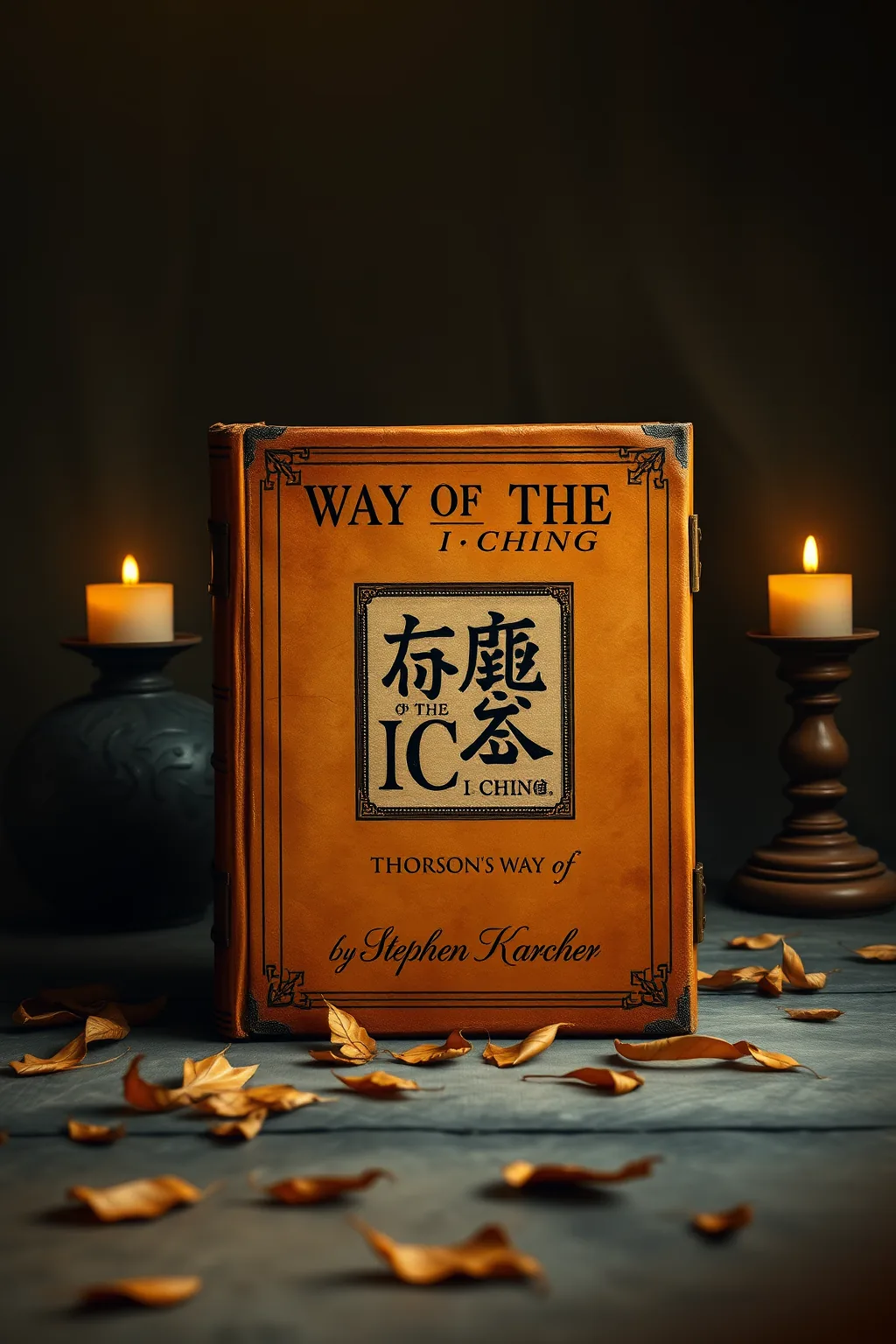
Way of the I Ching (Thorsons Way of)
 72
72

Way of the I Ching (Thorsons Way of)
Stephen Karcher's *Way of the I Ching* provides a lucid, accessible entry point into a profound system of wisdom. His strength lies in demystifying the hexagrams and their changing lines, presenting them as dynamic maps of psychological and situational shifts rather than static prophecies. The 2002 publication date means it avoids some of the more recent academic debates, but it offers a solid foundation. A limitation, perhaps, is that while it encourages personal interpretation, the sheer breadth of the *I Ching*'s potential meanings can feel overwhelming without extensive practice. The section on interpreting changing lines, however, is particularly well-handled, offering concrete steps for drawing meaning from the text's subtle shifts. Karcher successfully grounds the ancient oracle in a framework for modern self-reflection.
📝 Description
72
Stephen Karcher's Way of the I Ching, published in 2002, offers a practical guide to the ancient Chinese divination text.
This book approaches the I Ching not simply as a method for fortune-telling, but as a system for understanding life's patterns and changes. Karcher emphasizes practical application and personal development, making the text accessible even to those new to its philosophical depth. The work is suited for individuals seeking a structured yet personal way to engage with the I Ching, appealing to those interested in Chinese philosophy, divination, and self-reflection.
Readers will find value in its systematic explanations and clear guidance, which focus on the ethical and psychological aspects of the text. It serves both beginners and those with some experience who wish to deepen their knowledge. The book breaks down fundamental concepts like hexagrams, trigrams, and the balance of yin and yang. It explains how these components form the 64 hexagrams, each representing a unique situation or stage of transformation, highlighting their dynamic nature and the forces at play.
The I Ching, or Book of Changes, has a history reaching back to the Zhou dynasty. Its philosophical development is often associated with Confucius and his followers. Western readers were introduced to the text through scholars like Richard Wilhelm in the 20th century. Karcher's work continues this tradition, making the ancient text relevant for contemporary readers interested in Eastern philosophies and divination practices.
💡 Why Read This Book?
• Gain practical methods for interpreting the 64 hexagrams, understanding how each represents a distinct phase of transformation, a concept central to the *I Ching*'s philosophy. • Learn to utilize the 'changing lines' within a hexagram for specific guidance, moving beyond general pronouncements to actionable advice as detailed in Karcher's system. • Explore the dynamic interplay of yin and yang as foundational forces, understanding their role in shaping situations and guiding personal responses, a core tenet of Taoist thought.
⭐ Reader Reviews
Honest opinions from readers who have explored this book.
❓ Frequently Asked Questions
When was Stephen Karcher's *Way of the I Ching* first published?
Stephen Karcher's *Way of the I Ching* was first published in 2002, making it a relatively modern interpretation of the ancient Chinese text.
What is the core purpose of the *I Ching* as presented in this book?
The book presents the *I Ching* as a system for understanding life's patterns and cycles, promoting personal growth and practical application rather than simple fortune-telling.
How does Karcher explain the 64 hexagrams?
Karcher explains the 64 hexagrams as distinct situations or phases of transformation, formed by the combination of trigrams and the interplay of yin and yang.
What is the significance of 'changing lines' in the *I Ching* according to this book?
Changing lines offer specific, dynamic guidance within a hexagram, detailing how a situation might evolve and what actions are most appropriate at that moment.
Is this book suitable for beginners to the *I Ching*?
Yes, the book is designed to be accessible to newcomers, offering clear explanations and practical guidance for engaging with this ancient text.
What philosophical tradition does the *I Ching* originate from?
The *I Ching* originates from ancient Chinese philosophy, deeply intertwined with Taoist principles and later influenced by Confucian thought.
🔮 Key Themes & Symbolism
Hexagram Interpretation
The work meticulously details the structure and meaning of the 64 hexagrams, the core symbolic representations within the *I Ching*. Karcher emphasizes that each hexagram is not a fixed state but a dynamic unfolding of circumstances. Readers are guided to understand the symbolic language of the trigrams and their combinations, enabling them to interpret the specific wisdom offered by each of the 64 figures for personal guidance and decision-making. The focus is on recognizing situational archetypes presented by the hexagrams.
The Role of Changing Lines
A significant theme is the interpretation of 'changing lines' within a hexagram. These lines signify moments of transition and offer specific, nuanced advice. Karcher guides readers on how to identify and understand these lines, which act as crucial pivot points in the divination process. This element transforms the *I Ching* from a static oracle into a responsive guide, highlighting the mutable nature of reality and the importance of timely action or contemplation.
Yin and Yang Dynamics
The fundamental principles of yin (passive, receptive) and yang (active, assertive) are central to Karcher's exposition. The book explores how the interplay between these two primordial forces shapes the trigrams and, consequently, the hexagrams. Understanding these dynamics is presented as key to grasping the underlying energies of any situation and aligning one's responses with the natural flow of events, a core tenet of Taoist philosophy.
Ethical Guidance and Self-Inquiry
Beyond mere prediction, *Way of the I Ching* frames the text as a profound tool for ethical development and self-reflection. Karcher encourages readers to use the *I Ching* to examine their motivations, understand the consequences of their actions, and cultivate wisdom. The book promotes a proactive approach to life, where consulting the oracle is an act of deep self-inquiry aimed at fostering balance, integrity, and conscious living in accordance with natural principles.
💬 Memorable Quotes
Direct passages from the work, attributed to the author.
“The hexagrams are maps of the human condition.”
— This interpretation suggests that the 64 symbolic figures of the *I Ching* are not arbitrary signs but represent fundamental patterns and archetypal situations encountered throughout human experience and life's journey.
“Changing lines show where the situation is transforming.”
— This highlights the dynamic aspect of the *I Ching*. The concept of changing lines within a hexagram signifies active shifts and transitions, providing specific guidance on how a situation is evolving or can be influenced.
“Consult the oracle to understand the forces at play.”
— This emphasizes the *I Ching*'s function as a tool for discerning the underlying energies and influences affecting a situation, promoting a more informed and conscious approach to decision-making.
“The *I Ching* reflects the patterns of the universe and the self.”
— This statement connects the micro and macro levels, implying that the principles governing the cosmos are mirrored within individual human experience and consciousness, as revealed through the *I Ching*.
💡 Key Ideas
Editorial paraphrase of the work's core concepts — not direct quotes.
Wisdom lies in aligning action with the moment's character.
This paraphrased concept underscores the practical application of the *I Ching*, suggesting that true wisdom involves understanding the unique nature of the present situation and acting in accordance with it.
🌙 Esoteric Significance
Tradition
The *I Ching* is a foundational text within Chinese cosmology and philosophy, deeply influencing Taoism and Confucianism. While not strictly fitting into Western esoteric lineages like Hermeticism or Kabbalah, its emphasis on cyclical change, the balance of opposing forces (yin/yang), and the interconnectedness of the universe aligns with universal esoteric principles. Karcher's work positions the *I Ching* as a key text for understanding cosmic order and human destiny, drawing parallels to the Western search for universal laws and archetypal patterns.
Symbolism
Central to the *I Ching*'s symbolism are the trigrams (three-line figures like Heaven, Earth, Water, Fire) and the hexagrams (six-line figures formed by combining two trigrams). Karcher explains these as symbolic representations of fundamental natural forces and human situations. For instance, Heaven (☰) often symbolizes strength and dynamism, while Earth (☷) represents receptivity and stability. The interplay and transformation between these symbols offer a rich lexicon for understanding the nuances of life.
Modern Relevance
Contemporary practitioners of mindfulness, self-help, and transpersonal psychology often draw upon the *I Ching* for its insights into cyclical processes and personal transformation. Thinkers and writers exploring systems thinking, narrative therapy, and depth psychology find resonance in its archetypal structure. Karcher's approach, emphasizing practical application and self-inquiry, makes the *I Ching* relevant for modern seekers looking for tools to navigate complexity and foster personal growth without necessarily adhering to specific religious doctrines.
👥 Who Should Read This Book
• Individuals interested in comparative philosophy and divination systems seeking to understand the *I Ching*'s unique place in Chinese thought. • Practitioners of personal development and self-inquiry looking for a structured method to gain clarity on life situations and foster inner wisdom. • Students of East Asian studies or esoteric traditions who wish to engage with a primary source text through a contemporary, accessible lens.
📜 Historical Context
Stephen Karcher's *Way of the I Ching*, released in 2002, emerged during a period of sustained global interest in Eastern spiritual and philosophical traditions, building upon a rich legacy of *I Ching* scholarship. The foundational text itself dates back millennia, with its core philosophical development often attributed to the Confucian school during the Spring and Autumn and Warring States periods (771-256 BCE). By the early 20th century, translations like Richard Wilhelm's (published in German in 1924 and English in 1950) had already made the *I Ching* accessible to Western audiences, influencing thinkers such as Carl Jung. Karcher's work arrived in a landscape where the *I Ching* was already established as a significant esoteric and philosophical text, no longer a novelty but a subject of continued exploration and reinterpretation in light of modern psychological and spiritual inquiries. Its reception was part of a broader trend of Western engagement with Chinese thought, distinct from, yet aware of, the more academic sinological approaches.
📔 Journal Prompts
The character of Heaven (☰) and its manifestation in your life.
Reflecting on a specific hexagram's advice regarding a current challenge.
The balance of yin and yang forces in a recent decision.
How changing lines offer guidance for your immediate next steps.
The archetypal situations represented by the 64 hexagrams.
🗂️ Glossary
Hexagram
A figure composed of six stacked horizontal lines, representing a specific situation, concept, or phase of transformation in the *I Ching*. There are 64 unique hexagrams.
Trigram
A figure composed of three stacked horizontal lines, used as building blocks for the hexagrams. There are eight basic trigrams, each representing fundamental elements or forces.
Yin
In Taoist philosophy, one of two complementary principles. Yin represents the passive, dark, feminine, and receptive aspects of existence.
Yang
The complementary principle to Yin. Yang represents the active, light, masculine, and assertive aspects of existence.
Changing Lines
Specific lines within a hexagram that indicate a transition or movement. Their interpretation provides more detailed and dynamic guidance than the static hexagram itself.
Tao
The fundamental principle of the universe in Taoism; the 'Way' or 'Path'. It represents the natural order and the underlying force that flows through all things.
Divination
The practice of seeking knowledge of the future or the unknown by supernatural means. In the context of the *I Ching*, it involves using the text to gain insight into current situations.
🔮 Readers Also Liked
Browse all →









More by Stephen Karcher
All books →





More Free Occult Philosophy Books
View all →