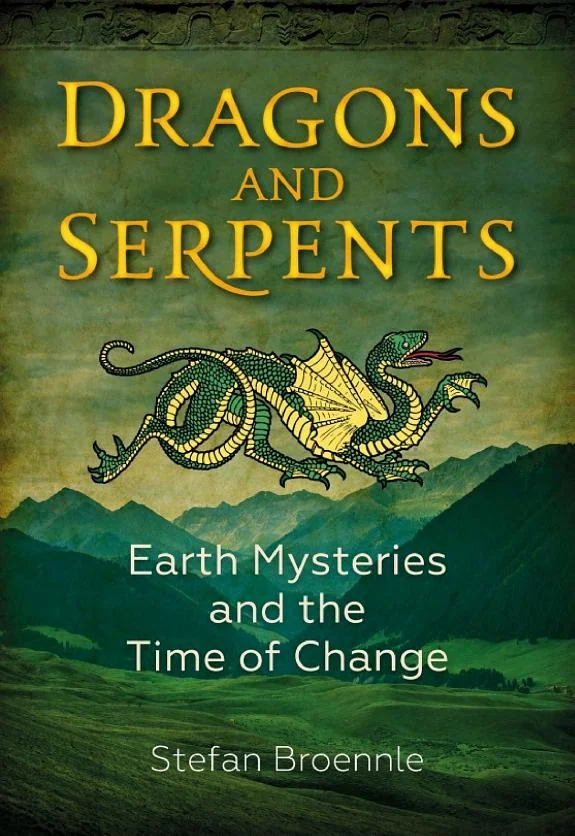
Dragons and Serpents
 75
75

Dragons and Serpents
Stefan Broennle's "Dragons and Serpents" provides a much-needed re-evaluation of these primal symbols, moving beyond simplistic good-versus-evil narratives. The book's strength lies in its detailed examination of Eastern serpent veneration, particularly the Naga, offering a refreshing counterpoint to Western dragon lore. Broennle's analysis of geomantic dragon energy is particularly insightful, connecting terrestrial power lines to archetypal forces. A limitation, however, is the sometimes dense prose, which can occasionally obscure the very connections the author seeks to illuminate. The section detailing the Christian reinterpretation of serpents as solely malevolent figures, contrasting it with pre-Christian reverence, is a potent example of the work's analytical depth. This is a valuable contribution for those seeking to understand the Earth's deeper symbolic language.
📝 Description
75
Stefan Broennle's 2024 book connects dragons and serpents to Earth's vital energies.
Stefan Broennle's "Dragons and Serpents" examines the deep archetypal and elemental significance of these figures. The book argues that dragons and serpents are more than mythological creations; they are tied to the planet's fundamental energies and principles. Broennle moves past simple interpretations to show their function as channels for primal forces, which is key to understanding the Earth's energetic structure. The work contrasts how dragons and serpents have been depicted across various cultures. It compares their revered status in Eastern traditions, like the Naga in Hinduism and Buddhism, with their often demonized portrayal in Western Christianity. This comparison reveals how these symbols changed and were manipulated within different religious and cultural systems, and how their original meaning became hidden or altered over time, particularly after the early medieval period.
Broennle details the geomantic meaning of dragon energy, linking it to the Earth's ley lines and sacred sites. The book explains how these beings represent elemental forces—earth, water, fire, air—and archetypal patterns that influence both human awareness and the physical world. It also offers ways for readers to reconnect with this dragon energy, suggesting it is important for ecological restoration and personal balance.
This book fits within occult philosophy, specifically traditions that view the natural world as imbued with conscious energy. It draws on geomancy, a practice concerned with Earth's energies and sacred geography, and comparative mythology to understand recurring archetypes. Broennle's work suggests a connection between these powerful symbols and the planet's vital forces, a concept found in various esoteric systems that seek to understand humanity's relationship with the Earth's living matrix. The focus on primal forces and elemental embodiment aligns with alchemical and hermetic thought that sees macrocosmic principles reflected in terrestrial phenomena.
💡 Why Read This Book?
• Understand the Earth's elemental and archetypal energies through the lens of dragon and serpent symbolism, as explored through Broennle's analysis of geomantic forces and ley lines. • Gain a nuanced perspective on cross-cultural mythologies, differentiating between the positive associations of serpents in Asian traditions and their often negative portrayal in Western Christianity, as discussed from the early medieval period. • Learn practical methods for reconnecting with Earth's energetic matrix, a key concept highlighted in the book's later sections concerning contemporary ecological and spiritual shifts.
⭐ Reader Reviews
Honest opinions from readers who have explored this book.
❓ Frequently Asked Questions
What is the primary difference between how dragons/serpents are viewed in Asian versus Christian traditions according to Stefan Broennle?
Broennle explains that Asian cultures, particularly from traditions like Hinduism and Buddhism, often revere serpents (like the Naga) as divine beings embodying wisdom and elemental power. Conversely, Western Christianity, especially from the early medieval period, frequently demonized them, associating them with Satan and sin.
How does "Dragons and Serpents" connect these mythical creatures to Earth's energies?
The book explores the geomantic meaning of dragon energy, positing that these beings are conduits for the Earth's vital forces, akin to ley lines. Broennle suggests they represent elemental principles that sustain the planet's energetic balance.
When was Stefan Broennle's "Dragons and Serpents" first published?
The original publication date for Stefan Broennle's "Dragons and Serpents" is February 27, 2024.
What are "elemental and archetypal energies" as discussed in the book?
These are the fundamental forces and primordial patterns that shape the Earth and human consciousness. Elemental energies refer to earth, water, fire, and air, while archetypal energies represent universal, symbolic patterns of behavior and experience.
Does the book offer practical advice for readers?
Yes, "Dragons and Serpents" reveals how to reconnect with dragon energy. This is presented as a way to support the Earth and oneself, especially during times of significant global change, drawing on the book's geomantic insights.
What is the book's stance on the symbolism of dragons and serpents?
The book asserts that dragons and serpents are deeply embedded in human history and serve as powerful symbols of Earth's elemental and archetypal forces. It aims to reveal their often-misunderstood or neglected significance across various cultures.
🔮 Key Themes & Symbolism
Earth's Elemental Forces
The work posits dragons and serpents as primary bearers of Earth's elemental energies. Broennle examines how these beings embody the fundamental forces of creation—earth, water, fire, and air—and act as vital conduits for planetary life. This perspective moves beyond simple myth to a geomantic understanding of how these symbols are intrinsically tied to the planet's energetic matrix and its cycles of transformation.
Cross-Cultural Symbolism
Broennle meticulously analyzes the diverse representation of dragons and serpents across global cultures. He contrasts their revered status in Asian traditions, such as the Naga, with their often demonized portrayal in Christianity, particularly from the early medieval period. This comparative study reveals how cultural and religious contexts shape the interpretation of these potent archetypes, highlighting their positive and negative symbolic associations.
Geomantic Dragon Energy
A central concept is the geomantic meaning of dragon energy, linking these beings to the Earth's ley lines and sacred geography. The book explores how understanding and reconnecting with this energy can support both ecological well-being and personal grounding. This aspect is presented as particularly relevant for navigating contemporary global challenges and fostering a deeper connection to the planet.
Humanity's Connection
The book argues that dragons and serpents are deeply embedded in the human story, acting as archetypal symbols that reflect fundamental aspects of our existence and our relationship with the Earth. Broennle suggests that by understanding these symbols, we can gain insight into our own origins, our connection to the natural world, and our role in planetary evolution.
💬 Memorable Quotes
Direct passages from the work, attributed to the author.
“Dragons and serpents are bearers of the elemental and archetypal energies of the Earth.”
— This core assertion frames the book's thesis, suggesting these creatures are not mere fantasy but represent fundamental forces shaping our planet and consciousness. It invites readers to see them as symbolic keys to Earth's living power.
“The positive associations of dragons and serpents in Asia stand in contrast to their often misinterpreted negative meanings in Christianity.”
— This highlights the book's comparative approach, emphasizing how cultural and religious frameworks drastically alter the perception of these symbols. It points to a Western bias that overlooks their ancient, positive connections to nature and divinity.
“Revealing the geomantic meaning of dragon energy and how to reconnect to it for supporting the Earth in these times of change.”
— This indicates the book's practical application, moving from symbolic analysis to actionable insight. It suggests a method for personal and planetary healing by tapping into primal Earth forces represented by dragons.
“Dragons and serpents are deeply embedded in the story of humankind.”
— This statement underscores the universal and ancient nature of these archetypes. It implies that their presence in myths and legends reflects a fundamental aspect of human psychology and our relationship with the natural world throughout history.
“The work examines myths, legends, and symbols of dragons and serpents in many cultures.”
— This describes the book's methodology, indicating a broad, cross-cultural survey. It promises a comprehensive exploration of how these figures manifest in diverse symbolic systems and historical narratives.
🌙 Esoteric Significance
Tradition
This work aligns broadly with Western esoteric traditions that focus on Earth mysteries, geomancy, and archetypal psychology. It draws parallels with traditions that view natural phenomena and ancient symbols as carriers of profound spiritual knowledge, akin to how Hermeticism or Gnosticism interpreted cosmology and the human soul. Broennle's approach, however, emphasizes a direct connection to terrestrial energies, potentially departing from purely metaphysical or psychological interpretations by grounding symbolism in the Earth's actual energetic landscape.
Symbolism
The primary symbols are the Dragon and the Serpent. In the context explored, the Serpent often represents chthonic, healing, and transformative energies, particularly evident in its Naga form in Asian traditions. The Dragon, while sometimes conflated with the serpent, is presented as a potent archetypal force connected to primordial creation, elemental power, and often, geomantic energy flows. Their varied interpretations across cultures underscore their capacity to symbolize both destructive and creative forces inherent in the Earth.
Modern Relevance
Contemporary ecological movements, Earth healing practitioners, and those interested in animistic or shamanic perspectives can find significant resonance in Broennle's work. Thinkers exploring ley lines, sacred geometry, and the planet's consciousness, along with practitioners seeking to deepen their connection to nature, can draw upon the book's insights. It offers a symbolic framework for understanding and engaging with the Earth's energetic field in an era increasingly concerned with environmental stewardship and spiritual reconnection.
👥 Who Should Read This Book
• Students of comparative mythology and religious studies seeking to understand the dualistic portrayal of serpents and dragons across cultures, particularly contrasting Asian reverence with Christian demonization. • Practitioners of geomancy, earth healing, and nature-based spirituality looking for a deeper conceptual framework for Earth's energetic forces and archetypal symbolism. • Esoteric scholars interested in the archetypal significance of primal beings and their connection to humanity's historical and ongoing relationship with the planet.
📜 Historical Context
Stefan Broennle's "Dragons and Serpents" emerged in 2024, a period marked by a resurgence of interest in Earth-based spirituality and ecological consciousness. While not directly engaging with contemporary figures like Graham Hancock or Julian Cope, the book aligns with a broader intellectual current that questions dominant Western narratives and seeks deeper connections to ancestral wisdom and the planet's energetic systems. Its exploration of serpent symbolism, particularly its positive aspects in Eastern traditions, offers a counterpoint to centuries of demonization in Western thought, a trend that solidified significantly from the early medieval period onwards. The work implicitly challenges the rationalist dismissal of myth and symbol, positioning itself within a lineage of esoteric scholarship that seeks to recover lost knowledge about humanity's relationship with the natural world and its inherent spiritual dimensions.
📔 Journal Prompts
Dragon energy as a geomantic force: How does its presence shape sacred sites?
Contrasting serpent symbolism: Reflect on positive Asian versus negative Christian interpretations.
Elemental energies embodied: Identify personal experiences with Earth, Water, Fire, or Air symbolism.
The story of humankind: How do dragon and serpent myths reflect our relationship with nature?
Reconnecting to Earth's matrix: What personal practices could foster this connection?
🗂️ Glossary
Archetypal Energies
Universal, primordial patterns of consciousness and behavior that influence human experience and collective understanding, often represented by mythic figures like dragons.
Elemental Energies
The fundamental forces associated with the classical elements (Earth, Water, Fire, Air) that are believed to constitute and sustain the physical world and its life.
Geomancy
A practice concerned with the energies and spiritual qualities of the Earth, often involving the study of ley lines, sacred sites, and terrestrial power currents.
Ley Lines
Hypothesized lines of terrestrial energy that crisscross the Earth's surface, often connecting ancient sites and natural landmarks, sometimes metaphorically associated with dragon energy.
Naga
Mythical serpent beings prominent in Hindu, Buddhist, and Jain traditions, often depicted as divine or semi-divine, associated with water, fertility, and cosmic cycles.
Dragon Energy
The potent, primal force described in the book as being intrinsically linked to the Earth's energetic matrix, often associated with geomantic currents and elemental power.
Times of Change
Refers to periods of significant global transformation, whether ecological, social, or spiritual, during which reconnecting with Earth's energies is presented as particularly vital.
This book appears in 1 collection
🔮 Readers Also Liked
Browse all →







From the “Earth Mysteries” Collection
View all →









More Free Occult Philosophy Books
View all →