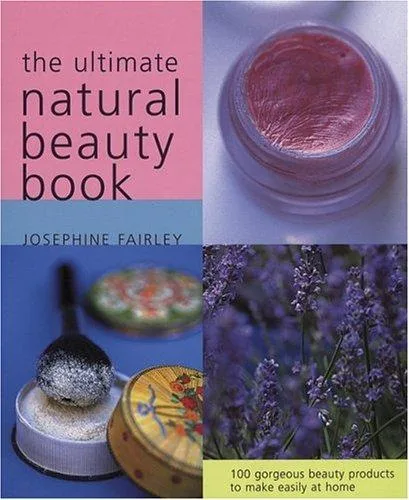
The Ultimate Natural Beauty Book
 83
83

The Ultimate Natural Beauty Book
Josephine Fairley’s *The Ultimate Natural Beauty Book* offers a refreshing counterpoint to the often overwhelming and chemically-laden world of modern cosmetics. From its initial publication in 2004, the book has sought to demystify natural beauty, presenting a practical guide that grounds itself in historical context and ingredient efficacy. Fairley's strength lies in her accessible approach, translating complex botanical and mineral properties into understandable advice and actionable recipes. The section detailing the historical use of ingredients like rosewater and beeswax, for instance, provides a compelling narrative that elevates simple substances to a place of reverence. However, the book’s primary limitation is its age; while the core principles remain sound, some of the specific product recommendations or brand mentions from 2004 feel dated, requiring readers to focus more on the foundational knowledge than the specific examples. Despite this, the work remains a valuable resource for anyone looking to cultivate a more conscious and nature-aligned beauty regimen.
📝 Description
83
Josephine Fairley's 2004 book connects personal well-being with botanical and mineral beauty practices.
First published in 2004, The Ultimate Natural Beauty Book examines beauty practices derived from natural ingredients and older traditions. It moves beyond surface-level cosmetics to consider the links between personal wellness, ecological awareness, and the use of plant and mineral substances. The book advances a perspective on beauty that is complete, sustainable, and well-informed by historical and cultural methods from across the world.
This book is for people who want to learn about and use beauty routines that are both effective and ethically sound. It will appeal to those interested in organic skincare, homemade beauty recipes, and the history of cosmetic components. Readers curious about the ecological effects of the beauty business, or those drawn to a more mindful approach to self-care without chemicals, will find considerable worth in its content. It arrived during a time of growing environmental concern and a rise in interest for natural products, offering a contrast to formulas developed in laboratories and the use of synthetic materials.
This book fits within an esoteric tradition that views beauty not merely as an external adornment but as an extension of inner vitality and a connection to natural forces. It draws from the historical understanding of botanicals and minerals as possessing inherent energies and therapeutic properties. The work aligns with traditions that advocate for a harmonious relationship between the individual and the environment, suggesting that true radiance comes from balanced health and mindful engagement with the natural world, echoing themes found in ancient healing arts and earth-centered spiritual practices.
💡 Why Read This Book?
• Learn to create potent, natural beauty formulations using readily available ingredients, a skill detailed in the book's extensive recipe sections for everything from cleansers to masks. • Understand the historical lineage of natural beauty, appreciating how ancient cultures utilized specific botanicals and minerals, a concept explored through Fairley's research into traditional practices. • Develop a more conscious relationship with beauty products by understanding ingredient sourcing and the environmental impact, a perspective championed throughout the book's ethical framework.
⭐ Reader Reviews
Honest opinions from readers who have explored this book.
❓ Frequently Asked Questions
When was The Ultimate Natural Beauty Book first published?
The Ultimate Natural Beauty Book by Josephine Fairley was first published in 2004, reflecting a growing interest in natural and organic beauty at the turn of the millennium.
What kind of recipes are included in Josephine Fairley's book?
The book contains a wide array of recipes for DIY beauty products, including facial masks, cleansers, body scrubs, and hair treatments, all utilizing natural and readily available ingredients.
Does The Ultimate Natural Beauty Book discuss the history of beauty ingredients?
Yes, Josephine Fairley delves into the historical use of various natural ingredients, tracing their significance in beauty rituals and practices across different cultures and eras.
What is the core philosophy behind the beauty practices in this book?
The core philosophy emphasizes a holistic approach to beauty, linking inner health and well-being with external care, and advocating for the use of pure, ethically sourced natural ingredients.
Is this book suitable for beginners in natural beauty?
Absolutely. The book is designed to be accessible to beginners, providing clear instructions and explanations of natural ingredients and their benefits, making it a practical starting point.
How does the book address the environmental aspect of beauty?
It addresses environmental concerns by promoting the use of sustainable, biodegradable ingredients and encouraging readers to consider the ecological footprint of their beauty choices, moving away from excessive packaging and synthetic chemicals.
🔮 Key Themes & Symbolism
Botanical Potency
The book champions the inherent power of plants in skincare and cosmetics, moving beyond mere fragrance to explore their active properties. Fairley details specific botanicals, from soothing chamomile to rejuvenating rosehip, explaining their traditional applications and modern scientific understanding. It's an exploration of how the earth's flora provides a rich pharmacopoeia for personal care, encouraging a deeper appreciation for plant-based ingredients that goes beyond their aesthetic appeal to their therapeutic benefits.
Mineral & Earth Elements
Beyond botanicals, Fairley investigates the beauty-enhancing qualities of minerals and earth-derived substances. This includes the purifying effects of clays, the exfoliating properties of salts, and the nourishing benefits of certain elemental compounds. The work positions these natural materials not just as fillers or bases, but as active contributors to skin health and vitality, drawing on ancient practices where minerals were integral to cosmetic and medicinal preparations.
Holistic Well-being
A central tenet of the book is the interconnectedness of internal health and external appearance. Fairley advocates for beauty practices that support overall well-being, suggesting that true radiance stems from a balanced lifestyle, mindful consumption, and self-care rituals that nourish the spirit as well as the skin. This holistic perspective encourages readers to view beauty not as a superficial endeavor, but as an integrated aspect of a healthy and conscious life.
Ethical & Sustainable Beauty
The book promotes a conscious approach to beauty, urging readers to consider the ethical sourcing of ingredients and the environmental impact of their choices. It critiques the excesses of the conventional beauty industry, advocating for simplicity, biodegradability, and a reduction in waste. This theme encourages a mindful consumerism, fostering a connection between personal care and planetary health, aligning with a growing awareness of ecological responsibility in the early 2000s.
💬 Memorable Quotes
Direct passages from the work, attributed to the author.
“Beauty is not just skin deep; it is an outward reflection of inner health and harmony.”
— This statement captures the book's core philosophy, emphasizing that true beauty is cultivated from within and supported by natural, wholesome practices, rather than being solely an artificial construct.
“The earth offers a bounty of potent ingredients for nurturing our skin, if only we learn to look.”
— This highlights the book's central argument: that natural remedies are abundant and effective, encouraging readers to reconnect with nature's resources for their beauty needs.
“Understanding the origin of your cosmetics is as important as understanding their application.”
— This emphasizes the book's focus on ethical consumption and ingredient transparency, urging a mindful approach to beauty product selection beyond mere efficacy.
“The wisdom of ancient beauty rituals offers profound lessons for modern self-care.”
— This points to the book's exploration of historical beauty practices, suggesting that time-tested methods hold valuable insights relevant to contemporary approaches to wellness and aesthetics.
💡 Key Ideas
Editorial paraphrase of the work's core concepts — not direct quotes.
Simple, pure ingredients often yield the most remarkable results.
This quote underscores the book's preference for minimal, natural formulations, suggesting that complex chemical mixtures are unnecessary for achieving healthy, beautiful skin.
🌙 Esoteric Significance
Tradition
While not explicitly tied to a single esoteric lineage like Hermeticism or Kabbalah, the book aligns with traditions that emphasize nature's inherent spiritual and healing powers, such as Neopaganism and certain forms of folk magic. It reflects the alchemical principle of 'as above, so below' by connecting external beauty practices to internal states of being and the broader cosmic order of nature. The work can be seen as a secularized manifestation of nature-based spiritualities, focusing on tangible, earthly remedies.
Symbolism
The book frequently employs botanical symbolism, where specific plants like roses represent love and healing, lavender signifies tranquility, and essential oils are seen as concentrated essences of nature's vital force. Water, particularly pure spring or rose water, symbolizes purification and emotional cleansing. Earth elements, such as clays and salts, represent grounding, detoxification, and the fundamental material aspect of creation that nourishes the body.
Modern Relevance
Contemporary movements like the 'clean beauty' industry, zero-waste lifestyle influencers, and holistic wellness practitioners draw heavily on the principles championed in this book. Thinkers and practitioners focusing on biophilia (the innate human tendency to connect with nature) and ecopsychology find resonance in Fairley's holistic approach. The book's emphasis on DIY and ingredient transparency continues to inform online communities and independent beauty brands seeking to offer sustainable and health-conscious alternatives.
👥 Who Should Read This Book
• Individuals interested in formulating their own skincare and haircare products using natural ingredients, seeking practical, step-by-step guidance beyond basic recipes. • Researchers or enthusiasts of cosmetic history and ethnobotany, looking for a comprehensive overview of how different cultures have utilized plants and minerals for beauty over centuries. • Consumers seeking to transition away from mass-produced beauty products towards a more sustainable, ethical, and health-conscious approach to personal care, wanting to understand ingredient origins and impacts.
📜 Historical Context
Published in 2004, *The Ultimate Natural Beauty Book* emerged during a period of burgeoning environmental consciousness and a growing consumer demand for transparency in product ingredients. The early 2000s saw a significant shift away from purely synthetic, lab-created beauty products, with a rising interest in organic, natural, and ethically sourced alternatives. Josephine Fairley's work tapped into this zeitgeist, offering a comprehensive guide that contrasted sharply with the mainstream beauty industry's reliance on petrochemicals and artificial additives. This era also saw the rise of figures like Dr. Bronner, whose company championed natural soaps and ethical production, reflecting a similar ethos. While the book was well-received by those seeking alternatives, it also existed alongside a robust conventional beauty market, representing a distinct philosophical approach to self-care that prioritized ecological harmony and ingredient purity.
📔 Journal Prompts
Reflect on the 'botanical potency' of a common plant in your environment.
Analyze the symbolism of water in your personal beauty rituals.
Consider the historical 'mineral & earth elements' used in ancient cosmetics and their modern equivalents.
Evaluate your current beauty routine through the lens of 'holistic well-being'.
Investigate the ethical sourcing of one ingredient in your favorite beauty product.
🗂️ Glossary
Botanical
Relating to or derived from plants. In beauty, this refers to ingredients sourced from flowers, herbs, fruits, and other plant parts, valued for their natural properties.
Carrier Oil
A vegetable oil derived from the fatty portion of a plant, such as seeds or nuts. These oils are used to dilute essential oils and deliver their benefits to the skin.
Essential Oil
Concentrated hydrophobic liquids containing volatile aroma compounds from plants. They are often used in aromatherapy and natural cosmetics for their scent and therapeutic properties.
Emulsifier
A substance that stabilizes an emulsion, like oil and water, by ensuring they mix properly. Natural emulsifiers derived from plants are often used in DIY beauty products.
Humectant
A substance that attracts and retains moisture. Natural humectants, like glycerin or hyaluronic acid (often plant-derived), are used in skincare to hydrate the skin.
Exfoliant
A substance or product used to remove dead skin cells from the skin's surface. Natural exfoliants include ground seeds, salts, and sugars.
Holistic
Characterized by the belief that the parts of something are intimately interconnected and explicable only by reference to the whole. In beauty, it means considering the mind, body, and spirit.
🔮 Readers Also Liked
Browse all →









More by Josephine Fairley
All books →
More Free Occult Philosophy Books
View all →