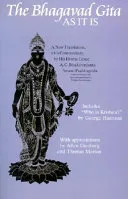
The Bhagavad Gita as it is
 77
77

The Bhagavad Gita as it is
Prabhupāda's rendition of the Bhagavad Gita offers a stark, devotional perspective that can be both illuminating and challenging for the uninitiated. The text's strength lies in its unwavering focus on Krishna as the Supreme Personality of Godhead, presenting a singular, unadulterated path of bhakti. The frequent invocations and direct address to Krishna as the ultimate authority lend a powerful, if dogmatic, tone. A notable passage is the explanation of the *visvarupa* (universal form) shown to Arjuna, described in Chapter 11, which attempts to convey Krishna's infinite nature. However, the work's limitation is its pronounced theological stance, which may alienate readers seeking a more comparative or purely philosophical exploration of the Gita's diverse interpretations. It prioritizes faith and surrender above all, sometimes at the expense of intellectual inquiry. This edition functions less as a neutral academic text and more as a devotional manual for a specific lineage.
📝 Description
77
A. C. Bhaktivedanta Swami Prabhupāda's 2002 edition of the Bhagavad Gita presents a devotional interpretation of a key Hindu scripture.
This edition of the Bhagavad Gita features a dialogue between Lord Krishna and the warrior Arjuna on the battlefield of Kurukshetra. The conversation covers fundamental philosophical and spiritual ideas about the soul, the self, the material world, and the divine. Prabhupāda's translation aims to convey the teachings in an 'as it is' manner, reflecting a specific Vaishnava perspective. It draws on centuries of commentary but emerged during a mid-20th century wave of global interest in Eastern thought.
It is intended for readers interested in the bhakti-yoga tradition, which emphasizes selfless service and devotion to God. The book offers a structured way to understand spiritual enlightenment through divine love and surrender. Its approach is distinct from more academic or generalized spiritual interpretations, focusing on a devotional path.
The Bhagavad Gita is a central text within the Hindu tradition, particularly Vaishnavism. Prabhupāda's 'as it is' translation emphasizes a specific devotional lineage, positioning it within the broader spectrum of Indian spiritual thought. This interpretation focuses on bhakti-yoga, the path of loving devotion, as a primary means of spiritual realization. It engages with concepts like the eternal nature of the soul and the influence of material nature, common themes in many esoteric traditions that seek to understand the relationship between the individual, the cosmos, and the divine.
💡 Why Read This Book?
• Gain a devotional framework for understanding the Bhagavad Gita, emphasizing Krishna as the Supreme Being, a concept central to the Vaishnava tradition presented by Prabhupāda. • Explore the distinct path of bhakti-yoga, learning how devotional service is presented as the most accessible and potent means of spiritual liberation according to this interpretation. • Understand the concept of *atma* (the soul) as eternally connected to Krishna, a core tenet that Prabhupāda's translation uses to reframe Arjuna's existential crisis on the battlefield of Kurukshetra.
⭐ Reader Reviews
Honest opinions from readers who have explored this book.
❓ Frequently Asked Questions
What is the primary focus of A. C. Bhaktivedanta Swami Prabhupāda's translation of The Bhagavad Gita?
Prabhupāda's translation, titled 'The Bhagavad Gita as it is,' emphasizes a devotional perspective, presenting Lord Krishna as the Supreme Personality of Godhead and bhakti-yoga (devotional service) as the foremost spiritual path.
When was 'The Bhagavad Gita As It Is' by A. C. Bhaktivedanta Swami Prabhupāda first published?
While the original work has earlier roots, the edition widely known today, with Prabhupāda's extensive commentary, saw its first full publication in 1972, with subsequent printings and this specific version appearing later.
What are the three main types of yoga discussed in The Bhagavad Gita?
The Bhagavad Gita discusses karma-yoga (the yoga of action), jnana-yoga (the yoga of knowledge), and bhakti-yoga (the yoga of devotion), with Prabhupāda's edition strongly advocating for the supremacy of bhakti-yoga.
Who is Arjuna in the context of The Bhagavad Gita?
Arjuna is a principal warrior of the Pandava lineage in the Mahabharata epic. In the Bhagavad Gita, he is the disciple who receives spiritual instruction from Lord Krishna on the battlefield before a great war.
What does the term 'Bhakti-yoga' mean in this translation?
Bhakti-yoga, as explained in Prabhupāda's 'The Bhagavad Gita As It Is,' refers to the path of devotional service, involving constant remembrance, worship, and love for the Supreme Lord, Krishna.
What is the significance of the battlefield setting in The Bhagavad Gita?
The battlefield of Kurukshetra serves as a profound metaphor for the arena of life, where one faces moral dilemmas and the struggle between duty and personal inclination, making it the opportune moment for Krishna's teachings.
🔮 Key Themes & Symbolism
The Eternal Soul (Atma)
This translation emphasizes the soul's eternal nature, distinct from the transient material body. It posits that true spiritual understanding begins with recognizing oneself as an atma, not merely a physical or mental construct. This concept is crucial for grasping Arjuna's existential dilemma and Krishna's instructions on duty, as the soul is beyond birth and death, unaffected by material conditions. Prabhupāda's commentary consistently reinforces this distinction as foundational to spiritual realization.
Bhakti-Yoga: The Path of Devotion
A central theme is the supremacy of bhakti-yoga, or devotional service, to Krishna. Unlike paths focused solely on knowledge (jnana-yoga) or action (karma-yoga), bhakti is presented as the most direct and potent means to achieve spiritual perfection and return to the spiritual realm. This involves cultivating love for God through various practices like chanting, hearing, and remembering His divine activities, as exemplified by Krishna's relationship with Arjuna.
The Three Modes of Nature
The text elaborates on the influence of *sattva* (goodness), *rajas* (passion), and *tamas* (ignorance) on all living beings and material phenomena. These modes shape consciousness, actions, and perceptions, binding individuals to the cycle of karma. Understanding these modes, as explained by Krishna to Arjuna, is essential for transcending material conditioning and achieving liberation by engaging in actions that are transcendental to their influence.
Krishna as the Supreme Absolute
This edition unequivocally identifies Lord Krishna as the Supreme Personality of Godhead, the source of all existence. The dialogue between Krishna and Arjuna serves to reveal Krishna's divine nature and establish His position as the ultimate object of worship and devotion. This monotheistic emphasis distinguishes Prabhupāda's interpretation, presenting a clear theological framework for the teachings conveyed.
💬 Memorable Quotes
Direct passages from the work, attributed to the author.
“The Supreme Lord is the controller of all controllers.”
— This statement, a core tenet in Prabhupāda's interpretation, establishes Krishna's supreme sovereignty over all other beings and forces. It asserts His ultimate authority and position as the singular controller, central to the devotional philosophy presented.
💡 Key Ideas
Editorial paraphrase of the work's core concepts — not direct quotes.
The living entity is by nature spiritual and eternally blissful, but due to material contamination, he appears to be annihilated.
This paraphrased concept highlights the core teaching on the eternal soul (atma) versus the temporary material body. It suggests that suffering and perceived annihilation stem from material entanglement, not from the soul's inherent nature, which is eternally joyful and spiritual.
One who is constantly engaged in devotional service, etc., is not entangled by the reactions of works.
This paraphrased idea underscores the power of bhakti-yoga. It proposes that by dedicating one's actions to Krishna, the karmic consequences that typically bind individuals are neutralized, offering a path to liberation from the cycle of action and reaction.
All forms of meditation, yoga, and sacrifice are ultimately meant for realizing Me.
This paraphrased concept posits that various spiritual practices, including different forms of yoga and ritual, are ultimately directed towards understanding and connecting with the Supreme Lord, Krishna, reinforcing His central role in spiritual realization.
The modes of material nature condition the living entity to act in various ways.
This paraphrased concept explains how the gunas (sattva, rajas, tamas) influence behavior and perception. It suggests that our actions and experiences are largely shaped by these material qualities, and understanding them is key to spiritual progress.
🌙 Esoteric Significance
Tradition
This work is firmly rooted in the Gaudiya Vaishnava tradition, a prominent school of Hindu devotionalism that emerged in Bengal. While the Bhagavad Gita is revered across various Hindu traditions, Prabhupāda's interpretation specifically highlights the supremacy of Krishna and the path of *bhakti* (devotion) within this lineage. It departs from non-dualistic interpretations (Advaita Vedanta) by positing a personal God and an eternal, distinct soul (atma) in loving service to Him, aligning with the devotional currents of the Chaitanya Mahaprabhu lineage.
Symbolism
Key symbols include the battlefield of Kurukshetra, representing the arena of life's moral struggles and existential choices. Krishna's chariot symbolizes the divinely guided journey of the soul through material existence, with Krishna as the charioteer, Arjuna as the soul, the senses as the horses, and the mind as the reins. The concept of *atma* (soul) itself is a central symbol of eternal consciousness, distinct from the perishable body, representing the true self seeking liberation.
Modern Relevance
Prabhupāda's edition continues to influence contemporary spiritual seekers interested in Krishna consciousness and Vaishnavism. It forms the bedrock of teachings within ISKCON and related movements. Philosophers and theologians examining the diversity of religious expression, particularly within Hinduism, often engage with this translation to understand devotional theology. Its emphasis on surrender, divine love, and the eternal nature of the soul appeals to modern audiences seeking meaning beyond material existence.
👥 Who Should Read This Book
• Devotees of Krishna and practitioners of Gaudiya Vaishnavism seeking an authoritative text for their devotional practices and philosophical understanding. • Students of comparative religion and Eastern philosophies interested in understanding a prominent devotional interpretation of a core Hindu scripture. • Individuals exploring paths to spiritual liberation through love and service, who are open to a text that presents a singular, God-centered approach to self-realization.
📜 Historical Context
The Bhagavad Gita, a Sanskrit scripture dating back possibly to the first millennium BCE, has been a foundational text in Indian philosophy and religion for millennia. A. C. Bhaktivedanta Swami Prabhupāda's translation and commentary, 'The Bhagavad Gita As It Is,' emerged in the mid-20th century, a period of burgeoning global interest in Eastern spirituality, often fueled by counter-cultural movements. Prabhupāda, a follower of the Gaudiya Vaishnava tradition, presented the Gita through a specific theological lens, emphasizing Krishna as the Supreme Personality of Godhead. This approach diverged from earlier academic translations or those influenced by Advaita Vedanta or Western Theosophy, such as the translations by Swami Vivekananda or Annie Besant. His work aimed to present an unadulterated, devotional interpretation for a Western audience, leading to its widespread adoption by the International Society for Krishna Consciousness (ISKCON), which he founded in 1966. The reception was polarized: embraced by devotees as an authentic spiritual guide, while some scholars critiqued its dogmatic assertions and selective emphasis.
📔 Journal Prompts
Arjuna's battlefield despair: How does the concept of *atma* offer solace?
The three modes of nature: Identify an action influenced by *rajas* in your week.
Krishna's instruction on duty: Analyze a personal obligation through the lens of *karma-yoga*.
The nature of *bhakti*: Reflect on acts of service that foster devotion.
The contrast between body and soul: Describe a moment you felt detached from physical sensation.
🗂️ Glossary
Atma
The eternal, spiritual self or soul, considered distinct from the temporary material body and mind. In this tradition, the atma is an infinitesimal part of Krishna.
Bhakti-yoga
The yoga of devotion; the spiritual path focused on cultivating love and engaging in selfless service to the Supreme Lord, Krishna.
Karma
The law of cause and effect governing actions and their consequences, which binds the soul to the cycle of birth and death in the material world.
Gunas
The three modes of material nature: sattva (goodness), rajas (passion), and tamas (ignorance), which influence consciousness, actions, and the material world.
Jnana-yoga
The yoga of knowledge; the spiritual path focused on philosophical inquiry, understanding the distinction between matter and spirit.
Kurukshetra
The sacred battlefield in ancient India where the Mahabharata war took place, serving as the setting for the Bhagavad Gita's dialogue.
Visvarupa
The universal form of the Supreme Lord, a manifestation of His infinite, all-encompassing divine essence, shown by Krishna to Arjuna.