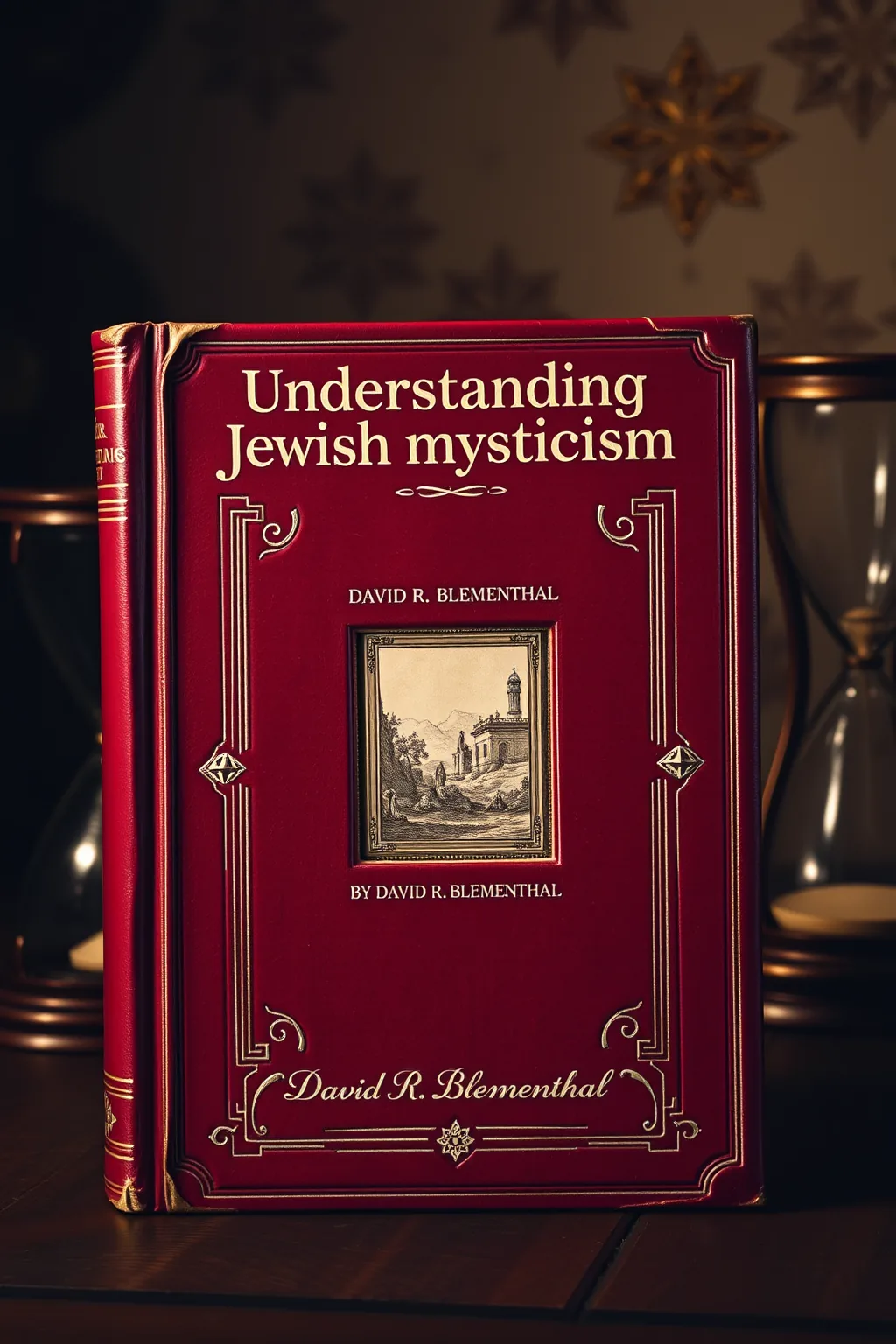
Understanding Jewish Mysticism
 76
76

Understanding Jewish Mysticism
David R. Blumenthal’s Understanding Jewish Mysticism is a welcome, if somewhat dry, entry into the often-murky waters of Jewish esoteric traditions. Its strength lies in its systematic approach, which breaks down complex ideas into digestible parts, a rare feat given the subject matter. For instance, the detailed explication of the concept of *Merkabah* mysticism offers clarity without sacrificing scholarly rigor. However, the book’s academic tone, while admirable for its precision, can sometimes feel detached, lacking the evocative quality that many readers seek when approaching mystical subjects. The 1978 publication date means some later scholarship is naturally absent, but the foundational insights remain solid. Blumenthal provides a firm intellectual scaffolding for understanding these profound traditions.
📝 Description
76
David R. Blumenthal's 1978 book examines the historical and philosophical roots of Jewish mysticism.
Understanding Jewish Mysticism presents a scholarly look at the varied spiritual traditions within Judaism. It moves past simple ideas to consider the historical growth and philosophical foundations of Jewish esoteric thought. The book examines how these mystical currents appeared in different times and places, giving a basic overview for those wanting to understand the depth of this subject.
This work is for academic students of religion, comparative mysticism, and Jewish studies. It is also for people with a strong intellectual interest in the history of esoteric traditions who are ready for detailed text analysis. Readers looking for a devotional or experiential guide might find this approach too academic. Those who want to grasp the intellectual structure of Jewish mysticism will find it very useful.
Published in 1978, Blumenthal's work appeared during a time of renewed academic interest in religious studies and mysticism. It offered a structured contrast to more general or romanticized views of Jewish mysticism common then. The book engages with scholarly discussions of its day about the origins and development of these practices and ideas.
This book situates itself within the academic study of Jewish mysticism, a field significantly shaped by scholars like Gershom Scholem. It addresses the historical development of Kabbalah and other esoteric currents, moving beyond purely devotional interpretations. The work analyzes core concepts such as the nature of God, the structure of the divine worlds, and the textual basis for mystical experience, particularly through the Zohar. It connects these ideas to practices like meditation and viewing the Torah as a symbolic guide.
💡 Why Read This Book?
• Gain a structured understanding of *Merkabah* mysticism, tracing its historical development and core tenets as presented in the book, which offers a clearer academic perspective than anecdotal accounts. • Grasp the significance of key texts like the Zohar and their role in shaping Kabbalistic thought, providing specific textual references that illuminate the evolution of Jewish esoteric ideas. • Appreciate the intellectual architecture behind Jewish mystical practices, moving beyond superficial interpretations to comprehend the philosophical underpinnings discussed in the book.
⭐ Reader Reviews
Honest opinions from readers who have explored this book.
❓ Frequently Asked Questions
What is Merkabah mysticism and how does Blumenthal explain it?
Merkabah mysticism, as explored in Blumenthal's work, refers to early Jewish mystical traditions focused on visions of the divine chariot, described in Ezekiel's prophecy. The book details its development, key figures, and textual sources from the Talmudic period.
When was Understanding Jewish Mysticism first published and why is that significant?
First published in 1978, the book emerged during a pivotal time for academic study of mysticism, offering a structured analysis that contributed to the scholarly discourse on Jewish esoteric traditions, building upon earlier works by figures like Gershom Scholem.
Does the book cover Kabbalah extensively?
Yes, while not solely focused on Kabbalah, the work addresses its foundational texts and concepts. It explores how traditions like Merkabah mysticism laid groundwork for later Kabbalistic developments, particularly concerning divine ascent and cosmology.
Is this book suitable for beginners in esoteric studies?
It is suitable for beginners with a strong academic inclination. While it introduces complex concepts, its scholarly depth requires dedicated attention, making it ideal for those who prefer rigorous, research-based explanations over introductory overviews.
What makes David R. Blumenthal's approach unique?
Blumenthal's approach is distinguished by its systematic, analytical method, dissecting historical and philosophical elements of Jewish mysticism. This scholarly rigor provides a clear framework for understanding traditions often obscured by less academic interpretations.
Are there discussions of practical mystical techniques in the book?
The book discusses the intellectual and theological frameworks that informed mystical practices, such as meditative ascent and visionary experiences. It focuses more on the conceptual underpinnings than on providing step-by-step guides to practice.
🔮 Key Themes & Symbolism
The Divine Chariot (Merkabah)
The work meticulously examines the Merkabah tradition, a foundational current in Jewish mysticism. It traces visions of the divine throne and celestial ascents, drawing from early texts that describe ecstatic journeys to the heavenly realms. This theme explores the human desire to perceive the divine presence directly and the symbolic language developed to articulate such profound, often ineffable, experiences. Blumenthal clarifies the historical context and textual basis for these early mystical practices, distinguishing them from later developments.
Textual Interpretation and Authority
Understanding Jewish Mysticism highlights the critical role of textual interpretation in shaping esoteric traditions. The book analyzes how key scriptures, such as Ezekiel's vision and later rabbinic literature, were reinterpreted through a mystical lens. It demonstrates how the Zohar, for example, provided new layers of meaning to the Torah, establishing an authoritative mystical tradition. This theme underscores how esoteric knowledge is often preserved, transmitted, and evolved through detailed exegesis and commentary.
Cosmology and Divine Structure
Central to Jewish mysticism is the concept of a structured cosmos, with various celestial palaces and divine emanations. Blumenthal's work unpacks these intricate cosmologies, explaining how mystics conceived of the divine nature and its relationship to the created world. It explores the architecture of the heavens and the pathways for spiritual ascent, illustrating a worldview where the physical and metaphysical are deeply intertwined, and the divine is understood through complex symbolic systems.
The Seeker's Path
The book implicitly outlines the path of the Jewish mystic, emphasizing the discipline, knowledge, and spiritual preparation required. It discusses the transformative potential of engaging with these traditions, from understanding the divine to achieving a higher state of consciousness. The focus is on the intellectual and spiritual journey, highlighting the rigorous study and contemplative practices that characterized historical Jewish mystical movements.
💬 Memorable Quotes
Direct passages from the work, attributed to the author.
“The Merkabah mystics sought direct apprehension of the divine.”
— This succinctly captures the core aspiration of early Jewish mystics who engaged in visionary practices to experience God's presence and throne.
“Ezekiel's vision of the chariot served as a primary textual anchor.”
— This highlights the foundational importance of the biblical passage in Ezekiel for the development of Merkabah mysticism and its focus on divine imagery.
“Later Kabbalah built upon earlier mystical frameworks.”
— This interpretation points to the historical continuity and development within Jewish mysticism, showing how later schools of thought inherited and expanded upon earlier traditions.
“Understanding the structure of divine realms was key.”
— This emphasizes the cosmological focus within Jewish mysticism, where mapping the heavens and understanding divine order were central to mystical inquiry and practice.
“The Zohar offered new symbolic interpretations of Torah.”
— This highlights the interpretive power of the Zohar, illustrating how it provided a rich, symbolic layer to Jewish scripture, central to the development of Kabbalistic thought.
🌙 Esoteric Significance
Tradition
This work sits within the broad umbrella of Western Esotericism, specifically focusing on the Kabbalistic and earlier Merkabah traditions within Judaism. It departs from purely theological or historical accounts by examining the experiential and symbolic dimensions of these practices. Blumenthal's scholarly rigor provides a bridge, allowing for the study of these esoteric elements within a structured academic framework, aligning with the Hermetic principle of understanding the 'correspondences' between the divine and the human.
Symbolism
Key symbols explored include the *Merkabah* (divine chariot), representing the ultimate manifestation of divine power and glory, and the concept of celestial palaces, which symbolize the structured, hierarchical nature of the divine realms and the stages of mystical ascent. The Sefirot, while more central to later Kabbalah, are implicitly present in discussions of divine emanation and structure, representing the divine attributes through which the hidden God becomes manifest.
Modern Relevance
Contemporary scholars and practitioners of Western Esotericism, particularly those interested in the roots of Kabbalah and comparative mysticism, continue to draw on Blumenthal's foundational analysis. His work provides essential background for understanding modern interpretations of Kabbalistic concepts and their integration into broader esoteric systems. Thinkers exploring consciousness, cosmology, and the history of contemplative practices find value in his precise articulation of these historical Jewish mystical traditions.
👥 Who Should Read This Book
• Academic students of religious studies and Jewish history: Gain a rigorous, historically grounded overview of key Jewish mystical movements and their textual foundations. • Researchers of Western Esotericism: Understand the specific Jewish lineages that significantly influenced broader esoteric thought and practice throughout history. • Serious inquirers into Kabbalah and mysticism: Develop a foundational intellectual framework for comprehending the complex ideas and historical development of Jewish esoteric traditions.
📜 Historical Context
Published in 1978, David R. Blumenthal's Understanding Jewish Mysticism arrived at a time when academic study of religion was gaining significant traction, particularly concerning esoteric traditions. The intellectual climate was heavily influenced by scholars like Gershom Scholem, whose monumental work on Kabbalah had already established a critical framework for understanding Jewish mysticism. Blumenthal's book contributed to this burgeoning field by offering a systematic analysis, focusing on specific currents like Merkabah mysticism and its historical trajectory. It provided a scholarly counterpoint to more popular or less rigorous explorations of the subject, engaging with debates about the origins and development of these complex spiritual systems. The reception was largely within academic circles, appreciating its meticulous research and clear exposition of dense material, situating it within the ongoing scholarly conversation about Jewish religious history.
📔 Journal Prompts
The Merkabah vision and its interpretation.
Mapping the celestial palaces as described in early mystical texts.
The role of textual exegesis in transmitting esoteric knowledge.
Contemplating the symbolic meaning of the divine chariot.
The historical development from Merkabah mysticism to later Kabbalah.
🗂️ Glossary
Merkabah Mysticism
An early form of Jewish mysticism, primarily from the Talmudic period, focused on visionary experiences of the divine chariot (Merkabah) and ascents to heavenly realms.
Zohar
The foundational work of Kabbalah, a collection of mystical commentaries on the Torah and other texts, attributed to Rabbi Shimon bar Yochai but largely compiled in the late 13th century.
Kabbalah
The esoteric tradition of Jewish mysticism, exploring the divine nature, creation, and the relationship between God and the universe, often through symbolic interpretation of scripture.
Divine Immanence
The concept that God is present within the created world, pervading all of existence, a key theme in many mystical traditions.
Divine Transcendence
The concept that God exists beyond the created universe, separate from and independent of material reality.
Ezekiel's Vision
The prophetic vision described in the biblical Book of Ezekiel, detailing a complex divine chariot (Merkabah) and celestial beings, which became a central text for early Jewish mystics.
Hekhalot Literature
A body of early Jewish mystical texts (roughly 2nd to 7th centuries CE) that describe heavenly palaces (Hekhalot) and the ascent through them to the divine throne.