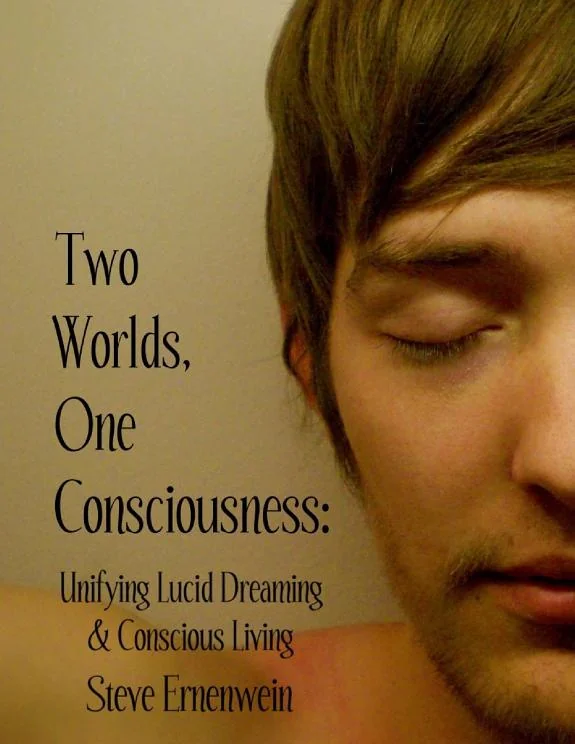
Two Worlds, One Consciousness: Unifying Lucid Dreaming and Conscious Living
 75
75

Two Worlds, One Consciousness: Unifying Lucid Dreaming and Conscious Living
Steven Ernenwein’s "Two Worlds, One Consciousness" attempts a bold synthesis, arguing that lucid dreaming is an extension of our everyday awareness, not a separate realm. The work’s strength lies in its persistent effort to bridge the gap between the ephemeral dream state and the tangible waking world. Ernenwein’s discussion of how dream symbols can inform waking decisions, particularly in Chapter 4 concerning the integration of dream characters into one’s self-concept, is quite compelling. However, the book occasionally suffers from a lack of concrete, step-by-step guidance for absolute beginners in lucid dreaming; the theoretical framework sometimes overshadows the practical application. While the premise is fascinating, some readers might find the philosophical underpinnings require significant prior engagement with esoteric thought. Ultimately, it offers a valuable perspective for those already familiar with dreamwork seeking a deeper philosophical context.
📝 Description
75
Steven Ernenwein's 2011 book proposes a unified model of consciousness linking waking life and dreams.
Published in 2011, "Two Worlds, One Consciousness" by Steven Ernenwein presents a unified view of consciousness, suggesting that lucid dreaming is not separate from our waking awareness but an intrinsic part of it. The book offers practical methods for integrating the insights gained from lucid dreams into everyday life. Ernenwein's aim is to clarify the nature of the dream state, highlighting its value for personal development and spiritual growth.
The work is intended for individuals interested in consciousness studies beyond ordinary perception. This includes those practicing lucid dreaming who seek deeper understanding, people involved in spiritual or metaphysical inquiry, and anyone curious about the mind's capacity for altered states of awareness in self exploration. It speaks to readers who question the distinction between subjective dream experiences and objective reality.
The central argument is that consciousness is non-dual, with waking and dream states being different expressions of a single awareness field. Ernenwein outlines techniques for achieving lucidity.
Ernenwein's book emerged in 2011 amidst growing interest in consciousness studies and esoteric philosophy. It builds upon earlier work in lucid dreaming research and draws parallels with concepts found in Jungian psychology. The text engages with a long tradition that views dreams as a vital channel for understanding the human psyche, a perspective explored by thinkers from antiquity onward. The early 21st century also saw greater access to information on altered states through online communities, creating a fertile environment for synthesizing lucid dreaming practices with broader philosophical ideas about consciousness.
💡 Why Read This Book?
• You will learn a framework for viewing your dream life not as separate from your waking life, but as an integrated aspect of a singular consciousness, drawing on concepts presented in Chapter 3 regarding the "dream-waking continuum." • You will gain actionable insights into how to consciously engage with dream imagery and symbols, applying them to solve problems or understand yourself better, a method elaborated upon in the techniques discussed for dream recall. • You will discover how cultivating lucidity in dreams can foster a greater sense of presence and self-awareness in your daily existence, a core objective highlighted by the author's emphasis on "conscious living."
⭐ Reader Reviews
Honest opinions from readers who have explored this book.
❓ Frequently Asked Questions
What is the primary concept of "Two Worlds, One Consciousness"?
The book's core idea is that waking consciousness and lucid dreaming are not distinct states but rather facets of a single, unified consciousness. Steven Ernenwein proposes integrating dream insights into daily life for personal growth.
When was "Two Worlds, One Consciousness" first published?
The book was first published in 2011, positioning it within the early 21st-century resurgence of interest in consciousness studies and dream research.
Who is the author of this book?
The author is Steven Ernenwein, who explores the intersection of lucid dreaming and conscious living in his work.
What kind of practical advice does the book offer?
It offers techniques for achieving lucidity in dreams and methods for recalling and interpreting dream symbols, with the goal of applying these insights to waking life.
Is this book suitable for complete beginners to lucid dreaming?
While it provides a philosophical foundation, readers new to lucid dreaming might benefit from supplementing it with more beginner-focused guides, as the theoretical aspects are quite detailed.
What is the main benefit of unifying lucid dreaming and conscious living, according to the book?
The primary benefit is enhanced self-understanding and personal growth through the integration of insights from the dream state into daily awareness, fostering a more holistic sense of self.
🔮 Key Themes & Symbolism
Unified Consciousness Model
Ernenwein posits that the boundary between waking life and dream states is artificial. The book argues for a singular consciousness that manifests differently under varying conditions. This perspective challenges the common perception of dreams as passive, random events, instead framing them as active explorations of an interconnected psyche. By understanding this unity, readers are encouraged to see dream experiences as directly relevant to their waking reality, offering a path to deeper self-knowledge and integration.
Lucid Dreaming as a Tool
The work details lucid dreaming not just as a phenomenon to be observed but as a practical tool for conscious exploration. It provides methods for inducing lucidity and maintaining awareness within the dream state. The emphasis is on actively engaging with the dream environment and its contents, transforming dreams from something that happens to the dreamer into something the dreamer consciously participates in. This active engagement is presented as a means to develop greater self-mastery and awareness.
Integration of Dream Wisdom
A central theme is the importance of integrating the insights, symbols, and lessons learned in dreams into the fabric of waking life. Ernenwein suggests that dreams offer a unique symbolic language that, when understood and applied, can help resolve waking conflicts, foster creativity, and guide personal development. This process of integration is crucial for achieving a more complete and conscious existence, bridging the gap between the subconscious and conscious mind.
Conscious Living Principles
The book advocates for a 'conscious living' approach that extends the awareness cultivated in lucid dreaming into everyday activities. This involves being more present, mindful, and intentional in waking hours, drawing parallels between the clarity achieved in lucid dreams and the potential for clarity in daily life. The aim is to live with a greater sense of purpose and connection, informed by the deeper understanding gained through dream exploration.
💬 Memorable Quotes
Direct passages from the work, attributed to the author.
“The dream state is not a departure from consciousness, but a different mode of its operation.”
— This statement captures the book's core argument: that dreams are an inherent and active part of our conscious experience, not a separate, disconnected realm. It reframes the dreamscape as an extension of our own minds.
“Symbols encountered in dreams serve as direct communications from the deeper self.”
— This highlights the symbolic nature of dreams, suggesting they carry meaningful messages. Ernenwein encourages readers to interpret these symbols as vital information for understanding their own psyche and guiding their life path.
“Lucidity in the dream offers a blueprint for conscious awareness in waking life.”
— This interpretation emphasizes the practical application of lucid dreaming techniques. The clarity and control experienced while lucid can be consciously cultivated and applied to enhance presence and intentionality during waking hours.
“To live consciously means to acknowledge and integrate the entirety of one's experience, including the dream.”
— This concept emphasizes a comprehensive approach to self-awareness. It suggests that true conscious living involves embracing all aspects of one's being, particularly the often-neglected field of dreams, for a more integrated self.
💡 Key Ideas
Editorial paraphrase of the work's core concepts — not direct quotes.
The separation between the 'inner' world of dreams and the 'outer' world of waking is an illusion.
This paraphrase points to the non-dualistic philosophy underpinning the book. Ernenwein argues against a rigid distinction, promoting a holistic view where inner psychic experiences profoundly influence and are influenced by outer reality.
🌙 Esoteric Significance
Tradition
The work draws implicitly from Neoplatonic and Hermetic traditions that emphasize the unity of consciousness and the potential for direct experience of higher realities. It aligns with Gnostic ideas of accessing inner knowledge and with certain schools of Western Esotericism that view the dream state as a liminal space for spiritual development. Ernenwein's approach departs from purely psychological interpretations by framing dream lucidity as an inherent spiritual faculty rather than a mere cognitive function.
Symbolism
Key symbols explored include the dream landscape itself, often presented as a mirror of the inner psyche, and the figures encountered within dreams, which represent aspects of the dreamer's personality or subconscious concerns. The concept of 'lucidity' itself functions symbolically, representing the dawning of self-awareness and conscious control within the vastness of the unconscious. The book encourages readers to interpret these symbols not as fixed archetypes but as fluid, personal communications.
Modern Relevance
Contemporary practices in mindfulness, transpersonal psychology, and even some forms of virtual reality development echo Ernenwein's emphasis on the malleability of consciousness and the integration of different experiential states. Thinkers and practitioners in fields like lucid dreaming research, consciousness hacking, and modern shamanism may find his framework for unifying inner and outer realities particularly relevant for contemporary applications.
👥 Who Should Read This Book
• Aspiring lucid dreamers seeking a philosophical underpinning for their practice, aiming to understand the deeper implications of dream awareness beyond mere technique. • Individuals interested in consciousness studies and metaphysics looking for a text that bridges subjective dream experiences with broader theories of mind and reality. • Practitioners of esoteric or spiritual disciplines who wish to explore how dream states can be integrated into their path of self-discovery and personal transformation.
📜 Historical Context
Steven Ernenwein's "Two Worlds, One Consciousness," published in 2011, arrived at a time when consciousness studies were gaining traction beyond academic circles, fueled by accessible online resources and a growing interest in contemplative practices. The book can be seen as a contribution to the ongoing dialogue initiated by figures like Stephen LaBerge, whose work in the 1980s and beyond popularized scientific approaches to lucid dreaming. Ernenwein's work engages with a tradition that views dreams as a vital aspect of the psyche, a perspective explored by Carl Jung and earlier esoteric traditions. While not directly engaging in public debate, Ernenwein's synthesis implicitly addresses a contemporary intellectual current that seeks to bridge empirical science with subjective experience, often contrasting with more purely materialistic or reductionist viewpoints prevalent in some scientific quarters. The early 21st century saw numerous books and online communities dedicated to dream exploration, indicating a fertile ground for a text that sought to unify lucid dreaming with broader philosophical concepts of consciousness.
📔 Journal Prompts
The unified consciousness described in the book, how does it manifest in your waking life?
Reflect on a recurring dream symbol and its potential parallel in your daily routines.
What specific techniques from the book could you apply to foster lucidity tonight?
Consider the 'dream-waking continuum'—what distinctions feel artificial to you?
How can the insights from a lucid dream inform a specific challenge you face today?
🗂️ Glossary
Lucid Dreaming
The state of being aware that one is dreaming while the dream is occurring, often allowing for a degree of conscious control over the dream narrative or environment.
Unified Consciousness
The book's central concept suggesting that waking awareness and dream states arise from a single, indivisible field of consciousness, rather than being separate phenomena.
Dream Symbols
Images, figures, or events within a dream that carry subjective meaning, often understood as representations of the dreamer's subconscious thoughts, feelings, or experiences.
Conscious Living
An approach to daily life that emphasizes present-moment awareness, intentionality, and self-reflection, extending the clarity and awareness cultivated in practices like lucid dreaming.
Dream-Waking Continuum
A conceptual model proposed in the book suggesting a fluid spectrum between the dream state and waking state, challenging the notion of a distinct separation between them.
Integration
The process of incorporating insights, lessons, or experiences from the dream state into one's conscious waking life for personal growth and wholeness.
Inner Self
Refers to the deeper, often subconscious or unconscious, aspects of an individual's psyche from which dream communications and symbolic messages are believed to originate.
This book appears in 1 collection
🔮 Readers Also Liked
Browse all →









From the “Lucid Dreaming” Collection
View all →




More Free Occult Philosophy Books
View all →