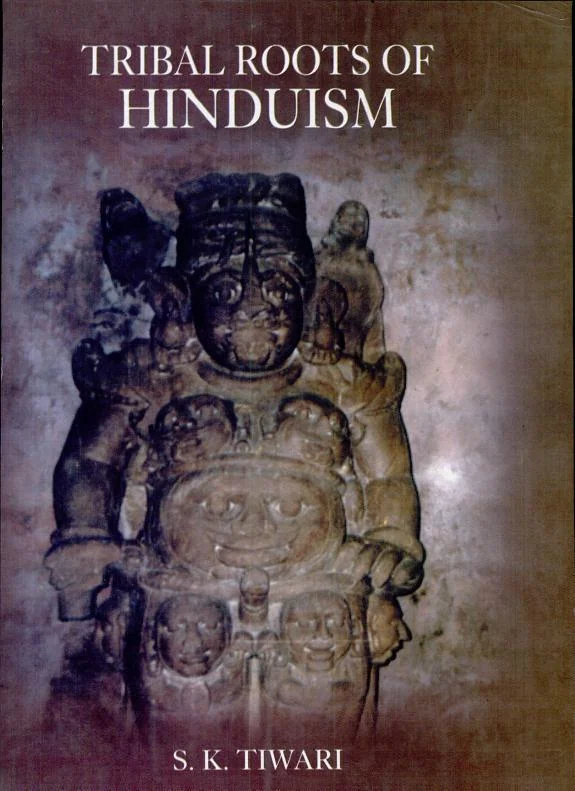
Tribal Roots of Hinduism
 84
84

Tribal Roots of Hinduism
Shiv Kumar Tiwari’s *Tribal Roots of Hinduism* provides a valuable, if sometimes dense, corrective to mainstream interpretations of the religion. The author's dedication to uncovering the pre-Vedic substratum of Hindu practice is commendable. A particular strength lies in his meticulous tracing of specific rituals and deities from obscure tribal communities into later, more formalized traditions. However, the book’s academic rigor occasionally leads to a prose style that can be challenging for the uninitiated. The section detailing the influence of maternal lineage cults on later Shakti traditions, for instance, is both illuminating and a testament to the author's deep research, but it requires significant concentration. Despite its demanding nature, the work offers a crucial perspective, challenging the reader to reconsider the very origins of what is commonly understood as Hinduism. It is an essential text for scholars of ancient religion.
📝 Description
84
Shiv Kumar Tiwari's 2002 book examines Hinduism's origins in indigenous and tribal practices.
Shiv Kumar Tiwari's Tribal Roots of Hinduism, published in 2002, provides a scholarly look at the foundational elements of Hindu traditions. The author traces these origins back to indigenous and tribal practices, moving beyond standard historical accounts. Tiwari focuses on the cultural and spiritual currents that predate and shape later Vedic and Puranic developments. The book highlights the lived experiences and ritualistic expressions of communities often overlooked in historical studies.
This work is suited for students of comparative religion, anthropology, and esoteric studies who want a deeper understanding of how ancient belief systems develop. It will interest those seeking more than superficial accounts of Hinduism and wishing to examine its earliest layers. Researchers and practitioners interested in the syncretic evolution of religion will find substantial material here. Tiwari's research reflects a period of growing academic attention to indigenous cosmologies and their effect on major world religions.
This book engages with esoteric traditions by questioning the monolithic view of Hinduism. It suggests that a significant part of its spiritual heritage comes from non-textual, indigenous sources like animism and shamanism, which often form the basis of esoteric interpretations of world religions. By focusing on these 'roots,' Tiwari connects to a lineage of scholarship that looks beyond orthodox scriptures to understand the deeper, often hidden, currents of spiritual development that influence both mainstream and esoteric practices.
💡 Why Read This Book?
• Gain an understanding of the pre-Vedic animistic and shamanistic influences that shaped early Hindu practices, a perspective often omitted in standard religious histories. • Explore the significance of specific tribal deities and their syncretism with later Vedic pantheons, as detailed in Tiwari's analysis of oral traditions. • Reframe your comprehension of Hinduism by examining its grassroots development, moving beyond purely textual or philosophical analyses as presented in the book's exploration of indigenous cosmologies.
⭐ Reader Reviews
Honest opinions from readers who have explored this book.
❓ Frequently Asked Questions
What is the primary focus of Shiv Kumar Tiwari's 'Tribal Roots of Hinduism'?
The book's primary focus is to trace the origins of Hindu traditions back to indigenous and tribal practices, challenging conventional narratives by exploring pre-Vedic cultural and spiritual currents.
When was 'Tribal Roots of Hinduism' first published?
The first publication of 'Tribal Roots of Hinduism' by Shiv Kumar Tiwari was in 2002.
Who would benefit most from reading this book?
Students of comparative religion, anthropology, esoteric studies, and researchers interested in the evolution of belief systems and indigenous cosmologies will find this book particularly beneficial.
Does the book discuss specific tribal communities?
Yes, the work explores various indigenous and tribal communities, examining their rituals, beliefs, and how these elements became integrated into broader Hindu traditions.
What kind of concepts does Tiwari explore in relation to tribal roots?
Tiwari explores concepts such as animism, shamanistic practices, nature veneration, oral traditions, and local deities as foundational elements of early Hindu thought.
Is this book suitable for beginners in Hinduism studies?
While comprehensive, the book's academic depth may be more suited for those with some existing background in religious studies or anthropology seeking a deeper, more specialized understanding.
🔮 Key Themes & Symbolism
Indigenous Animism and Shamanism
The work meticulously examines how animistic beliefs and shamanistic practices, prevalent in many tribal societies, formed the bedrock of early Hindu spiritual expression. Tiwari details how the veneration of nature spirits, ancestral figures, and the concept of a spiritual world accessible through altered states of consciousness were not merely precursors but integral components that later coalesced with more formalized Vedic structures. The book offers specific examples of rituals and belief systems that underscore this deep connection to the natural and spiritual realms, moving beyond philosophical abstractions to grounded community practices.
Oral Traditions and Local Deities
A significant theme is the preservation and evolution of Hindu traditions through oral transmission. Tiwari highlights how myths, cosmological narratives, and ritual knowledge were passed down through generations in tribal communities, predating widespread literacy. The book focuses on the worship of local, often nature-based deities, arguing that these figures were gradually assimilated into the broader Hindu pantheon. This perspective challenges the notion of a singular, unified origin for Hindu gods and goddesses, emphasizing instead a syncretic process rooted in diverse local cults.
Syncretism and Evolution of Practice
Tribal Roots of Hinduism illustrates the dynamic process of religious syncretism. Tiwari demonstrates how the integration of tribal beliefs and practices into what became mainstream Hinduism was not an imposition but an organic evolution. He explores how elements like fertility rites, ancestor worship, and specific forms of divination from tribal cultures found their way into later Hindu festivals, iconography, and philosophical interpretations. This theme underscores the adaptive and inclusive nature of religious development, showing how diverse cultural streams merged over millennia.
Challenging Textual Authority
The book implicitly and explicitly challenges the over-reliance on textual sources (like the Vedas) as the sole origin point for Hinduism. Tiwari’s research into tribal roots emphasizes the importance of lived experience, ritual action, and community memory as equally valid forms of religious knowledge. By focusing on non-literate traditions, he provides a crucial counter-narrative that enriches our understanding of Hinduism’s complex genesis, suggesting that its earliest forms were more experiential and community-based than purely scriptural.
💬 Memorable Quotes
Direct passages from the work, attributed to the author.
“The seeds of later Hindu cosmology are found in the animistic reverence for the forest.”
— This statement emphasizes that the spiritual worldview underpinning Hinduism did not solely emerge from philosophical texts but from the direct, animistic connection ancient tribal peoples had with their natural environment, particularly forests.
“Oral narratives preserve deities forgotten by written records.”
— This highlights the crucial role of oral traditions in maintaining the memory and worship of deities that might not appear in canonical scriptures, suggesting that written texts represent only a partial history of Hindu devotion.
“Rituals of the earth tribes became the festivals of the plains.”
— This concisely illustrates the process of cultural assimilation, where practices originating in indigenous, tribal communities were adopted and adapted by larger, more settled populations, eventually becoming integrated into widespread Hindu festivals.
“The shaman's trance echoes in the mystic's meditation.”
— This suggests a continuity between ancient shamanic practices, focused on accessing spiritual realms through altered states, and later contemplative practices within Hinduism, linking early forms of spiritual seeking to established meditative techniques.
“Understanding Hinduism requires acknowledging its deep roots in communal, not just individual, spiritual seeking.”
— This emphasizes that the development of Hindu traditions was fundamentally a collective, community-driven endeavor, contrasting with interpretations that might focus solely on the insights of individual sages or philosophers.
🌙 Esoteric Significance
Tradition
This work aligns with esoteric traditions that seek to understand religious phenomena through their deepest, often forgotten, origins, moving beyond exoteric or purely historical accounts. It appeals to a modern esoteric interest in animism, shamanism, and the 'earth mysteries' — concepts often explored in contemporary paganism and neo-shamanic practices. Tiwari’s focus on lived, pre-literate spiritual expression offers a counterpoint to more intellectual or ritualistic esoteric systems, grounding them in primal human experiences.
Symbolism
Key symbols explored include the sacredness of natural elements like trees (often representing cosmic axes or life forces), rivers (symbolizing purification, flow, and life-giving energy), and mountains (as abodes of deities or gateways to the spirit world). The work also implicitly examines the symbolism of the shaman’s journey – traversing different realms to gain knowledge or healing – a motif echoed in various mystical traditions. These symbols are presented not as abstract philosophical concepts but as vital aspects of community life and spiritual practice.
Modern Relevance
Contemporary thinkers and practitioners interested in animistic philosophies, indigenous wisdom, and the roots of ecstatic religion draw upon Tiwari's insights. Modern pagan movements, eco-spiritualists, and those exploring neo-shamanic techniques find validation in his work for the enduring power of primal spiritual expressions. The book's emphasis on the integration of diverse cultural elements also informs contemporary discussions on syncretism and the fluid nature of religious identity in a globalized world, relevant to scholars of lived religion.
👥 Who Should Read This Book
• Students of comparative religion and anthropology seeking to understand the foundational layers of major world traditions beyond textual analysis. • Esoteric practitioners interested in animism, shamanism, and the primal roots of spiritual experience, looking for scholarly grounding. • Researchers of Indian cultural history and indigenous studies who wish to explore the often-overlooked contributions of tribal communities to Hinduism.
📜 Historical Context
Published in 2002, Shiv Kumar Tiwari's *Tribal Roots of Hinduism* emerged during a period where post-colonial scholarship increasingly sought to decenter Western and Brahmanical narratives of Indian religions. The late 20th century saw a rise in anthropological studies focusing on indigenous cosmologies and their influence on major traditions. Tiwari's work engages with this intellectual current, pushing back against interpretations that solely emphasize Vedic origins or a singular, Aryan influx. It contributes to a broader academic discourse, initiated by scholars like D.D. Kosambi in the mid-20th century, that highlighted the role of local substrata and pre-Vedic cultures in shaping Hinduism. Unlike scholars who focused primarily on textual analysis of the Vedas and Upanishads, Tiwari's approach examines the practices and beliefs of tribal communities, offering a grassroots perspective that complicates the notion of a monolithic Hindu tradition. While not a direct engagement with a specific contemporary author's critique, the book implicitly dialogues with prevailing Indological assumptions of its time.
📔 Journal Prompts
The concept of animism in tribal societies and its echoes in later Hindu practices.
The role of oral traditions in preserving pre-Vedic deities and myths.
Shamanistic elements and their potential influence on early Hindu meditative states.
The significance of local nature deities before their integration into the Vedic pantheon.
How communal spiritual seeking differs from individualistic approaches to faith.
🗂️ Glossary
Animism
The belief that natural objects, phenomena, and the universe itself possess souls or consciousness. In the context of the book, it refers to the attributing of spiritual essence to elements of the natural world.
Shamanism
A practice that involves a practitioner reaching altered states of consciousness to interact with the spirit world. It often includes healing, divination, and guiding the community's spiritual needs.
Pre-Vedic
Referring to the period and cultural practices in the Indian subcontinent that predated the composition and widespread influence of the Vedas, the foundational scriptures of Hinduism.
Syncretism
The merging or blending of different, often opposing, religious beliefs, practices, and cultures. In this context, it describes how tribal traditions were incorporated into broader Hindu frameworks.
Oral Tradition
The transmission of cultural knowledge, beliefs, and stories from one generation to the next through spoken word, rather than written records.
Local Deities
Gods and goddesses worshipped in specific regions or communities, often associated with natural features or local phenomena, prior to their assimilation into a larger, pan-Indian pantheon.
Vedic
Pertaining to the Vedas, the oldest scriptures of Hinduism, composed in Sanskrit and considered by Hindus to be divinely revealed.
This book appears in 1 collection
🔮 Readers Also Liked
Browse all →









From the “Hinduism” Collection
View all →








More Free Occult Philosophy Books
View all →