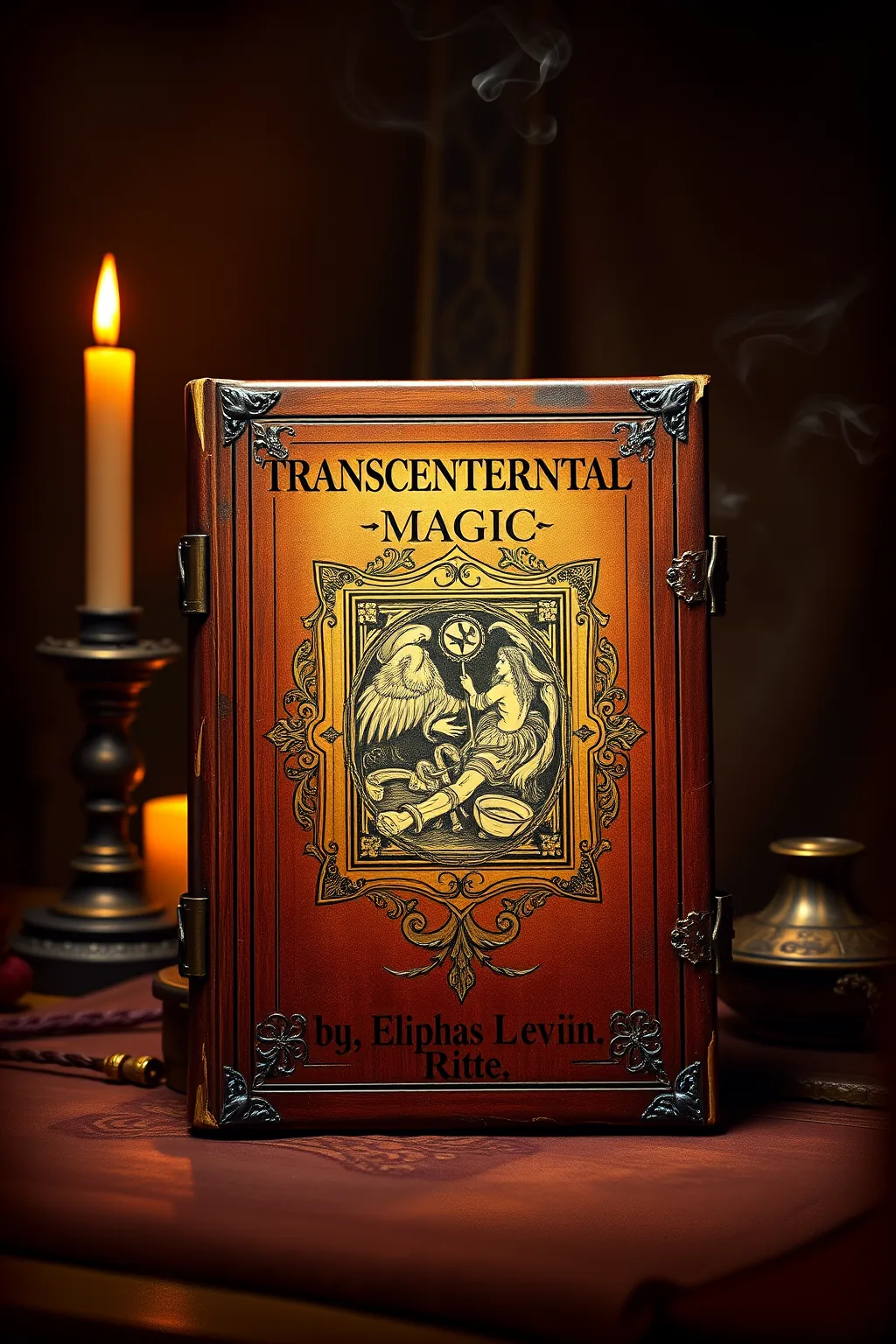
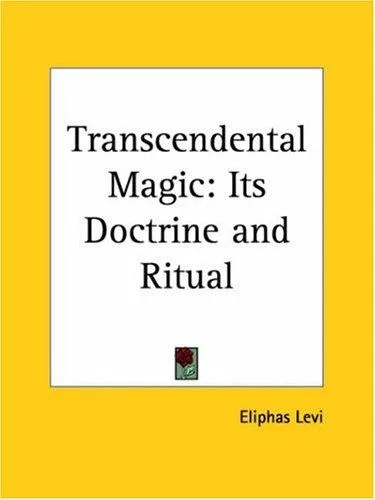
Transcendental Magic, its Doctrine and Ritual
 81
81

Transcendental Magic, its Doctrine and Ritual


Sophia Crane (Associate Editor) — 'Transcendental Magic' is an indispensable text for any serious student of the occult. Eliphas Lévi's systematic approach to ceremonial magic, brilliantly rendered by A. E. Waite, demystifies complex doctrines. The work's strength lies in its comprehensive synthesis of Hermeticism, Kabbalah, and Tarot, offering a cohesive philosophical framework. Lévi's prose, though dense, is deeply insightful, providing practitioners with practical guidance and scholars with a vital historical perspective. This book is essential for those seeking to understand the theoretical underpinnings and practical applications of high magic.
📝 Description
81
Eliphas Lévi published 'Transcendental Magic, its Doctrine and Ritual' in 1856, a foundational text for modern Western esotericism.
Eliphas Lévi's 1856 work, 'Transcendental Magic, its Doctrine and Ritual,' is a significant text in occult philosophy. Translated into English by A. E. Waite, it presents a systematic approach to ceremonial magic. Lévi connects various esoteric traditions, including Hermeticism, Kabbalah, and alchemy, into a coherent framework. He details magical theory, symbolism, and ritual practices intended to align the practitioner with cosmic principles.
The book aims to provide a structured understanding of magical operations, emphasizing the importance of knowledge, will, and symbolic language. Lévi discusses the nature of spiritual forces and the methods for interacting with them. It is written for those seriously interested in the theory and practice of magic, offering insights into the symbolic language of the Tarot and the philosophical underpinnings of the Great Work.
Published in the mid-19th century, 'Transcendental Magic' emerged during a period of renewed interest in spiritualism and occult studies. Lévi synthesized earlier magical traditions, particularly those associated with the Renaissance and the Enlightenment, into a more systematized and philosophical form. His work sought to bridge the gap between theoretical occultism and practical magical operations, influencing subsequent generations of occultists and esoteric scholars. It stands as a key text in the development of modern Western magical orders and thought.
✍️ Author
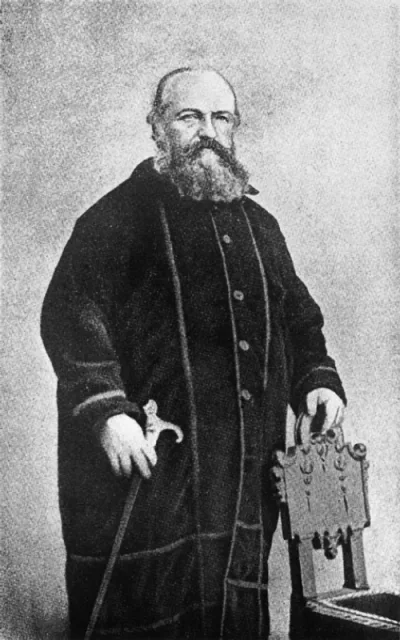
Eliphas Levi
Éliphas Lévi (Alphonse Louis Constant) was a French occultist, poet, and writer known for his works on magic.
Occultist
💡 Why Read This Book?
Delve into the foundational text of modern Western esotericism. 'Transcendental Magic' offers a systematic exploration of ritual, symbolism, and the interconnectedness of occult disciplines. Ideal for seekers of hidden knowledge, students of comparative religion and mysticism, and practitioners looking to deepen their understanding of magical theory and practice.
⭐ Reader Reviews
Honest opinions from readers who have explored this book.
❓ Frequently Asked Questions
What is 'Transcendental Magic' about?
It's a comprehensive treatise on ceremonial magic, doctrine, and ritual, synthesizing Hermeticism, Kabbalah, and Tarot into a unified system of occult philosophy and practice.
Who was Eliphas Lévi?
Eliphas Lévi (Alphonse Louis Constant) was a 19th-century French occultist, magician, and writer, widely considered one of the most influential figures in modern Western esotericism.
What is the significance of the A. E. Waite translation?
A. E. Waite's 1896 translation is renowned for its clarity and accessibility, making Lévi's complex ideas and rich symbolism comprehensible to a broader English-speaking audience.
Is this book suitable for beginners?
While comprehensive, it requires dedication. Beginners may find it challenging but rewarding, especially with supplementary study, as it lays a robust theoretical foundation.
What are the main esoteric traditions discussed?
The book primarily integrates Hermeticism, Kabbalah, and Tarot, positing them as interconnected elements of a universal magical doctrine.
🔮 Key Themes & Symbolism
The Unification of Esoteric Knowledge
Lévi's major work presents a radical synthesis, demonstrating the profound interconnectedness of seemingly disparate esoteric traditions. He argues that Hermeticism, Kabbalah, and the Tarot are not isolated systems but rather complementary expressions of a single, universal magical science. This theme explores how Lévi breaks down the barriers between these disciplines, revealing underlying principles that govern both the cosmos and the human psyche. The book functions as a Rosetta Stone for occult symbolism, enabling practitioners to see the common threads that bind ancient wisdom.
The Doctrine and Practice of Ceremonial Magic
Fundamentally, , 'Transcendental Magic' is a manual for the aspiring magician. It meticulously outlines the philosophical underpinnings and practical applications of ceremonial magic, emphasizing the importance of will, intention, and symbolic representation. Lévi guides the reader through the creation of magical correspondences, the use of sacred geometry, the construction of talismans, and the performance of rituals designed to invoke specific forces and achieve desired transformations. The book stresses that magic is not mere superstition but a science of forces and intelligences.
The Kabbalistic Tree of Life as a Cosmic Map
The Kabbalistic Tree of Life serves as the central axis of Lévi's magical cosmology. He dedicates significant portions of the text to explaining its structure, the Sephiroth, and the paths connecting them, interpreting each element through the lens of Hermetic philosophy and Tarot symbolism. This theme highlights how Lévi uses the Tree of Life as a symbolic map of creation, consciousness, and spiritual ascent. Understanding this framework is presented as crucial for comprehending the universe's energetic flows and for reading through the inner realms during magical operations.
💬 Memorable Quotes
Direct passages from the work, attributed to the author.
“The key of the magic is the will.”
— This emphasizes the central role of focused intention and mental discipline in the practice of magic, underscoring that the magician's will is the primary force that directs magical energies.
“The balance of opposites is the secret of the universe.”
— This highlights the Hermetic principle of duality and the necessity of harmonizing opposing forces, such as spirit and matter, light and darkness, to achieve equilibrium and creation.
“Symbology is the language of the soul.”
— Lévi posits that symbols are the most direct means of communicating profound spiritual truths, bypassing the limitations of ordinary language and speaking directly to the subconscious and spiritual faculties.
“The Astral Light is the universal solvent.”
— This refers to Lévi's concept of the Astral Light as a primordial, luminous fluid that permeates all existence, acting as a medium for thought, energy, and magical influence.
“To know, to dare, to will, and to keep silent are the four magical virtues.”
— These cardinal virtues outline the essential qualities required for successful magical practice: knowledge of principles, courage to act, determination to achieve, and discretion in execution.
🌙 Esoteric Significance
Tradition
Lévi's work is deeply rooted in the Western Esoteric Tradition, drawing heavily from Hermeticism, Kabbalah, Neoplatonism, and Gnosticism. He sought to revive and systematize what he believed to be the universal principles of magic, presenting them as a unified doctrine accessible through symbolic interpretation and ritual practice. His aim was to restore magic to its status as a sacred science, a means of understanding the divine order and achieving spiritual perfection.
Symbolism
Symbolism is the very language of Lévi's magic. He meticulously deciphers the symbolic meanings embedded within the Tarot, the Kabbalistic Tree of Life, alchemical processes, and ancient myths. For Lévi, symbols are not mere representations but living keys that unlock hidden knowledge and connect the practitioner to universal forces. His work emphasizes that true magical understanding comes from grasping the symbolic resonance of objects, gestures, and divine names.
Modern Relevance
Despite its 19th-century origins, 'Transcendental Magic' remains remarkably relevant. Its systematic approach to magic, its emphasis on psychological discipline, and its profound exploration of symbolism continue to resonate with contemporary practitioners and scholars. Lévi's insights into the interconnectedness of all things and the power of focused consciousness offer valuable perspectives for personal growth, spiritual inquiry, and understanding the subtle energies that shape our reality.
👥 Who Should Read This Book
This profound work is essential for serious students of Western esotericism, aspiring magicians, and scholars of comparative religion and mysticism. Beginners seeking a foundational understanding of occult philosophy will find it challenging but invaluable. Practitioners will discover a rich source of doctrine and ritual techniques to deepen their practice. Scholars will appreciate its historical significance and its comprehensive synthesis of key esoteric traditions. Anyone with a serious interest in the hidden currents of human knowledge and spiritual development will find 'Transcendental Magic' a transformative read.
📜 Historical Context
Published in the mid-19th century, 'Transcendental Magic' emerged during a period of intense spiritual and intellectual ferment in Europe. The rise of Spiritualism, the revival of Rosicrucianism, and a renewed interest in ancient philosophies and mystical traditions created fertile ground for Lévi's work. Occult societies flourished, and thinkers sought to reconcile science with spirituality. Lévi, a charismatic and prolific writer, tapped into this zeitgeist, offering a sophisticated, systematic approach to magic that aimed to elevate it from mere folklore to a genuine science. His synthesis of Kabbalah, Hermeticism, and Tarot provided a coherent framework that profoundly influenced subsequent generations of occultists, including the Hermetic Order of the Golden Dawn and Aleister Crowley.
📔 Journal Prompts
Reflect on the concept of the 'will' in magic. How does Lévi define it, and how can you cultivate it in your own life?
Choose one Sephiroth from the Kabbalistic Tree of Life and explore its symbolism as described by Lévi. How does this relate to your own inner landscape?
Consider the role of symbolism in your daily life. What symbols hold power for you, and how might you begin to decipher their deeper meanings?
Lévi synthesizes various traditions. How does this synthesis challenge or expand your understanding of spirituality and magic?
Meditate on the idea of the 'Astral Light.' What are your personal interpretations or experiences with this universal medium?
🗂️ Glossary
Hermeticism
An ancient philosophical and religious tradition based on the purported teachings of Hermes Trismegistus. It emphasizes the unity of all things, the correspondence between the macrocosm and microcosm, and the pursuit of spiritual knowledge and transformation.
Kabbalah
A complex system of Jewish mysticism and esoteric interpretation of the Torah, focusing on divine emanations (Sephiroth) and the structure of the universe, often represented by the Tree of Life.
Tarot
A deck of 78 cards, each with symbolic imagery, used for divination, meditation, and as a key to understanding esoteric principles and archetypal patterns of human experience.
Ceremonial Magic
A form of magic involving structured rituals, invocations, and symbolic operations performed with specific intent, often drawing upon elaborate correspondences and precise methodologies.
The Great Work
In alchemy and esoteric traditions, it refers to the process of spiritual transformation, purification, and perfection, often paralleled with the alchemical transmutation of base metals into gold.
This book appears in 1 collection
🔮 Readers Also Liked
Browse all →







More by Eliphas Levi
All books →




From the “Transcendental Meditation” Collection
View all →




More Free Magic & Ritual Books
View all →