Trancework
 71
71

Trancework
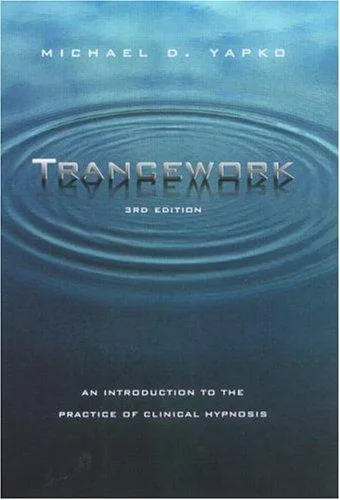
Michael D. Yapko’s *Trancework*, first appearing in 1984, offers a remarkably thorough and practical manual on hypnotic trance. Rather than indulging in sensationalism, Yapko presents a clear, step-by-step methodology for clinicians. His strength lies in demystifying the process, illustrating how trance is a natural, albeit focused, state of attention that can be cultivated. A particularly valuable section details the subtle art of suggestion, differentiating between direct and indirect approaches and their respective impacts. However, for the uninitiated reader, the sheer volume of clinical detail might feel overwhelming. The book assumes a certain level of familiarity with psychological principles, which could be a barrier for those outside therapeutic professions. Despite this, *Trancework* remains an indispensable guide for anyone serious about the practical application of hypnosis. It's a clinician's toolkit, meticulously assembled.
📝 Description
71
Michael D. Yapko's 1984 book, Trancework, details the mechanics and applications of hypnotic trance.
Published in 1984, Trancework offers a systematic examination of hypnotic trance, moving beyond surface-level descriptions to detail how these states are induced, maintained, and used in therapy and personal growth. Yapko presents a structured understanding of trance, covering the linguistic, behavioral, and cognitive elements involved.
The book is primarily for clinicians, therapists, and counselors who want to improve their hypnosis practice. Researchers in psychology and consciousness studies will also find its rigorous, empirically-based view of altered states valuable. Advanced students in related fields can benefit from its explanations and case examples.
Trancework appeared in 1984 during a time when hypnosis was regaining academic interest after periods of skepticism. Yapko's work contributed to this resurgence by providing a practical guide rooted in clinical experience. It aligned with psychotherapeutic shifts emphasizing experiential and cognitive-behavioral methods, a period when figures like Ernest Hilgard were still exploring hypnosis's dissociative aspects.
💡 Why Read This Book?
• Gain precise techniques for inducing and managing hypnotic states, moving beyond vague notions to understand the specific linguistic and behavioral protocols Yapko outlines from his 1984 text. • Learn to distinguish between various trance phenomena and their therapeutic applications, recognizing how Yapko categorizes them based on depth and focus. • Understand the crucial role of suggestion and client-centered utilization, as detailed in the book’s examination of therapeutic rapport and hypnotic language patterns.
⭐ Reader Reviews
Honest opinions from readers who have explored this book.
❓ Frequently Asked Questions
When was Michael D. Yapko's Trancework first published?
Michael D. Yapko's seminal work, Trancework, was first published in 1984, establishing it as an early influential text in the modern study of hypnotic trance.
What is the primary focus of Trancework by Michael D. Yapko?
The book's primary focus is the systematic exploration of hypnotic trance, detailing its induction, maintenance, and application, particularly within therapeutic contexts.
Is Trancework suitable for beginners in hypnosis?
While comprehensive, Trancework is dense with clinical detail. It is highly valuable for therapists and advanced students, but beginners might benefit from introductory materials before tackling its depth.
What key concepts are explored in Trancework?
Key concepts include the spectrum of trance phenomena, the utilization of client experiences, the art of suggestion (direct and indirect), and the importance of the therapeutic relationship in trance work.
Who is Michael D. Yapko?
Michael D. Yapko is a renowned psychologist and author specializing in hypnosis and strategic therapy, with Trancework being one of his foundational contributions since its 1984 release.
What historical period influenced Trancework's content?
Published in 1984, the book reflects a period of renewed academic interest in hypnosis, following earlier skepticism, and aligns with psychotherapeutic trends emphasizing experiential and cognitive approaches.
🔮 Key Themes & Symbolism
The Spectrum of Trance
Yapko meticulously maps the varied field of trance states, presenting them not as an all-or-nothing phenomenon but as a continuum of focused attention. He details how subtle shifts in awareness, concentration, and responsiveness characterize different levels of trance. This nuanced perspective allows practitioners to recognize and work with a wide range of client experiences, from mild relaxation to profound hypnotic states, as explored extensively since the book's 1984 publication.
Utilization and Rapport
A central tenet of Trancework is the principle of utilization – harnessing the client's existing experiences, beliefs, and even resistance as pathways into trance and therapeutic change. Yapko emphasizes that effective trance work is deeply collaborative, built on a strong therapeutic alliance. This approach respects the individual's internal world, making the process feel less imposed and more organic, a key element in successful hypnotic interventions discussed throughout the text.
The Art of Suggestion
The book dissects the mechanics of suggestion, differentiating between direct commands and indirect, permissive techniques. Yapko illustrates how the choice and phrasing of suggestions are critical, needing to be congruent with the client's frame of reference and the desired outcome. This detailed analysis moves beyond simplistic notions of suggestion, revealing its complexity and power when employed with precision and understanding, a core focus since its initial release.
Trance as Focused Attention
Contrary to popular misconceptions of hypnosis as sleep or unconsciousness, Yapko defines trance primarily as a state of heightened and focused attention. This conceptualization reframes the experience, emphasizing the active mental engagement of the individual. Understanding trance as a form of specialized concentration helps explain the process and highlights its potential for problem-solving and accessing inner resources, a perspective Yapko has consistently advocated.
💬 Memorable Quotes
Direct passages from the work, attributed to the author.
“Trance is an experience of focused attention and heightened awareness.”
— This core concept defines trance not as passive unconsciousness but as an active, concentrated mental state, highlighting its potential for directed therapeutic work.
“The most effective suggestions are those that fit the client's world.”
— This emphasizes the principle of utilization, stressing that therapeutic interventions, particularly hypnotic suggestions, must be tailored to the individual's unique perspective and beliefs.
“Therapeutic rapport is the fertile ground upon which trance grows.”
— This highlights the indispensable role of the client-therapist relationship, positing that trust and connection are foundational for successful hypnotic induction and exploration.
“Observe the client's responses to guide the deepening of trance.”
— This points to the dynamic and responsive nature of trance work, requiring the practitioner to be attentive to subtle cues and adapt techniques accordingly.
“Hypnosis is not about control, but about facilitating access.”
— This reframes the purpose of hypnosis away from domination and towards enabling the client to access their own internal resources and potential for change.
🌙 Esoteric Significance
Tradition
While primarily a clinical psychology text, *Trancework* engages with concepts that echo through various esoteric traditions, particularly those concerned with altered states of consciousness and mind-body integration. Its systematic approach to inducing and manipulating mental states can be seen as a secularized form of practices found in meditative or shamanic lineages, where focused attention and altered awareness are cultivated for insight or healing. It departs from traditional esoteric texts by grounding its methods in empirical observation and therapeutic outcomes, rather than purely metaphysical or spiritual frameworks.
Symbolism
The book doesn't rely heavily on overt esoteric symbolism but rather on the symbolic power inherent in the hypnotic process itself. The 'trance state' can be viewed as a symbolic gateway to the unconscious or subconscious mind, a liminal space where internal narratives can be re-authored. The 'suggestion' acts as a symbolic key, unlocking new perceptions or behavioral potentials. The therapeutic relationship itself becomes a symbolic container, representing safety and transformation.
Modern Relevance
Yapko's methodical approach to trance continues to influence contemporary therapeutic practices. Modern mindfulness-based therapies, acceptance and commitment therapy (ACT), and even certain forms of cognitive behavioral therapy (CBT) implicitly or explicitly draw upon the principles of focused attention and cognitive reframing that Yapko detailed. His work provides a robust foundation for understanding how internal states can be intentionally modulated for psychological well-being, remaining relevant for practitioners exploring consciousness and therapeutic change.
👥 Who Should Read This Book
• Licensed mental health professionals and medical practitioners seeking to integrate hypnosis into their clinical practice, benefiting from Yapko's detailed methodologies and therapeutic applications. • Graduate students in psychology, counseling, and related fields studying psychopathology and therapeutic interventions, gaining a foundational understanding of trance phenomena. • Researchers investigating consciousness, altered states of awareness, and psychophysiology, utilizing Trancework as a reference for empirical and clinical approaches to hypnosis.
📜 Historical Context
Michael D. Yapko's *Trancework*, first published in 1984, arrived at an important moment for the field of hypnosis. The preceding decades had seen significant fluctuations in its acceptance, with periods of intense interest followed by skepticism and even dismissal by mainstream psychology. By the early 1980s, however, a renewed scientific and clinical focus was emerging, partly driven by researchers like Ernest Hilgard, who continued to investigate the nature of hypnotic states, particularly concerning dissociation. Yapko's work contributed to this resurgence by providing a systematic, empirically-grounded, and highly practical manual for clinicians. It offered a clear alternative to more esoteric or dramatized portrayals of hypnosis, aligning with a broader trend in psychotherapy towards integrating experiential techniques with cognitive and behavioral frameworks. Its detailed approach provided a much-needed bridge between theoretical understanding and practical application, solidifying its place in the literature.
📔 Journal Prompts
The concept of trance as focused attention: How does this differ from your usual understanding?
Analyze a specific suggestion technique described by Yapko.
Reflection on the importance of therapeutic rapport in facilitating trance.
How can the 'spectrum of trance phenomena' be applied to everyday concentration?
Identify potential uses for indirect suggestion in communication outside therapy.
🗂️ Glossary
Trance
A state of focused attention and heightened awareness, often characterized by increased suggestibility and a subjective sense of altered experience. It is viewed not as sleep but as an active mental process.
Utilization
A therapeutic principle involving the incorporation of the client's existing experiences, behaviors, beliefs, or even resistance into the hypnotic process or therapeutic intervention.
Suggestion
An idea or instruction presented to an individual in a trance state, intended to influence their perceptions, feelings, thoughts, or behaviors. Can be direct or indirect.
Rapport
The harmonious relationship and mutual understanding established between the therapist and client, considered essential for effective therapeutic work, including hypnosis.
Pacing
Matching or mirroring aspects of the client's experience (e.g., breathing, posture, speech patterns) to build rapport and facilitate entry into a trance state.
Anchoring
The process of associating a specific internal state or response with an external cue (e.g., a touch, a word), allowing the state to be re-accessed later by triggering the cue.
Ideomotor response
Involuntary muscular movements that occur in response to an idea or suggestion, often used as a means of communication or confirmation within hypnosis.
🔮 Readers Also Liked
Browse all →









More by Michael D. Yapko
All books →





More Free Occult Philosophy Books
View all →