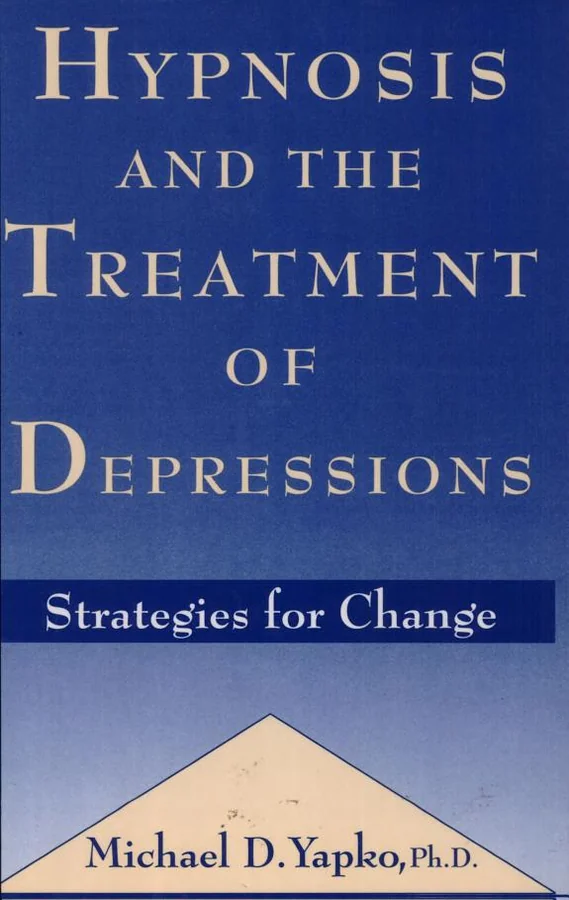
Hypnosis and the Treatment of Depressions
 73
73

Hypnosis and the Treatment of Depressions
Michael D. Yapko’s 1992 text, "Hypnosis and the Treatment of Depressions," serves as a robust, if somewhat dense, guide for clinicians. Its strength lies in its systematic approach, detailing not just the ‘what’ but the ‘how’ of applying hypnosis to depression, a topic often approached with less methodological rigor. Yapko’s insistence on integrating hypnotherapy within a comprehensive treatment framework, rather than presenting it as a panacea, is commendable. A particularly illustrative section details the construction of hypnotic suggestions tailored to combat specific depressive cognitions, such as hopelessness or low self-worth. However, the book’s 1992 publication date means its references to contemporary research are naturally dated, and the prose can be quite technical, potentially posing a barrier for those new to clinical hypnosis. Despite these limitations, Yapko’s work remains a valuable, practice-oriented resource for serious practitioners.
Verdict: A technically sound, albeit dated, manual for integrating hypnotherapy into depression treatment.
📝 Description
73
Michael D. Yapko published "Hypnosis and the Treatment of Depressions" in 1992.
This 1992 book by Michael D. Yapko details hypnotherapy's application to depressive disorders. It moves beyond simple uses, explaining how hypnotic techniques can join broader treatment plans. The book provides specific methods for patient assessment, crafting hypnotic suggestions, and handling therapy challenges. It serves as a technical guide for practitioners aiming to use the subconscious for psychological healing.
The intended readers are clinical psychologists, psychiatrists, psychotherapists, and other mental health professionals familiar with or interested in using hypnotherapy. Graduate students in psychology and counseling programs focusing on mood disorders or advanced therapeutic techniques will also find it valuable. Researchers studying hypnosis efficacy in mental health will find methodologies and theoretical bases here.
Published when psychodynamic and integrative approaches saw renewed interest, Yapko's work contributed to hypnosis's re-legitimization in clinical psychology. It presented hypnosis as a sophisticated tool for complex conditions, contrasting with dominant pharmacological or cognitive-behavioral methods.
While not strictly esoteric, Yapko's work on hypnosis taps into traditions that explore altered states of consciousness and the mind's subtle influences. Hypnosis, with roots in Mesmerism and early depth psychology, shares common ground with practices seeking to access deeper psychological layers beyond ordinary awareness. This book, by focusing on therapeutic change through hypnotic states, engages with the broader historical discussion of how the mind can be directed for healing, a theme present in many esoteric traditions that investigate consciousness and its potential.
💡 Why Read This Book?
• Learn specific hypnotic suggestion techniques for reframing depressive cognitions, as detailed in Yapko's 1992 text, allowing for personalized therapeutic interventions beyond generic advice. • Understand the historical placement of hypnotherapy in mental health treatment as discussed in the book’s context, differentiating it from earlier Mesmeric practices and contemporary approaches. • Gain practical knowledge on ego-strengthening techniques and future pacing, concepts explored in Yapko's work, to help patients build resilience and envision positive futures.
⭐ Reader Reviews
Honest opinions from readers who have explored this book.
❓ Frequently Asked Questions
What is the primary focus of Michael D. Yapko's "Hypnosis and the Treatment of Depressions"?
The book focuses on the application of hypnotherapy as a clinical tool for treating depressive disorders. It details specific techniques, strategies, and theoretical underpinnings for mental health professionals.
When was "Hypnosis and the Treatment of Depressions" first published?
The book was first published in 1992, making it a foundational text from that era of clinical psychology and hypnotherapy research.
Who is the intended audience for this book?
The primary audience consists of mental health professionals, including psychologists, psychiatrists, and therapists, who are trained in or wish to learn hypnotherapy for treating depression.
Does the book offer practical techniques for therapists?
Yes, it provides practical, step-by-step guidance on assessment, suggestion formulation, trance induction, and managing therapeutic challenges specific to depression.
How does Yapko position hypnosis in relation to other depression treatments?
Yapko advocates for integrating hypnotherapy into a broader, comprehensive treatment plan, rather than presenting it as a standalone cure, emphasizing its complementary role.
What historical period does the book reflect regarding hypnotherapy?
The book reflects the state of hypnotherapy in the early 1990s, aiming to legitimize its use for complex psychological conditions amidst evolving therapeutic landscapes.
🔮 Key Themes & Symbolism
Hypnotic Suggestion Reframing
The work details the precise construction and delivery of hypnotic suggestions aimed at altering the core negative beliefs and automatic thoughts characteristic of depression. This includes techniques for fostering hope, enhancing self-esteem, and challenging cognitive distortions, moving beyond simple affirmations to deeply embed new perspectives within the subconscious mind. It addresses how to tailor these suggestions to the individual's specific depressive symptomatology and cognitive landscape, emphasizing the power of focused, therapeutic language.
Ego-Strengthening Techniques
A significant theme is the application of hypnotherapy to bolster the patient's sense of self-efficacy and resilience. Yapko outlines methods for accessing and reinforcing internal resources, cultivating a stronger sense of identity, and developing coping mechanisms that can be utilized both within and outside the therapeutic setting. These techniques are crucial for empowering individuals struggling with the pervasive feelings of inadequacy and helplessness often associated with depression.
Integration with Psychotherapy
Yapko strongly advocates for viewing hypnotherapy not as an isolated modality but as an integrated component of a comprehensive treatment strategy. The book explores how hypnosis can augment traditional psychotherapeutic approaches, facilitate deeper therapeutic work, and enhance the patient's receptivity to other interventions. This perspective positions hypnosis as a sophisticated tool within the broader clinical toolkit for managing complex mental health conditions like depression.
Future Pacing and Goal Attainment
The text discusses the use of hypnotic techniques to help patients visualize and mentally rehearse successful outcomes and future states free from depressive symptoms. Future pacing involves guiding the patient to experience future scenarios where they are functioning effectively and contentedly, thereby creating a mental blueprint for recovery and reinforcing motivation towards achieving these goals. This proactive approach is vital for shifting focus from present suffering to future well-being.
💬 Memorable Quotes
Direct passages from the work, attributed to the author.
“Hypnosis can be utilized to access and modify maladaptive thought patterns associated with depression.”
— This highlights the core therapeutic function of hypnosis discussed in the book: not just relaxation, but active intervention at the cognitive level to dismantle the negative thinking that fuels depression.
“The construction of hypnotic suggestions requires careful tailoring to the individual's specific needs and cognitive landscape.”
— This emphasizes Yapko's meticulous approach, stressing that effective hypnotherapy for depression is personalized and precise, moving beyond generic scripts to address unique psychological structures.
“Ego-strengthening techniques are crucial for bolstering a patient's sense of self-efficacy.”
— This points to a key therapeutic goal: empowering the individual by reinforcing their internal resources and belief in their own capabilities, counteracting the helplessness often felt in depression.
“Hypnotherapy should be viewed as an integrated component of a comprehensive treatment strategy for depression.”
— This underscores Yapko's pragmatic view, positioning hypnosis as a valuable addition to, rather than a replacement for, other established therapeutic modalities in treating mood disorders.
“Future pacing allows patients to mentally rehearse states of well-being and goal achievement.”
— This illustrates a specific technique where hypnosis is used proactively to help clients envision and internalize successful recovery and future functioning, building a positive trajectory.
🌙 Esoteric Significance
Tradition
While "Hypnosis and the Treatment of Depressions" is primarily a clinical psychology text, its techniques touch upon esoteric traditions focused on mind-body connection and inner transformation. It aligns loosely with Western esoteric practices that explore altering consciousness states for healing and self-mastery, albeit framed within a secular, scientific paradigm. Unlike overtly spiritual traditions, Yapko's work grounds hypnotic phenomena in psychological and neurological processes, departing from mystical interpretations while still harnessing the power of the subconscious, a realm often explored in Gnostic or Hermetic thought.
Symbolism
The book implicitly utilizes symbols related to the 'inner world' and 'transformation'. The concept of the 'subconscious mind' itself acts as a symbolic landscape – a deep, often hidden realm where core beliefs reside and can be reshaped. Suggestions function as symbolic keys, unlocking potentials or re-framing existing narratives. The therapeutic trance state can be seen as a symbolic journey inward, facilitating a return to a more integrated and functional self, symbolizing a return from a 'shadow' state associated with depression.
Modern Relevance
Contemporary practices in mindfulness-based cognitive therapy (MBCT) and Acceptance and Commitment Therapy (ACT) echo Yapko's emphasis on altering cognitive patterns and accessing inner resources, even if they don't use formal hypnosis. Therapists exploring somatic experiencing or psychodynamic approaches that study the unconscious also find resonance with Yapko's foundational work on accessing deeper psychological layers. His meticulous approach to suggestion and trance continues to inform clinicians seeking to deepen their therapeutic efficacy through mind-body integration.
👥 Who Should Read This Book
• Clinical psychologists and psychotherapists seeking to integrate evidence-based hypnotherapy techniques into their treatment of depressive disorders, gaining practical strategies for suggestion formulation and trance management. • Graduate students in counseling and psychology programs specializing in mood disorders or advanced therapeutic modalities, looking for a foundational text on the clinical application of hypnosis. • Researchers investigating the efficacy of non-pharmacological interventions for depression, requiring detailed methodologies and theoretical frameworks for hypnotic interventions.
📜 Historical Context
Michael D. Yapko's "Hypnosis and the Treatment of Depressions," published in 1992, arrived at an important juncture for hypnotherapy. While hypnosis had a long, checkered past, marked by figures like Franz Mesmer in the late 18th century and later associations with stage shows, the early 1990s saw a resurgence of interest in its clinical applications within mainstream psychology. This period was characterized by a growing movement towards integrative psychotherapy, seeking to combine techniques from various schools of thought. Yapko’s work contributed significantly by presenting hypnotherapy not as an esoteric curiosity, but as a scientifically grounded, adaptable tool for treating complex disorders like depression. This contrasted with the increasing dominance of purely biomedical or strictly cognitive-behavioral approaches. While not facing direct censorship, hypnotherapy in general often contended with skepticism from segments of the medical establishment wary of its historical baggage and perceived lack of empirical validation, a skepticism Yapko's detailed, practice-oriented approach aimed to counter.
📔 Journal Prompts
The construction of hypnotic suggestions: How can tailored suggestions address specific depressive cognitions?
Ego-strengthening techniques: What internal resources can be identified and reinforced for greater self-efficacy?
Future pacing: How does visualizing future well-being impact present motivation?
The therapeutic alliance in hypnosis: How does trust facilitate deeper trance work for depression?
Maladaptive thought patterns: How can hypnotic states be used to challenge and reframe these cycles?
🗂️ Glossary
Hypnotic Trance
An altered state of consciousness characterized by focused attention, heightened suggestibility, and a reduced awareness of peripheral stimuli, utilized in therapy to access subconscious processes.
Suggestion
A therapeutic communication intended to influence a patient's perceptions, feelings, or behaviors, delivered during a hypnotic state to promote healing or change.
Ego-Strengthening
Hypnotic techniques aimed at reinforcing a patient's sense of self, competence, and resilience, counteracting feelings of inadequacy often present in depression.
Future Pacing
A hypnotic technique where the patient mentally rehearses future scenarios of success or well-being, consolidating therapeutic gains and promoting positive anticipation.
Cognitive Distortions
Irrational or biased ways of thinking that contribute to negative emotions, such as catastrophizing or all-or-nothing thinking, which hypnotherapy aims to modify.
Maladaptive Thought Patterns
Persistent, ingrained ways of thinking that are detrimental to mental health and well-being, often a central target in the treatment of depression.
Therapeutic Alliance
The collaborative relationship between therapist and patient, crucial for effective treatment, including hypnotherapy, built on trust and mutual understanding.
This book appears in 1 collection
🔮 Readers Also Liked
Browse all →









From the “Hypnosis” Collection
View all →








More Free Occult Philosophy Books
View all →