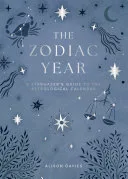
The Zodiac Year
 72
72

The Zodiac Year
Alison Davies' "The Zodiac Year" presents a refreshing perspective, grounding astrological archetypes in their literal celestial forms. The strength lies in its systematic, month-by-month approach, detailing the myths and lore of each zodiac constellation. Davies avoids the more esoteric jargon that can alienate newcomers, offering instead a clear, narrative-driven exploration. A minor limitation is the occasional brevity when discussing complex myth cycles; one wishes for more detailed exegesis in certain chapters, such as the intricacies of the Virgo constellation's associations with Demeter. However, the accessible prose and well-structured information, particularly the mapping of celestial placements, make it a valuable resource. The book successfully bridges the gap between astronomical observation and astrological interpretation, offering a solid framework for understanding the zodiac's origins. It's a commendable effort for those seeking a more tangible connection to the stars.
📝 Description
72
Published in 2024, Alison Davies' The Zodiac Year connects monthly zodiac constellations to their ancient myths and stellar origins.
This volume details each of the twelve zodiac constellations month by month. It maps their positions in the sky and dedicates separate chapters to each sign. The book unfolds the myths and legends tied to these star patterns, along with the traits associated with people born under them. It functions as a practical guide to understanding astrological archetypes by examining their celestial sources.
The Zodiac Year is for readers seeking a deeper, more grounded view of astrology, moving beyond simple horoscopes. It will interest those curious about the historical and mythological foundations of the zodiac. Amateur astronomers who want to link celestial bodies with human personality will find it useful, as will practitioners of esoteric arts wanting to add a monthly astronomical focus to their studies. It is for anyone eager to observe the night sky with fresh intention.
Published in 2024, this work arrives during a renewed interest in astrology and esoteric studies. Davies' book focuses on the constellations themselves and their historical narratives. This approach aligns with a trend that seeks to ground modern astrology in its Hellenistic and Mesopotamian roots, emphasizing the observable sky and its associated mythologies over purely predictive almanacs. It offers a bridge between scholarly inquiry and accessible exploration of astrological traditions.
💡 Why Read This Book?
• Gain a concrete understanding of astrological signs by exploring the specific myths and legends tied to each constellation, such as the tales surrounding Orion's prominence in winter skies, offering a narrative depth absent in generic astrological texts. • Learn to map the celestial placements of the zodiac constellations, enhancing your observational skills and providing a tangible connection to the astrological year that moves beyond abstract concepts. • Discover the historical and mythological roots of zodiacal traits, connecting specific constellation lore, like the story of the Pleiades, to personality attributes, enriching your astrological framework with ancient wisdom.
⭐ Reader Reviews
Honest opinions from readers who have explored this book.
❓ Frequently Asked Questions
What is the primary focus of 'The Zodiac Year'?
The book provides a month-by-month exploration of the zodiac constellations, detailing their myths, legends, and celestial placements to deepen the understanding of astrological traits and influences.
Who is the author, Alison Davies, and what is her background?
Alison Davies is an author known for works on astrology and mythology. Her background typically involves research into ancient cultures and their celestial traditions, aiming to make these subjects accessible.
When was 'The Zodiac Year' first published?
The book was first published on October 31, 2024, making it a recent contribution to the field of esoteric and astrological literature.
Does 'The Zodiac Year' discuss the twelve signs of the zodiac?
Yes, the book is structured around the twelve signs of the zodiac, dedicating specific chapters to each constellation, its myths, and associated traits.
What kind of astrological approach does this book take?
It takes an approach that emphasizes the astronomical and mythological origins of astrology, connecting the physical constellations and their ancient stories to astrological interpretations.
Is 'The Zodiac Year' suitable for beginners in astrology?
Yes, the book's accessible language and focus on narrative make it suitable for beginners, while its detailed exploration of constellation lore also offers depth for more experienced students.
🔮 Key Themes & Symbolism
Constellation Mythology
This theme centers on the ancient stories and legends associated with each of the twelve zodiac constellations. The book explores narratives passed down through generations, often linking figures from Greek mythology and other ancient traditions to specific star patterns. For instance, the myths surrounding Hercules or the Pleiades are examined not just as stories, but as foundational elements that inform the astrological character attributed to the respective zodiac signs. This approach emphasizes the narrative power of the cosmos and its role in shaping human understanding of celestial influence.
Celestial Mapping
The book emphasizes the physical location and seasonal appearance of zodiac constellations in the night sky. It provides a framework for understanding how these celestial bodies are positioned throughout the year, connecting astronomical observation with astrological interpretation. This involves detailing when each constellation is most visible and its general path across the sky. The intent is to foster a more grounded, observational practice of astrology, moving beyond abstract symbols to a direct engagement with the visible heavens.
Zodiacal Archetypes
This theme examines the character traits and symbolic meanings attributed to individuals born under each zodiac sign. Davies connects these archetypes directly to the myths and celestial configurations of their corresponding constellations. The book posits that understanding the underlying stellar narrative and astronomical presence offers a richer, more nuanced comprehension of these personality characteristics, moving beyond simplistic descriptions to explore the deeper archetypal resonances derived from the stars.
Astrology as a Yearly Cycle
The work frames astrological study as an ongoing, cyclical process tied to the Earth's annual journey around the Sun. It encourages readers to engage with the zodiac on a month-by-month basis, aligning personal reflection and understanding with the seasonal appearance of the constellations. This perspective highlights the dynamic nature of astrological influence and promotes a consistent, evolving relationship with the celestial calendar throughout the year.
💬 Memorable Quotes
Direct passages from the work, attributed to the author.
“Each constellation tells a story written in starlight, a narrative that shapes our understanding of the zodiac.”
— This statement captures the book's core premise: that the myths and legends of the constellations are not mere embellishments but integral components of astrological meaning, offering a narrative foundation for zodiacal interpretation.
“Mapping the heavens month by month reveals the cyclical dance of the zodiac.”
— This highlights the book's emphasis on practical, observational astrology. It suggests that charting the stars' movements throughout the year provides a tangible and dynamic understanding of the zodiac's influence.
“Understanding the celestial placement offers a grounded perspective on astrological energies.”
— This emphasizes the book's commitment to bridging astronomy and astrology. It suggests that knowing where the constellations are in the sky provides a concrete basis for understanding astrological influences.
💡 Key Ideas
Editorial paraphrase of the work's core concepts — not direct quotes.
The traits we associate with zodiac signs are traces of ancient myths.
This paraphrase points to the book's method of connecting personality characteristics directly to the mythological figures and stories linked to each zodiac constellation, asserting a historical and narrative origin for astrological symbolism.
Embrace the cosmos not just as a symbol, but as a living, narrative sky.
This quote encourages a dynamic and engaged relationship with astrology, viewing the night sky as a source of ongoing stories and influences rather than static, abstract concepts.
🌙 Esoteric Significance
Tradition
This work draws from the Western Esoteric Tradition, specifically its astrological branches, which have roots in Hellenistic Egypt and later Mesopotamian practices. It fits within a lineage that views celestial bodies and patterns as significant influences on terrestrial affairs and human psychology. Unlike more Kabbalistically or Theosophically inclined texts, Davies' focus remains tightly on the astronomical and mythological underpinnings of the zodiac, presenting a more direct, less allegorically layered interpretation of these ancient systems.
Symbolism
Key symbols include the constellations themselves, each representing archetypal figures or events from mythology (e.g., Aries as the Ram, Taurus as the Bull). The celestial placement is also symbolic, representing the cyclical journey of the Sun and Earth, and the seasonal unfolding of energies. The book interprets these symbols not as abstract representations but as potent forces with direct correlations to human experience and personality, drawing meaning from both their visual form and narrative context.
Modern Relevance
Contemporary practitioners of astrology, particularly those interested in archetypal astrology or the history of the craft, find value in Davies' work. It appeals to modern psychological approaches that seek deeper symbolic meaning, while also appealing to those engaged in comparative mythology or ancient history studies. Thinkers and educators who advocate for a more grounded, observational, and historically informed approach to astrology can utilize this text as a foundational resource for teaching and practice.
👥 Who Should Read This Book
• Students of Western Astrology seeking to understand the mythological and astronomical origins of the zodiac signs, moving beyond generalized horoscope interpretations. • Enthusiasts of ancient mythology and comparative religion interested in how celestial bodies influenced early cultures and belief systems, particularly regarding stellar lore. • Amateur astronomers curious about connecting their observations of the night sky to the collection of human meaning and symbolism associated with constellations.
📜 Historical Context
Published in 2024, "The Zodiac Year" emerges within a contemporary landscape where astrological interest has seen a significant resurgence, often referred to as the "New Age" movement's ongoing evolution. This period is marked by a diversification of astrological practice, with many seeking to reconnect with older, more textually-grounded traditions. Davies' work aligns with this trend by focusing on the direct mythological and astronomical foundations of the zodiac, harkening back to Hellenistic and Mesopotamian astrological roots. This contrasts with purely psychological astrology or the more generalized, often simplified, horoscopes found in popular media. While not engaging directly with specific contemporaries in its text, the book participates in a broader intellectual current that values historical accuracy and symbolic depth in esoteric studies, a movement that gained traction in the late 20th century with figures like Nicholas Campion exploring the history of astrology. The reception of such works generally caters to an audience looking for substance beyond ephemeral trends.
📔 Journal Prompts
The constellation myths associated with your Sun, Moon, or Rising sign.
Celestial placements of the zodiac and their seasonal significance.
Ancient legends linked to the Virgo constellation and its traits.
Personal reflections on the archetypal energies of a specific zodiac sign explored this month.
The connection between the Pleiades star cluster and its attributed symbolism.
🗂️ Glossary
Constellation
A group of stars forming a recognizable pattern that is traditionally named after its apparent form or identified with a mythological figure or creature.
Zodiac
An area of the sky divided into twelve equal parts, each associated with a constellation through which the Sun, Moon, and planets appear to pass over the course of a year.
Celestial Placement
The specific position of a star, planet, or constellation in the night sky as observed from Earth, often described using astronomical coordinates or seasonal visibility.
Mythology
A collection of myths, especially one belonging to a particular religious or cultural tradition; the study of myths.
Archetype
A very typical example of a certain person or thing; in psychology and mythology, a universal, archaic pattern or image that derives from the collective unconscious.
Esoteric
Intended for or likely to be understood by only a small number of people with a specialized knowledge or interest; relating to occult or secret knowledge.
Hellenistic Period
The period of Mediterranean and Near Eastern history between the death of Alexander the Great (323 BC) and the emergence of the Roman Empire (c. 31 BC).