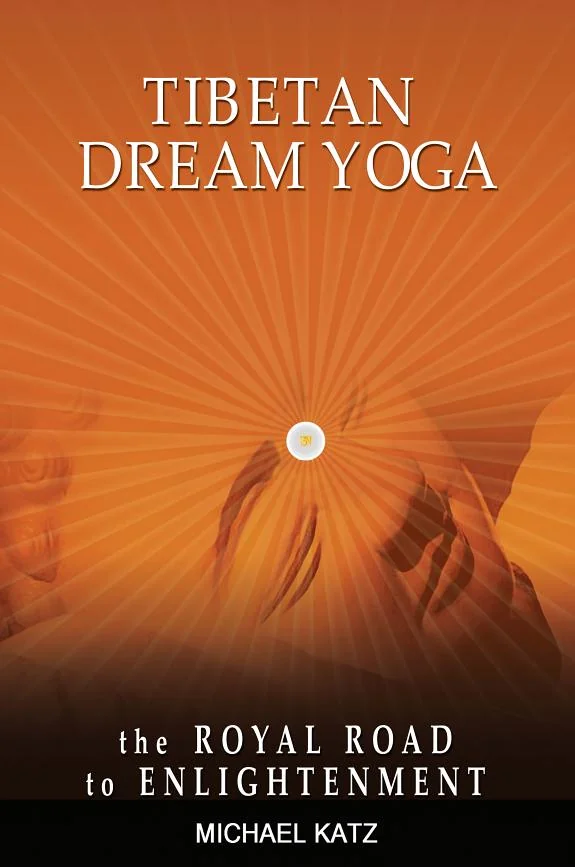
Tibetan Dream Yoga
 81
81

Tibetan Dream Yoga
Michael Katz’s Tibetan Dream Yoga attempts a much-needed recalibration of how we perceive our nocturnal narratives. He rightly challenges the reductionist views prevalent in some contemporary scientific circles, which, following certain interpretations of Freudian thought, tend to see dreams solely as the residue of waking anxieties. The book’s strength lies in its diligent effort to synthesize disparate threads of dream lore and practice, offering a more expansive framework. However, at times, the integration of these threads feels more like an academic compilation than a lived exploration, lacking the visceral immediacy one might expect from a text on such an intimate subject. The discussion around recognizing the 'dreaming self' is particularly compelling, highlighting the potential for conscious engagement within the dream state. Ultimately, Katz provides a valuable counterpoint to dream nihilism, urging readers to reconsider the profound possibilities held within sleep.
📝 Description
81
Michael Katz's Tibetan Dream Yoga argues dreams are vital for personal discovery and spiritual growth.
This book addresses the modern tendency to dismiss the significance of dreams, aiming to re-establish them as a crucial area for personal insight and spiritual development. It gathers information on dreams' functions, meanings, and their capacity for transformation. The author contrasts this view with current scientific theories that often interpret dreams as mere byproducts of anxiety or random neurological activity. Katz presents dreams as a meaningful field for self exploration.
Tibetan Dream Yoga is for those interested in the esoteric aspects of consciousness, especially individuals who find current psychological or scientific explanations for dreams lacking. It will appeal to readers seeking active methods to engage with their dream lives, moving beyond simple recall. Those curious about how different cultures, particularly Eastern contemplative traditions, view dreams will find substantial content here.
This work connects to a long tradition that views dreams as gateways to deeper realities. Unlike post-Enlightenment empirical approaches that often reduce dreams to mechanistic explanations, this book draws on spiritual and philosophical lineages that have always considered the dream state a significant site for consciousness exploration. It stands against reductionist views, emphasizing the potential for personal discovery within the dream experience.
💡 Why Read This Book?
• Gain practical techniques for achieving dream lucidity, drawing on methods discussed in relation to the *Tibetan Dream Yoga tradition*, allowing for conscious navigation of your inner landscape. • Understand dreams as symbolic language, moving beyond Freudian interpretation to explore how dream imagery can illuminate deeper psychological and spiritual states, as detailed in the book's analysis of dream symbolism. • Reframe your perspective on sleep, viewing it not as a passive state but as an active opportunity for personal growth and insight, a core tenet Katz revisits when contrasting his views with early 20th-century psychological theories.
⭐ Reader Reviews
Honest opinions from readers who have explored this book.
❓ Frequently Asked Questions
What is the core philosophy behind Tibetan Dream Yoga as presented by Michael Katz?
Katz presents Tibetan Dream Yoga as a practice that views dreams not as random neurological events but as a potent field for consciousness exploration and spiritual realization. It emphasizes achieving lucidity within dreams to gain insight and potentially influence the dream state.
How does Katz's work differ from modern scientific interpretations of dreams?
Katz contrasts his approach with theories that dismiss dreams as mere byproducts of anxiety or inconsequential mental activity. He seeks to balance the slate by highlighting the transcendent possibilities and deeper meanings dreams can offer, a perspective often overlooked by purely mechanistic explanations.
Who was Sigmund Freud and what was his influence on dream interpretation?
Sigmund Freud, an Austrian neurologist, was a pioneer in psychoanalysis. His 1900 book 'The Interpretation of Dreams' proposed that dreams are often disguised fulfillments of repressed wishes, significantly influencing Western thought on the subject, though Katz argues against a solely psychoanalytic view.
What does it mean to achieve lucidity in dreams?
Dream lucidity refers to the state of becoming aware that one is dreaming while the dream is still occurring. This awareness can allow the dreamer to exert a degree of control over the dream narrative, characters, and environment.
Does the book offer specific practices for dream recall or lucidity?
Yes, the book consolidates information and explores various methods and concepts related to dream recall and the attainment of lucidity within the dream state, drawing from esoteric traditions.
When was Tibetan Dream Yoga first published?
Michael Katz's 'Tibetan Dream Yoga' was first published on November 1, 2011, offering contemporary readers access to these ancient practices.
🔮 Key Themes & Symbolism
The Significance of Dreams
This book challenges the modern tendency to dismiss dreams as inconsequential byproducts of anxiety or neurological noise. Katz argues that dreams represent a vital field for exploration, offering clear insights into the self and the nature of reality. He consolidates information from various traditions to present dreams as a gateway to understanding consciousness, contrasting this view with mechanistic theories that emerged in the wake of early 20th-century psychology.
Dream Lucidity and Control
A central theme is the concept of dream lucidity – the awareness of dreaming while in the dream state. The work explores the potential for conscious engagement within dreams, suggesting that once lucidity is achieved, individuals may influence or direct their dream experiences. This aspect highlights the active, rather than passive, nature of the dreaming mind and its capacity for intentional exploration.
Symbolism and Inner Meaning
Katz posits that dream content is not random but carries symbolic meaning relevant to the dreamer's psychological and spiritual landscape. The book encourages a deeper analysis of dream imagery, moving beyond simplistic interpretations to uncover the messages and potentials embedded within the dream narrative. This approach views dreams as a personal oracle or a mirror reflecting inner truths.
Transcendence Through Dreaming
The ultimate possibility explored is that of transcendence via dream practices. By engaging consciously with the dream state, individuals can potentially expand their awareness beyond ordinary waking limitations. The book positions dream yoga not merely as a tool for self-understanding but as a path toward spiritual growth and altered states of consciousness.
💬 Memorable Quotes
Direct passages from the work, attributed to the author.
“In contrast to the aforementioned quasi scientific...”
— This truncated phrase from the original blurb signals Katz's intention to pivot from discussing dismissive scientific views to introducing alternative, likely more esoteric or philosophical, perspectives on dreams that he will explore.
💡 Key Ideas
Editorial paraphrase of the work's core concepts — not direct quotes.
The most common dreams are typically the product of our anxieties and preoccupations.
This paraphrased concept from the original blurb sets up Katz's argument by acknowledging a common, reductionist view of dreams often attributed to Freudian psychology, which he intends to challenge and expand upon.
Consolidating information as to the function and meaning of dreams, and the transcendent possibilities they represent.
This paraphrased statement from the blurb expresses the book's ambitious goal: to synthesize diverse knowledge on dreams and present them as avenues for spiritual and conscious expansion, countering purely scientific or psychological dismissals.
Balance the slate against mechanistic type theories by contemporary scientists hypothesizing the inconsequentiality of all dreams.
This paraphrased concept highlights Katz's critical stance. He aims to provide a counter-narrative to scientific theories that label dreams as meaningless, advocating for their inherent significance and potential for deeper understanding.
The prevalence of common dreams has spawned mechanistic type theories.
This paraphrased observation from the original blurb points to a perceived trend in modern science where the recurrence of certain dream types is used to justify theories of dream insignificance, a premise Katz seeks to question.
🌙 Esoteric Significance
Tradition
This work engages with the esoteric lineage of Tibetan Buddhism, specifically its contemplative practices related to dream states. Within this tradition, dreams are not merely psychological phenomena but are seen as a crucial dimension of consciousness that can be cultivated for spiritual realization. Katz's exploration fits within a broader spectrum of esoteric thought that views altered states of consciousness, including dreams, as pathways to understanding ultimate reality and the nature of the self.
Symbolism
Key symbols explored often relate to the nature of perception and illusion within the dream state. Motifs may include the transformation of dream imagery, the recognition of the dream body, and the illusory quality of all phenomena, whether waking or dreaming. These symbols serve to deconstruct the dreamer's attachment to conventional reality and to highlight the potential for liberation through understanding the mind's own creative power.
Modern Relevance
In contemporary esoteric circles, Katz's work contributes to the ongoing dialogue about consciousness, lucid dreaming, and contemplative practices. Thinkers and practitioners interested in integrating Eastern meditative techniques with Western psychological frameworks find resonance here. It aligns with modern movements exploring non-ordinary states of consciousness for personal growth and spiritual development, often drawing parallels with practices found in shamanism and Western esotericism.
👥 Who Should Read This Book
• Individuals interested in exploring the spiritual and psychological dimensions of dreaming, particularly those seeking alternatives to purely scientific or Freudian interpretations of dream content. • Practitioners of meditation and mindfulness who wish to extend their awareness into the dream state and utilize dreams for personal insight and spiritual growth. • Students of comparative religion and esoteric traditions looking for a focused examination of dream practices within a specific Eastern contemplative framework.
📜 Historical Context
Michael Katz's *Tibetan Dream Yoga* emerged in 2011, a period marked by a resurgence of interest in consciousness studies and alternative spiritual practices, yet still heavily influenced by the legacy of early 20th-century psychoanalysis. Sigmund Freud's important work, *The Interpretation of Dreams* (1899), had established dreams as a key subject for psychological inquiry, albeit often through the lens of wish fulfillment and repressed desires. By the turn of the 21st century, however, many scientific interpretations had shifted towards more neurobiological or cognitive models, sometimes deeming dreams epiphenomenal. Katz’s book positions itself as a corrective, drawing from traditions that have long revered dream states for spiritual insight, a lineage distinct from both Freudian psychoanalysis and contemporary neuroscience. While Freud's theories were widely adopted, they also faced criticism and were challenged by other schools of thought, such as Carl Jung's analytical psychology, which emphasized archetypal symbolism in dreams. Katz's work, by contrast, looks eastward, engaging with Tibetan Buddhist contemplative practices, offering a bridge between ancient wisdom and modern seekers.
📔 Journal Prompts
The concept of dream lucidity and its implications for waking consciousness.
Reflections on recurring dream symbols and their potential personal meaning.
The contrast between Freudian dream theory and the transcendent possibilities discussed.
Exploring the 'dream body' and its relationship to the waking self.
The function of dreams as presented by Katz versus common anxieties.
🗂️ Glossary
Dream Yoga
A set of contemplative practices originating in Tibetan Buddhism, aimed at utilizing the dream state for spiritual insight, lucidity, and realization of the mind's nature.
Lucid Dreaming
The state of being aware that one is dreaming while the dream is occurring, often allowing for a degree of conscious control over the dream narrative and environment.
Mechanistic Theories (of Dreams)
Explanations of dreams that view them as purely biological or psychological byproducts, often emphasizing their role in processing waking anxieties or as random neural activity, thereby dismissing deeper meaning.
Sigmund Freud
An influential Austrian neurologist and the founder of psychoanalysis, known for his theories on dream interpretation, which often focused on repressed desires and wish fulfillment.
Transcendence
In this context, refers to the experience of going beyond ordinary limitations of consciousness or reality, often through spiritual practices, including the cultivation of dream states.
Dream Content
The actual imagery, narrative, emotions, and sensory experiences that occur within a dream. The interpretation of this content is central to understanding dream significance.
Esoteric
Relating to or accessible only by a small number of people with a specialized knowledge or interest; often pertaining to mystical or hidden spiritual teachings.
This book appears in 1 collection
🔮 Readers Also Liked
Browse all →









From the “Dream Yoga” Collection
View all →







More Free Occult Philosophy Books
View all →