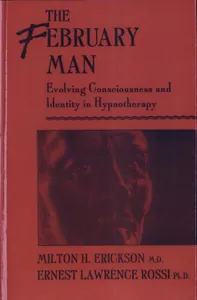
Thomas and the Gospels
 74
74

Thomas and the Gospels
Mark S. Goodacre’s *Thomas and the Gospels* offers a refreshing, critical perspective on the perennial debate concerning the Gospel of Thomas's relationship to the Synoptic Gospels. Rather than rehashing familiar arguments, Goodacre meticulously dissects the scholarly assumptions that have long underpinned theories of direct dependence. He compellingly argues against the straightforward notion that Thomas served as a primary source for Matthew and Luke, a position that has, at times, felt overly entrenched in some academic circles.
A significant strength lies in Goodacre's rigorous textual analysis, particularly his examination of the distinct collection of sayings in Thomas and their potential parallels. His critique of the so-called 'Q hypothesis' and its implications for understanding Gospel development is sharp and well-reasoned. However, the book's dense academic prose, while precise, may present a barrier for readers not already steeped in New Testament textual criticism. The focus remains squarely on scholarly debate, occasionally at the expense of broader theological or historical implications for early Christian communities. Nevertheless, *Thomas and the Gospels* is an essential, albeit challenging, contribution to understanding the complex textual landscape of early Christianity.
📝 Description
74
Mark S. Goodacre's 2012 book challenges direct source claims for the Gospel of Thomas.
Thomas and the Gospels, published in 2012, examines the Gospel of Thomas and its links to the canonical Gospels. Mark S. Goodacre moves past the idea that the Gospel of Thomas directly supplied material for Matthew and Luke. Instead, he considers a more complex academic discussion about these texts. This book is for students of early Christianity, New Testament scholars, and anyone interested in the historical Jesus or the variety of early Christian writings. It is not a devotional text, but a critical analysis of ancient documents.
The work arises from the ongoing scholarly debate about the Synoptic Problem and how the Gospels originated. For many years, scholars favored the 'Q hypothesis,' which suggested a lost sayings gospel (Q) served as a source for Matthew and Luke. Goodacre's research engages with this established theory. He proposes different or additional ways to understand the textual connections between the Gospels and texts like the Gospel of Thomas. The book analyzes arguments for and against the 'Thomas as source' idea, looking at specific passages and language. It considers how different source theories affect our understanding of early Christian thought and the historical Jesus. The distinct theology of Thomas compared to the canonical Gospels is also discussed.
This book engages with the study of early Christian literature, particularly texts outside the canonical New Testament. The Gospel of Thomas, a collection of sayings attributed to Jesus, represents a significant strand of early Christian tradition that developed alongside, and sometimes in dialogue with, the texts that would become the standard Gospels. Its study falls within the broader field of Gnosticism and related movements, which often preserved alternative interpretations and traditions about Jesus and his teachings. Goodacre's work seeks to clarify the historical and literary connections between these diverse early Christian writings, situating the Gospel of Thomas within its historical milieu.
💡 Why Read This Book?
• Understand the scholarly debate around the Gospel of Thomas's origins, moving beyond simplistic source theories and engaging with the nuances of the 2012 publication date's academic context. • Learn to critically analyze textual evidence in early Christian literature, applying Goodacre's methods to evaluate claims about relationships between texts like Thomas, Matthew, and Luke. • Grasp the limitations of the Q hypothesis and alternative models proposed by Goodacre, offering a deeper appreciation for the complexity of Gospel formation.
⭐ Reader Reviews
Honest opinions from readers who have explored this book.
❓ Frequently Asked Questions
What is the primary argument of Mark S. Goodacre's *Thomas and the Gospels*?
The book's central argument challenges the prevailing scholarly view that the Gospel of Thomas directly influenced the canonical Gospels of Matthew and Luke. Goodacre proposes a more complex relationship, questioning the assumptions behind common source-criticism theories.
When was *Thomas and the Gospels* first published?
Mark S. Goodacre's *Thomas and the Gospels* was first published in 2012, placing it within a specific period of ongoing New Testament scholarship.
Who is Mark S. Goodacre?
Mark S. Goodacre is a theologian and scholar specializing in the New Testament, particularly the Synoptic Gospels and the Gospel of Thomas. His work is recognized for its critical approach to textual analysis.
Does this book suggest the Gospel of Thomas is historically accurate?
The book focuses on textual relationships and scholarly theories of Gospel origins, not on verifying the historical accuracy of any particular saying or event within the Gospels. It examines *how* these texts might have been composed and related.
What is the 'Q hypothesis' mentioned in relation to this book?
The Q hypothesis posits a now-lost collection of Jesus' sayings (designated 'Q') that served as a source for both the Gospel of Matthew and the Gospel of Luke. Goodacre's work critically engages with this theory.
Is this book suitable for someone new to the Gospel of Thomas?
While informative, the book assumes a certain level of familiarity with New Testament scholarship and textual criticism. Readers new to the Gospel of Thomas might benefit from introductory materials first.
🔮 Key Themes & Symbolism
Source Criticism of Gospels
The work critically examines the methodologies used to determine the literary relationships between the Gospels. Goodacre scrutinizes how scholars have historically posited the Gospel of Thomas as a source, particularly in relation to the Synoptic Problem. He challenges established hypotheses, suggesting that the perceived parallels might be explained by alternative models of transmission and composition, rather than direct borrowing from Thomas into Matthew and Luke.
The Gospel of Thomas's Uniqueness
Goodacre highlights the distinct nature of the Gospel of Thomas as a collection of sayings, contrasting its structure and content with the narrative Gospels. He analyzes the theological implications of Thomas's focus on esoteric knowledge and the sayings themselves, arguing that its independence from canonical narrative traditions is a crucial factor in understanding its origins and influence (or lack thereof).
Scholarly Debate and Hypotheses
This book is deeply embedded in the academic discourse surrounding early Christian literature. It directly engages with prominent scholars and their theories, particularly regarding the Q hypothesis. Goodacre’s contribution lies in his reframing of the debate, pushing for a re-evaluation of existing assumptions and encouraging new avenues of inquiry into how the Gospels came to be.
Textual Relationships
The core of Goodacre's analysis revolves around establishing and questioning textual relationships. He meticulously compares specific sayings and their variations across different early Christian texts. The book demonstrates the challenges inherent in proving direct literary dependence and advocates for a more cautious and nuanced approach to identifying how early Christian authors may have utilized and adapted existing traditions.
💬 Memorable Quotes
Direct passages from the work, attributed to the author.
“The Gospel of Thomas is not a primitive source for Matthew and Luke.”
— This is a direct challenge to a long-held, though not universally accepted, scholarly position. It suggests that the perceived similarities between Thomas and the Synoptics are better explained by other factors than direct borrowing from Thomas into the canonical texts.
“The Q hypothesis has become a default explanation, but it is not the only possibility.”
— Goodacre questions the unquestioned acceptance of the Q hypothesis as the sole explanation for shared material between Matthew and Luke. He implies that other models of textual transmission or common oral traditions might account for these similarities.
“Parallels can be explained by common traditions or later agreements, not solely by direct dependence.”
— This interpretation highlights Goodacre's view that similarities between texts don't automatically prove one copied from the other. He suggests that shared cultural or religious backgrounds, or even agreements made after the texts were initially formed, could account for resemblances.
“We need to rethink the presuppositions of Gospel source criticism.”
— This calls for a fundamental re-examination of the established methods and assumptions within the field of Gospel studies. Goodacre argues that current approaches may be leading to flawed conclusions about the Gospels' origins.
“The distinct nature of Thomas's sayings collection demands a different approach.”
— This emphasizes that the Gospel of Thomas, primarily a collection of sayings rather than a narrative, requires unique analytical tools. Its structure and content should not be forced into frameworks designed for narrative Gospels.
🌙 Esoteric Significance
Tradition
While not strictly an esoteric text in the vein of Gnosticism or Hermeticism, the Gospel of Thomas, which Goodacre analyzes, is often considered proto-Gnostic or containing Gnostic-inflected material. This work sits within the broader academic study of early Christian literature, including texts that explore themes of inner knowledge and spiritual awakening, which are central to many esoteric traditions. Goodacre's scholarly approach, however, focuses on historical and textual relationships rather than esoteric interpretation.
Symbolism
The Gospel of Thomas, as discussed in Goodacre's analysis, is rich with symbolic language, though his focus is textual rather than symbolic interpretation. Concepts like the 'kingdom of heaven' within oneself, the 'light' within, and the 'twin' represent spiritual states and esoteric knowledge sought by many esoteric traditions. Goodacre’s work indirectly engages with these by examining how such sayings were transmitted and understood in relation to canonical narratives.
Modern Relevance
Contemporary scholars and spiritual seekers continue to engage with the Gospel of Thomas for its unique perspective on Jesus' teachings. The questions raised by Goodacre's textual analysis inform ongoing discussions about the diversity of early Christianity and the potential for alternative interpretations of Jesus' message. Thinkers interested in non-dualistic spirituality or the historical Jesus beyond orthodox narratives may find value in understanding the critical scholarship surrounding this text.
👥 Who Should Read This Book
• Students of New Testament textual criticism seeking to understand the complexities of Gospel formation and the debates surrounding the Gospel of Thomas. • Scholars of early Christianity interested in alternative perspectives on the Synoptic Problem and the literary relationships between canonical and non-canonical texts. • Researchers focused on the historical Jesus and the diversity of early Christian sayings and teachings, who require a critical engagement with source theories.
📜 Historical Context
Published in 2012, *Thomas and the Gospels* emerged within a robust and often contentious field of New Testament scholarship. For decades, the dominant paradigm for understanding the relationship between Matthew, Mark, and Luke was the 'Synoptic Problem,' largely settled by the 'two-source hypothesis' (Markan priority and the existence of a hypothetical sayings source, Q). Scholars like Kurt Aland and the Jesus Seminar had also extensively analyzed the Gospel of Thomas, with some arguing for its antiquity and potential as a source for canonical texts. Goodacre's work directly engages with this established scholarly ecosystem, notably with proponents of the Q hypothesis like John S. Kloppenborg. His critique of the uncritical acceptance of Q and the 'Thomas as source' theories represented a significant intervention, prompting a re-evaluation of long-held assumptions about Gospel origins and textual transmission in the early Christian period.
📔 Journal Prompts
The distinctiveness of the sayings collection in the Gospel of Thomas.
How do the presuppositions of source criticism shape conclusions about Gospel origins?
Evaluating the evidence for textual relationships between Thomas and the Synoptics.
The implications of the Q hypothesis for understanding early Christian discourse.
Analyzing the scholarly debate surrounding the 2012 publication date's context.
🗂️ Glossary
Gospel of Thomas
An early Christian non-canonical text consisting of a collection of 114 sayings attributed to Jesus. It is notable for its focus on esoteric knowledge and its distinct lack of narrative elements found in the canonical Gospels.
Synoptic Gospels
The Gospels of Matthew, Mark, and Luke, which share a similar narrative structure and content, leading scholars to investigate their literary relationships (the Synoptic Problem).
Synoptic Problem
The question of how to explain the literary relationships among the first three Gospels (Matthew, Mark, and Luke). Scholars seek to understand which Gospel was written first and how they may have influenced one another.
Q Hypothesis (Quelle)
A scholarly hypothesis proposing the existence of a now-lost collection of Jesus' sayings (designated 'Q' for 'Quelle,' German for 'source') that served as a common source for the Gospels of Matthew and Luke, independent of Mark.
Source Criticism
A method of literary analysis used to identify and evaluate the sources that an author may have used in composing a text. In New Testament studies, it is applied to determine the origins of the Gospels.
Textual Criticism
The scholarly discipline focused on identifying and correcting errors and variations in ancient manuscripts to reconstruct the original text as accurately as possible.
Canonical Gospels
The four Gospels (Matthew, Mark, Luke, and John) that are accepted as part of the official Christian Bible.
🔮 Readers Also Liked
Browse all →









More Free Occult Philosophy Books
View all →