This dark endeavor
 78
78

This dark endeavor
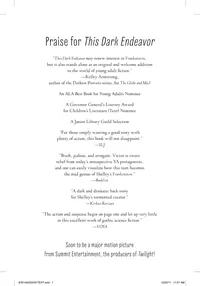
Kenneth Oppel’s "This Dark Endeavor" presents a compelling, if somewhat familiar, origin story for a figure steeped in literary legend. The novel's strength lies in its atmospheric portrayal of a decaying estate and the palpable tension between the three brothers, particularly Victor's consuming obsession. Oppel excels at rendering the psychological strain of their shared secret and the oppressive environment that breeds such dark ambition. A notable passage involves the brothers' desperate attempts to reanimate a supposedly dead pet, a scene that effectively foreshadows the larger, more gruesome endeavors to come. However, the narrative occasionally feels constrained by its own source material; the shadow of Mary Shelley's "Frankenstein" looms large, making some plot points feel predictable. While the exploration of familial obligation versus personal drive is well-executed, the young protagonists' motivations sometimes lack the full gravitas one might expect. Still, "This Dark Endeavor" is a well-crafted prequel that offers a chilling glimpse into the making of a monster.
📝 Description
78
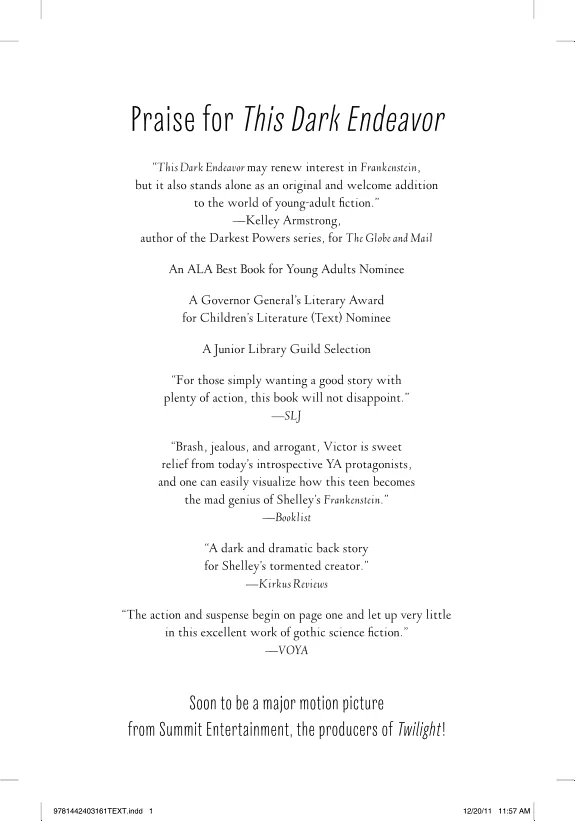
Kenneth Oppel published "This Dark Endeavor" in 2011, a young adult novel examining ambition's shadows.
This young adult novel, published in 2011, centers on Victor Frankenstein and his twin brothers, detailing the genesis of his infamous experiments. It is not a manual for occult practices but a story that touches on the spirit of dark academia and the ethical quandaries that arise when pushing boundaries. The narrative follows Victor's obsessive quest for knowledge and the personal cost it exacts.
The book appeals to those who enjoy gothic literature, psychological thrillers, and speculative fiction with a philosophical undercurrent. Readers interested in character-driven stories that explore moral ambiguity and the darker aspects of human nature will find ample material for thought. It is especially suited for audiences who question the ethics of scientific advancement and the extreme measures individuals might take to achieve their goals, echoing classic tales of ambition's downfall.
Published in 2011, "This Dark Endeavor" engages with themes of forbidden knowledge and the pursuit of hidden truths, resonating with perennial human fascinations found in various occult traditions. Its exploration of the drive to uncover life's secrets and the potential dangers involved aligns with historical quests, such as those in alchemy, and Gnostic inquiries into hidden realities. The novel uses a gothic framework to examine the ethical cost of such pursuits, reflecting a long-standing interest in the occult's intersection with human ambition and the limits of understanding.
💡 Why Read This Book?
• Gain insight into the psychological underpinnings of ambition by examining Victor Frankenstein's obsessive drive, as depicted in the narrative's exploration of forbidden knowledge and its consequences. • Experience a gothic atmosphere reminiscent of early 19th-century literature, specifically through the novel's detailed descriptions of the decaying estate and the oppressive mood. • Understand the literary trope of the doppelgänger and its symbolic representation of a fractured self, a concept central to the complex sibling dynamics presented.
⭐ Reader Reviews
Honest opinions from readers who have explored this book.
❓ Frequently Asked Questions
Is "This Dark Endeavor" a direct sequel to Mary Shelley's "Frankenstein"?
No, "This Dark Endeavor" is a prequel, published in 2011. It explores the early life and influences of Victor Frankenstein, detailing events that precede the narrative of Mary Shelley's classic novel published in 1818.
What are the main themes explored in Kenneth Oppel's "This Dark Endeavor"?
The novel primarily explores themes of ambition, the pursuit of forbidden knowledge, the consequences of obsession, and the complex dynamics within a family driven by dark secrets and scientific curiosity.
Who are the main characters in "This Dark Endeavor"?
The central characters are Victor Frankenstein and his twin brothers, Konrad and Henry. Their relationships and individual struggles form the core of the narrative, driven by Victor's increasingly dangerous scientific pursuits.
Does the book contain supernatural elements?
While the book deals with themes of life, death, and reanimation that border on the supernatural, it frames these within a pseudo-scientific and psychological context, rather than overt magic. It focuses on the human drive to transgress natural boundaries.
What is the historical setting of "This Dark Endeavor"?
The novel is set in the early 19th century, aligning with the period of Mary Shelley's original "Frankenstein." This era is characterized by burgeoning scientific inquiry and romantic literary sensibilities.
Is "This Dark Endeavor" suitable for young adults?
Yes, it is categorized as young adult fiction. While it deals with dark themes like death, obsession, and moral ambiguity, it does so in a way that is accessible to teenage readers, focusing on character development and suspense.
🔮 Key Themes & Symbolism
The Allure of Forbidden Knowledge
The narrative probes the dangerous fascination with secrets and discoveries that lie beyond conventional understanding or ethical boundaries. Victor's relentless pursuit of understanding life and death, inspired by his family's history and intellectual environment, exemplifies this theme. The novel illustrates how the desire to know what is hidden can lead individuals down perilous paths, blurring the lines between scientific curiosity and destructive obsession. This echoes historical esoteric quests for hidden truths, often met with societal resistance or personal peril.
Fractured Identity and the Double
"This Dark Endeavor" implicitly explores the concept of the doppelgänger through the intense, often adversarial, relationships between the three brothers. Victor's own psyche appears fragmented by his ambition, leading to actions that alienate him from his kin and himself. The presence of twins, Konrad and Henry, further amplifies this theme of duality and mirrored existence. This psychological exploration aligns with symbolic interpretations where the double represents a hidden self, repressed desires, or an impending fate, a motif found in various mythologies and psychological theories.
Consequences of Transgression
The book meticulously details the cascading negative outcomes that arise from the characters' attempts to defy natural laws or moral codes. Whether it's the brothers' pact to pursue dark experiments or their individual choices driven by fear and ambition, each transgression incurs a significant cost. This theme serves as a cautionary tale, demonstrating how the pursuit of power or knowledge without ethical grounding inevitably leads to suffering and destruction, a recurring lesson in many occult traditions warning against hubris.
Familial Bonds Under Pressure
The intricate and often strained relationships between Victor, Konrad, and Henry form the emotional core of the story. Their shared past, secrets, and conflicting desires create a volatile dynamic. The narrative examines how external pressures and internal obsessions can warp familial loyalty and affection, pushing brothers towards betrayal and conflict. This focus on the internal dynamics of a close-knit group facing extraordinary circumstances is a narrative device often used to explore human nature at its extremes.
💬 Memorable Quotes
Direct passages from the work, attributed to the author.
“Victor's overwhelming ambition eclipses his concern for his brothers.”
— This interpretation points to the internal conflict within Victor, where his consuming desire for scientific achievement begins to override his familial duties and moral compass.
“The decaying estate mirrors the moral decay of its inhabitants.”
— This symbolic interpretation connects the physical setting of the novel to the psychological and ethical deterioration of the characters, suggesting an external manifestation of their internal struggles.
“The desperate attempts to reanimate a dead creature.”
— This refers to a specific, chilling event in the narrative that foreshadows Victor's larger, infamous experiments, demonstrating an early transgression against the natural order.
“A brother's fear of Victor's growing obsession.”
— This captures the palpable tension and rising alarm among the siblings as Victor's scientific endeavors become increasingly extreme and alarming.
💡 Key Ideas
Editorial paraphrase of the work's core concepts — not direct quotes.
The brothers' secret pact to pursue forbidden knowledge.
This paraphrased concept highlights the central agreement that drives the plot: a shared commitment to uncovering dangerous secrets, setting the stage for the ethical compromises and dire consequences that follow.
🌙 Esoteric Significance
Tradition
While not explicitly tied to a single esoteric lineage, "This Dark Endeavor" appeals to the Hermetic principle of "As Above, So Below," suggesting a connection between internal states and external realities. The characters' obsessive pursuit of manipulating life and death mirrors alchemical quests for transmutation and immortality. The narrative also touches upon Gnostic themes of seeking forbidden knowledge to liberate oneself from material limitations, albeit with disastrous personal consequences, highlighting the dangers of such pursuits when untempered by wisdom.
Symbolism
The decaying estate where the Frankenstein brothers reside serves as a potent symbol of moral and psychological entropy, reflecting the internal rot caused by their dark ambitions. The motif of the 'double' or doppelgänger, amplified by the presence of twins, symbolizes fractured identity and the potential for self-destruction inherent in unchecked ambition. Furthermore, the act of reanimation itself symbolizes humanity's primal fear of death and the hubristic desire to conquer it, a recurring theme in many mythologies and esoteric traditions.
Modern Relevance
Contemporary thinkers exploring the ethics of artificial intelligence and bioengineering find parallels in Victor Frankenstein's early transgressions. The novel's examination of ambition, obsession, and the potential for scientific advancement to outpace ethical considerations remains highly relevant. Modern practitioners of occultism and shadow work might draw parallels between the characters' internal struggles and the process of confronting one's own darker impulses and hidden potentials, as explored through the lens of psychological symbolism.
👥 Who Should Read This Book
• Aspiring writers of gothic and dark fantasy fiction seeking to understand character motivation and atmospheric setting. • Young adult readers interested in psychological thrillers and character studies that explore moral ambiguity. • Students of literature examining the evolution of classic literary figures and their modern reinterpretations.
📜 Historical Context
Kenneth Oppel's "This Dark Endeavor" emerged in 2011, a period when the young adult literary market was expanding its thematic range beyond traditional adventure and romance. While not directly participating in a specific esoteric movement, the novel tapped into enduring fascination with forbidden knowledge and the darker aspects of scientific ambition, themes that have long been central to occult and philosophical inquiries. Its publication preceded the significant rise of the "dark academia" aesthetic in popular culture. In terms of literary lineage, it directly engages with the legacy of Mary Shelley's "Frankenstein" (1818), offering a prequel that explores the psychological and environmental factors contributing to Victor Frankenstein's infamous pursuits. Unlike contemporary Gothic novels of Shelley's era, which might have been overtly sensational, Oppel's work leans into psychological realism and character study, appealing to a modern audience accustomed to complex anti-heroes and morally ambiguous narratives. The reception of "This Dark Endeavor" was largely positive within the YA community, praised for its atmosphere and character development.
📔 Journal Prompts
Victor's pact with his brothers and its ethical implications.
The symbolism of the decaying estate in relation to the characters' inner states.
Reflect on the consequences of pursuing forbidden knowledge, as shown by the Frankenstein brothers.
Analyze the doppelgänger motif as it relates to Victor's fractured psyche.
Consider the pressures that drive familial bonds to breaking points, as depicted in the novel.
🗂️ Glossary
Doppelgänger
A concept referring to a look-alike or double of a living person. In folklore and literature, it often signifies a harbinger of bad luck or a manifestation of a fractured psyche.
Dark Academia
An aesthetic and literary subgenre that focuses on higher education, often featuring themes of mystery, intellectualism, and a somewhat morbid or gothic atmosphere.
Gothic Literature
A genre characterized by elements of horror, death, and romance, often set in atmospheric, decaying locations and featuring intense emotions and psychological distress.
Transgression
The act of going beyond limits or boundaries, particularly in a moral, ethical, or natural sense. In the context of the novel, it refers to defying natural laws.
Ambition
A strong desire for success, achievement, power, or wealth. In the novel, it is often depicted as a destructive force when unchecked by morality.
Hermeticism
A religious, philosophical, and esoteric tradition based on writings attributed to Hermes Trismegistus. It emphasizes the unity of all things and the potential for human spiritual ascent.
Gnosticism
A diverse set of religious and philosophical ideas and systems originating in the first centuries CE. Gnostics believed that salvation came through secret knowledge (gnosis) of the divine.
🔮 Readers Also Liked
Browse all →






More by Kenneth Oppel
All books →

More Free Alchemy & Hermeticism Books
View all →