Herbal Alchemy

 75
75

Herbal Alchemy
Phillip Hurley’s Herbal Alchemy attempts to bridge the practical world of herbal remedies with the esoteric art of alchemy. The strength of the book lies in its detailed descriptions of plant preparations, offering a unique perspective on processes like distillation and tincture-making through an alchemical lens. Hurley’s exploration of the 'Green Lion' as a plant-derived prima materia is particularly engaging for those familiar with alchemical symbolism. However, the book’s primary limitation is its dense, often opaque prose, which can make accessing its core concepts challenging for readers new to either herbalism or alchemy. A passage detailing the calcination of specific roots, while conceptually interesting, requires significant prior knowledge to fully grasp its alchemical significance.
Ultimately, Herbal Alchemy is a specialized text for dedicated students of alchemical botany.
📝 Description
75
Phillip Hurley's 1977 book, Herbal Alchemy, bridges botanical knowledge with alchemical philosophy.
Herbal Alchemy, published in 1977, examines the energetic and spiritual aspects of plants beyond their physical uses. Phillip Hurley frames botanical substances as powerful agents for transformation, detailing methods for preparing them for subtle energetic work that aligns with older alchemical ideas. The book aims to guide practitioners and students of esoteric traditions toward a deeper appreciation of the plant kingdom's potential. It will appeal to those interested in Hermeticism, Western esotericism, and the practical application of plant energies for spiritual development or ritualistic purposes. Individuals curious about the historical links between botany and alchemy, and how these might inform current practice, will find this text valuable.
The work emerged during a 1970s resurgence of interest in esoteric studies. While popular attention turned to the occult, serious practitioners and academics were also reviewing older alchemical texts and their real-world applications. Hurley's book connects with contemporary discussions of plant consciousness and subtle energies but grounds these concepts firmly within an alchemical framework, distinguishing it from purely botanical or New Age perspectives. It offers a specific approach to understanding plants as active participants in alchemical processes.
Phillip Hurley’s Herbal Alchemy situates itself within the Western esoteric tradition, particularly Hermeticism and its alchemical branches. The book draws on historical alchemical concepts and symbols, such as the Green Lion, to interpret the properties and potential of plants. It links these ancient philosophical frameworks to the study of botanical matter, suggesting that herbs are not merely physical remedies but carriers of subtle energies and prima materia. This approach distinguishes it from contemporary herbalism or New Age spirituality by emphasizing the transformative and spiritual dimensions inherent in alchemical practice applied to the plant world.
💡 Why Read This Book?
• Learn specific methods for preparing plant essences, such as detailed distillation techniques, that go beyond standard herbalism, as described in chapters focusing on alchemical plant processing. • Understand the alchemical concept of the 'Green Lion' and its application to botanical matter, offering a unique interpretive framework for plant energies. • Explore the symbolic and energetic correspondences between plants and alchemical operations, providing a novel approach to understanding botanical virtues through the lens of 1977 esoteric thought.
⭐ Reader Reviews
Honest opinions from readers who have explored this book.
❓ Frequently Asked Questions
What is the historical significance of Phillip Hurley's Herbal Alchemy?
First published in 1977, Herbal Alchemy emerged during a period of renewed interest in esoteric studies. It provided a specific alchemical framework for understanding plant properties, distinguishing itself from purely scientific or New Age botanical approaches prevalent at the time.
What is the 'Green Lion' in the context of Herbal Alchemy?
The 'Green Lion' is a significant alchemical symbol discussed in Hurley's work. It represents the potent, often untamed essence or prima materia derived from plant substances, central to the alchemical transformation of herbs.
Does Herbal Alchemy provide practical recipes for herbal remedies?
While it details preparations like distillation and tincture-making, the focus is on alchemical principles and energetic extraction rather than conventional medicinal recipes. The intent is for spiritual or energetic work, not solely physical healing.
What alchemical processes are discussed in relation to plants?
The book explores alchemical operations such as distillation, calcination, and the extraction of essences. These are presented as methods to purify and concentrate the subtle virtues of plants for alchemical purposes.
Who would benefit most from reading Herbal Alchemy?
Students of Western esotericism, Hermeticism, and practitioners interested in the deeper energetic and spiritual aspects of plants would find this book most beneficial.
What distinguishes Herbal Alchemy from standard herbalism guides?
Unlike standard guides, Hurley's book applies alchemical theory and symbolism to botany. It views plants not just for their physical medicinal properties but as agents for spiritual transformation and alchemical work.
🔮 Key Themes & Symbolism
The Green Lion in Botany
Hurley posits the 'Green Lion' not just as a symbolic alchemical entity but as a tangible principle extractable from plant life. This theme explores how the raw, vital energy of specific plants, when ritually processed, can serve as the prima materia for alchemical operations. The text suggests that understanding the 'Green Lion' within a botanical context is key to unlocking the plant kingdom's transformative potential, moving beyond mere materia medica to a spiritual science.
Alchemical Operations on Flora
This theme examines the application of alchemical processes—such as distillation, calcination, and sublimation—to botanical substances. Hurley details how these operations are intended to purify, concentrate, and elevate the subtle virtues of herbs, aligning them with alchemical goals of transformation and perfection. It suggests that the energetic signature of a plant can be refined and made more potent through these ancient methods.
Planetary and Astrological Correspondences
Herbal Alchemy emphasizes the crucial role of celestial influences in the efficacy of plant preparations. The work details how specific planetary alignments and astrological timings are believed to enhance the energetic qualities of herbs and the success of alchemical work performed upon them. This highlights a holistic worldview where terrestrial botany is inextricably linked to cosmic forces.
Subtle Virtues of Plants
Beyond physical properties, Hurley focuses on the inherent spiritual and energetic potencies within plants. This theme investigates how herbs act as conduits for subtle energies, capable of influencing consciousness and facilitating spiritual growth. The book frames herbalism as a practice deeply intertwined with the development of the alchemist's own inner faculties.
💬 Memorable Quotes
Direct passages from the work, attributed to the author.
“Distillation refines the plant’s soul, not just its water.”
— This interpreted concept highlights the alchemical perspective on distillation. It's not merely a physical separation process but a spiritual refinement, aiming to capture the plant's essential life force or 'soul' in a concentrated form.
“The herb is a vessel, the alchemist the transmuter.”
— This interpreted statement frames the relationship between plant and practitioner. The herb possesses latent potential, and the alchemist, through skillful application of alchemical arts, facilitates its transformation and realization.
💡 Key Ideas
Editorial paraphrase of the work's core concepts — not direct quotes.
The Green Lion is the spirit of the plant, waiting to be liberated.
This paraphrase captures the essence of Hurley's view on the 'Green Lion' as the vital force within botanicals, suggesting that alchemical methods are necessary to release and utilize this inherent energy for transformative purposes.
Calcination reveals the hidden salts of the earth within the herb.
This paraphrase refers to the alchemical process of calcination applied to plants. It suggests that this fire-based purification method breaks down the plant matter to reveal its essential mineral or 'salty' component, believed to hold significant energetic properties.
Astrology is the clock by which the alchemist harvests the herb's virtue.
This conceptual paraphrase emphasizes the integral role of astrological timing in alchemical herbalism. It implies that harvesting plants according to celestial cycles is essential for capturing their peak energetic potential, guiding the alchemist's actions.
🌙 Esoteric Significance
Tradition
Herbal Alchemy firmly belongs within the Western Esoteric tradition, specifically drawing from Hermeticism and classical alchemy. It interprets botanical knowledge through an alchemical lens, viewing plants not merely as medicinal agents but as substances containing spiritual essences ripe for purification and transformation. The work aligns with the Hermetic principle of 'As Above, So Below,' suggesting that cosmic influences (astrology) are directly mirrored in the subtle properties and preparation of terrestrial plants.
Symbolism
Key symbols include the 'Green Lion,' representing the untamed vegetative spirit or prima materia derived from plants, and the processes of distillation and calcination, which symbolize purification and the extraction of essential virtues. The text likely employs planetary symbols to denote correspondences, linking specific herbs and alchemical operations to celestial influences that govern their energetic potency and transformative capacity.
Modern Relevance
Contemporary practitioners of Hermeticism, ceremonial magic, and advanced botanical alchemy continue to reference Hurley's foundational concepts. His work informs modern approaches to plant spirit medicine and energetic herbalism, particularly for those seeking to understand the symbolic and alchemical dimensions of plant use. Thinkers and groups exploring the integration of ancient alchemical texts with practical, nature-based spiritual disciplines often find value in its specific interpretations.
👥 Who Should Read This Book
• Students of Western Esotericism and Hermeticism seeking to understand the alchemical perspective on plant properties and preparation methods. • Advanced herbalists interested in exploring the energetic, spiritual, and symbolic dimensions of botanicals beyond their medicinal applications. • Practitioners of alchemy looking to expand their knowledge into the field of phytochemistry and the alchemical transmutation of plant matter.
📜 Historical Context
Published in 1977, Phillip Hurley’s Herbal Alchemy emerged during a period of significant resurgence in Western esoteric studies. The 1970s witnessed a growing public fascination with occultism, mysticism, and alternative spiritualities, partly fueled by the counterculture's rejection of purely materialistic worldviews. While popular interest often leaned towards the sensational, serious practitioners were re-examining foundational texts and developing more systematic approaches. Hurley’s work is notable for grounding botanical knowledge within the specific framework of classical alchemy, a lineage distinct from the more generalized New Age spiritualism gaining traction. This approach distinguished it from contemporary scientific botany and even from other esoteric herbal traditions. The book can be seen as contributing to a broader movement to integrate ancient wisdom with practical application, echoing figures like Manly P. Hall who, though writing earlier, had also popularized esoteric philosophy. The reception of such works in the 1970s was often within niche circles, though they contributed to a growing body of literature accessible to those seeking deeper spiritual understanding.
📔 Journal Prompts
The alchemical significance of the 'Green Lion' in relation to common garden herbs.
Reflections on the symbolic meaning of distillation when applied to plant essences.
How do planetary correspondences influence your perception of a plant's 'virtue'?
Consider a plant preparation method discussed and its potential for spiritual refinement.
The role of the alchemist as a 'transmuter' of botanical energies.
🗂️ Glossary
Green Lion
An alchemical symbol representing the prima materia or raw, untamed spirit, often associated with the vegetative realm and the potent, volatile essence found within plants.
Distillation
An alchemical process of heating substances to vaporize them, then cooling the vapor to condense it back into a liquid, symbolically purifying and concentrating the 'soul' or essence of the material.
Calcination
An alchemical process involving heating a substance, often to a high temperature, to reduce it to a fine ash or powder. In Herbal Alchemy, this is applied to plants to extract their essential mineral or 'salty' components.
Prima Materia
The fundamental, unformed substance from which all things are created in alchemical philosophy. In this context, it refers to the raw, potent essence extracted from plants.
Subtle Virtues
The non-physical, energetic, or spiritual properties of plants, believed to influence consciousness and facilitate transformation, distinct from their observable physical or medicinal effects.
Planetary Correspondences
The symbolic associations between celestial bodies (planets) and earthly substances (like herbs), believed to imbue those substances with specific energies and influences.
Materia Medica
A body of knowledge concerning the medicinal properties of substances, particularly plants. Hurley's work extends this to include esoteric and alchemical applications.
🔮 Readers Also Liked
Browse all →









More by Phillip Hurley
All books →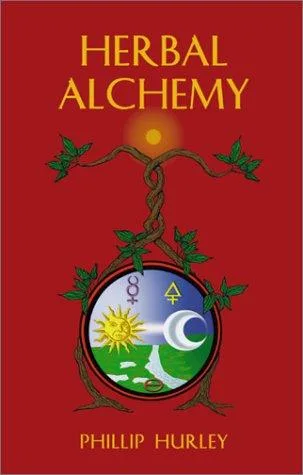
More Free Alchemy & Hermeticism Books
View all →