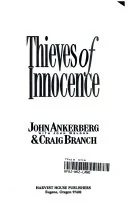
Thieves of Innocence
 73
73

Thieves of Innocence
Ankerberg and Weldon's 'Thieves of Innocence' presents a direct challenge to the pedagogical philosophies that gained currency in the late 20th century. The book's strength lies in its unvarnished presentation of concerns held by many parents at the time regarding the shift away from explicit moral instruction. It clearly articulates the authors' perspective on how humanistic psychology, particularly its emphasis on subjective experience, could be interpreted as undermining traditional value systems. However, the work occasionally veers into an alarmist tone, which may alienate readers seeking a more balanced analysis. The discussion on the ease with which children are "turned away from traditional values" offers a stark, if contentious, viewpoint. Ultimately, 'Thieves of Innocence' serves as a historical marker of a particular cultural anxiety concerning education.
📝 Description
73
Published in 1993, Thieves of Innocence critiques perceived humanistic and New Age influences in American schools.
John Ankerberg and John Weldon's 1993 book, Thieves of Innocence, argues that humanistic and New Age philosophies are replacing traditional moral education in American public schools. The authors contend that these ideologies influence how children are taught and how they develop their values. This work is aimed at parents, educators, and concerned citizens who want to understand and address what they see as an erosion of established values in educational settings. It offers a way to identify these influences and make informed choices about children's upbringing.
The book emerged during a period of cultural discussion in the early 1990s about religion, spirituality, and personal values in public education. It specifically addresses the rise of self-help and New Age movements. The authors present their work as a counterargument, supporting the preservation of religiously informed moral education. Their central idea is that educational goals have shifted towards 'child-centered' or 'feeling-based' decision-making, which they contrast with traditional reliance on external moral authorities. The book examines how concepts from humanistic psychology and New Age thought may appear in curricula, purportedly to boost self-esteem but, according to Ankerberg and Weldon, at the cost of objective moral truths.
While not strictly an esoteric text itself, 'Thieves of Innocence' engages with the perceived infiltration of New Age thought into mainstream institutions. The New Age movement, emerging in the mid-20th century, often synthesized Eastern spiritual traditions with Western psychology and occultism, emphasizing personal experience, holistic wellness, and subjective truth. Ankerberg and Weldon view these elements, when applied to education, as undermining established religious and moral frameworks. Their critique positions traditional, often religiously derived, moral education against the subjective and experiential approaches characteristic of New Age philosophy.
💡 Why Read This Book?
• Understand the specific arguments against humanistic psychology's influence on education, as detailed in the book's critique of "feeling-based" choices. This offers a concrete historical perspective on value-based education debates. • Gain insight into the perceived "New Age influence" within public schools during the early 1990s, providing context for contemporary discussions on curriculum and values. • Equip yourself with the authors' proposed methods for parents to "wisely and confidently face these issues," as outlined in their recommendations for navigating educational choices.
⭐ Reader Reviews
Honest opinions from readers who have explored this book.
❓ Frequently Asked Questions
What specific educational philosophies does 'Thieves of Innocence' criticize?
The book primarily criticizes humanistic psychology and what it labels "New Age" philosophies, arguing they encourage children to base decisions on feelings rather than established moral principles, a trend they observed in American public schools during the early 1990s.
When was 'Thieves of Innocence' first published and by whom?
'Thieves of Innocence' was first published in 1993 by authors John Ankerberg and John Weldon.
What are the main concerns the authors raise about the school system?
The authors express concern that children are being steered away from traditional values and taught to prioritize personal feelings in decision-making, which they view as a detrimental influence within the public school system.
Does the book offer solutions for parents?
Yes, the book aims to provide parents with information and strategies to "wisely and confidently face these issues," empowering them to address the perceived influences on their children's education and value formation.
What is the central argument regarding children's choices?
The central argument is that children are being taught to make choices based on their own feelings, a shift the authors contrast with traditional values and moral guidance.
Is this book considered part of the New Age movement it discusses?
No, 'Thieves of Innocence' is written as a critique and expose of the New Age and humanistic influences the authors perceived in education, rather than an endorsement of them.
🔮 Key Themes & Symbolism
Humanistic Psychology in Schools
The book scrutinizes the infiltration of humanistic psychology into public education, a movement emphasizing self-actualization and subjective experience. Ankerberg and Weldon argue that this focus leads to a devaluation of objective moral standards, encouraging children to rely solely on internal feelings for guidance. They present this as a departure from traditional frameworks that often relied on external authorities or established doctrines for moral instruction, raising concerns about the long-term impact on societal values and individual character development.
The "New Age" Influence
A significant portion of the critique targets what the authors identify as "New Age" thought permeating educational materials and methodologies. This includes concepts related to self-discovery, alternative spiritualities, and a general skepticism towards traditional religious or ethical systems. The book posits that these influences are introduced subtly, often under the guise of fostering creativity or emotional intelligence, thereby "thieving" children's innocence and traditional moral grounding without explicit parental awareness.
Parental Empowerment and Values
Central to the book's purpose is the empowerment of parents. Ankerberg and Weldon aim to equip them with the knowledge to recognize and counteract the perceived ideological shifts in schools. They advocate for active parental engagement in their children's education, providing strategies to reinforce traditional values and critical thinking skills that can serve as a bulwark against what they view as secular or esoteric indoctrination.
Erosion of Traditional Values
The overarching theme is the perceived erosion of traditional values, often implicitly or explicitly linked to religious or moral frameworks that predate the late 20th century. The authors contend that educational institutions, by embracing humanistic and New Age ideologies, are actively contributing to this decline. This is framed not merely as a philosophical debate but as a critical societal issue impacting the moral compass of future generations.
💬 Memorable Quotes
Direct passages from the work, attributed to the author.
“Children are being taught to make choices based on their own feelings.”
— This core assertion highlights the authors' concern that subjective emotional responses are being prioritized over objective moral principles or external guidance in educational settings.
“The growing humanistic/New Age influence invading the American public school system.”
— This phrase expresses the book's central thesis, framing the perceived ideological shift as an aggressive encroachment upon traditional educational values.
“Revealing the surprising ease with which children are being turned away from traditional values.”
— This points to the authors' belief that the shift in values is occurring more readily and perhaps subtly than many parents might realize, necessitating awareness and action.
“Information to equip parents to wisely and confidently face these issues.”
— This statement underscores the book's practical intent: to serve as a resource for parents seeking to navigate and counter perceived negative influences in their children's education.
“A provocative, no-holds-barred expose.”
— This blurb-like phrase suggests the book adopts an assertive and direct approach in its critique of educational trends, aiming for a thorough and uncompromised examination.
🌙 Esoteric Significance
Tradition
While not strictly an esoteric text in the Hermetic or Kabbalistic sense, 'Thieves of Innocence' engages with the perceived influence of New Age thought. This tradition often draws eclectically from various spiritual and psychological systems, including humanistic psychology, Eastern mysticism, and occult philosophies, aiming for personal transformation and spiritual awakening outside traditional religious structures. The book critiques this eclectic approach when it manifests in educational settings, viewing it as a departure from established Western philosophical and religious traditions.
Symbolism
The central 'symbol' explored is the child's 'innocence,' which the authors argue is being 'stolen' or corrupted by external influences. The 'feeling-based' choice mechanism can be seen as a symbolic representation of a subjective, immanent spirituality replacing objective, transcendent moral codes. The 'American public school system' itself functions as a symbolic battleground where traditional values are contested by newer, humanistic, and New Age ideologies.
Modern Relevance
Contemporary discussions on critical pedagogy, the influence of social-emotional learning (SEL) programs, and debates over curriculum content in schools echo the concerns raised in 'Thieves of Innocence.' Thinkers and parent groups focused on preserving traditional values or critiquing secularization in education continue to grapple with similar arguments about the philosophical underpinnings of educational policy and practice. The book's critique of self-help and New Age influences remains relevant as these currents persist in various forms within popular culture and wellness movements.
👥 Who Should Read This Book
• Parents and guardians concerned about the philosophical underpinnings of their children's education, particularly those seeking to understand critiques of humanistic psychology in schools. • Educators and administrators interested in the historical context of debates surrounding values education and curriculum development in the late 20th century. • Researchers of cultural studies and the history of education, specifically those examining the influence of New Age and humanistic movements on societal institutions during the 1990s.
📜 Historical Context
Published in 1993, 'Thieves of Innocence' emerged during a period of heightened cultural tension surrounding the content and values promoted in American public schools. The early 1990s saw significant public discourse on topics like values clarification, secular humanism, and the burgeoning New Age movement's presence in society. The book positioned itself within this debate, offering a critical perspective on the perceived shift away from traditional, often religiously-informed, moral frameworks. Key contemporaries engaging with similar themes included authors focused on educational reform and critics of secularization in public life. While specific reception events like major reviews or bans are not widely documented, the book's stance placed it in opposition to educational philosophies championed by figures within the human potential movement and proponents of child-centered learning, reflecting a broader societal divergence on the role of values in education.
📔 Journal Prompts
The concept of 'feeling-based' choices as presented by Ankerberg and Weldon.
The perceived 'invasion' of humanistic and New Age thought in education.
Your own understanding of 'traditional values' versus subjective experience.
Methods for parents to 'wisely and confidently face these issues'.
The ease with which children are 'turned away from traditional values'.
🗂️ Glossary
Humanistic Psychology
A psychological approach emphasizing personal growth, self-actualization, and subjective experience. The book critiques its application in education for potentially undermining objective moral standards.
New Age Influence
Refers to a broad range of spiritual, mystical, and self-help beliefs and practices that gained prominence in the late 20th century, often characterized by eclecticism and a focus on personal experience. The book views its integration into schools negatively.
Traditional Values
Moral or cultural standards that have been long-established and passed down through generations, often associated with religious or long-standing societal norms. The book argues these are being supplanted.
Feeling-Based Choices
Decision-making driven primarily by emotions and subjective feelings, as opposed to logic, external rules, or established moral codes. This is a key target of the book's criticism.
Expose
A revealing or uncovering of wrongdoing or scandal. The book is described as such, aiming to bring perceived negative influences in education to light.
Values Clarification
An educational approach encouraging students to identify and articulate their own values. The authors likely view certain forms of this as contributing to the problematic 'feeling-based' choices.
Indoctrination
The process of teaching someone to accept a set of beliefs uncritically. The authors suggest this is occurring through the introduction of humanistic and New Age ideas in schools.
This book appears in 1 collection
🔮 Readers Also Liked
Browse all →







From the “Spirit Guides” Collection
View all →







More Free Occult Philosophy Books
View all →