How to Use Tarot Spreads
 78
78

How to Use Tarot Spreads
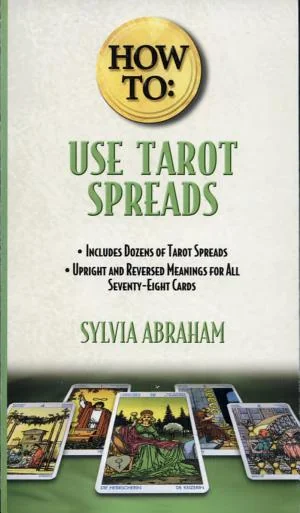
Sylvia Abraham's 1997 volume, "How to Use Tarot Spreads," presents a welcome antidote to overly generalized tarot instruction. Its strength lies in its sheer volume of 37 specific spreads, addressing common inquiries about love, finance, and personal growth. The inclusion of real-life reading examples for each spread is particularly valuable, moving theory into tangible application. However, the book occasionally feels prescriptive; while the layouts are varied, the interpretive guidance for each can sometimes lack the nuanced depth one might expect from a more advanced text. A passage detailing the "Past Lives Spread," for instance, offers a clear structure but could benefit from more extensive discussion on correlating card symbolism across its positions. Nevertheless, for practitioners seeking a diverse toolkit of proven layouts, this remains a solid, if occasionally uninspired, resource.
📝 Description
78
Sylvia Abraham's 1997 book presents 37 tarot spreads for specific life questions.
Sylvia Abraham's "How to Use Tarot Spreads" offers a practical collection of 37 distinct tarot layouts, moving beyond general interpretation to give readers specific structures. The book aims to make tarot application clearer by showing concrete methods for inquiry and insight. It is for individuals who have moved past basic tarot reading and want to improve their practice. The guide appeals to those who often receive specific questions about relationships, finances, or personal growth. It also suits practitioners who wish to add more interpretive tools to their existing methods, going beyond the common Celtic Cross spread. The book emerged in 1997 during a time of growing interest in divination and esoteric studies, responding to a demand for structured approaches to occult practices. It provided a set of applied techniques for those moving from purely intuitive methods to more organized frameworks.
Published in 1997, "How to Use Tarot Spreads" arrived as esoteric studies and divination saw a notable revival. This period favored structured occult practices, shifting from solely intuitive approaches to more systematic frameworks. Abraham's work met this demand by detailing applied techniques. The core idea is that a reading's effectiveness increases with the right spread, which acts as a guide for specific concerns. The book uses 36 illustrations to clarify card positions and meanings within each layout, supporting a more methodical form of tarot practice.
💡 Why Read This Book?
• Learn 37 distinct tarot spreads, moving beyond generic layouts to address specific life areas like romance and finance, as detailed in the book's core sections. • Gain practical insight by studying 36 included illustrations and real-life readings, which concretely demonstrate how each spread functions in practice. • Develop a more structured approach to divination, understanding how specific spread designs, like the "Past Lives Spread," can illuminate complex questions more effectively.
⭐ Reader Reviews
Honest opinions from readers who have explored this book.
❓ Frequently Asked Questions
What is the primary focus of Sylvia Abraham's "How to Use Tarot Spreads"?
The book focuses on providing 37 specific tarot spreads designed to answer common questions about love, home, business, major life events, and spiritual growth, offering practical applications and real-life reading examples.
When was "How to Use Tarot Spreads" first published?
"How to Use Tarot Spreads" by Sylvia Abraham was first published in 1997.
How many tarot spreads are included in the book?
The book features a total of 37 time-tested tarot spreads, each designed to address specific types of inquiries.
Does the book offer visual aids for understanding the spreads?
Yes, the book includes 36 illustrations to help readers visualize and understand the card placement and interpretation for each of the 37 spreads.
What types of questions can "How to Use Tarot Spreads" help answer?
The spreads in the book are intended to provide answers for questions related to love and romance, home and family, business and finance, major life events, and spiritual growth and past lives.
Who would benefit most from reading "How to Use Tarot Spreads"?
Individuals seeking to deepen their tarot practice beyond basic readings, those who frequently receive specific types of questions, and practitioners looking for a structured, systematic approach to divination will benefit.
🔮 Key Themes & Symbolism
Applied Divination Frameworks
The core of Abraham's work lies in its systematic approach to tarot application. Rather than focusing solely on the inherent meanings of individual cards, the book emphasizes the power of structured layouts, or spreads. These 37 distinct arrangements serve as interpretive frameworks, guiding the querent and reader through specific areas of inquiry. The book posits that the efficacy of a reading is enhanced by selecting a spread that precisely matches the nature of the question, thereby focusing the energies of the cards for clearer insight.
Targeted Question Resolution
Abraham addresses the common need for practical answers to everyday concerns. The spreads are categorized to tackle specific life domains: relationships, career, finances, and personal development. This targeted approach moves tarot from a generalized predictive tool to a focused problem-solving instrument. By providing layouts for "Business and Finance" or "Love and Romance," the book equips readers with methods to dissect complex situations and identify actionable insights within the card interpretations.
Visual Learning and Real-World Examples
Recognizing that visual cues are crucial in tarot, the book incorporates 36 illustrations. These visual aids are not merely decorative but serve to clarify the often-complex arrangements of cards within each spread. Furthermore, the inclusion of "real-life readings" for each spread bridges the gap between theoretical knowledge and practical application. This feature allows readers to see how specific card combinations manifest within a given layout, making the interpretive process more tangible and accessible.
Spiritual Growth and Past Lives Inquiry
Beyond mundane concerns, Abraham extends the utility of tarot to explore deeper aspects of the self. The inclusion of spreads dedicated to "Spiritual Growth" and "Past Lives" acknowledges the esoteric dimension of tarot. These layouts are designed to facilitate introspection, uncover karmic patterns, or illuminate the soul's journey. This aspect of the book caters to readers interested in using tarot not just for prediction, but as a tool for self-discovery and understanding one's place within a larger spiritual context.
💬 Memorable Quotes
Direct passages from the work, attributed to the author.
“These 37 time-tested spreads help readers to see real-life readings for each spread and bring each reading into focus for the seeker.”
— This statement expresses the book's practical ethos. It highlights the dual benefit of structured layouts (spreads) and concrete examples, aiming to sharpen the clarity and effectiveness of tarot consultations for both the reader and the person seeking guidance.
“Now, for the first time, there is a book of specific tarot spreads...”
— This assertion, from the original blurb, emphasizes the perceived novelty and unique contribution of Abraham's work at the time of its publication, suggesting a gap in the market for such a focused collection of practical layouts.
“36 illustrations.”
— This factual statement points to a key feature of the book's pedagogical approach. The inclusion of numerous visual aids suggests an emphasis on clarity and practical demonstration, aiding readers in understanding the mechanics of each spread.
“These 37 time-tested spreads...”
— The term 'time-tested' implies that the layouts presented have been utilized and refined over a significant period, lending them an air of reliability and proven effectiveness within the practice of tarot reading.
💡 Key Ideas
Editorial paraphrase of the work's core concepts — not direct quotes.
Specific tarot spreads that will provide the answers to the most commonly asked questions about love and romance, home and family, business and finance, major life events, and spiritual growth and past lives.
This quote outlines the comprehensive scope of the book's offerings. It assures potential readers that the methodologies presented are designed to address a wide spectrum of human concerns, from the practicalities of daily life to the deeper mysteries of personal evolution.
🌙 Esoteric Significance
Tradition
While not explicitly tied to a single esoteric lineage like Hermeticism or Kabbalah, Abraham's work functions within the broader Western esoteric tradition's practical application of divination. It aligns with the modern tendency to systematize occult practices, making them accessible and applicable to contemporary life concerns. The emphasis on specific spreads reflects a desire for order and method, a common thread in many esoteric disciplines that seek to map the unseen world.
Symbolism
The book's primary symbolic contribution lies not in individual card interpretations but in the symbolic structure of the spreads themselves. Each layout is a symbolic map, with card positions representing archetypal roles (e.g., the querent, the obstacle, the outcome) or phases of a process. For instance, a spread focused on relationships might symbolically represent the union, the challenges, and the potential future, using the card positions to hold these symbolic meanings.
Modern Relevance
In contemporary tarot practice, there's a continued appreciation for structured approaches. Abraham's work remains relevant for readers who prefer systematic methods over purely intuitive readings. Modern practitioners, particularly those focused on psychological or self-help applications of tarot, can draw upon the variety of spreads offered to address specific client needs or personal inquiries, integrating them into modern therapeutic or coaching frameworks.
👥 Who Should Read This Book
• Tarot enthusiasts seeking to expand their repertoire beyond standard layouts, who will gain 37 new, specific frameworks for interpretation. • Practical occultists interested in systematized divination techniques, who will find concrete methods for addressing common life questions. • Aspiring tarot readers aiming for clarity and focus in their practice, who will benefit from real-life examples and 36 illustrations clarifying spread application.
📜 Historical Context
Sylvia Abraham's "How to Use Tarot Spreads," published in 1997, emerged during a period of intensified popular engagement with esoteric subjects, following the New Age wave of the 1980s. This era saw a demand for practical, systematized approaches to divination and occultism, moving beyond purely intuitive or theoretical explorations. The late 20th century witnessed a flourishing of tarot literature, with authors like Rachel Pollack and Mary K. Greer exploring diverse applications. Abraham's work fit into this trend by offering a highly structured compendium of specific layouts, catering to readers seeking concrete tools for interpreting the cards across various life domains. Unlike more philosophical or historical analyses of the tarot, Abraham's focus was squarely on applied technique, providing a ready-made toolkit for practitioners. While not a controversial work, its publication contributed to the growing body of accessible, practice-oriented occult guides available to the public.
📔 Journal Prompts
Reflection on the "Past Lives Spread" structure and potential personal resonances.
Analyze how the "Business and Finance" spreads categorize potential outcomes.
Consider the unique insights offered by the "Spiritual Growth" spread.
Document a reading using one of the "Love and Romance" spreads.
Compare the effectiveness of two different spreads for a similar question.
🗂️ Glossary
Tarot Spread
A specific arrangement or layout of tarot cards used during a reading, with each position corresponding to a particular question, aspect, or element of the inquiry.
Querent
The person for whom a tarot reading is performed; the individual seeking answers or guidance from the cards.
Divination
The practice of seeking knowledge of the future or the unknown by supernatural means, often through the use of tools like tarot cards, astrology, or runes.
Interpretation
The process of analyzing and assigning meaning to the tarot cards drawn within a specific spread, considering their individual meanings, positional significance, and relationships with other cards.
Layout
Synonymous with 'spread,' referring to the geometric pattern or sequence in which tarot cards are placed for a reading.
Real-life Reading
An example within the book demonstrating how a specific tarot spread was applied to an actual question, including the cards drawn and their interpreted meanings.
Time-tested
Describes methods or techniques that have been used and proven effective over an extended period, suggesting reliability and practical validation.
This book appears in 1 collection
🔮 Readers Also Liked
Browse all →







From the “Tarot” Collection
View all →








More Free Occult Philosophy Books
View all →