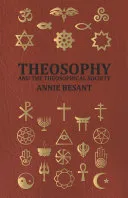
Theosophy and the Theosophical Society
 82
82

Theosophy and the Theosophical Society
Annie Wood Besant's "Theosophy and the Theosophical Society" offers a clear, if somewhat uncritical, exposition of its subject matter. Besant's prose, while accessible, lacks the vibrant, challenging quality found in earlier Theosophical writings. A particular strength lies in her systematic explanation of the society's organizational goals and its foundational principles, particularly the concept of Universal Brotherhood as a practical, unifying force. However, the book's limitation is its inherent advocacy; it presents Theosophy and the society as self-evidently true, offering little by way of critical self-examination or engagement with external philosophical critiques. The section detailing the society's founding in 1875 provides valuable historical data, but feels more like a hagiography than a balanced account. For those seeking an introduction to Besant's perspective, it is informative; for critical inquiry, supplemental reading is necessary. It functions as a primer for the already initiated.
📝 Description
82
Annie Wood Besant wrote 'Theosophy and the Theosophical Society' to explain the movement's core ideas and structure.
Annie Wood Besant's 1912 book, "Theosophy and the Theosophical Society," explains the philosophical and spiritual foundations of Theosophy. Besant, a leader in the movement, positions Theosophy not as a religion, but as a system for uniting humanity through synthesized ancient wisdom. The text details the society's aims, its ethical principles, and its overarching goal of fostering universal brotherhood. It is intended for students of esoteric philosophy, especially those interested in Helena Blavatsky's Theosophical movement. Scholars of religious history and comparative mysticism will find it useful for understanding Theosophy's effect on Western thought from the late 19th century onward. Those curious about alternative spiritual paths and the history of organized occultism will also find the book informative.
The Theosophical Society, founded in 1875, aimed to bridge science, philosophy, and religion, standing apart from materialistic scientism and established dogma. Besant's book places the society's work within the context of a Western period marked by spiritual searching and intellectual exchange. It functions as a response to contemporary intellectual trends and a link between Eastern and Western spiritual ideas. The book covers key concepts like Universal Brotherhood, the divine monad, reincarnation, karma, and the evolution of consciousness. Besant also describes the hierarchy of spiritual teachers, known as Masters, and the cosmology that supports Theosophical beliefs. Practical applications of these principles are also discussed.
This book sits within the Western esoteric tradition that gained prominence in the late 19th and early 20th centuries. It emerged from the Theosophical Society, founded in 1875 by Helena Blavatsky, which sought to synthesize Eastern spiritual philosophies with Western thought. Theosophy presented itself as a "wisdom religion," aiming to uncover universal truths underlying all major faiths and sciences. Besant, a key figure after Blavatsky, worked to popularize and organize these ideas, making them accessible to a Western audience during a time of significant interest in spiritualism and alternative belief systems.
💡 Why Read This Book?
• Understand the foundational aims of the Theosophical Society, as articulated by Annie Wood Besant, to foster Universal Brotherhood and spiritual evolution. • Grasp key Theosophical concepts like karma and reincarnation, as explained by a leading proponent, to explore their role in human destiny. • Gain historical perspective on the late 19th-century spiritual landscape by examining the Theosophical Society's origins and its place among contemporary intellectual movements.
⭐ Reader Reviews
Honest opinions from readers who have explored this book.
❓ Frequently Asked Questions
What is the primary purpose of the Theosophical Society according to Annie Wood Besant?
According to Besant, the primary purpose is to form a nucleus of Universal Brotherhood of humanity, without distinction of race, creed, sex, caste, or color. It also aims to encourage the study of comparative religion, philosophy, and science, and to investigate unexplained laws of nature and the powers latent in humanity.
When was the Theosophical Society founded, and who were its key early figures?
The Theosophical Society was founded in New York City in 1875. Key early figures included Helena Blavatsky, Henry Steel Olcott, and William Quan Judge, with Annie Wood Besant becoming a prominent leader later.
How does Besant explain the concept of reincarnation in this book?
Besant presents reincarnation as the process by which the individual soul (monad) experiences successive physical lives to learn lessons and evolve spiritually. Each life's experiences are influenced by karma, the law of cause and effect, shaping future existences.
Is 'Theosophy and the Theosophical Society' suitable for absolute beginners to Theosophy?
Yes, it is generally considered suitable for beginners. Besant's work aims to provide a clear introduction to the core principles and the history of the society, making complex ideas accessible to a new audience.
What is the relationship between Theosophy and traditional religions as described by Besant?
Besant posits Theosophy not as a religion, but as a wisdom religion underlying all exoteric faiths. It seeks to reveal the common spiritual truths and ethical principles shared across diverse religious traditions, advocating for their underlying unity.
Does this book discuss the Masters of Wisdom mentioned in Theosophy?
Yes, the book discusses the concept of the Masters of Wisdom, who are presented as highly evolved spiritual beings guiding humanity's evolution. Besant explains their role within the Theosophical hierarchy and their connection to the society's mission.
🔮 Key Themes & Symbolism
Universal Brotherhood
This theme is central to Besant's exposition, presented as the primary objective of the Theosophical Society. She argues for a spiritual kinship that transcends all man-made divisions of race, creed, sex, or nationality. The book elaborates on how the study of esoteric truths and the practice of compassion can foster this unity, creating a global family working towards common spiritual and ethical goals. It is framed as a practical, actionable ideal rather than mere philosophical sentiment.
Spiritual Evolution
Besant outlines a comprehensive view of human and cosmic evolution driven by spiritual principles. The work details the journey of the individual soul (monad) through successive lifetimes (reincarnation) and the mechanism of karma that governs this process. This evolutionary path is not confined to humanity but extends across the cosmos, involving cycles of manifestation and dissolution, guided by spiritual hierarchies.
The Ancient Wisdom
The book positions Theosophy as the re-emergence of an 'Ancient Wisdom' or 'Secret Doctrine' that forms the basis of all world religions and philosophies. Besant suggests that esoteric traditions across cultures share a common, underlying source of truth. The Theosophical Society's role is to uncover and disseminate these universal principles, revealing the interconnectedness of all existence and the divine spark within each being.
The Theosophical Society's Mission
Besant meticulously defines the purpose and structure of the Theosophical Society itself. Beyond promoting brotherhood, the society aims to study comparative religion, philosophy, and science, and to investigate unexplained natural laws and human potential. The text details the society's organizational framework, its ethical guidelines, and its role as a vehicle for disseminating Theosophical teachings globally.
💬 Memorable Quotes
Direct passages from the work, attributed to the author.
“The Theosophical Society is founded to carry out the great work of spiritualizing humanity.”
— This statement captures Besant's view of the society's purpose: not merely intellectual study, but a transformative mission to elevate human consciousness and ethical conduct through esoteric knowledge.
“Brotherhood is the only foundation upon which the future of humanity can be built.”
— Besant emphasizes Universal Brotherhood as the essential prerequisite for progress, suggesting that societal advancement is impossible without genuine unity and mutual respect among all people.
“Reincarnation provides the opportunity for the soul's continuous unfoldment.”
— This interpretation emphasizes the positive and progressive aspect of reincarnation as presented by Besant, framing it as a necessary process for spiritual growth and the eventual realization of the soul's potential.
“The Masters of Wisdom guide humanity's spiritual evolution.”
— This statement refers to the belief in advanced spiritual beings who oversee and assist in the unfolding consciousness of humanity, a core tenet within Theosophical teachings as explained by Besant.
💡 Key Ideas
Editorial paraphrase of the work's core concepts — not direct quotes.
Karma is the unerring law of cause and effect, shaping every life.
This paraphrased concept highlights the deterministic yet ethical nature of karma within Theosophy, explaining how actions in one life directly influence future experiences and the soul's evolutionary path.
🌙 Esoteric Significance
Tradition
This work is central to the Theosophical tradition, a syncretic spiritual movement founded in the late 19th century. It draws heavily on Eastern philosophies (Hinduism, Buddhism) and Western esoteric streams (Neoplatonism, Hermeticism, Kabbalah), reinterpreting them through the lens of Helena Blavatsky's 'Secret Doctrine'. Besant's text codifies and popularizes these synthesized teachings, establishing the Theosophical Society as a distinct organizational and philosophical entity within modern esotericism.
Symbolism
While this specific text focuses more on doctrine and history, Theosophy generally employs detailed symbolism. Key concepts like the 'Monad' represent the divine spark within all beings, destined for evolutionary return. The 'Chains of Being' illustrate cosmic hierarchies and the interconnectedness of all life forms, from mineral to angelic. The 'Lotus' often symbolizes the unfolding of consciousness, with its roots in the mud (materiality) and petals reaching towards the sun (spirituality).
Modern Relevance
Besant's work continues to influence contemporary esoteric thought, particularly within New Age spirituality and various branches of modern Theosophy. Thinkers and movements focusing on universalism, spiritual evolution, karma, and reincarnation often trace their lineage or ideas back to the foundational texts of the Theosophical Society, including those by Besant. Her emphasis on the synthesis of science and spirituality remains a relevant topic for those exploring consciousness studies and alternative worldviews.
👥 Who Should Read This Book
• Students of comparative religion and philosophy seeking to understand the origins and core tenets of the Theosophical movement. • Researchers of late 19th and early 20th-century spiritual and intellectual history interested in influential esoteric organizations. • Individuals exploring concepts like karma, reincarnation, and universal brotherhood from a structured, historical perspective.
📜 Historical Context
Annie Wood Besant's "Theosophy and the Theosophical Society" emerged from a fertile period of spiritual and intellectual exploration in the late 19th and early 20th centuries. The Theosophical Society, founded in 1875 by Helena Blavatsky and Henry Steel Olcott, sought to synthesize Eastern mysticism with Western philosophy and science, challenging the prevailing materialism and religious orthodoxy. This era also saw the rise of movements like Spiritualism and New Thought, with figures such as William James seriously engaging with psychic phenomena and alternative consciousness states. Besant herself was a prominent socialist and activist before her full immersion in Theosophy, bringing a unique social conscience to the movement. Her writings aimed to clarify the society's complex doctrines for a Western audience, often in response to critiques or misunderstandings. The reception of Theosophy was varied, with some intellectuals like F. Max Müller engaging critically, while others found in it a compelling spiritual alternative.
📔 Journal Prompts
The concept of Universal Brotherhood as the Theosophical Society's primary objective.
Annie Wood Besant's explanation of karma and its role in shaping lives.
The evolutionary journey of the Monad through successive reincarnations.
The historical context of the Theosophical Society's founding in 1875.
The society's stated aims beyond promoting brotherhood.
🗂️ Glossary
Theosophy
A spiritual philosophy that seeks to understand the underlying principles of all religions and sciences, often referred to as the 'Ancient Wisdom'. It emphasizes the divine nature within all beings and the evolutionary path of consciousness.
Theosophical Society
An international organization founded in 1875 by Helena Blavatsky, Henry Steel Olcott, and others, dedicated to promoting Universal Brotherhood, the study of comparative religion and philosophy, and the investigation of unexplained laws of nature.
Universal Brotherhood
A core principle of Theosophy, advocating for the fundamental unity and interconnectedness of all humanity, regardless of differences in race, creed, sex, caste, or color.
Karma
The universal law of cause and effect, stating that every action has a corresponding consequence which influences an individual's present and future experiences, guiding spiritual evolution.
Reincarnation
The doctrine that the individual soul (Monad) undergoes a series of physical births and deaths, learning lessons and evolving spiritually through successive lifetimes.
Monad
In Theosophy, the divine spark or individual spiritual principle within each being, which undergoes the process of evolution through various planes of existence and successive lives.
Masters of Wisdom
Highly evolved spiritual beings, often referred to as Ascended Masters, believed by Theosophists to guide humanity's spiritual evolution and to have inspired the Theosophical teachings.






![The Key to Theosophy [Microform]](/img/thumb/the-key-to-theosophy-microform-h-p-1831-1891-blavatsky-813509.webp)