Thelema - Unicursal Hexagram
 71
71

Thelema - Unicursal Hexagram
Thelema - Unicursal Hexagram offers a direct, no-nonsense approach to the foundational practice of magical journaling. Its strength lies in its clear articulation of *why* this practice is central to occult work, moving beyond mere record-keeping to active subconscious exploration. The emphasis on diverse traditions—from Thelema to Chaos Magick—is commendable. However, its utility as a standalone text is limited; it functions more as a practical workbook or a specialized journal cover than a deep theoretical treatise. The section on the Unicursal Hexagram, while present in the title, could benefit from more explicit symbolic breakdown beyond its use as a cover motif. The core message, that meticulous documentation is paramount, is well-served. It functions effectively as a dedicated space for practitioners, albeit one that assumes prior knowledge of magical concepts.
📝 Description
71
Published in 2018, Thelema - Unicursal Hexagram is a journal for documenting magical practice.
This journal, released in 2018 by Black Magick Black Magick Journals, focuses on the critical practice of maintaining a magical record. It is designed as a tool for practitioners of various occult disciplines, including Chaos Magick, Thelema, Satanism, and Wicca. The journal facilitates recording dreams, documenting magical experiments and rituals, and exploring the subconscious through creative work like sigil creation, drawing, sketching, and writing.
Individuals actively engaged in occult and magical practices who value record-keeping will find this journal particularly useful. While its title suggests an interest in the Thelemic system, it is broadly applicable to Chaos Magick, Wicca, Satanism, and any tradition that benefits from documenting magical work. It offers a dedicated space for recording diverse magical endeavors, from dream analysis to ritual performance.
The practice of keeping magical journals has a long history, seen in the diaries of alchemists and ceremonial magicians. The establishment of the Thelemic system in the early 1900s by Aleister Crowley highlighted the need for detailed personal magical records. This 2018 journal reflects a modern approach to these traditions, accommodating contemporary practices within Chaos Magick and modern Wiccan traditions, emphasizing the continued importance of documenting magical work.
💡 Why Read This Book?
• Learn the critical role of magical journaling in active occultism, as detailed in the 2018 publication context. • Gain practical guidance on documenting dreams, experiments, and rituals, a core tenet emphasized by Black Magick Black Magick Journals. • Understand the journal's function in exploring the subconscious, a key concept for practitioners of Thelema and Chaos Magick.
⭐ Reader Reviews
Honest opinions from readers who have explored this book.
❓ Frequently Asked Questions
What is the primary purpose of the Thelema - Unicursal Hexagram journal?
The primary purpose is to serve as a dedicated space for practitioners of occult disciplines to record dreams, magical experiments, rituals, and explore the subconscious through creative means like writing and sigil creation.
Which magical traditions are discussed in relation to journaling?
The journal is presented as important for Witchcraft, Chaos Magick, Thelema, Satanism, and various Wiccan traditions.
When was Thelema - Unicursal Hexagram first published?
The book was first published on March 14, 2018.
What is the significance of the Unicursal Hexagram in this context?
While the title references it, the book primarily uses the Unicursal Hexagram as a symbolic representation of integrated magical work, emphasizing its use in the context of magical record-keeping.
Is this book a theoretical explanation of Thelema or a practical tool?
It is primarily a practical tool, functioning as a journal designed to facilitate magical record-keeping and exploration, rather than a theoretical exposition of Thelemic philosophy.
Who are the intended users of this journal?
Intended users are active practitioners of occult and magical arts who recognize the importance of documenting their spiritual and magical experiences.
🔮 Key Themes & Symbolism
The Magical Journal as a Tool
This journal emphasizes the indispensable nature of consistent record-keeping in occultism. It frames the journal not as a passive diary but as an active instrument for self-discovery and magical efficacy. Practitioners are encouraged to meticulously document dreams, rituals, and experiments, fostering a deeper connection with their subconscious and providing a verifiable map of their spiritual progression. This practice is presented as fundamental across diverse magical traditions.
Exploration of the Unconscious
A central theme is the journal's role in actively probing the unconscious and subconscious realms. Through methods like sigil creation, sketching, and detailed written accounts, practitioners can externalize internal states, analyze them, and integrate them into their magical work. The journal becomes a space for understanding the symbolic language of the psyche, crucial for effective spellcraft and personal transformation within systems like Thelema.
Integration of Diverse Traditions
While titled 'Thelema', the journal explicitly acknowledges its relevance to a broader spectrum of magical practices, including Chaos Magick, Wicca, and Satanism. This suggests a unifying principle in the act of magical documentation itself, transcending specific dogma. The Unicursal Hexagram, a symbol often used to represent the microcosm and macrocosm, hints at the journal's potential to bridge different facets of magical understanding and practice.
The Significance of the Unicursal Hexagram
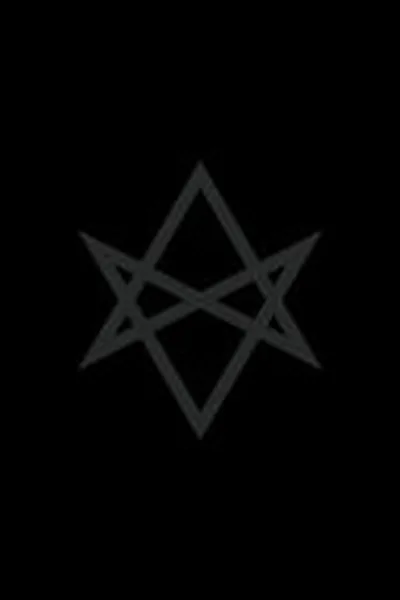
The Unicursal Hexagram, a single continuous line forming a six-pointed star, symbolizes unity and the interconnectedness of diverse elements. In the context of this journal, it likely represents the integration of all aspects of magical practice—theory, ritual, personal experience, and subconscious exploration—into a cohesive whole. Its prominent placement suggests a focus on systems that synthesize disparate concepts into a unified magical working.
💬 Memorable Quotes
Direct passages from the work, attributed to the author.
“Keeping a magical record, magical journal or magical diary is the most important skill in magick and occultism.”
— This statement elevates journaling from a supplementary activity to a core, essential skill for any serious practitioner, highlighting its foundational importance.
“Its is used to record your dreams, magical experiments, rituals and for active exploration of the unconscious and subconscious realms.”
— This defines the complex utility of the journal, encompassing both the documentation of external acts and the internal work of psychic exploration.
“This is a deeply important aspect of Witchcraft, Chaos Magick, Thelema, Satanism, Wiccan and Wiccan Traditions.”
— This broadens the scope of journaling's importance, demonstrating its cross-traditional relevance and necessity for a wide range of occult paths.
“creation of sigils, drawing sketching and writing.”
— These specific creative methods are highlighted as key techniques for engaging with and recording subconscious material within the journal.
“The powerful symbol used in the de”
— This phrase, though incomplete, points to the symbolic nature of the journal's design and its connection to potent magical imagery like the Unicursal Hexagram.
🌙 Esoteric Significance
Tradition
This work aligns with the practical, experiential branches of Western Esotericism, particularly those focused on magical practice and personal gnosis. While titled 'Thelema,' its emphasis on journaling transcends specific dogma, making it relevant to the broader Hermetic and ceremonial magic traditions. It carries the emphasis on meticulous self-recording found in systems originating from figures like Aleister Crowley, but its direct application is universal to any practitioner valuing empirical magical work.
Symbolism
The Unicursal Hexagram, featured prominently, is a potent symbol of unity and integration, representing the seamless connection between the macrocosm and microcosm, or the spiritual and material planes. Within the journal's context, it signifies the holistic approach to magical practice that the journal itself facilitates—unifying disparate experiences and techniques into a coherent, ongoing magical operation recorded within its pages.
Modern Relevance
Contemporary practitioners of Chaos Magick, modern Wicca, and independent ceremonial magicians frequently engage with the principles of magical journaling. The emphasis on documenting subjective experience and the efficacy of personal ritual resonates strongly with current trends in self-directed magical exploration. Thinkers and practitioners who advocate for empirical evidence in magical work find value in the structured recording methods this journal promotes.
👥 Who Should Read This Book
• Aspiring Thelemites and practitioners of ceremonial magic seeking to establish a rigorous personal magical record. • Chaos Magick practitioners looking for a dedicated space to document experiments, sigil work, and altered states of consciousness. • Students of comparative occultism interested in the historical and practical importance of magical diaries across different traditions.
📜 Historical Context
The practice of detailed magical record-keeping has a long lineage, evident in the notebooks of medieval alchemists and Renaissance ceremonial magicians. The late 19th and early 20th centuries saw a significant revival and codification of these practices, notably through figures like Aleister Crowley, who founded Thelema in the early 1900s. Crowley's emphasis on personal magical experience and the meticulous documentation thereof, as seen in his own diaries and writings, laid groundwork for subsequent generations. The 2018 publication of 'Thelema - Unicursal Hexagram' emerges within a modern occult landscape significantly shaped by the rise of Chaos Magick in the late 20th century, which champions experimental approaches and subjective experience, often documented in personal grimoires. While not directly engaging with contemporaries in the same way as 19th-century occultists interacting with figures like Eliphas Lévi, this 2018 journal reflects a continued engagement with foundational magical principles, adapting them for contemporary practitioners who may also be influenced by diverse modern Pagan and esoteric movements.
📔 Journal Prompts
Your recorded dreams from the past week and their potential symbolic connections to the Unicursal Hexagram.
An experiment or ritual you performed, detailing the steps and the resulting subconscious exploration.
The primary skill in magick and occultism, as presented in the introduction, and how your journaling practice reflects this.
Sigil creation documented in your journal: analyze the process and its connection to your inner landscape.
The integration of Witchcraft, Chaos Magick, Thelema, and Satanism through the act of magical record-keeping.
🗂️ Glossary
Thelema
A religious philosophy and spiritual discipline established by Aleister Crowley, based on his purported reception of the Book of the Law in 1904. Its central tenet is 'Do what thou wilt shall be the whole of the Law'.
Unicursal Hexagram
A six-pointed star that can be drawn in a single continuous line. It is often used in occultism to symbolize the union of macrocosm and microcosm, or the integration of diverse magical forces.
Magical Journal
A record book used by occult practitioners to document rituals, spells, dreams, visions, and personal magical experiences, serving as a tool for self-reflection and progress tracking.
Chaos Magick
A modern magical tradition that emphasizes belief as a tool, encouraging practitioners to use any symbols, rituals, or systems that yield results, often focusing on experimental and personalized approaches.
Sigil
A symbol created to represent a specific magical intention or desire. Sigils are often created through processes involving abstracting letters or concepts and then charging them with magical energy.
Subconscious Realms
The part of the mind that is not currently in focal awareness but can be accessed, often through dreams, meditation, or altered states. It is considered a source of intuition, creativity, and hidden knowledge in many esoteric systems.
Occultism
A broad category of esoteric or supernatural beliefs and practices, often involving hidden knowledge, secret traditions, and the study of phenomena beyond the scope of conventional science.