The zelator
 73
73

The zelator
Mark Hedsel's 'The Zelator' offers a clear, if somewhat dry, exposition of foundational magical concepts. Its strength lies in its systematic approach, dissecting the 'Zelator' grade, typically the introductory stage in many Western esoteric orders, with methodical detail. The author’s insistence on intellectual rigor is commendable, particularly when he discusses the necessity of understanding Qabalistic correspondences before attempting advanced workings. However, the prose occasionally suffers from a lack of evocative language; for instance, the description of the astral plane, while factually accurate according to certain traditions, feels more like a technical manual than a living experience. A notable passage is the detailed breakdown of the tools and their symbolic meanings, which is particularly well-executed. While it may not ignite the imagination as some texts do, 'The Zelator' provides a solid, reliable foundation for the earnest student.
📝 Description
73
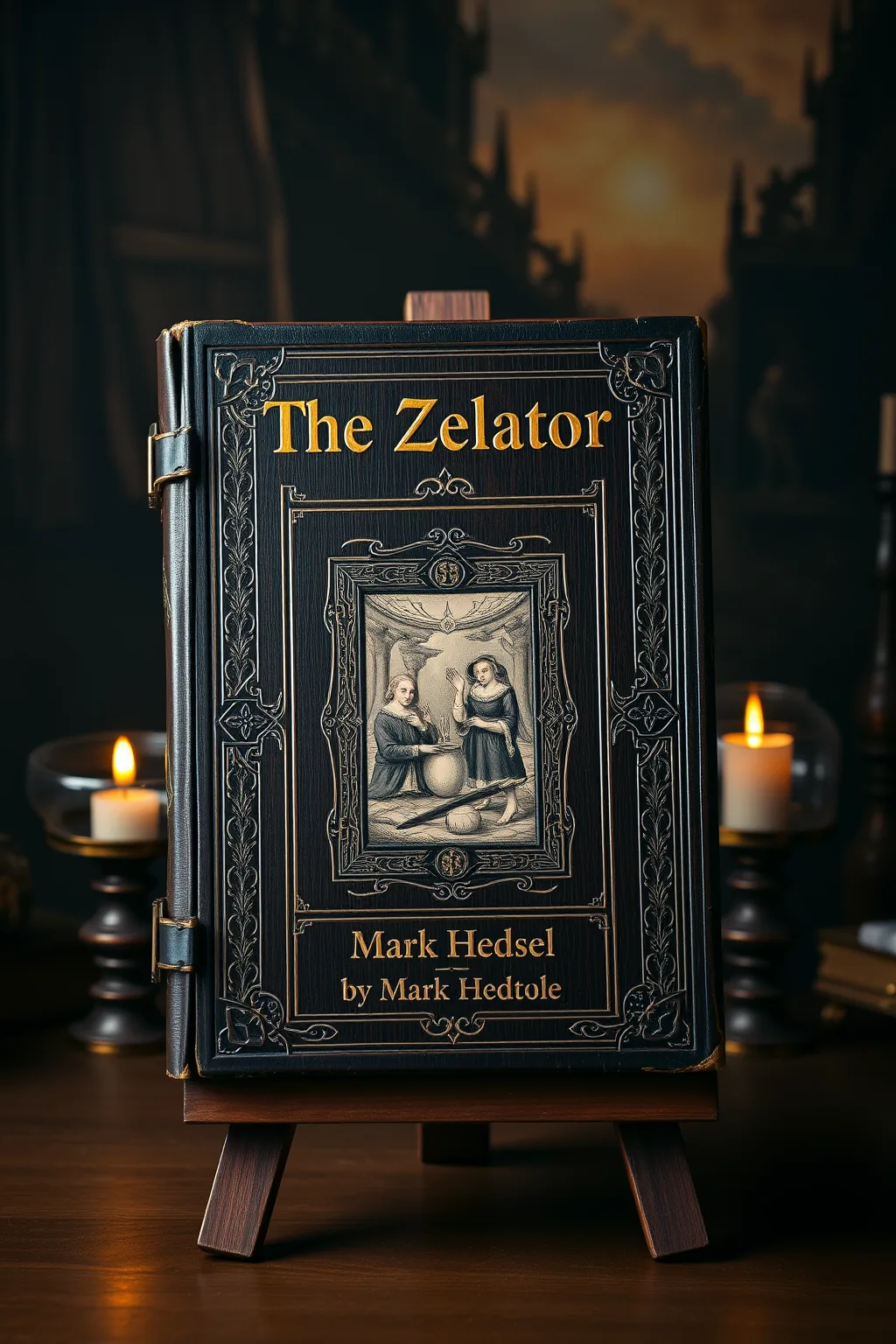
Mark Hedsel's The Zelator, first published in 2000, examines Western occult traditions.
The Zelator is a detailed look at esoteric ideas and methods, originating from Mark Hedsel's first publication in 2000. It aims to help readers grasp the basic principles of Western occult traditions. The book focuses on the serious study and application of metaphysical ideas rather than sensationalism.
This text is for dedicated students of esotericism, especially those interested in Hermeticism and the occult revival movements of the early twentieth century. It will appeal to practitioners who prefer historical accuracy and theoretical depth to simplistic explanations. Readers familiar with figures like Aleister Crowley or Dion Fortune will recognize Hedsel's approach.
The book systematically presents key esoteric concepts, such as the nature of the astral plane, the rules of sympathetic magic, and the role of symbolic language in spiritual growth. It highlights the Zelator grade, often seen as the initial step in magical systems, concentrating on purification, self-knowledge, and the early phases of spiritual advancement.
Published in 2000, The Zelator arrived during a resurgence of interest in occultism. It connects to the historical foundations laid by groups like the Hermetic Order of the Golden Dawn and the subsequent diversification within early twentieth-century magical orders. Hedsel's work addresses the heritage of these movements, particularly their focus on ceremonial magic and Qabalistic studies, placing it within the lineage of Western esotericism.
💡 Why Read This Book?
• Gain a structured understanding of the Zelator grade, the initial phase of many Western esoteric initiations, as detailed in the book's systematic approach to purification and self-awareness. • Grasp the foundational principles of sympathetic magic and the astral plane, concepts central to esoteric practice since at least the Renaissance and explored thoroughly by Hedsel. • Appreciate the crucial role of Qabalistic correspondences in magical work, a concept Hedsel emphasizes as essential for serious practitioners, drawing from traditions formalized in the late 19th century.
⭐ Reader Reviews
Honest opinions from readers who have explored this book.
❓ Frequently Asked Questions
What is the significance of the Zelator grade in esoteric traditions?
The Zelator grade, as explored in Mark Hedsel's work, typically represents the first step in initiatory systems. It focuses on foundational spiritual work, purification, and developing basic awareness of esoteric principles and the astral realm.
When was 'The Zelator' first published?
'The Zelator' by Mark Hedsel was first published in the year 2000, positioning it within a contemporary wave of interest in esoteric studies.
Does the book cover practical magical techniques?
While 'The Zelator' lays the groundwork for practical techniques by explaining underlying principles and symbolism, its primary focus is on the theoretical and preparatory stages essential for understanding more advanced magical operations.
What esoteric traditions does 'The Zelator' draw upon?
The work primarily draws from Western esoteric traditions, with a strong emphasis on Hermeticism, Qabalistic studies, and the principles common to initiatory magical orders that emerged in the late 19th and early 20th centuries.
Is 'The Zelator' suitable for complete beginners in esotericism?
Yes, the book is designed to introduce fundamental concepts, making it suitable for beginners. However, it demands a serious and studious approach, akin to academic learning, rather than offering quick-fix magical solutions.
What is the author's background or affiliation mentioned in the book?
Information regarding Mark Hedsel's specific affiliations or detailed background is not explicitly detailed within the book's core content, allowing the focus to remain on the presented esoteric principles and practices.
🔮 Key Themes & Symbolism
The Zelator Grade
The book meticulously details the Zelator grade, often the initial step in Western magical initiatory systems. This includes the purification rituals, the development of self-awareness, and the fundamental understanding of one's place within the spiritual hierarchy. Hedsel emphasizes the importance of this foundational stage, likening it to building a solid base for future spiritual architecture. The work clarifies the symbolic meaning behind the rituals and meditations associated with this grade, drawing parallels to early Hermetic teachings.
Astral Plane Dynamics
A significant focus is placed on the nature and function of the astral plane. Hedsel explains it not merely as a metaphysical concept but as an accessible dimension for consciousness exploration. The text outlines how practitioners can begin to perceive and interact with this plane, stressing the need for mental discipline and ethical considerations. This exploration is crucial for understanding phenomena such as clairvoyance and psychic sensitivity, linking it to earlier discussions by figures like Eliphas Lévi.
Qabalistic Correspondences
The intricate system of Qabalistic correspondences forms a backbone of the book's teachings. Hedsel illustrates how the Tree of Life, the Sephiroth, and the paths are not abstract philosophical constructs but practical tools for magical work and spiritual mapping. The book guides readers on how to apply these correspondences to various elements, planets, and Hebrew letters, providing a framework for understanding the interconnectedness of the cosmos as understood in traditions influenced by the Hermetic Order of the Golden Dawn.
Symbolism in Practice
Hedsel underscores the vital role of symbolism in esoteric practice. He argues that symbols are not mere decorations but potent carriers of energetic and conceptual information. The book examines the symbolic meaning of ritual tools, geometric shapes, and even letters, explaining how their proper understanding unlocks deeper levels of spiritual comprehension and magical efficacy. This approach aligns with the symbolic language prevalent in Renaissance Hermeticism and later occult revivals.
💬 Memorable Quotes
Direct passages from the work, attributed to the author.
“The Zelator’s work is primarily internal, a preparation of the vessel.”
— This statement highlights the foundational nature of the Zelator grade, emphasizing that its core purpose is not external manifestation but the internal purification and readiness of the practitioner's consciousness and energetic body.
“Understanding the astral requires a disciplined mind, not merely a curious one.”
— This points to the necessity of mental control and focus when exploring the astral plane. It suggests that passive curiosity is insufficient; active, disciplined engagement is key to navigating this dimension safely and effectively.
“Every symbol carries layers of meaning, accessible through sustained contemplation.”
— This underscores the depth of esoteric symbolism. It implies that true understanding comes not from a single definition but from prolonged, focused meditation upon a symbol, revealing its many-sided significance.
“The correspondences are the grammar of the magical language.”
— This interpretation emphasizes the systematic and structural role of correspondences (like Qabalistic ones) in magic. They provide the rules and relationships that allow for coherent and effective magical communication and operation.
“The first step is always the most crucial for establishing a firm foundation.”
— This reflects the importance placed on the initial stages of esoteric training. It suggests that neglecting or rushing through foundational work, such as the Zelator grade, can compromise all subsequent magical development.
🌙 Esoteric Significance
Tradition
The work is firmly rooted in the Western Esoteric Tradition, specifically drawing heavily from Hermeticism and Qabalistic magic. It aligns with the initiatory framework established by late 19th and early 20th-century magical orders, such as the Hermetic Order of the Golden Dawn, which codified many of the concepts discussed. Hedsel’s approach emphasizes the structured, step-by-step progression through defined grades of spiritual development, positioning 'The Zelator' as a manual for the initial stages of this path.
Symbolism
Key symbols explored include the square (representing the material plane and the foundation of the Zelator's work), the circle (representing the divine or the microcosm/macrocosm), and the tools of the craft (like the dagger and wand, representing will and elemental forces). The Hebrew letters and their associated paths on the Qabalistic Tree of Life are also central, serving as symbolic keys to understanding cosmic structure and spiritual evolution.
Modern Relevance
Contemporary practitioners of Hermeticism, Qabalism, and ceremonial magic frequently reference 'The Zelator' as a foundational text for understanding the initial stages of their chosen paths. It is often recommended for those seeking a structured, intellectual approach to magic, complementing more practical or experiential techniques found in modern witchcraft or neo-shamanic traditions. Its clarity makes it a valuable resource for comparative studies within the broader field of esoteric philosophy.
👥 Who Should Read This Book
• Aspiring students of Western Esotericism seeking a foundational understanding of initiatory magic, particularly the Zelator grade. • Practitioners interested in the Qabalistic underpinnings of magical systems, who require a clear exposition of correspondences and their application. • Individuals studying the history and development of occult orders from the late 19th century onwards, looking for insight into their foundational teachings.
📜 Historical Context
Mark Hedsel's 'The Zelator', published in 2000, emerged in a landscape shaped by the late 20th-century resurgence of interest in Western esotericism. This period saw a proliferation of texts drawing from the legacy of occult orders like the Hermetic Order of the Golden Dawn, founded in 1888, and the Theosophical Society, established in 1875. Hedsel's work engages directly with the foundational concepts and initiatory structures prevalent in these movements, particularly the early grades of magical training. It offers a more structured and academically-oriented approach compared to some of the more popularized occult writings of the 1970s and 80s. While not directly engaging with contemporaries in a polemical fashion, the book implicitly responds to the need for clear, systematic instruction in core esoteric principles, distinguishing itself from more experiential or syncretic approaches that also gained traction around the millennium.
📔 Journal Prompts
The Zelator's primary task of internal purification: how does this concept apply to your daily life?
Reflect on the symbolic meaning of the dagger as presented in the text.
Consider the necessity of disciplined thought when exploring the astral plane.
Map one personal belief or practice onto the Qabalistic framework discussed.
Analyze the relationship between the square and the circle as foundational symbols.
🗂️ Glossary
Zelator
The first grade in many Western esoteric initiatory systems, focusing on foundational spiritual development, purification, and the initial understanding of esoteric principles.
Astral Plane
A subtle, non-physical dimension of existence, often described as a field of thought-forms, emotions, and psychic energies, accessible through altered states of consciousness.
Qabalah
A complex system of Jewish mysticism, adapted by Western esotericism, involving cosmology, divine emanations (Sephiroth), and symbolic correspondences used for spiritual understanding and magical practice.
Correspondences
The intricate system of relationships between different elements within esoteric systems, such as planets, elements, Hebrew letters, colors, and divine names, used for magical and divinatory purposes.
Sympathetic Magic
The belief that like affects like, or that a cause affects its effect through means other than direct physical or mechanical connection, often involving the use of effigies or symbolic representations.
Initiation
A ritual or ceremony that marks a person's transition into a new stage of knowledge, spiritual understanding, or membership within a group or tradition.
Hermeticism
A spiritual, philosophical, and esoteric tradition based primarily upon the writings attributed to Hermes Trismegistus, emphasizing principles like 'As Above, So Below'.
🔮 Readers Also Liked
Browse all →








More by Mark Hedsel
All books →
More Free Alchemy & Hermeticism Books
View all →