Pan-Sophia

 79
79

Pan-Sophia
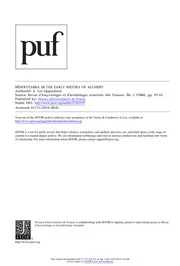
Pan-Sophia offers a refreshing, if uneven, look at theosophy and esotericism through the lens of student scholarship. The strength lies in its commitment to presenting academic explorations of subjects often shrouded in obscurity. The inclusion of essays on the history of scientific inquiry in mysticism, for instance, provides a valuable counterpoint to purely dogmatic interpretations. However, the quality, as expected from a collection of exam papers, varies significantly between contributors. One particular limitation is the occasional lack of deep engagement with primary esoteric texts, relying instead on secondary interpretations. A notable passage discusses the historical opinions concerning alchemy, highlighting its dual nature as a spiritual path and a practical, albeit often misunderstood, art. While not a definitive treatise, Pan-Sophia functions as an interesting survey of academic approaches to esoteric thought. It serves its purpose as an educational compilation, offering a glimpse into how these complex subjects are being dissected by emerging scholars.
📝 Description
79
Pan-Sophia collects student exam papers on theosophy and esotericism, published in 2018.
This 2018 collection, compiled by Tim Rudbg and Ida Skovhus Hansen, gathers student exam papers on theosophy and esotericism. The editors selected articles for their clarity and relevance to complex mystical subjects. The book acts as an accessible introduction for those new to the academic study of these fields. It appeals to students and enthusiasts of esoteric philosophy and theosophy who seek structured, academic examinations of topics often discussed speculatively. Readers interested in the historical development of mystical thought, comparative religion, and the philosophical foundations of occult traditions will find its rigorous analysis valuable. The publication situates itself within the ongoing academic engagement with esoteric traditions that has grown since the late 20th century. By featuring student work, it represents a contemporary pedagogical method for understanding these subjects, moving beyond purely historical or theological viewpoints. The inclusion of topics from antiquity through the Middle Ages, and analyses of alchemy, demonstrates a connection between historical esoteric practices and current intellectual discourse.
Pan-Sophia engages with the academic study of esotericism, a field that has seen increased scholarly attention in recent decades. It highlights a pedagogical approach that uses student research to understand mystical traditions, moving beyond older, purely historical or theological analyses. The book’s focus on topics from antiquity to the Middle Ages, including alchemy, bridges historical esoteric practices with contemporary intellectual currents. This collection reflects an interest in applying rigorous academic methods to subjects often considered speculative.
💡 Why Read This Book?
• Gain insight into the historical intersection of scientific inquiry and mysticism, as demonstrated by the journal's examination of how ancient and medieval thinkers approached the study of the unseen. • Understand the multifaceted nature of alchemy beyond its chemical associations, by engaging with essays that explore its philosophical and spiritual dimensions as presented in the text. • Appreciate the academic approach to theosophy, by encountering student analyses of its core tenets and historical development, providing a structured perspective on this complex field of study.
⭐ Reader Reviews
Honest opinions from readers who have explored this book.
❓ Frequently Asked Questions
What is the primary focus of the articles in Pan-Sophia?
The primary focus is on theosophy and esotericism, presented through academic exam papers. Articles explore historical scientific inquiry in mysticism, medieval esotericism, and opinions on alchemy.
Who are the authors of Pan-Sophia?
Pan-Sophia was compiled by Tim Rudbg and Ida Skovhus Hansen. The book itself contains contributions from students, not just the editors.
When was Pan-Sophia first published?
Pan-Sophia was first published in October 2018. This edition represents a curated selection of student work from that period.
What historical periods does the journal cover?
The journal covers a broad historical spectrum, including mysticism from antiquity through the Middle Ages, and touches upon the historical development of scientific inquiry within mystical traditions.
Is Pan-Sophia suitable for beginners in esotericism?
Yes, it is suitable for beginners and students who appreciate academic rigor. The articles are selected for conveying interesting and relevant ideas, offering a structured introduction to complex topics.
What is the significance of 'Pan-Sophia' as a title?
The title 'Pan-Sophia' suggests 'all-encompassing wisdom,' aligning with the journal's broad exploration of diverse esoteric and theosophical concepts from various historical and philosophical perspectives.
🔮 Key Themes & Symbolism
Theosophy and Esotericism
This theme frames the core content of Pan-Sophia, examining theosophical principles and a range of esoteric traditions. The journal explores how these diverse fields of knowledge have been studied academically, moving beyond anecdotal evidence to structured analysis. It highlights the connections and distinctions between theosophy, often linked to Helena Blavatsky's work, and the broader spectrum of esoteric thought, encompassing ancient mysteries and medieval practices.
Historical Scientific Inquiry
Pan-Sophia investigates the historical relationship between scientific methods and mystical pursuits. It challenges the notion of a strict dichotomy between empirical science and esoteric knowledge, presenting how thinkers across different eras sought to understand the universe through observation, reason, and intuitive insight. This theme underscores the long-standing human endeavor to reconcile the material and the spiritual.
Medieval Mysticism and Alchemy
The journal looks at the rich field of mysticism from antiquity to the Middle Ages. A significant focus is placed on alchemy, not just as an early form of chemistry, but as a complex symbolic system. The essays explore the philosophical and spiritual dimensions of alchemical practices, viewing them as pathways to transformation and hidden knowledge, reflecting medieval worldviews.
Academic Study of Esotericism
This theme emphasizes the pedagogical and scholarly approach taken in Pan-Sophia. By featuring student exam papers, the collection showcases how esoteric subjects are being critically examined within academic settings. It highlights the value of rigorous research in understanding traditions often perceived as outside mainstream scholarship, fostering a more nuanced appreciation of their historical and intellectual significance.
💬 Memorable Quotes
Direct passages from the work, attributed to the author.
“Opinions concerning alchemy encompass its dual nature as spiritual path and practical art.”
— This highlights the complex historical understanding of alchemy, recognizing it not solely as a precursor to modern chemistry but as a system of symbolic transformation and spiritual discipline.
“Mysticism from antiquity to the Middle Ages reveals continuous threads of esoteric inquiry.”
— This suggests that despite vast cultural and temporal differences, core elements of mystical experience and the pursuit of hidden knowledge persisted and evolved throughout ancient and medieval periods.
“The history of scientific inquiry in mysticism shows a persistent search for universal principles.”
— This points to an enduring human effort to find underlying order and meaning in the cosmos, utilizing both observational methods and intuitive understanding across various philosophical and spiritual traditions.
“The journal's articles were chosen for conveying interesting and relevant ideas.”
— This editorial principle emphasizes the value placed on intellectual engagement and the accessibility of complex esoteric concepts, aiming to educate and stimulate thought among readers.
“Pan-Sophia serves as a student journal on theosophy and esotericism.”
— This defines the book's fundamental purpose: a collection of academic works focused on understanding divine wisdom (theosophy) and hidden knowledge (esotericism) through scholarly investigation.
🌙 Esoteric Significance
Tradition
Pan-Sophia primarily engages with the Theosophical tradition, as articulated by Helena Blavatsky, and broader Western Esotericism. It positions itself as an academic exploration of these fields, seeking to understand their historical development and philosophical underpinnings. By presenting student research, it contributes to the ongoing academic legitimation of esoteric studies, bridging the gap between traditional occult scholarship and contemporary intellectual inquiry.
Symbolism
While specific symbols are explored within individual articles, the overarching symbolism of 'Pan-Sophia' itself—'all-encompassing wisdom'—is central. This title suggests a synthesis of diverse knowledge systems. The journal's treatment of alchemy, for instance, implicitly engages with its rich symbolic language, representing spiritual transformation through material processes, a common motif in Hermetic traditions.
Modern Relevance
The work's modern relevance lies in its contribution to the academic study of esotericism. It reflects a contemporary approach to understanding hidden traditions, influencing current academic discourse and curriculum development. Thinkers and students engaging with comparative religion, the history of ideas, and the philosophical underpinnings of consciousness may find its structured approach to topics like Theosophy and alchemy particularly useful.
👥 Who Should Read This Book
• Students of comparative religion and philosophy seeking structured academic analyses of esoteric traditions and theosophy. • Researchers interested in the historical development of mystical thought from antiquity through the Middle Ages, particularly concerning alchemy. • Individuals curious about the academic study of occult and metaphysical subjects, who appreciate critical examination over purely devotional approaches.
📜 Historical Context
Pan-Sophia emerges from a period of burgeoning academic interest in esotericism, particularly from the late 20th century onwards. This intellectual climate saw scholars increasingly engaging with previously marginalized traditions, moving beyond purely historical or sociological analyses to explore their philosophical and intellectual contributions. The journal's focus on student work, first published in 2018, reflects this contemporary pedagogical trend of incorporating esoteric studies into academic curricula. It situates itself against a backdrop where thinkers like Antoine Faivre were instrumental in establishing 'esotericism' as a legitimate field of historical research. While not engaging directly with specific reception events like censorship or major reviews, the book implicitly participates in the broader academic discourse that sought to understand traditions like Theosophy, founded by Helena Blavatsky, and medieval alchemy, moving them from the periphery to the center of intellectual history. This contrasts with earlier eras where such topics might have been dismissed outright or studied only through the lens of their perceived deviations from established religious or scientific norms.
📔 Journal Prompts
Reflect on the historical trajectory of scientific inquiry within mysticism as presented in the journal.
Analyze the dual nature of alchemy discussed in the essays.
Consider the evolution of theosophical concepts across different historical periods examined.
Evaluate the academic methodology used in the student papers.
Compare the treatment of mysticism in antiquity versus the Middle Ages within the journal's scope.
🗂️ Glossary
Theosophy
A philosophical system advocating a belief in divine wisdom, often associated with Helena Blavatsky's teachings, seeking to reconcile science, religion, and philosophy through esoteric knowledge.
Esotericism
A broad category of mystical or occult traditions that are usually secret, hidden, or intended for a select group of initiates, focusing on inner knowledge and spiritual transformation.
Alchemy
An ancient tradition involving the study of transmutation of substances, often interpreted as a symbolic process of spiritual purification and enlightenment alongside its material aims.
Mysticism
The practice of achieving communion with divine or ultimate reality, often through altered states of consciousness, direct experience, and intuitive insight.
Antiquity
The period of history before the Middle Ages, generally from the earliest recorded human history up to the 5th century CE, including ancient Greek, Roman, and Egyptian civilizations.
Middle Ages
The period of European history between the fall of the Western Roman Empire (5th century) and the beginning of the Renaissance (around the 15th century).
Scientific Inquiry
A systematic process of observation, experimentation, and rational analysis used to investigate phenomena, understand the natural world, and acquire knowledge.
This book appears in 1 collection
🔮 Readers Also Liked
Browse all →









From the “Western Esotericism” Collection
View all →



More Free Occult Philosophy Books
View all →