Perfect Timing
 71
71

Perfect Timing
Von Braschler’s *Perfect Timing* doesn’t just suggest faster reactions; it posits a method for fundamentally altering one's temporal experience. The book’s strength lies in its practical exercises, which aim to induce states where the subjective experience of time dilates, allowing for accelerated processing. For instance, the exercises designed to foster what the book calls 'temporal awareness' provide tangible, albeit challenging, pathways to achieving this. However, the work sometimes leans heavily on anecdotal evidence without fully grounding its more extraordinary claims in empirical science, a common pitfall in esoteric literature. The central premise—that athletes can 'freeze' time—is provocative, but the mechanisms proposed remain largely within the realm of subjective experience rather than measurable physics. Despite this, the book offers a unique perspective on human potential, urging readers to question the perceived limits of their own capabilities. It is a compelling, if sometimes speculative, exploration of consciousness.
📝 Description
71
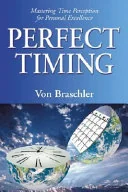
Von Braschler's 2002 book *Perfect Timing* claims consciousness can manipulate subjective experience of time.
Published in 2002, *Perfect Timing* by Von Braschler presents a system for enhancing human performance by accessing latent temporal abilities. The book moves past common self-improvement techniques, suggesting that consciousness can alter how we perceive time. Braschler outlines methods to quicken mental and physical reactions, drawing comparisons to the remarkable abilities of elite athletes.
This work is for individuals aiming to surpass their personal limits in sports, creative work, or everyday life. It will interest those curious about esoteric psychology, consciousness studies, and the mind-body connection. Readers feeling restricted by perceived limits of time and speed will discover exercises and ideas intended to broaden their capabilities.
Emerging in the early 2000s, *Perfect Timing* arrived during a period of increased focus on mind-body integration and unconventional performance enhancement. This era saw widespread discussion, both popular and academic, concerning neuroplasticity and human mental potential, itself influenced by earlier humanistic psychology and Eastern meditation. Braschler's work fits within this cultural trend of examining consciousness's untapped capacities and subjective temporal control.
💡 Why Read This Book?
• Learn to manipulate your subjective experience of time, enhancing reaction speed and cognitive processing, as detailed in the exercises for achieving 'heightened states' described in the book. • Gain practical techniques, inspired by elite athletes’ documented abilities, to perform complex actions with greater precision and speed, as explored in the book's core concepts. • Understand the esoteric principles behind temporal perception, challenging your perceived limitations and unlocking new potentials for mental and physical performance, as presented in the 2002 publication.
⭐ Reader Reviews
Honest opinions from readers who have explored this book.
❓ Frequently Asked Questions
What specific exercises does Von Braschler suggest for manipulating time perception in 'Perfect Timing'?
The book details various exercises designed to cultivate heightened states of awareness. These often involve focused concentration and visualization techniques intended to alter the subjective experience of time, allowing for accelerated thought and action, as discussed in the text.
How does 'Perfect Timing' relate to the abilities of elite athletes?
Braschler posits that elite athletes, through intense training and focus, unconsciously tap into principles of temporal manipulation. The book aims to make these abilities conscious and accessible to the general reader, drawing parallels to their exceptional performances.
Is 'Perfect Timing' a scientific or an esoteric text?
While it draws inspiration from observed human performance, 'Perfect Timing' is primarily an esoteric text. It explores consciousness and subjective experience through a metaphysical lens, rather than adhering strictly to empirical scientific methodology.
What is the core concept of 'freezing time' as presented by Von Braschler?
The 'freezing time' concept refers to a subjective state where one's perception of time slows down dramatically, allowing for enhanced cognitive processing and reaction speed. It's about experiencing more subjective time within a given objective duration.
When was Von Braschler's 'Perfect Timing' first published, and what was the context?
The book was first published in 2002, during a period of increased interest in mind-body connections and human potential, reflecting a broader cultural fascination with consciousness and enhanced performance.
Can readers expect to literally stop time after reading 'Perfect Timing'?
The book focuses on the subjective experience and perception of time. Readers can learn to enhance their own temporal awareness and reaction capabilities, but it does not claim literal control over objective, external time.
🔮 Key Themes & Symbolism
Subjective Time Dilation
The central theme is the malleability of perceived time. The book argues that through specific mental disciplines, individuals can enter states where subjective time appears to slow down, granting them an advantage in speed and cognitive processing. This concept moves beyond physics to explore the psychological and metaphysical aspects of temporal experience, suggesting that our internal clock is not fixed but can be trained and expanded.
Mind-Body Synergy for Performance
Perfect Timing explores the profound connection between mental states and physical execution. It posits that achieving peak performance, particularly in speed and precision, requires a synchronized mind and body. The work details how athletes and others can cultivate this synergy, using consciousness to enhance motor skills and decision-making under pressure, moving beyond mere physical training.
Esoteric Athlete Archetype
The book uses the archetype of the 'esoteric athlete' – one who possesses extraordinary speed and timing not just through physical conditioning, but through mastery of consciousness. This figure represents the human potential for transcending ordinary limitations by understanding and applying esoteric principles to kinetic and cognitive tasks. It reframes athletic prowess as a potentially conscious, spiritual discipline.
Cultivating Temporal Awareness
A significant theme is the development of 'temporal awareness' – a heightened sensitivity to the flow of time and one's own relationship to it. The book provides practical exercises designed to build this awareness, enabling readers to better anticipate events, react instantaneously, and operate with a perceived advantage in timing. This is presented as a learnable skill, not an innate gift.
💬 Memorable Quotes
Direct passages from the work, attributed to the author.
“Athletes 'freeze' time to accomplish amazing feats.”
— This iconic phrase captures the book's central premise: that peak performers can enter altered states where their subjective experience of time expands, allowing for seemingly superhuman reactions and precision. It suggests a conscious control over temporal perception.
“Readers learn to run faster and think quicker.”
— This highlights the practical outcome promised by the book. It's not just theoretical; Braschler offers methods intended to yield tangible improvements in both physical speed and mental processing agility through esoteric techniques.
“Contains exercises for achieving heightened states.”
— This points to the pedagogical nature of the work. The book functions as a manual, providing concrete practices designed to guide the reader toward altered states of consciousness conducive to enhanced temporal perception and performance.
“Secrets of athletes who 'freeze' time.”
— This suggests that the book unveils hidden knowledge previously accessible only to a select few, particularly elite athletes. It positions the content as a form of occulted wisdom regarding human potential and temporal mastery.
“Moving beyond conventional methods of self-improvement.”
— This frames the book as a radical departure from typical self-help literature. It implies that the techniques and philosophies presented are unconventional, tapping into deeper, possibly metaphysical, principles to achieve results.
🌙 Esoteric Significance
Tradition
The work draws implicitly from traditions that explore consciousness as a fundamental force, possibly aligning with Hermetic or New Age philosophies that emphasize the mind's power over perceived reality. It departs from strict adherence to any single lineage, instead synthesizing concepts to create a practical system for enhancing human temporal experience.
Symbolism
While not overtly symbolic in the traditional esoteric sense, the 'athlete' serves as a powerful archetype of human potential pushed to its limits. The concept of 'freezing time' itself functions metaphorically, symbolizing a mastery over the mundane constraints of linear progression and a conscious engagement with deeper temporal flows.
Modern Relevance
Contemporary interest in biohacking, mindfulness for athletes, and expanded states of consciousness echoes themes present in *Perfect Timing*. Thinkers and practitioners in fields like performance psychology, lucid dreaming, and consciousness exploration may find Braschler's work a precursor to modern inquiries into subjective temporal experience and cognitive enhancement.
👥 Who Should Read This Book
• Athletes and performers seeking to enhance reaction times and precision by exploring the mental dimensions of peak performance. • Individuals interested in consciousness studies and esoteric psychology who wish to understand the subjective nature of time and its manipulation. • Self-improvement enthusiasts looking for unconventional methods to overcome perceived limitations in speed, focus, and cognitive agility.
📜 Historical Context
Published in 2002, Von Braschler's *Perfect Timing* emerged within a cultural landscape increasingly fascinated by human potential and the mind's capacity to influence physical reality. The early 2000s saw a confluence of interest in disciplines like peak performance psychology, consciousness studies, and esoteric traditions, building on the burgeoning fields of neuroscience and cognitive psychology. This era was marked by popular books exploring latent human abilities and the power of the mind, often drawing from Eastern philosophies and practices. Braschler’s work sits alongside contemporaries like those exploring flow states or the neurological underpinnings of exceptional performance, but distinctly leans into metaphysical interpretations. While figures like Timothy Gallwey were popularizing introspective approaches to sport, Braschler's focus on 'freezing time' offered a more overtly esoteric and speculative angle, distinguishing it from purely psychological or physiological accounts of athletic achievement.
📔 Journal Prompts
Reflect on the concept of 'freezing time' as presented in the book.
Analyze the relationship between 'heightened states' and athletic performance.
Consider the potential for training 'temporal awareness'.
Explore personal experiences of subjective time distortion.
How might the 'secrets of athletes' be applied to daily life challenges?
🗂️ Glossary
Heightened States
Altered states of consciousness characterized by increased focus, awareness, and a perceived expansion of mental or temporal capacity, often induced through specific mental exercises.
Temporal Awareness
A cultivated sensitivity to the flow of time and one's own subjective experience within it, enabling enhanced perception and reaction.
Freeze Time
A subjective experience where the perception of time slows dramatically, allowing for accelerated thought and action within a given objective timeframe.
Esoteric Secrets
Knowledge or techniques derived from non-mainstream, often metaphysical or spiritual traditions, believed to unlock hidden potentials or understanding.
Cognitive Processing
The mental operations involved in acquiring, storing, manipulating, and recalling information; in this context, enhanced speed and efficiency are key.
Kinetic Skills
Abilities related to the generation and execution of physical movement, particularly those requiring speed, precision, and coordination.
Subjective Experience
An individual's personal, internal perception and interpretation of events or phenomena, as opposed to objective, external reality.
This book appears in 2 collections
🔮 Readers Also Liked
Browse all →









From the “Energy Healing” Collection
View all →








More Free Occult Philosophy Books
View all →