The witch-cult in Western Europe
 72
72

The witch-cult in Western Europe
Margaret Murray's *The Witch-Cult in Western Europe* remains a pivotal, if problematic, text in the study of witchcraft. Its strength lies in Murray's audacious synthesis of disparate historical records, presenting a coherent, if speculative, vision of a surviving pagan religion. She compels the reader to reconsider the nature of the evidence presented in witch trials, particularly her detailed analysis of the 'Diabolerie' confessions. However, the book's primary limitation is its methodological approach; Murray often assumes the literal truth of confessions, overlooking the psychological pressures, torture, and ingrained Christian cosmology that shaped them. The assertion that the 'Devil' in confessions was a Christian misunderstanding of a Horned God, while influential, is a leap not fully substantiated by the trial texts themselves. Despite its scholarly shortcomings, the book’s enduring legacy is its profound influence on 20th-century pagan revival movements, which found in Murray's work a historical justification for their beliefs.
📝 Description
72
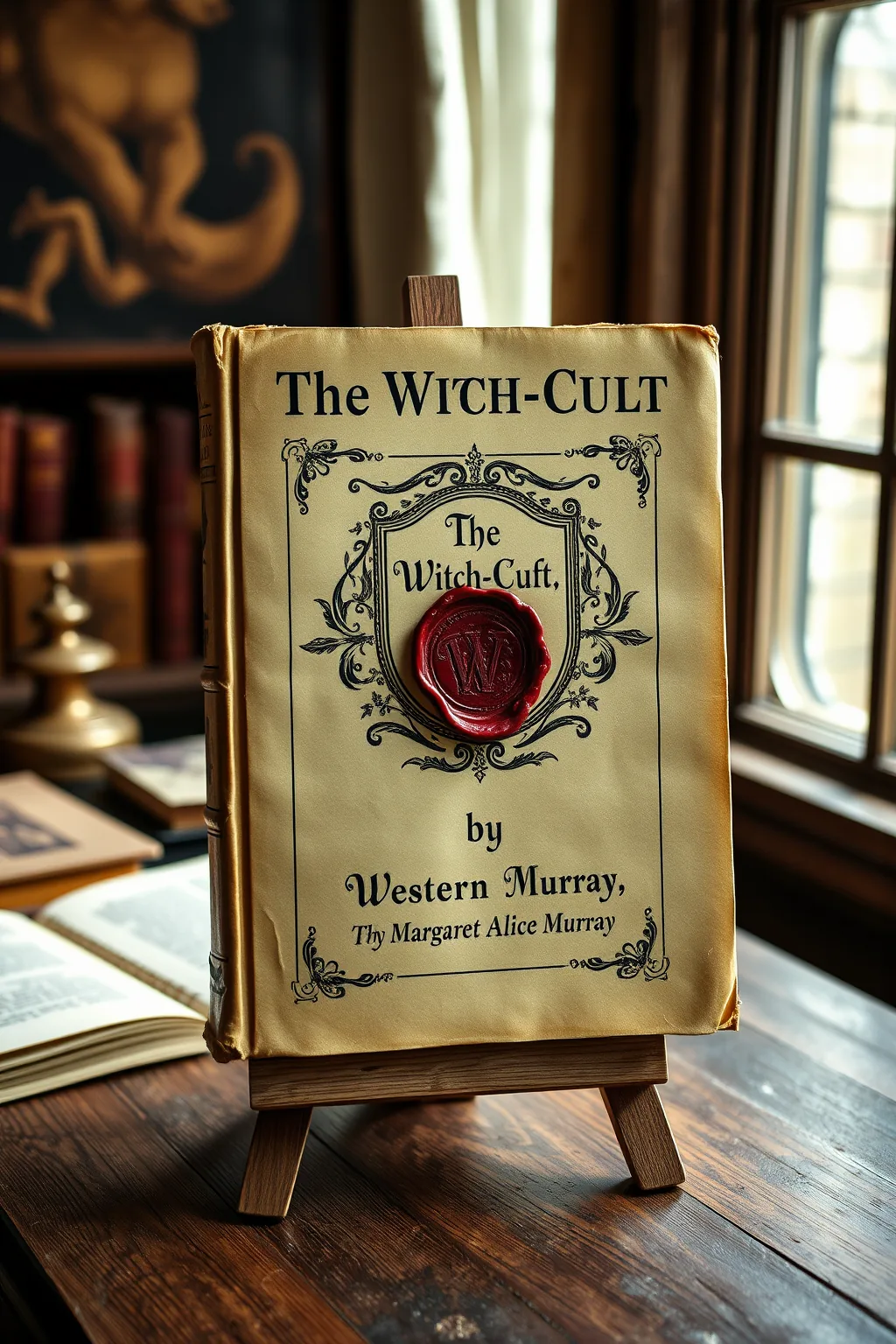
Margaret Alice Murray's 1921 book proposed witchcraft was a surviving pagan religion, not mere superstition.
Published in 1921, Margaret Alice Murray's The Witch-Cult in Western Europe argued that European witchcraft represented the continuation of an ancient, organized pagan religion. Murray posited a secret cult, predating Christianity, with specific practices and structures evident across the continent. She based her argument on historical trial records, folklore, and observations of existing traditions, suggesting a nature-based spirituality that persisted underground.
This work generated significant debate upon its release and has remained a subject of discussion among scholars for a century. It speaks to students of Western esotericism, comparative religion, and early modern European history. Those interested in the historical roots of paganism and modern witchcraft movements will find its perspective, though contested, important. Researchers of folklore, mythology, and the social history of witchcraft will also find value in Murray's use of trial evidence.
Murray's research appeared during a period of heightened interest in occult studies and ancient traditions, influenced by movements like Theosophy and the developing field of anthropology. The book's central claim that witchcraft trials pointed to a genuine, organized pagan cult challenged contemporary academic views. It emerged within an intellectual environment where scholars were exploring non-mainstream spiritual and historical narratives, positioning it as a significant, albeit controversial, contribution to occult and historical scholarship of its time.
💡 Why Read This Book?
• Gain a foundational, albeit debated, historical argument for the existence of an organized pagan witch-cult, as presented through Murray's interpretation of 15th-century European witch trial records. • Understand the concept of the 'Horned God' as Murray defines it, exploring how she interprets its role and worship within the supposed clandestine religious structure she outlines. • Examine Murray's controversial methodology, which treats confessions from witch trials as literal descriptions of cult practices rather than as products of duress or religious persecution.
⭐ Reader Reviews
Honest opinions from readers who have explored this book.
❓ Frequently Asked Questions
When was Margaret Murray's The Witch-Cult in Western Europe first published?
Margaret Murray's seminal work, The Witch-Cult in Western Europe, was first published in 1921, making it a foundational text in the study of historical witchcraft and paganism.
What is the central thesis of The Witch-Cult in Western Europe?
The book's central thesis is that witchcraft trials in Europe did not represent random acts of superstition but were evidence of a continuous, organized, pre-Christian pagan religion surviving underground.
What kind of evidence did Margaret Murray use to support her claims?
Murray primarily used historical records from European witch trials, along with folklore and anthropological observations, to argue for the existence of an organized witch-cult.
Was Margaret Murray's thesis widely accepted by scholars?
No, Murray's thesis was highly controversial and debated. While influential among occultists and some historians, many scholars criticized her methodology and interpretation of historical evidence.
What is the 'Horned God' according to Murray's book?
According to Murray, the 'Horned God' was a central deity worshipped by the clandestine witch-cult she describes, often identified by Christian inquisitors as the Devil.
How did The Witch-Cult in Western Europe influence later movements?
The book significantly influenced the 20th-century pagan revival and modern witchcraft movements, providing them with a historical narrative and perceived legitimacy for their spiritual practices.
🔮 Key Themes & Symbolism
The Organized Witch-Cult
Murray posits that 'witchcraft' was not isolated superstition but the practice of an ancient, organized pagan religion that persisted throughout Europe. This cult, she argues, possessed a distinct structure, hierarchy, and regular ceremonial gatherings known as Sabbat. She meticulously analyzes trial records from the 15th century onwards, interpreting confessions of pacts with the Devil, sabbatic rites, and magical practices as evidence of this ongoing religious tradition, rather than mere fabrications under duress or delusion.
The Horned God
A central figure in Murray's thesis is the Horned God, whom she identifies as the principal deity worshipped by the European witch-cult. She interprets the frequent appearance of the Devil in witch trial confessions not as the Christian Satan, but as a Christian misrepresentation of this ancient pagan god. The book explores the attributes and worship associated with this deity, linking him to fertility, nature, and the wild, and suggesting his veneration was a core element of the clandestine religious practices.
Witchcraft as Survival
Murray's work frames witchcraft not as a heresy to be eradicated, but as a surviving pagan religion that Christian authorities actively persecuted. She argues for the continuity of this tradition from pre-Christian times, suggesting that the trials were an attempt to suppress a deeply entrenched, widespread spiritual system. The book examines how this 'cult' adapted and persisted, often in secret, across different regions and centuries, presenting a radical reinterpretation of the historical witch hunts.
Regional Variations and Evidence
The Witch-Cult in Western Europe meticulously details regional variations in the alleged practice of the witch-cult, drawing evidence from France, Scotland, England, and other parts of Europe. Murray presents specific examples of rituals, organizational structures, and beliefs attributed to witches in different locales, using court documents as her primary source. Her method involves comparing these testimonies to identify common threads that support her overarching theory of a unified, yet geographically diverse, pagan religious survival.
💬 Memorable Quotes
Direct passages from the work, attributed to the author.
“The Sabbat was a regularly organised meeting of the cult.”
— This highlights Murray's view of the Witches' Sabbat not as a fantastical event, but as a structured, recurring religious assembly of the pagan cult she theorizes existed.
“The evidence derived from the confessions themselves is so overwhelming that it is impossible to resist the conclusion that the trials were based on fact.”
— This statement reflects Murray's core, controversial argument: that the detailed confessions of witches, while appearing fantastical, were factual accounts of actual practices within a surviving pagan religion.
“In every case the Devil appeared to the witch in the form of an animal, sometimes a black cat, sometimes a dog, sometimes a goat.”
— This represents a specific observation from witch trial records that Murray uses to illustrate the recurring motifs and symbolism associated with the Horned God's manifestations within the cult.
“The cult was undoubtedly a religion.”
— This is a direct assertion of Murray's central thesis, emphasizing her belief that the practices attributed to witches constituted a coherent and legitimate religious system, not mere superstition or heresy.
💡 Key Ideas
Editorial paraphrase of the work's core concepts — not direct quotes.
The Devil in the confessions is not the Devil of the Church, but a Horned God.
This paraphrased concept expresses Murray's radical reinterpretation of the 'Devil' figure in witch trial testimonies. She argues it represents a Christian misunderstanding of an ancient pagan deity, central to the cult she describes.
🌙 Esoteric Significance
Tradition
Murray's work is foundational to modern Wicca and other Neopagan traditions, positioning itself within the broader history of Western Esotericism by seeking a pre-Christian, nature-based spiritual lineage. While not directly aligned with Hermeticism or Kabbalah, it taps into a current of interest in ancient European paganism and earth-based spirituality that runs parallel to, and sometimes intersects with, these traditions. It offers a historical narrative that validates the idea of a continuous, albeit hidden, spiritual path distinct from Abrahamic religions.
Symbolism
The central symbol is the 'Horned God,' interpreted by Murray as a representation of a pre-Christian deity embodying nature, fertility, and wildness, later demonized by Christianity. The 'Witches' Sabbat' functions as a symbolic locus of this forbidden worship, representing ritual assembly, community, and the subversion of Christian order. Other motifs include the pact with the Devil (reinterpreted as allegiance to the Horned God) and various magical practices described in trial records, all serving as evidence for Murray's hypothesized cultic structure.
Modern Relevance
Murray's theories, despite scholarly critique, profoundly influenced the development of 20th-century Neopaganism, particularly Wicca. Modern witchcraft practitioners and scholars of religion continue to engage with her work, either as a historical source for their own beliefs or as a critical case study in the interpretation of historical evidence. Contemporary discussions on witchcraft history, pagan revivalism, and the anthropology of religion frequently reference *The Witch-Cult in Western Europe* as a seminal, albeit debated, text.
👥 Who Should Read This Book
• Students of Western Esotericism and Pagan History: Those seeking to understand the historical roots and theoretical underpinnings of modern witchcraft and Neopaganism will find Murray's work essential, regardless of its scholarly controversies. • Comparative Religion Researchers: Individuals interested in the survival of ancient religions, the dynamics of religious persecution, and the reinterpretation of historical evidence will benefit from her unique thesis. • Early Modern European Historians: Scholars studying the social and legal history of witchcraft, particularly the analysis of trial records, can use this book as a critical counterpoint to standard interpretations, examining Murray's methodology.
📜 Historical Context
Margaret Murray's *The Witch-Cult in Western Europe* was published in 1921, a period marked by significant intellectual shifts and a burgeoning interest in esoteric subjects. The early 20th century saw the rise of anthropology as a discipline, with figures like Bronisław Malinowski pioneering field research. Simultaneously, movements like Theosophy fueled interest in ancient religions and occult traditions. Murray's work emerged as a direct challenge to prevailing historical scholarship, which largely dismissed witchcraft confessions as products of delusion or religious persecution. While scholars like Henri Boguet had documented trials earlier, Murray's unique contribution was to synthesize evidence from across Europe into a theory of a continuous, organized pagan religion. This directly contrasted with the views of contemporary scholars who saw witchcraft as a form of heresy or social deviance, rather than a coherent religious practice. The book's reception was sharply divided, embraced by occultists but rigorously debated by historians for its controversial methodology.
📔 Journal Prompts
The Horned God's perceived presence in confessions: what might its recurrence signify beyond Murray's interpretation?
Murray's analysis of the Sabbat: consider the social and communal aspects implied by her description.
The use of witch trial records: reflect on the ethical considerations of interpreting historical testimony.
The concept of a continuous pagan religion: how does this idea challenge dominant historical narratives?
The 'Devil' as a misinterpretation: explore alternative symbolic readings of this figure in pre-Christian European cultures.
🗂️ Glossary
Witch-Cult
Margaret Murray's term for a hypothesized, organized, pre-Christian pagan religion that she believed survived clandestinely throughout Western Europe and was the subject of witch trials.
Horned God
The central deity in Murray's theory of the witch-cult, believed to be a pre-Christian pagan god, often identified by Christian inquisitors as the Devil.
Sabbat
In Murray's context, not a mere superstition, but a regularly organized ceremonial meeting of the witch-cult, often described in trial testimonies as involving ritual and revelry.
Diabolerie
A term referring to the alleged pacts with the Devil, adoration of Satan, and magical practices confessed by individuals accused of witchcraft during the historical witch hunts.
Pagan Revival
The re-emergence and development of pre-Christian, nature-based spiritual traditions in the 19th and 20th centuries, significantly influenced by Murray's historical interpretations.
Witch Trials
The historical period, primarily from the 15th to 18th centuries, during which large numbers of people were accused, tried, and often executed for witchcraft in Europe and colonial America.
Anthropology
The scientific study of humanity, concerned with human behavior, human biology, cultures, societies, and linguistics, in both the present and past, including past human species. Murray drew on contemporary anthropological thought.
🔮 Readers Also Liked
Browse all →





More by Margaret Alice Murray
All books →





More Free Witchcraft & Paganism Books
View all →