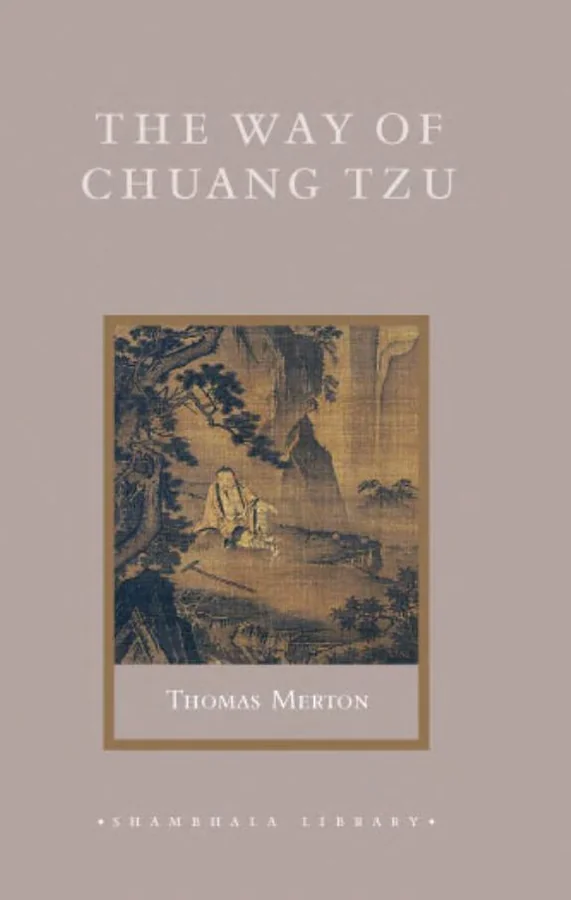
The Way of Chuang Tzu
 82
82

The Way of Chuang Tzu
Thomas Merton’s "The Way of Chuang Tzu" offers a singular lens through which to view the ancient Taoist master. Merton, a Trappist monk, filters Chuang Tzu’s seemingly paradoxical teachings through his own contemplative practice, resulting in renderings that feel both distant and intimately familiar. The strength lies in this unique interpretive voice; Merton doesn't just translate, he embodies the spirit of the text, presenting it with a monastic quietude. One limitation, however, is that this highly personalized approach can sometimes obscure the original text’s sharper edges, softening its radical critique of convention. A passage that particularly illustrates Merton's touch is his rendering of the famous "butterfly dream" parable, where the philosophical inquiry into reality feels less like a dizzying paradox and more like a gentle acceptance of illusion. Ultimately, this collection is a valuable, if selective, gateway into Taoist thought as mediated by a significant 20th-century mystic.
📝 Description
82
Thomas Merton presented his poetic renderings of Chuang Tzu in 2004.
Thomas Merton's "The Way of Chuang Tzu" is not a scholarly translation but a collection of poetic interpretations drawn from the ancient Taoist classic. Merton, a Trappist monk, engaged deeply with the text, aiming to make Chuang Tzu's ideas on the natural order, freedom, and happiness more accessible through lyrical prose. The book focuses on distilling the core philosophy of Chuang Tzu, which emphasizes alignment with the Tao, the universe's inherent flow.
This selection will interest readers drawn to Eastern philosophies, especially Taoism, and those who appreciate meditative and poetic approaches to spiritual writings. It covers concepts such as natural living, detachment, and spontaneous action. Individuals seeking contemplative wisdom, irrespective of their familiarity with Western monasticism, will find value in Merton's renderings.
Chuang Tzu, a key figure in Taoism from the 4th century BCE Warring States period, represents a significant stream of early Chinese thought. His writings offered a counterpoint to more structured ethical systems like Confucianism. Merton's engagement with Chuang Tzu reflects a broader 20th-century Western interest in Eastern spiritual traditions, particularly among intellectuals and artists exploring alternative frameworks.
💡 Why Read This Book?
• Gain an appreciation for 'Wu Wei,' or effortless action, by examining Merton’s poetic interpretations, understanding how Taoist philosophy suggests achieving goals through natural alignment rather than forceful effort, as seen in his renderings of Chuang Tzu’s parables. • Explore the concept of 'Ziran' (naturalness) and its implications for personal freedom, learning how the text encourages shedding societal artifice to embrace authentic existence, drawing from the allegorical style employed by Chuang Tzu. • Understand the Taoist perspective on impermanence and unity, as Merton’s selection highlights the interconnectedness of all things and the acceptance of life’s flux, a central tenet illustrated through the book’s anecdotal narratives.
⭐ Reader Reviews
Honest opinions from readers who have explored this book.
❓ Frequently Asked Questions
What is the Taoist concept of 'Wu Wei' as presented in Merton's "The Way of Chuang Tzu"?
'Wu Wei,' or effortless action, is a central theme. Merton's renderings illustrate acting in harmony with the natural flow of the universe, like water finding its course, rather than imposing one's will forcefully, leading to a state of spontaneous effectiveness.
Who was Chuang Tzu and why is he significant in Taoism?
Chuang Tzu was an influential Chinese philosopher from the 4th century BCE, alongside Lao Tzu. He is revered for his allegorical and paradoxical writings that explore the Tao, emphasizing naturalness, freedom, and the relativity of human judgments.
What is the role of Thomas Merton in this book?
Thomas Merton, a renowned Trappist monk, is not a translator but an interpreter. He spent years reflecting on various translations of Chuang Tzu's work to create poetic renderings that capture the spirit and wisdom of the original text.
How does "The Way of Chuang Tzu" differ from a direct translation?
This book is a collection of poetic interpretations, not a literal translation. Merton aimed to convey the essence and feeling of Chuang Tzu's philosophy in a lyrical style, making it more accessible to Western readers while reflecting his own contemplative understanding.
What kind of philosophical ideas are explored in "The Way of Chuang Tzu"?
The book explores profound philosophical ideas such as the Tao (the Way), 'Wu Wei' (effortless action), 'Ziran' (naturalness), the relativity of perspectives, and the attainment of freedom and happiness through alignment with nature.
When was Thomas Merton's "The Way of Chuang Tzu" first published?
Thomas Merton's "The Way of Chuang Tzu" was first published in 2004, long after his death, presenting his contemplative engagement with the ancient Chinese classic.
🔮 Key Themes & Symbolism
Embracing Naturalness (Ziran)
The work profoundly explores 'Ziran,' the Taoist concept of naturalness and spontaneity. Chuang Tzu, as rendered by Merton, illustrates how societal conventions and artificial constructs hinder true freedom. By shedding pretense and acting in accordance with one's inherent nature, individuals can achieve a state of authentic being. Merton's poetic interpretations highlight this through allegories of animals, craftsmen, and everyday occurrences, urging a return to a simpler, more genuine existence free from the burdens of ego and expectation.
The Paradox of Knowledge
A recurring theme is the inadequacy of conventional human knowledge and logic to grasp the ultimate truth of the Tao. Chuang Tzu employs paradox and humor to expose the limitations of rigid thinking and dualistic viewpoints. Merton's renderings emphasize how understanding arises not from intellectual accumulation but from intuitive insight and direct experience. The famous 'butterfly dream' motif, for instance, questions the very nature of reality and self-awareness, suggesting that true wisdom lies in accepting ambiguity and the fluidity of perception.
Effortless Action (Wu Wei)
The principle of 'Wu Wei,' often translated as non-action or effortless action, is central to the philosophy presented. Merton's interpretations depict this not as passivity, but as acting in perfect alignment with the natural course of events. This involves understanding the optimal moment, flowing with circumstances, and achieving results without struggle or force. Examples include the skilled artisan who works with intuitive precision or the sage who guides without overt command, demonstrating a profound effectiveness derived from yielding to the Tao.
Unity and Relativity
Chuang Tzu's teachings, as presented by Merton, underscore the fundamental unity of all things and the relativity of human judgments. Concepts of good and evil, beauty and ugliness, are shown to be subjective and dependent on perspective. By transcending these dualities, one can perceive the interconnectedness of the cosmos and find peace. This theme encourages a holistic view, where all phenomena are seen as expressions of the Tao, fostering a sense of acceptance and equanimity towards the diverse manifestations of existence.
💬 Memorable Quotes
Direct passages from the work, attributed to the author.
“The butterfly dreams it is Chuang Tzu. Chuang Tzu dreams he is a butterfly. Who is the butterfly?”
— This iconic paradox probes the nature of identity and reality. Merton's rendering invites contemplation on the fluid boundaries between dream and waking life, self and other, questioning our certainty about who we truly are.
“The sage travels without leaving tracks.”
— This proverb illustrates the principle of 'Wu Wei.' It suggests that a wise person acts effectively and leaves no trace of unnecessary effort or imposition, moving through the world with grace and minimal disturbance.
“To know the origin is to know the end.”
— This concept points to the cyclical nature of existence and the interconnectedness of beginnings and endings within the Tao. Understanding the root of things provides insight into their ultimate destination and the natural order.
“When the shoe fits, the foot is forgotten.”
— This metaphor highlights the state of naturalness ('Ziran') and effortless action ('Wu Wei'). When one is perfectly attuned to their circumstances or role, the effort and self-consciousness dissolve into seamless participation.
“The world is a great alchemist.”
— This highlights the transformative power of nature and the Tao. It suggests that the universe is constantly engaged in a process of change and refinement, and one finds wisdom by observing and aligning with this ongoing metamorphosis.
🌙 Esoteric Significance
Tradition
While Chuang Tzu's philosophy is the root of philosophical Taoism, Merton's interpretation situates it within a broader contemplative and mystical framework. It aligns with esoteric traditions that seek direct, intuitive knowledge of ultimate reality, bypassing dogmatic structures. Merton’s monastic background lends a resonance with Christian contemplative practices, suggesting a universal pursuit of the 'divine' or 'natural' order, albeit through different cultural expressions.
Symbolism
Key symbols include the butterfly, representing illusion, transformation, and the relativity of self; the Tao itself, an ineffable cosmic principle of order and flow; and natural phenomena like water and wind, embodying effortless action ('Wu Wei') and adaptability. These symbols are not mere literary devices but represent profound metaphysical states and principles accessible through contemplation.
Modern Relevance
Contemporary thinkers and practitioners in mindfulness, non-dual spirituality, and certain branches of ecopsychology draw heavily on Taoist principles. The emphasis on 'Ziran' (naturalness) and 'Wu Wei' (effortless action) offers antidotes to the stress and artificiality of modern life. Chuang Tzu's questioning of perceived realities also finds echoes in quantum physics and postmodern thought, highlighting its enduring intellectual and spiritual currency.
👥 Who Should Read This Book
• Seekers of Eastern wisdom who appreciate poetic and contemplative interpretations, particularly those interested in Taoism beyond academic translations. • Individuals exploring philosophies of natural living, non-attachment, and spontaneous action, looking for practical insights into achieving inner freedom. • Students of comparative religion and mysticism interested in how Western contemplative figures like Thomas Merton engaged with and interpreted Eastern spiritual traditions.
📜 Historical Context
Chuang Tzu, a foundational figure of Taoism, composed his key work during China's Warring States period (c. 475–221 BCE). His philosophy, marked by skepticism towards rigid societal structures and emphasis on individual freedom, offered a counterpoint to the burgeoning Confucian emphasis on order and ritual. While Confucianism sought to govern society through ethics, Chuang Tzu's Taoism advocated for alignment with the natural Way. Thomas Merton, a globally recognized Trappist monk and writer, engaged with Chuang Tzu’s text in the latter part of his life. His renderings, published posthumously in 2004, emerged during a period of significant Western interest in Eastern philosophies, a trend influenced by figures like Alan Watts and the counterculture movement. Merton's work provided a bridge, offering a contemplative, monastic perspective on ancient Chinese wisdom, making it accessible to a Western audience grappling with modernity.
📔 Journal Prompts
The butterfly dream's contemplation of reality and self.
Effortless action ('Wu Wei') in daily tasks.
The concept of 'Ziran' and shedding societal artifice.
Relativity of judgments and finding unity.
The Tao as the underlying principle of nature and existence.
🗂️ Glossary
Tao (or Dao)
The fundamental principle of the universe in Taoism; the natural order, the Way. It is ineffable, eternal, and the source of all things, best understood through intuition and alignment rather than intellectual definition.
Wu Wei
Literally 'non-action' or 'effortless action.' It describes acting in harmony with the natural flow of the Tao, achieving results spontaneously and without force or undue effort. It is not passivity but optimal, natural action.
Ziran
Naturalness, spontaneity. The state of being authentic and uncorrupted by artificial societal norms or personal desires. Living in accordance with one's true nature and the Way of the universe.
Chuang Tzu (Zhuang Zhou)
An ancient Chinese philosopher (c. 4th century BCE) and central figure of Taoism, known for his allegorical, paradoxical, and witty writings that explore the Tao and advocate for individual freedom and naturalness.
Lao Tzu
Traditionally considered the founder of Taoism and author of the Tao Te Ching. He is often paired with Chuang Tzu as one of the two great figures of early Taoist thought.
Warring States period
An era in ancient Chinese history (c. 475–221 BCE) characterized by political upheaval and philosophical development, during which major schools of thought like Taoism and Confucianism emerged and flourished.
Allegory
A story, poem, or picture that can be interpreted to reveal a hidden meaning, typically a moral or political one. Chuang Tzu famously used allegories to illustrate philosophical concepts.
This book appears in 1 collection
🔮 Readers Also Liked
Browse all →








From the “Taoism” Collection
View all →





More Free Occult Philosophy Books
View all →