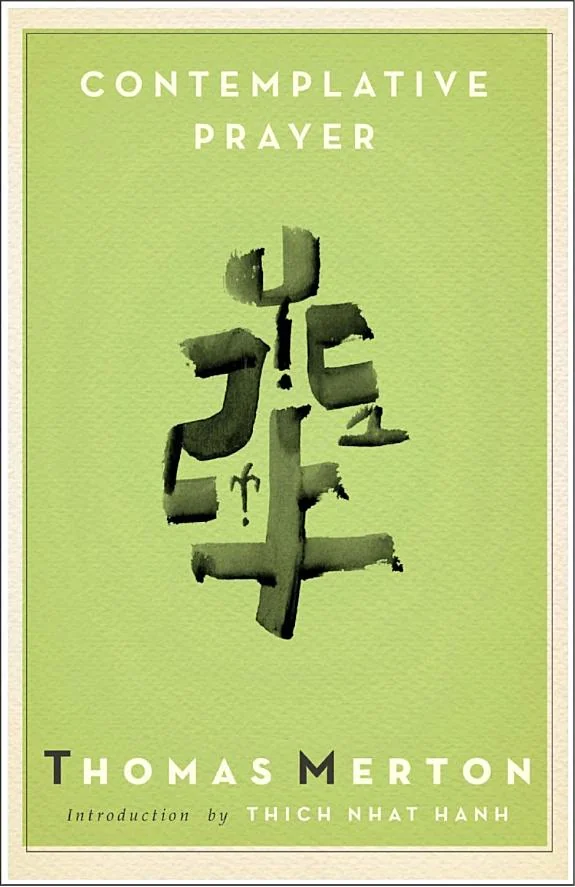
Contemplative Prayer
 84
84

Contemplative Prayer
Thomas Merton’s Contemplative Prayer offers a surprisingly accessible entry into the dense world of Christian mystical theology. Merton, a Trappist monk, possessed a unique ability to bridge the gap between ancient monastic wisdom and the modern seeker. He doesn't shy away from the demanding nature of true contemplation, but his prose remains clear, guiding the reader toward understanding prayer not as a technique for personal solace, but as a pathway to active love in the world. A particular strength lies in his synthesis of disparate traditions; his references to John of the Cross alongside Eastern monasticism are not mere intellectual curiosities but vital components of his argument. The limitation, perhaps, is that the book’s depth demands careful reading; it’s not a quick read for casual browsing. However, Merton's insistence that the peace found in prayer must be directed outward, to "affect positive change," remains a powerful and relevant call to action. It’s an essential text for anyone questioning the purpose and practice of prayer beyond rote recitation.
📝 Description
84
Thomas Merton's 2009 book Contemplative Prayer discusses silent prayer beyond meditation techniques.
Contemplative Prayer is Thomas Merton's examination of silent prayer, drawing on various spiritual traditions. Merton moves past basic meditation to describe a state of deep spiritual connection. He argues that this inner quiet is not an avoidance of the world but a way to engage with it more fully. The book is for those wanting to deepen their prayer life, especially those interested in mystical theology or comparative spirituality. It will appeal to Christians looking into contemplative ways, and also to people from other backgrounds curious about the overlap between Eastern and Western meditation. Readers should approach the text with an open mind and a readiness to wrestle with complex spiritual ideas.
Merton's work synthesizes influences from Christian mystics such as John of the Cross and early Desert Fathers, alongside Eastern monasticism. This combination reflects a mid-20th-century interest in cross-cultural spiritual ideas. The book analyzes prayer's nature, distinguishing between discursive prayer, meditation, and contemplation. It discusses the importance of silence, letting go of the ego, and experiencing the divine directly. Merton suggests that genuine contemplative experience fosters greater compassion and a more active role in social and political matters, rather than detachment.
Thomas Merton's reflections on contemplative prayer place this work within the Christian mystical tradition, but also engage with Eastern monasticism. His approach bridges the gap between Western contemplative practices, rooted in figures like John of the Cross and the Desert Fathers, and Eastern meditative disciplines. This synthesis reflects a broader mid-20th-century movement seeking to find common ground between diverse spiritual paths. Merton's writing acknowledges a form of prayer that seeks direct experience of the divine, moving beyond intellectual understanding or emotional petition.
💡 Why Read This Book?
• You will learn how to integrate contemplative prayer into daily life, understanding that it’s not about escaping problems but about finding the inner strength to address them, as Merton suggests when discussing the redirection of peace. • You will gain insight into the historical convergence of Christian mysticism and Eastern monasticism, exemplified by Merton's specific references to figures like John of the Cross and the Desert Fathers. • You will explore the concept of "pure prayer" or "prayer of simple gaze," a state beyond words and thoughts, which Merton describes as the essence of contemplative union.
⭐ Reader Reviews
Honest opinions from readers who have explored this book.
❓ Frequently Asked Questions
What is the difference between meditation and contemplation according to Thomas Merton?
Merton distinguishes meditation as a more active, discursive form of prayer involving thought and reflection, while contemplation is a passive, direct experience of God's presence, a "prayer of simple gaze" beyond conceptualization.
When was Thomas Merton's Contemplative Prayer first published?
Thomas Merton's Contemplative Prayer was first published on November 17, 2009.
What spiritual traditions influenced Merton's ideas on contemplative prayer?
Merton drew from a wide array of traditions, including Christian mystics like John of the Cross, the early Desert Fathers, and Eastern desert monasticism, alongside Eastern spiritual practices.
Does Merton suggest prayer should be used to avoid worldly problems?
No, Merton explicitly states that the peace found through meditation and contemplation should not be sought to evade life's problems but should be directed outward to foster positive change.
Who is the intended audience for Contemplative Prayer?
The book is for individuals seeking to deepen their prayer life, interested in mystical theology, comparative spirituality, and those exploring the intersection of Christian contemplative practices with Eastern traditions.
What does Merton mean by the "prayer of simple gaze"?
The "prayer of simple gaze" refers to a state of silent, direct, and loving awareness of God's presence, transcending thought, words, and images, representing the height of contemplative prayer.
🔮 Key Themes & Symbolism
The Nature of Prayer
Merton dissects the spectrum of prayer, moving from discursive reflection to the silent, ineffable experience of contemplation. He emphasizes that true prayer transcends words and concepts, leading to a direct encounter with the divine. This work guides readers to understand prayer not merely as petition or meditation, but as a state of being and loving union, a concept explored in depth through his examination of the "prayer of simple gaze."
Inner Peace and Social Action
A central theme is the integration of contemplative experience with active engagement in the world. Merton argues against viewing prayer as escapism, asserting that the profound peace attained through contemplation provides the strength and clarity needed for authentic social and political action. This connection is vital, as the stillness achieved allows for a more compassionate and effective response to contemporary issues.
East-West Spiritual Synthesis
Merton masterfully bridges Christian contemplative traditions with Eastern spiritual insights. He references figures like John of the Cross and the Desert Fathers alongside Eastern monasticism, demonstrating common ground in the pursuit of inner silence and direct experience of the divine. This synthesis broadens the understanding of contemplative practices beyond a single religious framework.
Detachment and Self-Knowledge
The path to contemplation requires a significant degree of detachment from the ego, worldly desires, and even one's own thoughts. Merton explores how this shedding of superficial layers leads to a deeper self-knowledge and an opening to God's presence. This process involves confronting one's own limitations and cultivating an inner stillness that allows for divine illumination.
💬 Memorable Quotes
Direct passages from the work, attributed to the author.
“Contemplation is the highest form of prayer.”
— Merton posits contemplation as the apex of prayer, a direct, wordless communion with God that surpasses intellectual understanding or petitionary requests, representing a state of profound spiritual union.
“Prayer is not an escape from the world.”
— This interpretation highlights Merton's view that spiritual practice should not be used to avoid life's difficulties but rather to cultivate the inner resources needed to engage with the world more effectively and compassionately.
“The fruit of silence is prayer.”
— This aphorism suggests that cultivating inner silence, a key element in contemplative practice, naturally leads to a deeper and more authentic form of prayer and direct connection with the divine.
“In silence, God speaks.”
— This concept emphasizes the receptive nature of contemplation, where by quieting the mind and ego, one creates space for the divine to communicate directly, often beyond words or rational thought.
💡 Key Ideas
Editorial paraphrase of the work's core concepts — not direct quotes.
The peace of Christ means peace in spite of the world.
This quote expresses Merton's core argument that true spiritual peace is not an absence of conflict but a profound inner stillness that endures even amidst worldly turmoil and challenges.
🌙 Esoteric Significance
Tradition
Contemplative Prayer fits within the perennialist or universalist stream of esoteric thought, which seeks common threads across diverse religious and mystical traditions. While grounded in Christian monasticism, Merton's work explicitly draws from Eastern desert monasticism and other contemplative practices, aligning with esoteric aims to find universal truths beneath specific doctrines. It departs from purely dogmatic approaches by emphasizing direct experience over creedal adherence.
Symbolism
The book's primary symbolism revolves around silence and emptiness, not as voids but as pregnant spaces for divine encounter. Silence is the crucible where the ego dissolves, and emptiness is the receptivity that allows God's presence to fill the soul. The "prayer of simple gaze" symbolizes a direct, unmediated perception of the divine, akin to the unitive states sought in various mystical traditions, moving beyond symbolic representation to immediate experience.
Modern Relevance
Merton's work remains highly relevant for contemporary mindfulness and meditation practitioners, even those outside of Christianity, who are drawn to the depth of contemplative practice. Thinkers and practitioners in contemplative Christianity, interfaith dialogue, and those exploring the intersection of psychology and spirituality (e.g., Jungian psychology's interest in mysticism) frequently cite Merton. His emphasis on peace as a catalyst for social action also appeals to modern activists and spiritual leaders seeking grounded approaches to global issues.
👥 Who Should Read This Book
• Christian seekers interested in deepening their prayer life beyond discursive methods, who want to understand the contemplative path as outlined by a key 20th-century mystic. • Students of comparative religion and spirituality who wish to explore the convergences between Western Christian mysticism and Eastern contemplative traditions, as exemplified by Merton's synthesis. • Individuals grappling with the role of inner peace in social action, seeking to understand how profound spiritual experience can inform and energize engagement with worldly problems.
📜 Historical Context
Thomas Merton's Contemplative Prayer, first published in 2009, emerged from a fertile period of interfaith dialogue and a renewed interest in Christian mysticism in the mid-to-late 20th century. Merton, a prolific writer and Trappist monk, was a key figure in this spiritual renaissance. His work synthesized the rich contemplative traditions of Western Christianity, particularly the writings of John of the Cross and the early Desert Fathers, with insights from Eastern monasticism and Zen Buddhism. This cross-pollination was significant, as many contemporary religious scholars and practitioners were exploring the commonalities between diverse spiritual paths. While Merton's embrace of Eastern thought was sometimes viewed with caution by more conservative elements within the Church, his ability to articulate profound spiritual experiences in accessible language garnered widespread acclaim. His contemporaries included figures like Alan Watts, who also explored Eastern philosophies, though Merton's focus remained firmly rooted in a Christian contemplative framework, offering a nuanced perspective that distinguished his work from purely philosophical explorations.
📔 Journal Prompts
The experience of silence: How does cultivating inner silence affect your perception of the world?
Merton's synthesis of John of the Cross and Eastern monasticism: What parallels do you observe in these traditions?
Prayer as action: Reflect on how contemplative peace could inform a specific challenge you face.
The "prayer of simple gaze": Describe your attempts to rest in wordless awareness.
Detachment from ego: What aspects of your self-identity feel most resistant to stillness?
🗂️ Glossary
Contemplation
A passive, direct, and loving experience of God's presence, transcending thought, words, and images. It is considered the highest form of prayer, a state of profound spiritual union.
Discursive Prayer
A more active form of prayer involving reasoning, reflection, and meditation on spiritual topics or scripture, moving from one thought to another.
Prayer of Simple Gaze
A term referring to the state of contemplation where the soul rests in a silent, loving, and direct awareness of God's presence without using concepts or images.
Desert Fathers
Early Christian monks and hermits (3rd-5th centuries) who lived in the Egyptian desert, known for their wisdom, asceticism, and spiritual teachings on prayer and inner life.
John of the Cross
A 16th-century Spanish Carmelite friar and mystic, whose writings on the "dark night of the soul" and the ascent of Mount Carmel are foundational to Christian contemplative theology.
Detachment
A spiritual practice involving letting go of excessive attachment to worldly things, egoic desires, and even one's own thoughts and feelings, to foster openness to divine presence.
Silence
In the context of contemplative prayer, silence is not merely the absence of noise but an inner stillness cultivated to quiet the mind and ego, creating space for direct encounter with God.
This book appears in 1 collection
🔮 Readers Also Liked
Browse all →







From the “Contemplative Prayer” Collection
View all →







More Free Mysticism & Contemplation Books
View all →