The Last Vampire

 81
81

The Last Vampire
Christopher Pike’s The Last Vampire grapples with the weighty concept of an immortal being navigating modern life, a premise that, while familiar, is handled with a degree of earnestness that distinguishes it. The novel’s strength lies in its focus on Tabitha’s internal world, her weariness with eternity and her yearning for genuine connection. Pike is adept at creating a sense of longing that permeates Tabitha’s existence. However, the narrative occasionally falters under the weight of its own romantic inclinations. The dynamic between Tabitha and Adam, while central, can sometimes feel less like a profound, centuries-spanning love and more like a conventional YA romance, which might underwhelm readers seeking a more complex philosophical engagement with vampirism. The depiction of Tabitha’s past, particularly her interactions across different historical periods, offers glimpses of deeper potential but remains somewhat underdeveloped. Ultimately, The Last Vampire is a competent exploration of eternal love and loneliness, best suited for those who prioritize emotional arcs over intricate lore.
📝 Description
81
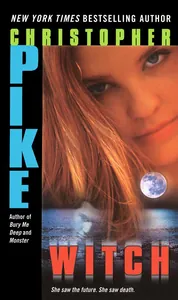
Christopher Pike's 1994 novel, The Last Vampire, centers on Tabitha, a vampire living across centuries.
The story follows Tabitha, an ancient vampire, as she navigates her long existence and her relationship with a young man named Adam. Pike traces her life through different eras, showing how her immortal nature affects her perception of time and human connection. Tabitha's experiences highlight the isolation that can accompany eternal life and the complexities of finding love when one outlives generations.
Readers will find a narrative that balances supernatural elements with a strong romantic thread. The novel examines the psychological weight of extreme longevity and the character's internal struggles with her unique condition. It offers a character-driven perspective on vampirism, focusing on the personal consequences rather than the typical horror tropes.
Published in 1994, The Last Vampire emerged during a resurgence of interest in gothic and supernatural fiction, particularly within young adult literature. While drawing on established vampire lore, Pike's work focused on the internal experience of an ancient being. This approach allowed for an examination of themes like existential isolation and the nature of fated connections, placing it within a tradition of stories that explore the psychological impact of prolonged existence and supernatural abilities.
💡 Why Read This Book?
• Understand the psychological toll of immortality through Tabitha’s millennia-spanning existence, offering a unique perspective on time and human connection. • Explore the concept of fated love as depicted in the bond between Tabitha and Adam, which the novel suggests transcends historical epochs. • Experience Christopher Pike’s signature blend of supernatural suspense and romantic drama, a style that defined much of 1990s young adult fiction.
⭐ Reader Reviews
Honest opinions from readers who have explored this book.
❓ Frequently Asked Questions
When was Christopher Pike's 'The Last Vampire' originally published?
The Last Vampire by Christopher Pike was first published in 1994, positioning it within a wave of popular supernatural young adult fiction.
What is the central premise of 'The Last Vampire'?
The book centers on Tabitha, an ancient vampire who has lived for thousands of years and forms a profound connection with a young man named Adam.
Does 'The Last Vampire' involve romance?
Yes, romance is a significant element, exploring the complex relationship between the immortal Tabitha and Adam across their intertwined destinies.
What themes does 'The Last Vampire' explore?
Key themes include immortality, loneliness, the nature of love, the perception of time, and the burden of eternal existence.
Is 'The Last Vampire' part of a series?
While part of Christopher Pike's extensive body of work, The Last Vampire is generally considered a standalone novel, not part of a direct series.
Who is the author Christopher Pike?
Christopher Pike is the pen name of Kevin McFadden, a highly successful author of young adult horror and supernatural fiction, known for titles like 'The Haunting of Cassandra' and 'Remember Me'.
🔮 Key Themes & Symbolism
The Weight of Immortality
The novel scrutinizes the experience of living for millennia, portraying immortality not as a gift but as a profound burden. Tabitha's weariness with the endless cycle of life and death, her detachment from fleeting human concerns, and the deep-seated loneliness that accompanies eternal existence are central. This theme explores the psychological and emotional toll of outliving civilizations and loved ones, questioning the true desirability of unending life when it comes at the cost of genuine, lasting connection.
Eternal Love and Fate
A core concept is the idea of a love that transcends time, suggesting that certain souls are destined to find each other across lifetimes. Tabitha's connection with Adam is presented as such a fated bond, one that has persisted through her long existence. This theme explores whether such a connection is a source of solace against the loneliness of immortality or merely another facet of its inherent tragedy. The narrative questions the nature of such predestined relationships and their impact on an immortal being.
Perception of Time
The novel offers a unique perspective on the passage of time through the eyes of an immortal. For Tabitha, centuries can feel like moments, and the rapid changes of human society might appear ephemeral. This theme allows for reflections on history, progress, and the cyclical nature of human endeavors. Her ancient perspective contrasts sharply with Adam's finite human lifespan, highlighting the vast differences in how time is experienced and valued by mortals and immortals.
Identity and Change
Tabitha grapples with maintaining her identity across vast stretches of time. While physically unchanging, her internal self evolves, yet she remains tethered to her vampiric nature. The book explores the tension between her ancient self and her desire for present-day human experiences. This theme questions how one defines oneself when removed from the natural progression of aging and change, and the struggle to reconcile past identities with current desires.
💬 Memorable Quotes
Direct passages from the work, attributed to the author.
“Love was a dangerous thing, especially for someone like her, who could never truly experience its end.”
— This highlights the paradox of an immortal's love: the inability to share the natural conclusion of mortal affection, leading to a unique form of perpetual longing or loss.
“He was the anchor in the storm of her endless years.”
— This metaphor suggests Adam's an important role in Tabitha's life, providing stability and meaning amidst the overwhelming and chaotic nature of her eternal existence.
“The loneliness was a cold, constant companion, more ancient than any lover she had ever known.”
— This expresses the profound isolation inherent in immortality, portraying loneliness as a fundamental aspect of Tabitha's being, predating even her romantic entanglements.
“Every sunrise was a reminder of another day she had to endure, not one she could embrace.”
— This illustrates Tabitha's jaded perspective on life, where each new day represents a continuation of her unending existence rather than an opportunity for joy or fulfillment.
💡 Key Ideas
Editorial paraphrase of the work's core concepts — not direct quotes.
She had lived for so long, she had seen empires rise and fall like the tide.
This line captures the vast scope of Tabitha's existence, emphasizing her ancient nature and her detached observation of human history's transient cycles.
🌙 Esoteric Significance
Tradition
While not explicitly aligned with a singular esoteric tradition like Hermeticism or Gnosticism, The Last Vampire taps into archetypal themes found in various occult philosophies concerning immortality and the nature of the soul. The concept of an ancient, enduring consciousness echoes Gnostic ideas of a soul detached from the cycle of rebirth, or Hermetic notions of timelessness. The vampire itself can be seen as a modern interpretation of archetypal beings that exist outside natural laws, often representing primal desires or the corrupting influence of forbidden knowledge.
Symbolism
The vampire, Tabitha, symbolizes eternal life, the allure and danger of the forbidden, and a being divorced from the natural order of life and death. Her ancient nature represents accumulated wisdom and weariness. Adam, her mortal counterpart, symbolizes the fleeting beauty and significance of human life, acting as a focal point for Tabitha's longing for connection and perhaps redemption. The motif of the 'last' vampire suggests a unique, perhaps singular, existence, emphasizing her isolation and the end of an era or lineage.
Modern Relevance
Contemporary fascination with vampire lore, particularly in paranormal romance and urban fantasy, continues to draw from the archetypes explored in works like Pike's. Modern thinkers and practitioners exploring themes of consciousness, longevity, and the psychological impact of extreme existence may find parallels. The novel's exploration of enduring love and loneliness speaks to modern anxieties about connection in an increasingly transient world, influencing narratives that examine the human condition through supernatural lenses.
👥 Who Should Read This Book
• Young adult readers exploring themes of romance and supernatural elements, seeking a narrative that balances suspense with emotional depth. • Fans of Christopher Pike's previous works who appreciate his signature style of blending darker themes with compelling character relationships. • Readers interested in exploring the concept of immortality and its psychological implications through a character-driven, accessible story.
📜 Historical Context
Christopher Pike’s The Last Vampire, released in 1994, emerged during a fertile period for young adult supernatural fiction. Authors like Anne Rice had already significantly popularized the vampire genre for adult readers, while R.L. Stine’s Goosebumps series dominated the younger end of the market. Pike carved his niche by blending suspense with romantic and psychological elements, often focusing on the internal lives of his protagonists. The 1990s saw a growing interest in darker, more complex themes within YA literature, moving beyond simpler ghost stories. While not a direct engagement with a specific philosophical movement, Pike's work implicitly touched on existential themes of loneliness and the search for meaning, common in post-modern narratives. The novel arrived in a landscape where supernatural beings were increasingly being re-imagined as objects of desire and romantic interest, a trend Pike capitalized on. Its reception was largely within the existing fanbase of Pike’s oeuvre, contributing to his status as a prolific and popular YA author of the era.
📔 Journal Prompts
Tabitha's perception of human history across millennia.
The nature of Adam's appeal to an ancient vampire.
Reflect on the burden of eternal existence as depicted.
Consider the concept of fated love across vast time spans.
The vampire archetype as a symbol of forbidden knowledge.
🗂️ Glossary
Vampire
A mythical or folkloric being who subsists by feeding on the life essence (generally in the form of blood) of living creatures. In fiction, often depicted as immortal and possessing supernatural abilities.
Immortality
The quality or state of living forever; eternal life. In narrative contexts, often explored for its psychological and existential consequences.
Ancient
Belonging to the very distant past and no longer in existence. In the context of Tabitha, it signifies an existence spanning thousands of years.
Fated Love
A romantic connection believed to be predetermined or destined by supernatural forces, often transcending ordinary circumstances or even time.
Loneliness
A complex and usually unpleasant emotional response to isolation, characterized by a sense of emptiness or lack of connection. For an immortal, this can be a pervasive, unending state.
Supernatural
Attributed to forces beyond the scientific understanding of the natural world. In this novel, vampirism and its associated traits fall under this category.
YA Fiction
Literature written for adolescents and young adults, typically between the ages of 12 and 18. Often features themes relevant to this age group, such as identity, romance, and coming-of-age.
🔮 Readers Also Liked
Browse all →









More by Christopher Pike
All books →




More Free Occult Philosophy Books
View all →