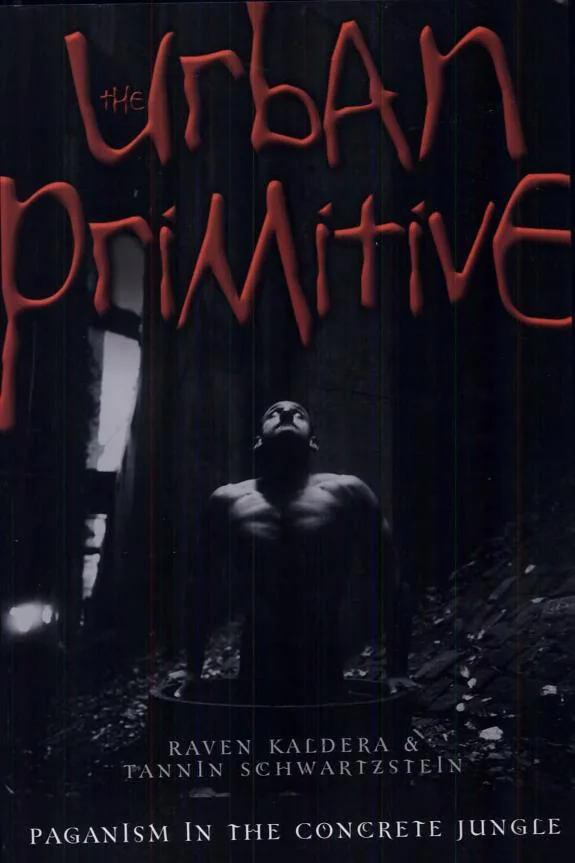
The Urban Primitive
 79
79

The Urban Primitive
Kaldera and Schwartzstein’s "The Urban Primitive" is a refreshing antidote to the often-idealized portrayals of Pagan life. It directly confronts the challenges of practicing Magick within a concrete jungle, a perspective many city-dwelling practitioners will appreciate. The authors’ ability to blend serious, practical advice with a wonderfully irreverent and humorous tone is a significant strength. One particularly memorable section discusses finding magical energy not in ancient groves, but in the hum of a refrigerator or the patterns of traffic lights. However, the book's very specificity might leave those with strong rural connections feeling a bit alienated, as its focus is intensely urban. Ultimately, "The Urban Primitive" offers a vital, grounded perspective for modern urban Pagans seeking to root their spiritual lives in their immediate surroundings.
📝 Description
79
Published in 2002, The Urban Primitive offers magick for city dwellers.
"The Urban Primitive" by Raven Kaldera and Tannin Schwartzstein presents a system of magick designed for people living in cities. The authors moved beyond typical nature-based rituals to create a spiritual framework that fits urban life. The book gives practical advice and techniques often missing from magical texts focused on rural settings. It aims to make esoteric practices understandable and useful for those in modern environments.
This book is for Pagans and occultists who live in cities and feel out of step with earth-centric practices. It appeals to people wanting to build a personal magical system that accounts for city realities like small apartments, noise, and limited green space. Readers seeking a direct, humorous guide that is irreverent yet provides serious magical instruction will find it valuable.
Published in 2002, "The Urban Primitive" appeared during a time of growth for Neopagan and occult movements. As more practitioners lived in cities, there was a need for magical resources suited to their circumstances. The book responded to traditions that often assumed rural or wilderness settings were ideal for spiritual work. Its approach differs from nature-focused methods common in Paganism, reflecting a shift toward urban spirituality.
💡 Why Read This Book?
• Learn to identify and harness the unique magical energies present in urban environments, such as the symbolism of streetlights or the resonant frequencies of city sounds, as detailed in the book's exploration of urban sacred spaces. • Discover practical, space-saving ritual techniques and magical adaptations suitable for apartment living or small urban dwellings, directly addressing the challenges outlined in the book's pragmatic approach. • Gain a humorous yet serious perspective on how to integrate a modern, city-based Pagan identity with esoteric practices, moving beyond traditional nature-centric paradigms presented in the book's core philosophy.
⭐ Reader Reviews
Honest opinions from readers who have explored this book.
❓ Frequently Asked Questions
What is "The Urban Primitive" about?
"The Urban Primitive" is an alternative guide to Magick for city-dwelling Pagans, offering practical recommendations and techniques tailored to urban life, published in 2002.
Who are the authors of "The Urban Primitive"?
The authors are Raven Kaldera and Tannin Schwartzstein. The book was first published in 2002.
What makes this book different from other Pagan guides?
It focuses on Magick for urban environments, providing practical advice for city dwellers, unlike many guides that assume a rural or nature-based setting.
What kind of tone does the book have?
The book uses a humorous and irreverent tone, but it is also full of serious, practical information for its readers.
When was "The Urban Primitive" first published?
The book was first published in 2002, reflecting a growing interest in urban spirituality within Paganism.
What subjects does "The Urban Primitive" cover?
It covers alternative Magick for urban Pagans, offering practical recommendations for city life and spiritual practice.
🔮 Key Themes & Symbolism
Urban Sacred Spaces
This theme redefines the concept of sacredness by locating it within the urban landscape. Instead of ancient forests or natural springs, "The Urban Primitive" identifies potential power spots in city infrastructure, such as subway stations, bridges, or even the energy grid. The authors encourage practitioners to find spiritual significance in concrete, steel, and the constant flow of urban life, demonstrating that Magick is not confined to pristine natural settings but can flourish amidst the modern metropolis.
Adaptable Ritual Practice
Central to the book is the idea that magical rituals must be adaptable to the constraints of urban living. This involves developing techniques suitable for small apartments, noisy environments, and limited access to traditional ritual components. The work provides concrete strategies for creating sacred space in confined areas, performing effective spellwork without extensive materials, and maintaining a consistent spiritual practice despite the demanding pace of city life.
Humor and Irreverence
The authors employ a distinctly humorous and irreverent tone throughout "The Urban Primitive." This approach serves to clarify Magick and make it more accessible, cutting through pretentiousness and dogma. By using wit and relatable anecdotes, they engage readers on a personal level, demonstrating that spiritual practice can be both serious and enjoyable, and that a lighthearted attitude can be a powerful tool in the practitioner's arsenal.
Pragmatic Esotericism
This theme emphasizes a grounded, no-nonsense approach to esoteric practice. "The Urban Primitive" focuses on what works in the real world, prioritizing practical application over abstract theory. The book's advice is designed to be immediately actionable, encouraging readers to experiment and find what appeals to their individual circumstances. It champions a form of Magick that is effective, efficient, and integrated into the everyday life of a modern urban dweller.
💬 Memorable Quotes
Direct passages from the work, attributed to the author.
“Your apartment is your temple. Learn to work with the appliances.”
— This statement underscores the practical, urban-focused nature of the book, suggesting that everyday domestic objects and spaces can be integrated into magical practice.
“The city has its own pulse, its own rhythms. Learn to dance to them.”
— This captures the essence of finding spiritual connection and power within the unique energetic field of an urban environment.
“Serious magic can be done with a sense of humor.”
— This reflects the book's blend of practical instruction and irreverent tone, suggesting that levity is not antithetical to potent magical work.
💡 Key Ideas
Editorial paraphrase of the work's core concepts — not direct quotes.
Magick isn't about escaping the city; it's about finding the sacred within it.
This paraphrased concept highlights the book's core thesis: that spiritual power and practice can be found and cultivated within the urban environment, rather than requiring a retreat to nature.
Don't wait for a forest; make a sacred grove out of your fire escape.
This paraphrased idea emphasizes the book's message of adapting esoteric principles to limited urban spaces, finding magical potential in unconventional settings.
🌙 Esoteric Significance
Tradition
This work fits within the broader spectrum of modern Western Esotericism, specifically the contemporary Pagan and eclectic witchcraft movements. It departs from many traditional lineages by de-emphasizing a direct connection to natural, pre-industrial landscapes. Instead, it reinterprets esoteric principles through the lens of 21st-century urbanism, advocating for an adaptable, pragmatic form of Magick that acknowledges technological and social realities, rather than seeking to escape them.
Symbolism
The book reinterprets common symbols by placing them in an urban context. For instance, the 'sacred grove' might become a well-tended potted plant on a balcony, or the 'flow of the river' could be symbolized by the movement of traffic or the flow of data. Electrical grids and urban infrastructure are presented not as alienating forces, but as potential conduits of energy and power, suggesting a new symbolic language for modern practitioners.
Modern Relevance
Contemporary practitioners and thinkers in fields like urban shamanism, eco-witchcraft (with an urban focus), and even secular paganism find value in "The Urban Primitive." Its emphasis on adaptability and finding the sacred in the mundane appeals to those seeking to practice Magick in diverse and challenging environments, contributing to ongoing discussions about the evolution of spiritual practices in the modern world.
👥 Who Should Read This Book
• Beginning students of Magick residing in cities who feel intimidated by traditional, nature-focused practices and seek a more accessible entry point. • Experienced urban Pagans looking for fresh perspectives and practical techniques to deepen their existing spiritual work within their metropolitan environment. • Comparative religion and esoteric studies researchers interested in understanding the diversification of modern Paganism and the development of urban spiritualities.
📜 Historical Context
When "The Urban Primitive" was published in 2002, the Neopagan landscape was increasingly diverse, with more practitioners residing in urban centers. This period saw a growing demand for magical resources that acknowledged the realities of city living, moving beyond the nature-centric paradigms that had dominated earlier Paganism. The book offered a distinct counterpoint to the traditional focus on rural settings, reflecting a broader cultural shift towards urban spirituality. While contemporaries like Starhawk were exploring ecological spirituality, Kaldera and Schwartzstein focused on the concrete and steel. The work’s pragmatic, often humorous, approach provided a much-needed voice for those seeking to integrate their esoteric practices with the demands of modern urban life, differentiating it from more established earth-based traditions.
📔 Journal Prompts
Your personal urban temple: Identify three everyday objects in your living space that could serve as focal points for magical practice.
The pulse of the city: Describe the unique energetic rhythms you perceive in your neighborhood and how they might be incorporated into ritual.
Adapting ancient forms: How could a traditional ritual be modified to fit the constraints of your apartment or urban dwelling?
Finding the primitive in the paved: Reflect on a mundane urban element (e.g., streetlights, graffiti, public transport) and its potential symbolic meaning.
The humorous practitioner: Recall a time when humor helped you overcome a challenge in your spiritual practice.
🗂️ Glossary
Urban Magick
A branch of Magick specifically tailored for practitioners living in cities, focusing on adapting esoteric principles to the urban environment and its unique energies.
Pragmatic Esotericism
An approach to spiritual or magical practice that emphasizes practical application, effectiveness, and integration into daily life, rather than solely theoretical or ritualistic aspects.
Sacred Space (Urban)
Any location within a city that a practitioner designates or perceives as imbued with spiritual significance or power, often found in mundane or unexpected places.
Ritual Adaptation
The process of modifying traditional or established magical rituals to suit the specific conditions, limitations, and available resources of an urban setting.
City Rhythms
The inherent patterns, cycles, and energetic flows characteristic of urban life, such as traffic patterns, daily commutes, or the hum of machinery, which can be harnessed for magical purposes.
Irreverent Tone
A style of communication that is informal, humorous, and potentially challenging to conventional norms or authority, used in the book to make Magick more accessible.
Pagan City Folk
Individuals who identify with Pagan spiritual paths and live within urban environments, seeking to reconcile their faith with city living.
This book appears in 1 collection
🔮 Readers Also Liked
Browse all →





From the “Neopaganism” Collection
View all →






More Free Witchcraft & Paganism Books
View all →