The Way
 83
83

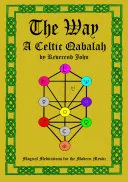
The Way
John Littlewood's *The Way* attempts a bold reimagining of the Qabalah, stripping it of its overt religious scaffolding to present a system for personal empowerment. Its primary strength lies in this demystification; the author succeeds in making Kabbalistic concepts accessible to those put off by traditional scholarship. The book’s central argument—that life is a struggle to be met and worked around—is compelling, and its framing of the Qabalah as a map for developing potential offers a fresh perspective. However, in removing the traditional context, some of the symbolic depth and historical resonance of the Qabalah might be lost for seasoned practitioners. The work explores the Qabalah as a practical tool, which is admirable, but the assertion that it is "dangerous" feels somewhat overstated without a deeper exploration of the potential pitfalls beyond personal change. Nevertheless, for the uninitiated seeking a secularized entry point, *The Way* provides a clear, if somewhat simplified, pathway.
📝 Description
83
John Littlewood's 2016 book, The Way, reframes Kabbalah for personal development.
The Way offers a practical system for engaging with the Qabalah, moving beyond its usual theological or academic context. John Littlewood designed this framework for personal growth and for addressing life's challenges. The book suggests that life is a continuous process of facing obstacles and opportunities, a dynamic force that shapes our experiences, including dreams, fears, and joys.
This work is for individuals interested in the Qabalah who have found its traditional religious language or perceived complexity discouraging. It caters to those seeking a pragmatic path to spiritual or personal development, viewing life's events as solvable problems and potential transformations. Readers desiring a structured method to access their innate abilities and approach life's difficulties with a fresh perspective will find this book directly relevant.
At its heart, The Way simplifies Kabbalistic ideas into an applicable system. It presents the Qabalah not as a set of beliefs, but as a model for understanding reality's structure and one's position within it. The focus is on individual capacity and cultivating inherent potential, suggesting that applying these principles can foster significant personal change. The system is shown as fluid, acknowledging its responsive nature.
Published in 2016, The Way engages with the Kabbalistic tradition by offering a secular and psychological interpretation. It stands apart from purely academic or strictly religious examinations of the Qabalah, proposing that its core tenets are applicable to daily life. This approach connects with contemporary self-help and personal development movements by translating ancient symbolic frameworks for modern use. The book treats the Qabalah as a map for understanding reality, emphasizing personal agency and the development of inner potential.
💡 Why Read This Book?
• You will learn to interpret the Qabalah as a practical system for navigating life's challenges, moving beyond its religious associations, as presented in the book's 2016 publication. • You will gain a method for developing your personal potential, framed not as mystical attainment but as an active engagement with life's inherent struggles, a core tenet of the system. • You will feel empowered to view your own life experiences as a dynamic map for growth, understanding that the process itself, as described by Littlewood, holds the key to transformation.
⭐ Reader Reviews
Honest opinions from readers who have explored this book.
❓ Frequently Asked Questions
What makes 'The Way' different from traditional Qabalah studies?
The Way distinguishes itself by focusing on the Qabalah as a practical system for personal development, rather than a religious or academic study. It deliberately avoids complex religious terminology, making it accessible to beginners.
Is 'The Way' suitable for someone with no prior knowledge of the Qabalah?
Yes, the book is specifically designed for individuals new to the Qabalah who may be intimidated by its usual presentation. It offers a simplified, actionable framework.
What kind of 'challenges' does the book suggest the Qabalah can help with?
The book frames life itself as a series of challenges and opportunities. It suggests the system can help individuals develop their potential to work through everyday obstacles and experiences.
When was 'The Way' first published?
The Way was first published on August 26, 2016, positioning it as a contemporary interpretation of ancient Kabbalistic principles.
Does 'The Way' require belief in specific religious doctrines?
No, the book aims to present the Qabalah in a secularized manner, focusing on its application as a personal development tool rather than requiring adherence to religious beliefs.
What does the author mean by the system being 'dangerous'?
The author suggests the system is 'dangerous' because engaging with it will fundamentally change the individual, challenging their existing perspectives and potentially altering their life path.
🔮 Key Themes & Symbolism
Qabalah as a Practical System
This work reframes the Qabalah from a complex theological or mystical system into an accessible, practical framework for daily life. It deliberately sidesteps the dense religious and Hebrew terminology often associated with Kabbalistic studies, presenting it instead as a tool for personal development. The book posits that engaging with its principles can help individuals confront and navigate life's inherent struggles, dreams, and joys more effectively. It emphasizes an actionable understanding of the Qabalah's structure, viewing it as a map for self-discovery and growth rather than a doctrine to be passively accepted.
Developing Personal Potential
A central theme is the cultivation of an individual's latent abilities and potential. 'The Way' proposes that by applying its structured system, derived from Kabbalistic concepts, readers can enhance their capacity to face life's challenges. This isn't presented as passive spiritual unfolding but as an active process of learning and adaptation. The book suggests that this development is an ongoing journey, inherently dynamic and transformative, encouraging a proactive approach to self-improvement and problem-solving.
Life as a Continuous Struggle
The book adopts a realistic perspective on existence, characterizing life as a perpetual series of challenges and opportunities. This viewpoint serves as the foundation for its practical application of Kabbalistic principles. Instead of seeking an escape from difficulty, 'The Way' encourages readers to engage with these struggles directly, viewing them as integral to personal growth and the realization of one's potential. This perspective positions the Qabalah as a method for effectively working around or through life's inherent complexities.
The Transformative Nature of the Path
Littlewood emphasizes that the path presented in 'The Way' is not static; it is inherently transformative and can be considered 'dangerous' because it fundamentally alters the individual. This transformation involves confronting one's limitations, adapting to new perspectives, and embracing change. The book suggests that this process, while potentially unsettling, is essential for unlocking deeper capabilities and achieving a more profound understanding of oneself and one's place in the world. The journey is presented as one of continuous evolution.
💬 Memorable Quotes
Direct passages from the work, attributed to the author.
“Real life is meeting challenges or working around them.”
— This concise statement captures the book's pragmatic philosophy, viewing existence not as a passive state but as an active engagement with obstacles and opportunities. It sets the stage for the Qabalah's application as a practical tool for navigating everyday life.
“The Way is a system to help develop your potential and ability.”
— This highlights the core purpose of the book's approach to the Qabalah. It's presented not as abstract theory but as a structured method for practical self-improvement and the unlocking of innate capacities.
“It is dangerous, for it will change you.”
— This provocative statement underscores the author's view of the transformative power of the presented system. It warns that engaging with these principles requires a willingness to undergo significant personal change, which can be both challenging and profound.
“Think of the Qabalah as a map of your [life/potential/etc.]”
— This analogy positions the Qabalah as a navigational tool rather than a rigid doctrine. It implies that understanding its structure can provide guidance and clarity for one's personal journey and development.
“Do you want to find out more about the Qabalah but have been put off by the Jewish terms and the complicated and obscure religious words usually used? Then this book is for you.”
— This directly addresses the intended audience, highlighting the book's unique selling proposition: making the Qabalah accessible and approachable by removing intimidating traditional language and framing.
🌙 Esoteric Significance
Tradition
This work draws from the Kabbalistic tradition but reframes it through a secular, psychological lens. It departs from traditional interpretations by focusing on the Qabalah as a practical system for personal development and life navigation, rather than primarily a mystical or theological path. It aims to make the underlying principles accessible without requiring adherence to specific religious doctrines or immersion in complex Hebrew terminology.
Symbolism
While the book simplifies terminology, it implicitly engages with Kabbalistic symbolism by presenting the Qabalah as a 'map.' This metaphor suggests an underlying structure (like the Tree of Life, though not explicitly detailed here) that can guide understanding. The core symbolism it leverages is that of a journey or path, emphasizing personal growth and the overcoming of obstacles as central motifs derived from the tradition.
Modern Relevance
In contemporary esoteric circles and personal development communities, *The Way*'s approach appeals to the desire for practical, actionable wisdom. Thinkers and practitioners seeking to integrate ancient symbolic systems into secular frameworks for self-improvement or psychological exploration might find its explained presentation appealing. Its focus on life's challenges as a catalyst for growth aligns with modern therapeutic and coaching methodologies.
👥 Who Should Read This Book
['• Beginners to esoteric studies: Individuals curious about systems like the Qabalah but intimidated by complex religious language and academic texts will find a clear, accessible entry point.', "• Personal development enthusiasts: Those seeking practical frameworks for self-improvement and navigating life's difficulties will appreciate the book's focus on developing potential and working through challenges.", '• Comparative philosophy students: Readers interested in how ancient esoteric traditions are adapted for modern, secular contexts will find this book a case study in reinterpreting Kabbalistic principles.']
📜 Historical Context
Published in 2016, John Littlewood's *The Way* enters a contemporary spiritual landscape increasingly interested in secularized esoteric practices. It positions itself as an accessible entry point to the Qabalah, deliberately eschewing the dense religious terminology and academic complexity that often characterize traditional Kabbalistic studies. This approach aligns with a broader trend in the 21st century where ancient wisdom traditions are being reinterpreted for personal development and psychological insight, often divorced from their original orthodox contexts. While not engaging directly with specific contemporaries, its publication year places it in dialogue with the burgeoning self-help and mindfulness movements, offering a symbolic system as a framework for life management. Unlike strictly orthodox interpretations or scholarly works that might cite figures like Gershom Scholem, *The Way* prioritizes practicality, aiming to offer a usable map for individual growth rather than a historical or theological treatise.
📔 Journal Prompts
The concept of life as a continuous struggle: How does this perspective align with your own experiences?
Your personal potential: Identify one ability you wish to develop using the system presented in The Way.
The Qabalah as a map: What aspects of your life feel uncharted, and how could a 'map' provide guidance?
The 'dangerous' aspect of change: Reflect on a time personal growth felt challenging or unsettling.
Working around challenges: Describe a recent obstacle and how you navigated it, applying principles from The Way.
🗂️ Glossary
Qabalah
An esoteric system of Jewish mysticism, often involving symbolic interpretations of scripture and cosmology. This book presents a secularized, practical application of its principles.
System
In the context of 'The Way,' a structured method or framework derived from Kabbalistic concepts, designed for personal development and navigating life's challenges.
Potential
The inherent capabilities or latent qualities within an individual that can be developed and realized through understanding and applying the principles outlined in the book.
Challenges
Obstacles, difficulties, or complex situations encountered in life that the book suggests can be addressed and worked through using its practical system.
Map
An analogy used in the book to describe the Qabalah, implying it serves as a guide or framework for understanding oneself and working through the complexities of existence.
Transformation
The profound personal change that engaging with the book's system is said to instigate, altering one's perspectives and capabilities.
Life's Struggles
The inherent difficulties, conflicts, and complexities that form the continuous backdrop of human existence, which the book's system aims to help individuals manage.