The Tʻai chi workbook

 81
81

The Tʻai chi workbook
Paul H. Crompton's 'The Tʻai Chi Workbook' presents a refreshingly direct approach to a practice often shrouded in mystique. The book excels in its methodical breakdown of the Tʻai Chi form, particularly the detailed illustrations and explanations of each posture's transition. Crompton's 1987 publication provides a solid, if somewhat dry, foundation for the beginner. However, the text occasionally leans towards a rigid, almost instructional-manual tone, which may not fully capture the fluid, organic essence that experienced practitioners seek. A particular strength is the detailed explanation of the 'Push Hands' exercises, offering a clear path toward understanding sensitivity and yielding. Its limitation lies in its sparse engagement with the deeper Taoist philosophical underpinnings, focusing more on the mechanics. Nevertheless, for those seeking a clear, unadorned guide to the form's execution, it remains a valuable resource.
📝 Description
81
Paul H. Crompton's The Tʻai Chi Workbook, published in 1987, teaches Tʻai Chi Chʻuan through detailed instruction.
Published in 1987, Paul H. Crompton's The Tʻai Chi Workbook provides a practical, step-by-step method for learning Tʻai Chi Chʻuan. The book moves past theory to give clear instructions on practice. Its structure helps readers build understanding and physical ability gradually. This approach makes the book suitable for those new to martial arts.
The workbook is for individuals interested in practicing Tʻai Chi and who want a structured learning path. It suits those who learn well through self-study and value precise explanations of how movements work and the principles behind them. Readers interested in the philosophical and energetic aspects of Tʻai Chi, as well as its physical form, will find substantial material here. Crompton's work addresses the growing Western interest in Eastern martial arts and philosophies from the late 1980s, offering a detailed guide for self-instruction in an internal art.
The Tʻai Chi Workbook connects to the Taoist tradition, which emphasizes balance, flow, and the cultivation of internal energy (Qi). Tʻai Chi itself is an internal martial art that draws heavily on these principles, viewing physical movement as a way to harmonize the body, mind, and spirit. Crompton's book guides practitioners in understanding this energetic dimension, presenting Tʻai Chi as a meditative practice that fosters mental focus and physical well-being, aligning with broader esoteric goals of self-cultivation and connection to natural principles.
💡 Why Read This Book?
• Learn the precise sequence and mechanics of the Tʻai Chi form through detailed step-by-step instructions and clear illustrations, a direct benefit of Crompton's methodical approach. • Understand the fundamental principles of Qi flow and energetic cultivation within the practice, as explained in the sections detailing breathing and posture. • Gain practical experience in Tʻai Chi's application through the dedicated 'Push Hands' section, offering a tangible way to explore yielding and sensitivity, as presented in the workbook.
⭐ Reader Reviews
Honest opinions from readers who have explored this book.
❓ Frequently Asked Questions
Is 'The Tʻai Chi Workbook' suitable for absolute beginners?
Yes, Paul H. Crompton's workbook is specifically designed for beginners. It starts with fundamental principles of posture and breathing before moving into the Tʻai Chi form, making it accessible even without prior martial arts experience.
What year was 'The Tʻai Chi Workbook' first published?
The first edition of 'The Tʻai Chi Workbook' by Paul H. Crompton was published in 1987.
Does the book explain the philosophical aspects of Tʻai Chi?
While the book focuses primarily on the practical execution of Tʻai Chi, it does touch upon the Taoist principles that inform the art, such as the concept of Qi and the connection between movement and mental focus.
What are 'Push Hands' exercises mentioned in the book?
'Push Hands' are a Tʻai Chi training method where partners practice yielding, sensitivity, and maintaining structure against gentle pressure. Crompton's workbook provides specific guidance on these exercises.
Does the book include illustrations of the Tʻai Chi movements?
Yes, 'The Tʻai Chi Workbook' features detailed illustrations that accompany the step-by-step instructions for each movement of the Tʻai Chi form.
Is this book suitable for learning Tʻai Chi for self-defense?
While Tʻai Chi has martial origins, Crompton's workbook emphasizes the health and meditative aspects. It provides a foundation, but specific martial applications might require further study beyond this text.
🔮 Key Themes & Symbolism
Form and Structure
The workbook meticulously details the sequence and physical alignment of the Tʻai Chi Chʻuan form. It breaks down complex movements into manageable steps, ensuring practitioners can build the form accurately. Emphasis is placed on correct posture and the smooth transition between postures, creating a coherent physical expression of internal principles. This focus on structure provides a solid scaffold for developing the art.
Internal Energy (Qi)
A core theme is the cultivation and circulation of Qi, or vital energy. Crompton explains how breath synchronization and mindful intention guide this internal flow. The workbook connects the external movements to their internal energetic effects, presenting Tʻai Chi as a practice that nourishes the body's energetic system. This concept is crucial for understanding Tʻai Chi beyond mere physical exercise.
Mind-Body Integration
The book highlights the inseparable link between mental focus and physical execution. It describes how a calm, concentrated mind enhances the practice, leading to greater precision and internal awareness. This integration transforms Tʻai Chi from a series of physical actions into a moving meditation, fostering a state of presence and balance for the practitioner.
Taoist Principles
Underpinning the practice are Taoist concepts such as yielding (Wu Wei), balance, and the interplay of Yin and Yang. The workbook interprets these philosophical tenets through the lens of Tʻai Chi movements, illustrating how the art embodies these ancient ideas. Understanding these principles adds depth to the practice, connecting physical form to a broader cosmological view.
💬 Memorable Quotes
Direct passages from the work, attributed to the author.
“The coordinated use of breath, intention, and movement.”
— This highlights the holistic nature of Tʻai Chi as presented in the workbook, emphasizing that effective practice requires harmonizing physical action with mental focus and respiratory control.
“Understanding the flow of Qi through the body's meridians.”
— This reflects the workbook's exploration of the energetic dimension of Tʻai Chi, suggesting that movements are designed to influence and balance the body's subtle energy pathways.
“The principle of yielding to overcome force.”
— This captures a key martial and philosophical concept within Tʻai Chi, indicating the workbook's engagement with strategies of deflection and redirection rather than direct confrontation.
“Developing sensitivity through partner exercises like Push Hands.”
— This points to the workbook's practical application of Tʻai Chi principles, suggesting that partner drills are essential for cultivating awareness and responsiveness.
💡 Key Ideas
Editorial paraphrase of the work's core concepts — not direct quotes.
The importance of rooting and maintaining structure during transitions.
This paraphrased concept underscores the workbook's focus on stability and groundedness, crucial for both effective Tʻai Chi movement and the cultivation of internal energy.
🌙 Esoteric Significance
Tradition
This work aligns with the Taoist tradition, specifically focusing on the practical application of Taoist principles through the physical discipline of Tʻai Chi Chʻuan. It interprets concepts like Yin and Yang, Qi cultivation, and Wu Wei (non-action or effortless action) through the lens of movement and breath. While not strictly a philosophical treatise, it grounds esoteric concepts in a tangible, physical practice, making them accessible to a broader audience interested in embodied wisdom.
Symbolism
The primary symbolism revolves around the Tʻai Chi symbol itself (Taijitu), representing the dynamic balance of opposing yet complementary forces. The circularity of the movements symbolizes the cyclical nature of energy and existence. Specific postures within the form, such as 'Grasping the Bird's Tail,' carry symbolic weight, illustrating principles of yielding, redirecting, and control, mirroring natural processes and energetic interactions.
Modern Relevance
Contemporary practitioners of Tʻai Chi for health, meditation, and martial arts often draw upon foundational texts like Crompton's. Modern schools emphasizing Tʻai Chi for stress reduction, physical therapy, and mindfulness frequently reference the clear, anatomical-and-energetic explanations found in such workbooks. It serves as a reference point for instructors and students alike seeking a solid understanding of the form's execution and underlying principles.
👥 Who Should Read This Book
• Individuals new to Tʻai Chi seeking a structured, self-paced learning method, benefiting from the workbook's detailed instructions and illustrations. • Practitioners interested in the energetic and meditative aspects of martial arts, who will gain insights into Qi cultivation and mind-body integration. • Students of comparative spirituality or physical disciplines looking for a practical guide to a practice rooted in Taoist philosophy and traditional Chinese medicine principles.
📜 Historical Context
Published in 1987, Paul H. Crompton's 'The Tʻai Chi Workbook' emerged during a period of burgeoning Western interest in Eastern philosophies and practices. The 1980s saw increased accessibility of martial arts and meditative disciplines beyond academic circles. While figures like Lin Yutang had popularized Taoist thought decades earlier, and Westerners like Isabella Bird had traveled extensively in Asia, practical guides for self-study in internal martial arts were still solidifying their presence. Crompton's work competed with, yet also complemented, the more esoteric or martial-focused texts available. Unlike the rapid popularity of Karate or Judo which had earlier established schools in the West, Tʻai Chi Chʻuan’s integration was more gradual, often presented through dedicated centers or via books like this one that offered a structured learning path. The book's detailed, step-by-step approach positioned it as a valuable resource for individuals seeking to learn Tʻai Chi independently, away from the more traditional, and sometimes exclusive, lineage-based teaching structures.
📔 Journal Prompts
The posture of 'Ward Off' and its application of yielding.
Synchronization of breath with the movement sequences.
The concept of 'rooting' within the Tʻai Chi form.
Integrating mindful intention with physical transitions.
Exploring the balance of Yin and Yang energies in a single movement.
🗂️ Glossary
Tʻai Chi Chʻuan
A Chinese internal martial art practiced for both its defensive applications and its health benefits. It is characterized by slow, flowing movements, deep breathing, and mental focus.
Qi (Chi)
The vital life force or energy believed to flow through all living things. In Tʻai Chi, its cultivation and circulation are central to the practice.
Yin and Yang
Fundamental Taoist concepts representing complementary opposites, such as dark/light, passive/active, soft/hard. Tʻai Chi embodies their dynamic balance and interplay.
Wu Wei
A Taoist concept often translated as 'non-action' or 'effortless action.' In Tʻai Chi, it relates to acting in accordance with natural flow and yielding rather than forcing.
The Form
The prearranged sequence of movements in Tʻai Chi Chʻuan. Practicing the form is the primary method for developing skill, energy, and internal awareness.
Push Hands
A Tʻai Chi training exercise involving two practitioners engaging hands to develop sensitivity, balance, and the ability to yield and redirect an opponent's force.
Meridians
In traditional Chinese medicine, these are pathways through which Qi is believed to flow throughout the body. Tʻai Chi practice is thought to influence these pathways.
🔮 Readers Also Liked
Browse all →









More by Paul H. Crompton
All books →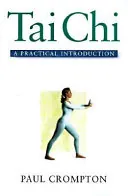


More Free Occult Philosophy Books
View all →