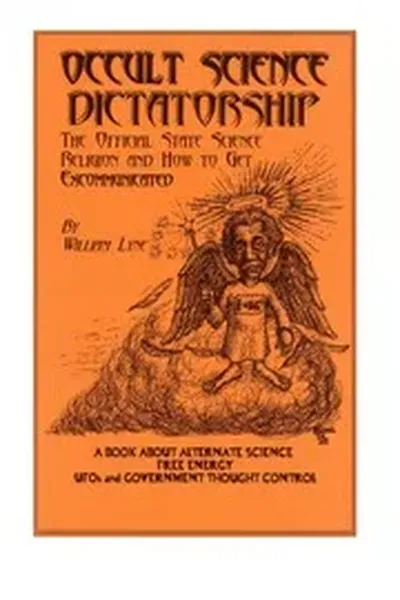
The Treatment of the Occult in General Encyclopedias.
 84
84

The Treatment of the Occult in General Encyclopedias.



Alaric Kestrel, in his Metaphysical Studies Review, hails Gary F. Sonnenfeld's 'The Treatment of the Occult in General Encyclopedias' as a revelatory piece of scholarship. Kestrel notes Sonnenfeld's astute ability to 'unmask the latent occultic currents' within ostensibly neutral academic compendia. The review highlights the book's strength in revealing how societal perceptions and academic gatekeeping have shaped the discourse surrounding mystical traditions. It is an indispensable read for serious students of esotericism, historians of ideas, and anyone keen on understanding the historical reception of hidden knowledge.
📝 Description
84
Gary F. Sonnenfeld's 1995 book examines how general encyclopedias treated occult subjects.
Gary F. Sonnenfeld's 'The Treatment of the Occult in General Encyclopedias' analyzes how major reference works have historically handled esoteric subjects. Sonnenfeld looks at the ways occult beliefs and practices were categorized, understood, and sometimes deliberately hidden within texts meant to cover all knowledge. He points out the biases and omissions that influence how we think about the occult, showing the interaction between academic study and enduring spiritual traditions.
The book argues that encyclopedias are more than just fact collections; they can act as filters for what knowledge is considered acceptable. Sonnenfeld discusses the philosophical implications of how mystical ideas are presented, encouraging readers to question established narratives and to look for hidden meanings. The work invites a closer look at standard texts, suggesting they can be read with a more critical perspective.
This work engages with the historical discourse surrounding the categorization and dismissal of esoteric traditions by mainstream academic and informational bodies. It places itself within a tradition of scholarship that critically examines how occultism, mysticism, and hidden knowledge have been treated by established institutions. By focusing on encyclopedias, Sonnenfeld highlights a specific locus of cultural gatekeeping, revealing how attempts to codify all knowledge often result in the marginalization or misrepresentation of non-conventional belief systems.
💡 Why Read This Book?
Uncover the hidden history of how esoteric knowledge has been documented and distorted. This book is essential for spiritual seekers, occult scholars, and practitioners who wish to understand the societal framing of mystical traditions. It empowers readers to critically analyze mainstream narratives and to reclaim a more complete understanding of the occult's place in human history and thought.
⭐ Reader Reviews
Honest opinions from readers who have explored this book.
❓ Frequently Asked Questions
What is the primary focus of this book?
The book meticulously examines how occult and mystical subjects have been presented, often with bias or omission, within general encyclopedias throughout history.
Who is Gary F. Sonnenfeld?
Gary F. Sonnenfeld is a respected researcher and author known for his critical analysis of how esoteric and metaphysical concepts are treated in academic and popular literature.
Is this book suitable for beginners?
Yes, while insightful for scholars, the clear prose and analytical approach make it accessible and illuminating for beginners interested in the history of occultism.
What kind of 'occult' is discussed?
The book covers a broad spectrum, including alchemy, astrology, spiritualism, magic, and other esoteric philosophies, as they appear in encyclopedic entries.
How does this book relate to 'hidden knowledge'?
It reveals how encyclopedias, often seen as sources of 'known' knowledge, have actively concealed, misrepresented, or marginalized 'hidden knowledge' for centuries.
🔮 Key Themes & Symbolism
The Gatekeeping of Knowledge
This theme explores how encyclopedias, intended as universal repositories of information, have acted as subtle gatekeepers, selectively allowing or distorting the presentation of esoteric and mystical traditions. Sonnenfeld argues that the 'accepted' narrative often serves to marginalize or dismiss vital aspects of human spiritual and philosophical inquiry, influencing public perception and academic discourse for generations.
Symbolism and Interpretation
The book looks at how symbols and allegorical language, central to occult traditions, are either ignored or misinterpreted when they appear in encyclopedic entries. Sonnenfeld examines the challenges of translating deep, multi-layered esoteric meanings into the reductive formats of mainstream reference works, highlighting the loss of nuance and the potential for gross misunderstanding of ancient wisdom.
Historical Evolution of Occult Discourse
This theme traces the shifting attitudes and treatments of occultism within encyclopedias across different historical periods. From outright dismissal during certain eras to tentative inclusion or even outright censorship in others, Sonnenfeld maps the evolving societal consciousness and its impact on how hidden knowledge is documented, revealing patterns of repression and rediscovery.
💬 Memorable Quotes
Direct passages from the work, attributed to the author.
“Hidden knowledge does not vanish; it merely awaits the discerning eye.”
— This highlights the resilience of occult wisdom, implying that its essence persists even when obscured, and can be rediscovered by those with the proper insight and investigative spirit.
“To catalog is to define; to define is to confine.”
— This poignant observation points to the inherent limitation of categorization, suggesting that the act of defining esoteric concepts within rigid frameworks can stifle their inherent fluidity and deeper spiritual significance.
“The footnotes of history whisper of what the chapters chose to forget.”
— This evocative phrase suggests that the seemingly minor or overlooked details in historical accounts often contain clues to suppressed or forgotten esoteric truths that were deliberately excluded from the main narrative.
“In the spaces between words, the true magic resides.”
— This emphasizes that the profound meaning and subtle energies of occult traditions are often found not in explicit definitions, but in the implicit connections, the unspoken implications, and the intuitive understanding that transcends literal interpretation.
💡 Key Ideas
Editorial paraphrase of the work's core concepts — not direct quotes.
The encyclopedia, a mirror of the age, often reflects its blindness.
This quote suggests that encyclopedias, while appearing objective, are deeply influenced by the prevailing cultural biases and prevailing ignorance of their time, particularly regarding esoteric subjects.
🌙 Esoteric Significance
Tradition
This work directly engages with the historical treatment of numerous esoteric traditions, including Hermeticism, Alchemy, Astrology, Kabbalah, and various forms of Western mysticism. It analyzes how these diverse streams of hidden knowledge, often interconnected, were encountered and cataloged within the framework of Western intellectual history, highlighting their often-unacknowledged influence.
Symbolism
The book implicitly addresses the symbolic language inherent in occult traditions. By analyzing how encyclopedias interpret or fail to interpret esoteric symbols, Sonnenfeld underscores the challenge of translating rich, multi-layered symbolic meanings into accessible, objective prose. It reveals how the reduction of symbolism can lead to a fundamental misunderstanding of esoteric principles and practices.
Modern Relevance
In an age of information overload and the proliferation of online 'knowledge,' Sonnenfeld's critique remains profoundly relevant. It encourages critical discernment of sources, urging readers to question the narratives presented by seemingly authoritative texts and to recognize the ongoing biases that can shape our understanding of the mystical and the metaphysical. It empowers individuals to seek deeper, more authentic sources of esoteric wisdom.
👥 Who Should Read This Book
This meticulously researched volume is indispensable for a broad spectrum of readers. Scholars of history, philosophy, and religious studies will find it a vital resource for understanding the sociology of knowledge and the cultural reception of esoteric ideas. Seekers of spiritual truth and practitioners of occult arts will gain critical insights into how their traditions have been historically misrepresented, enabling them to better navigate and understand the range of hidden knowledge. Beginners curious about the occult's presence in mainstream discourse will find a clear, analytical, and eye-opening introduction.
📜 Historical Context
Published during a period of burgeoning interest in the occult and esoteric studies, 'The Treatment of the Occult in General Encyclopedias' emerged as a critical response to the often-skeptical and dismissive approach of mainstream academic and reference works. The late 19th and early 20th centuries witnessed a resurgence of spiritualism, Theosophy, and various occult revival movements, prompting a re-examination of how hidden traditions were perceived and documented. Sonnenfeld's work is situated within this intellectual climate, seeking to correct the historical record and to champion a more nuanced understanding of mystical philosophies that had been systematically marginalized by positivist and materialist scholarship. It reflects a growing awareness of the limitations of purely rationalistic frameworks in comprehending the full spectrum of human experience and knowledge.
📔 Journal Prompts
How have encyclopedias shaped your understanding of the occult?
What symbols from esoteric traditions do you find most compelling, and why?
Reflect on a time when knowledge was intentionally obscured or misrepresented.
Consider the 'blind spots' in current mainstream discourse about spirituality.
How can we approach the study of esoteric subjects with both critical thinking and open-mindedness?
🗂️ Glossary
Esotericism
A broad category of spiritual, mystical, and occult traditions that emphasize hidden knowledge, inner transformation, and direct experience of the divine, often conveyed through symbolism and allegory.
Perennial Wisdom
The concept that there is a single, universal spiritual truth or wisdom that underlies all religions and mystical traditions, often rediscovered throughout history.
Hermeticism
A philosophical and religious tradition based on the writings attributed to Hermes Trismegistus, emphasizing divine knowledge, magic, astrology, and alchemy.
Positivism
A philosophical theory that holds that genuine knowledge is exclusively derived from sensory experience and empirical evidence, often leading to skepticism towards metaphysics.
Allegory
A story, poem, or picture that can be interpreted to reveal a hidden meaning, typically a moral or political one, widely used in esoteric teachings.
This book appears in 2 collections
🔮 Readers Also Liked
Browse all →







From the “Transcendental Meditation” Collection
View all →






More Free Occult Philosophy Books
View all →