The Tarot speaks
 63
63

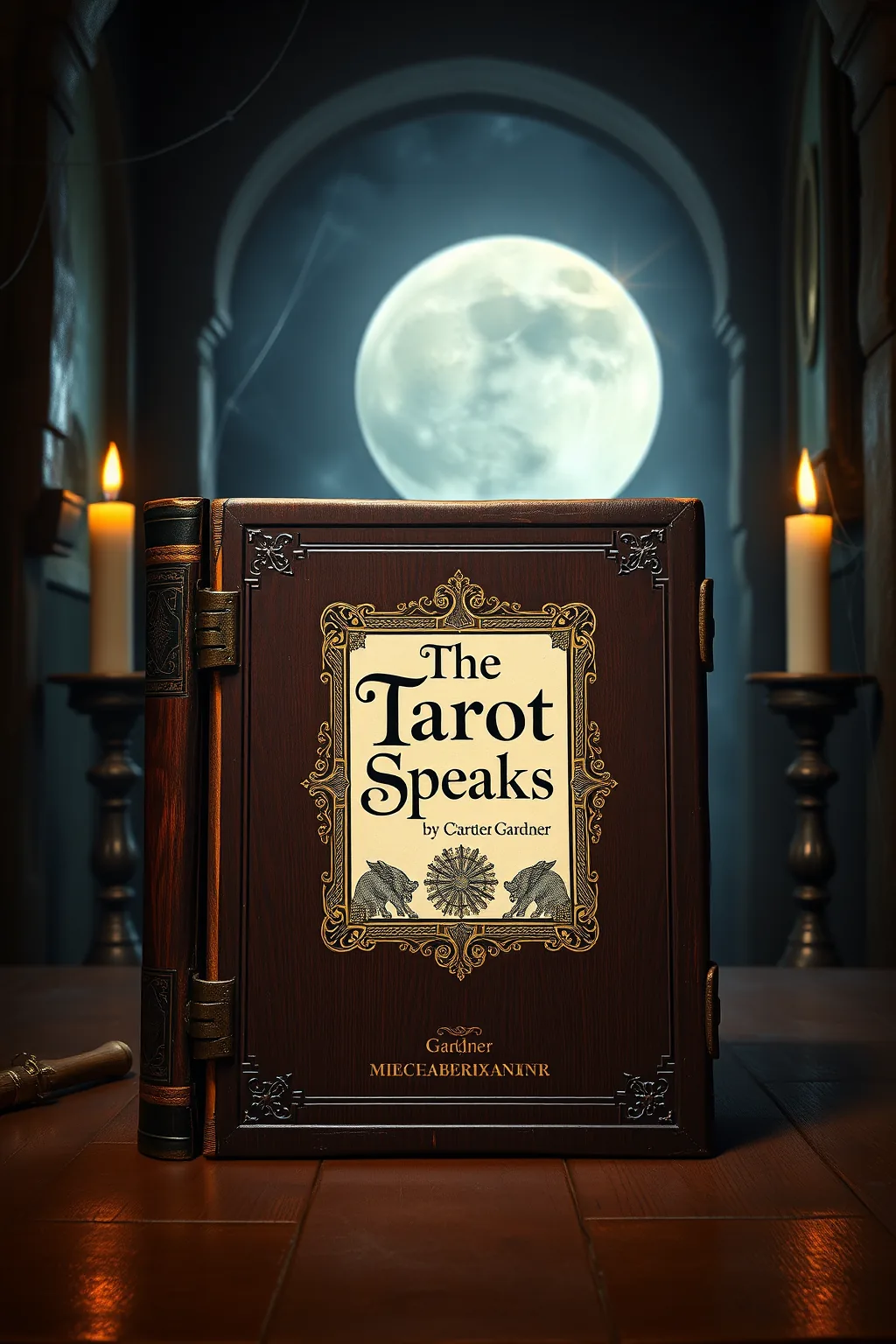
The Tarot speaks



Lorelei Sage, Contemplative Literature Editor — Richard Gardner's 'The Tarot Speaks' is an indispensable compendium for anyone seeking to delve beyond the superficial interpretations of Tarot. Gardner's prose is imbued with a rare erudition and a palpable sense of reverence for the esoteric traditions he explores. He skillfully navigates the complex tapestry of Tarot symbolism, offering profound insights into its hermetic roots and its capacity for spiritual transformation. This work is particularly adept at illuminating the archetypal journey, making it an invaluable resource for both neophytes and seasoned practitioners looking to deepen their understanding and practice.
📝 Description
63
Richard Gardner's 'The Tarot Speaks' was published in 1980.
Richard Gardner's 'The Tarot Speaks,' published in 1980, approaches Tarot not as a fortune-telling device but as a symbolic system for self-understanding. Gardner argues that each card's imagery holds specific meanings related to universal forces and the human psyche. He focuses on the philosophical and mystical dimensions of the cards, suggesting they act as a mirror to inner truths rather than a predictive tool.
The book details the esoteric resonances of individual cards. Gardner examines their connections to broader cosmic principles and their potential to foster deep self-awareness. It is written for those seriously interested in esoteric studies, from beginners to experienced practitioners. The text encourages a contemplative approach to divination, urging readers to engage with the cards' symbolic language.
Gardner's work invites readers to understand the Tarot's potential for psychological insight. It aims to shift perception by revealing the hidden energies and structures within the Tarot's archetypes. The book is a guide to interpreting these symbols for personal growth and contemplation.
Published in 1980, 'The Tarot Speaks' emerged during a period of renewed interest in esoteric traditions and Western esotericism. It sits within the lineage of occultists and mystics who viewed the Tarot not just as a game or a predictive tool, but as a complex symbolic language connected to deeper spiritual and psychological realities. Gardner's work aligns with interpretations that see the Tarot's seventy-eight cards as a map of the human condition and the cosmos, drawing on concepts found in Hermeticism and Jungian psychology, among other esoteric frameworks.
💡 Why Read This Book?
Uncover the profound spiritual and psychological depths of the Tarot. 'The Tarot Speaks' offers a unique esoteric perspective, revealing the cards as keys to inner wisdom and cosmic understanding. Ideal for seekers of hidden knowledge, Tarot practitioners yearning for deeper insight, and scholars of mystical traditions seeking authoritative guidance.
⭐ Reader Reviews
Honest opinions from readers who have explored this book.
❓ Frequently Asked Questions
What is the primary philosophical approach of this book towards Tarot?
This book views Tarot as a profound symbolic language and a tool for self-discovery, emphasizing its role in spiritual growth and understanding cosmic principles rather than mere fortune-telling.
Is this book suitable for absolute beginners to Tarot?
While it delves into advanced esoteric concepts, Gardner's clear exposition makes it accessible to earnest beginners willing to engage with its deeper meanings. Previous basic knowledge of card names can be beneficial.
Does the book offer specific card-reading techniques?
Yes, it provides foundational principles and interpretive frameworks for understanding card combinations and layouts, guiding readers towards insightful readings.
What esoteric traditions does Gardner draw upon?
Gardner integrates wisdom from Hermeticism, Kabbalah, and other Western esoteric traditions, weaving them into his interpretation of Tarot symbolism.
How does 'The Tarot Speaks' differ from other Tarot books?
Its strength lies in its deep dive into the philosophical and spiritual dimensions of the Tarot, moving beyond practical applications to explore its role as a map of consciousness and a conduit for universal wisdom.
🔮 Key Themes & Symbolism
The Tarot as a Mirror of Consciousness
This theme explores how the Tarot's archetypal imagery serves as a profound reflection of the human psyche's various states and potentials. Gardner posits that each card represents a facet of our inner world, a stage in our spiritual evolution, or a universal principle at play. By understanding these symbols, readers can gain unprecedented self-awareness, charting the range of their own consciousness and identifying patterns that shape their destiny. It's a journey into the self, guided by the silent, potent wisdom of the cards.
Hermetic Principles and Cosmic Resonance
Gardner masterfully interweaves the core tenets of Hermetic philosophy and the Kabbalistic Tree of Life with Tarot symbolism. This section elucidates how the cards embody universal laws, such as the principle of correspondence ('As above, so below') and the cyclical nature of existence. It reveals the Tarot as a microcosm of the macrocosm, a divine map that speaks to the energetic frequencies of the universe, offering a framework for understanding our place within the grand cosmic design.
The Archetypal Journey of the Fool
The book meticulously dissects the archetypal journey, often symbolized by the Fool's path through the Major Arcana. This theme examines how each card represents a significant stage of spiritual growth, initiation, or transformation. It's a narrative of descent and ascent, of facing trials and gaining wisdom, mirroring the hero's journey common to myths worldwide. Gardner presents the Tarot not just as a divinatory tool, but as a powerful allegory for personal development and the quest for enlightenment.
💬 Memorable Quotes
Direct passages from the work, attributed to the author.
“Each card is a whisper from the silent intelligence of the cosmos.”
— This highlights the esoteric nature of the Tarot, suggesting that the cards carry profound, subtle messages from a higher or universal source, accessible through contemplation.
“The Fool's journey is our own journey.”
— This points to the archetypal resonance of the Tarot, suggesting that the path depicted through the Major Arcana is a universal metaphor for human spiritual development and life's transformative experiences.
“Symbolism is the language of the soul.”
— This underscores the importance of symbolic interpretation in understanding the deeper, intuitive messages of the Tarot, bypassing the limitations of purely rational thought.
“To read the Tarot is to read the self.”
— This captures the book's emphasis on self-awareness, viewing Tarot reading as an introspective practice that illuminates one's inner landscape and personal journey.
💡 Key Ideas
Editorial paraphrase of the work's core concepts — not direct quotes.
The Tarot is not a crystal ball, but a sacred mirror.
This quote emphasizes the book's core philosophy: Tarot reveals inner truths and potentials rather than predicting fixed futures, acting as a tool for introspection and self-understanding.
🌙 Esoteric Significance
Tradition
This work is deeply rooted in the Western Esoteric Tradition, drawing significant inspiration from Hermeticism, Kabbalah, and Neoplatonism. Gardner masterfully synthesizes these ancient streams of wisdom, presenting the Tarot as a living embodiment of their core principles. It views the cards as a symbolic language designed to unlock the secrets of the universe and the human soul, aligning with the Hermetic dictum 'As Above, So Below.' The Tarot, in this context, becomes a key to understanding cosmic order and our place within it.
Symbolism
Gardner meticulously deciphers the wide range of symbols within the Tarot, revealing their esoteric meanings. He connects the imagery to archetypes, elemental forces, and the Kabbalistic Tree of Life, elucidating concepts like the divine spark, the shadow self, and the path of initiation. The numerical, elemental, and pictorial symbolism of each card is explored not just for divination, but as a profound map of consciousness and spiritual evolution, offering a visual language for the ineffable.
Modern Relevance
In an age often characterized by materialism and disconnection, 'The Tarot Speaks' offers a vital bridge to ancient wisdom and inner knowing. Its emphasis on archetypes and self-awareness remains profoundly relevant for navigating modern psychological landscapes and personal growth. The book provides tools for introspection, fostering a deeper understanding of oneself and one's relationship with the universe, making the esoteric accessible and applicable to contemporary spiritual seekers.
👥 Who Should Read This Book
This comprehensive guide is essential for several groups of readers. For the **beginner**, it provides a solid, philosophically rich foundation, moving beyond rote memorization to genuine understanding. **Scholars of esoteric traditions** will appreciate its insightful synthesis of Hermeticism and Kabbalah within Tarot studies. **Spiritual seekers** will find it an invaluable companion on their path of self-discovery, offering a map for inner exploration. **Practitioners of divination** will elevate their readings by integrating Gardner's profound symbolic interpretations and philosophical depth, transforming their approach to the cards.
📜 Historical Context
Published during a period of burgeoning interest in esoteric studies and the occult revival of the mid-20th century, Richard Gardner's 'The Tarot Speaks' emerged as a significant contribution to the literature on Tarot. This era saw a departure from purely predictive methods towards a more psychological and spiritual interpretation of the cards. Influenced by figures like Aleister Crowley, Paul Foster Case, and the Hermetic Order of the Golden Dawn, Gardner's work reflects a synthesis of traditional occult teachings with emerging psychological theories. The book's emphasis on archetypal symbolism and its connection to broader mystical traditions resonated deeply with a readership seeking deeper meaning and personal transformation beyond the mundane. It helped solidify the Tarot's place as a serious tool for self-exploration and spiritual inquiry within esoteric circles.
📔 Journal Prompts
Reflect on the Fool's journey as presented in the Major Arcana. Where are you currently on this path, and what lessons are you learning?
Choose a Tarot card that deeply speaks to you today. Meditate on its imagery and symbolism. What message does it hold for your current circumstances?
How can the Hermetic principle of 'As Above, So Below' be applied to understanding a recent challenge or success in your life, as illuminated by a Tarot spread?
Consider the Tarot as a 'sacred mirror.' What aspects of your inner self or your potential are reflected in the cards you've drawn recently?
Explore the concept of 'symbolism as the language of the soul.' How has understanding Tarot symbols opened up new avenues of self-perception for you?
🗂️ Glossary
Archetype
A universal, archaic pattern or image that derives from the collective unconscious and is a recognizable theme in literature, myths, and dreams. In Tarot, cards represent fundamental human experiences and psychological states.
Hermeticism
A philosophical and religious tradition based on the purported teachings of Hermes Trismegistus. It emphasizes esoteric knowledge, the unity of all things, and the pursuit of spiritual enlightenment through understanding universal laws.
Kabbalah
A system of Jewish mysticism that deals with the nature of God and the creation of the universe. Its central text, the Zohar, describes the Tree of Life, a symbolic representation of divine emanations and spiritual pathways.
Cartomancy
The practice of divination using a deck of cards, most commonly the Tarot. It involves interpreting the symbols and combinations of cards to gain insight into questions or situations.
Sigil
An inscribed or painted symbol considered to have magical power. In esoteric traditions, sigils are often created from intent and used for focused manifestation or communication with unseen forces.
This book appears in 3 collections
🔮 Readers Also Liked
Browse all →
More by Gardner, Richard.
All books →
From the “Tarot” Collection
View all →

More Free Divination & Tarot Books
View all →