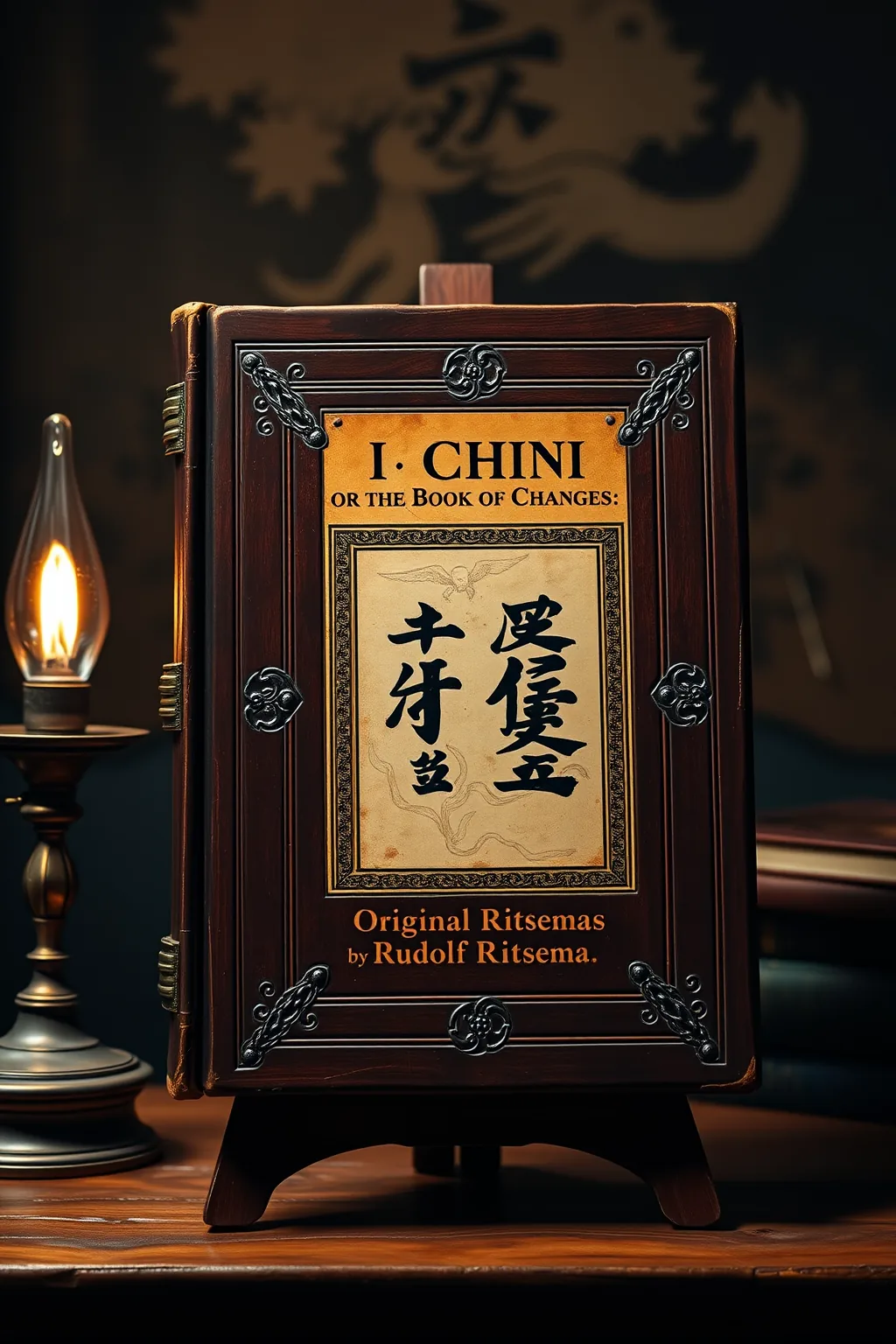
Original I Ching or the Book of Changes
 61
61

Original I Ching or the Book of Changes



Ophelia Vance (Mystical Literature Reviewer) — Rudolf Ritsema's "Original I Ching" is a seminal work for any serious student of esoteric thought. This translation breathes vital life into the ancient text, illuminating its profound philosophical underpinnings and divinatory power. Ritsema’s scholarly yet accessible approach reveals the intricate symbolic language and the deep wisdom embedded within each hexagram. It is an indispensable resource for those seeking to understand the I Ching not merely as a fortune-telling tool, but as a profound guide to understanding life's fundamental forces. Highly recommended for practitioners and scholars alike.
📝 Description
61
Rudolf Ritsema's 2003 translation of the I Ching reveals its original structure and philosophical underpinnings.
Rudolf Ritsema's translation of the I Ching, published in 2003, aims to present the text closer to its earliest forms. It moves beyond common interpretations to highlight the book's philosophical framework and its connection to ancient Chinese cosmology. Ritsema's work examines how the hexagrams function not just as tools for divination, but as a system that maps the dynamics of change and balance within the cosmos.
The translation pays close attention to the interplay of Yin and Yang as fundamental forces shaping reality. It seeks to convey the layered meanings within each hexagram, which speak to universal principles of transformation and cyclical existence. This edition is intended for those who wish to engage with the I Ching on a deeper, more scholarly level, seeking an understanding of its core concepts and their application to personal insight and cosmic awareness.
This translation situates the I Ching within a lineage of texts that explore fundamental correspondences between the human experience and the natural order. It aligns with traditions that see these ancient Chinese writings as a sophisticated system for understanding cosmic processes and human potential. The emphasis on original structure and philosophical blueprint connects it to scholarly approaches that seek to recover the text's earliest conceptualizations, moving past later accretions and popular divinatory practices.
💡 Why Read This Book?
Uncover the primal wisdom of the I Ching, stripped of later accretions, in this foundational translation. Ritsema offers unparalleled clarity into the text's philosophical and divinatory core. Ideal for seekers of ancient knowledge, scholars of comparative religion, and practitioners of Eastern mysticism who desire an authentic, unadulterated connection to this powerful oracle.
⭐ Reader Reviews
Honest opinions from readers who have explored this book.
❓ Frequently Asked Questions
What makes this edition 'original'?
This edition prioritizes a direct translation from early textual sources, aiming to present the I Ching's core meanings and philosophical intent before centuries of commentary and interpretation influenced its understanding.
Is this a practical guide for divination?
Yes, while deeply philosophical, Ritsema's translation provides the foundational understanding necessary for accurate and insightful divinatory practice, emphasizing the symbolic and contextual nature of the hexagrams.
Who is Rudolf Ritsema?
Rudolf Ritsema was a distinguished Sinologist and scholar of Taoism, dedicated to producing accurate and insightful translations of classical Chinese texts, particularly those related to ancient philosophy and cosmology.
What are the core philosophical concepts presented?
The book explores concepts such as Yin and Yang, the Tao, the cyclical nature of change, cosmic harmony, and the human role within the grand scheme of existence.
Can beginners use this book?
While rich in depth, Ritsema's translation is presented with enough clarity to be accessible to dedicated beginners who approach it with a contemplative mindset and a willingness to engage with its symbolic language.
🔮 Key Themes & Symbolism
The Tao and the Cosmic Flow
This edition studies the fundamental concept of the Tao, the ineffable, primordial principle that governs the universe. It illustrates how the I Ching serves as a map of this perpetual, cyclical flow of change, from which all phenomena arise and to which they return. Understanding this cosmic rhythm is key to aligning oneself with the natural order, fostering harmony and wisdom in all aspects of life. The text reveals the subtle interconnectedness of all things, urging readers to perceive the underlying unity within apparent duality.
Yin and Yang: The Dance of Opposites
At the heart of the I Ching lies the dynamic interplay of Yin and Yang, the archetypal forces of receptivity and activity, darkness and light, stillness and movement. Ritsema’s translation elucidates how these seemingly opposing energies are in fact complementary and interdependent, constantly transforming into one another. This duality is not a source of conflict but the engine of creation and change. By understanding this fundamental principle, readers can gain insight into balance, moderation, and the essential nature of transformation in both the external world and their inner lives.
The Oracle of Transformation and Destiny
The I Ching is presented not merely as a tool for predicting the future, but as a profound oracle of transformation. Each hexagram offers a snapshot of a particular stage in the ever-unfolding process of change, providing guidance on how to navigate specific circumstances with wisdom and foresight. Ritsema emphasizes the text's capacity to reveal karmic patterns and potential pathways, empowering individuals to consciously engage with their destiny. It encourages a proactive approach to life, where understanding the forces at play allows for informed choices and personal evolution.
💬 Memorable Quotes
Direct passages from the work, attributed to the author.
“What is most hidden is most important.”
— This aphorism points to the esoteric nature of true knowledge, suggesting that the most profound truths are often subtle, concealed, and require diligent seeking and introspection to uncover.
“The superior man understands the commands of heaven.”
— This emphasizes the importance of aligning one's will and actions with the natural order or 'heavenly' principles, suggesting that true wisdom lies in discerning and following this cosmic guidance.
💡 Key Ideas
Editorial paraphrase of the work's core concepts — not direct quotes.
The superior man acts before he speaks, and in his speaking, he keeps to the promise.
This quote highlights the virtue of action and integrity, emphasizing that true leadership and wisdom are demonstrated through deeds rather than mere words, fostering trust and reliability.
When the sun is at its highest, it must begin to decline.
A profound observation on the cyclical nature of fortune and power, this quote warns against complacency at the peak of success, reminding us that all things are in flux and subject to natural decline.
When one's inner life is in order, the outer world reflects it.
A powerful statement on the interconnectedness of inner and outer realities, this quote suggests that personal cultivation and spiritual clarity are the foundation for a harmonious external existence.
🌙 Esoteric Significance
Tradition
The I Ching is a foundational text within the Taoist and Chinese philosophical traditions, deeply intertwined with ancient Chinese divination, cosmology, and ethical thought. Esoterically, it serves as a practical manual for understanding the subtle energies of the universe and one's place within them. It is a key text in understanding the principles of change, balance, and the cyclical unfolding of reality, offering a framework for spiritual growth and alignment with the Tao.
Symbolism
The core symbolism of the I Ching revolves around the 64 hexagrams, each composed of six lines that are either solid (Yang) or broken (Yin). These lines and their combinations represent archetypal situations, cosmic forces, and stages of transformation. The trigrams (three-line combinations) are fundamental building blocks, symbolizing elements like heaven, earth, water, fire, and man. The interplay and movement between these symbols offer a rich language for understanding life's complexities and potential outcomes.
Modern Relevance
In the modern era, the I Ching remains profoundly relevant as a tool for introspection, decision-making, and personal development. Its emphasis on adaptability, understanding cyclical patterns, and seeking balance resonates deeply in a rapidly changing world. Esoteric practitioners find it an invaluable guide for navigating spiritual challenges, fostering intuition, and deepening their connection to universal principles. It offers a timeless wisdom that transcends cultural and temporal boundaries, providing solace and insight for contemporary seekers.
👥 Who Should Read This Book
This translation is indispensable for seasoned practitioners of divination and esoteric arts seeking to deepen their understanding of the I Ching's fundamental principles. Scholars of Eastern philosophy, comparative religion, and ancient cosmology will find Ritsema's meticulous approach important for academic research. Spiritual seekers yearning for a profound connection to ancient wisdom and a guide for navigating life's transformations will discover a rich source of insight. Beginners with a serious commitment to contemplative study and a desire for an authentic, unadulterated encounter with this seminal text will also find profound value.
📜 Historical Context
The I Ching, or Book of Changes, emerged from ancient Chinese cosmology and philosophy, with its earliest layers possibly dating back to the Western Zhou Dynasty (c. 1046–771 BCE). Its development spans millennia, evolving from a practical divinatory tool to a central to Chinese thought, influencing Confucianism, Taoism, and later mystical traditions. Rudolf Ritsema's translation seeks to access the text's primordial essence, aiming to present its original philosophical weight and symbolic power before it became heavily annotated and interpreted by subsequent scholars. This endeavor situates the work within a tradition of scholarly inquiry focused on uncovering the foundational layers of ancient wisdom, providing a crucial link to the intellectual and spiritual climate of early China.
📔 Journal Prompts
Reflect on a recent significant change in your life. How does a specific hexagram from the I Ching speak to this transformation?
Consider the interplay of Yin and Yang in your daily life. Where do you experience balance, and where is there discord?
How can understanding the 'commands of heaven,' as presented in the I Ching, inform your current decisions and aspirations?
Meditate on the concept of 'what is most hidden is most important.' What inner truths are you currently seeking to uncover?
If the I Ching is an oracle of transformation, what aspect of yourself do you feel is most ripe for change right now?
🗂️ Glossary
Yin
The passive, receptive, dark, and feminine principle in Chinese cosmology. It is often associated with the moon, water, and stillness.
Yang
The active, creative, light, and masculine principle in Chinese cosmology. It is often associated with the sun, fire, and movement.
Hexagram
A symbol composed of six stacked lines, each being either solid (Yang) or broken (Yin). There are 64 unique hexagrams in the I Ching, representing various archetypal situations and cosmic forces.
Trigram
A symbol composed of three stacked lines, either solid (Yang) or broken (Yin). There are eight trigrams, which are the building blocks for the 64 hexagrams and represent fundamental elements or concepts.
Tao
The fundamental, ineffable principle that underlies and governs the universe in Taoist philosophy. It is the 'Way' or the natural order of things, from which all creation emerges.
This book appears in 2 collections
🔮 Readers Also Liked
Browse all →









More by Rudolf Ritsema
All books →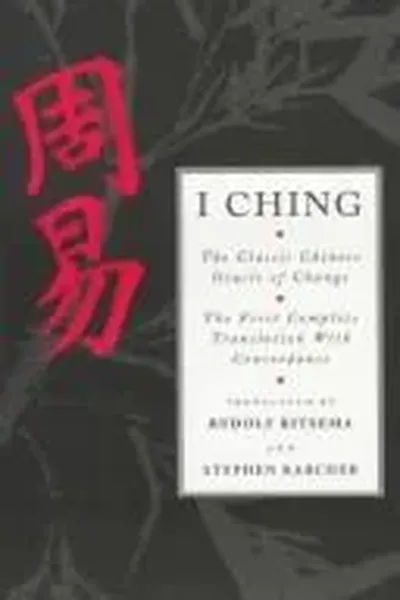

From the “I Ching” Collection
View all →








More Free Divination & Tarot Books
View all →