The tarot
 67
67

The tarot



Manly Palmer Hall's 'The Tarot' is a cornerstone for any serious student of esoteric symbolism. Balthazar Finch here. Hall's genius lies in his unparalleled ability to synthesize Kabbalistic, Hermetic, and alchemical philosophies into a cohesive understanding of the Tarot's profound depth. He elevates the cards from simple pictograms to potent keys for unlocking the secrets of consciousness and universal law. This work is essential for those who seek to grasp the Tarot’s true spiritual significance, offering insights that resonate far beyond the realm of predictive divination. A truly masterful exposition.
📝 Description
67
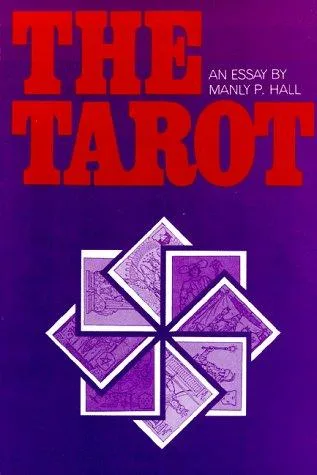
Manly Palmer Hall's 1929 book deciphers the 78 Tarot cards as a symbolic map.
Manly Palmer Hall’s work on the Tarot, published in 1929, presents the seventy-eight cards as more than a divinatory system. Hall argues they represent a symbolic map of the human psyche and the cosmos. He interprets the archetypal imagery, connecting the Major Arcana to spiritual evolution and the Minor Arcana to daily life experiences.
The book encourages deep reflection on the cards' meanings. Hall aims to reveal philosophical and metaphysical truths he believed were embedded in the Tarot. He positions it as a guide for those interested in esoteric knowledge, suggesting it holds insights into eternal principles.
This book sits within the Hermetic and occult traditions that view ancient systems like the Tarot as repositories of hidden knowledge. Hall, influenced by figures like Eliphas Lévi and the Rosicrucians, connects the Tarot to Qabalah and alchemy, seeing it as a key to understanding universal laws and the path of spiritual initiation. It reflects a broader esoteric interest in the 1920s that sought to find correspondences between symbolic systems and the human condition.
💡 Why Read This Book?
Unlock the ancient secrets of the Tarot as a symbolic map of consciousness and the universe. Manly Palmer Hall offers a profound, philosophical interpretation, ideal for seekers of hidden knowledge, students of mysticism, and practitioners looking to deepen their understanding of archetypal energies. This book transforms the Tarot into a powerful tool for self-discovery and spiritual enlightenment.
⭐ Reader Reviews
Honest opinions from readers who have explored this book.
❓ Frequently Asked Questions
What is the primary focus of Manly Palmer Hall's 'The Tarot'?
Hall's work delves into the Tarot as a profound symbolic system, exploring its philosophical, metaphysical, and psychological dimensions rather than solely its divinatory applications. It's about understanding the archetypal language of the soul.
Is this book suitable for beginners to Tarot?
While comprehensive, Hall's prose can be dense. It's excellent for earnest beginners eager for a deep dive, but may be more challenging than introductory guides. It rewards patient study.
What esoteric traditions does Hall draw upon in his Tarot interpretations?
Hall masterfully integrates Hermeticism, Kabbalah, Gnosticism, and Rosicrucianism, weaving their principles into his explanation of the Tarot's symbolism and its connection to the Great Work.
How does Hall differentiate Tarot from simple fortune-telling?
Hall views Tarot as a cosmic blueprint and a key to understanding universal laws and the evolution of consciousness. Fortune-telling is a superficial application; the true value lies in self-knowledge and spiritual attainment.
What is the 'Great Work' as discussed in relation to the Tarot?
The Great Work refers to the alchemical and spiritual process of self-transformation and the attainment of divine consciousness, which Hall posits is symbolically represented and illuminated by the Tarot's archetypes.
🔮 Key Themes & Symbolism
The Tarot as a Cosmic Map
Hall presents the Tarot not as a mere deck of cards, but as a vibrant, living map of the cosmos and the human soul. Each card is a hieroglyph, a key unlocking profound universal laws and archetypal patterns that govern existence. This perspective shifts the reader's understanding from prediction to illumination, revealing how the cards mirror the journey of consciousness and the unfolding of destiny.
Archetypal Symbolism and the Great Work
A central theme is the interpretation of the Tarot's imagery through the lens of universal archetypes, deeply rooted in Hermetic and Kabbalistic traditions. Hall connects the Major Arcana, in particular, to the stages of the alchemical 'Great Work' – the process of spiritual purification, integration, and divine realization. Understanding these archetypes offers a pathway to personal transformation and self-mastery.
The Tarot as a Key to Hidden Knowledge
Hall positions the Tarot as a repository of ancient, esoteric wisdom, a sacred language designed to transmit profound truths across generations. He reveals how the cards contain coded messages about the nature of reality, the divine, and the human condition. This book encourages a deep, contemplative study, inviting readers to uncover the hidden knowledge that can lead to spiritual awakening and enlightenment.
💬 Memorable Quotes
Direct passages from the work, attributed to the author.
“The Tarot is an ancient book of wisdom.”
— This highlights the Tarot's role as a repository of timeless knowledge and spiritual truths, intended for deep study and contemplation.
“Each card is a symbol of a divine idea.”
— This emphasizes the profound philosophical underpinnings of the Tarot, suggesting each image represents a fundamental aspect of universal consciousness or spiritual law.
“The Tarot is the alphabet of the divine.”
— This evocative metaphor suggests the Tarot provides the foundational elements and language through which divine principles can be understood and communicated.
“The cards are keys to the kingdom of the soul.”
— This frames the Tarot as an internal map, offering access and understanding to the deeper areas of one's own consciousness and spiritual potential.
“Seek within, and the Tarot will reveal.”
— This encourages an introspective approach, asserting that the true power of the Tarot lies in its ability to mirror and illuminate the seeker's inner journey and hidden truths.
🌙 Esoteric Significance
Tradition
Hall's interpretation is deeply rooted in the Western Esoteric Tradition, drawing heavily from Hermeticism, Kabbalah, Gnosticism, and Rosicrucianism. He views the Tarot as a symbolic representation of these ancient philosophies, particularly the alchemical 'Great Work' of spiritual transformation and the Kabbalistic Tree of Life, which he intricately ties into his card interpretations.
Symbolism
The book meticulously deciphers the detailed symbolism of the Tarot, from the archetypal figures of the Major Arcana to the elemental forces represented in the Minor Arcana. Hall explains how each image, number, and suit carries layered meanings, acting as keys to understanding cosmic principles, human psychology, and the journey of the soul towards enlightenment.
Modern Relevance
Despite its historical context, Hall's work remains profoundly relevant for modern seekers. It offers a sophisticated framework for understanding the Tarot beyond simple prediction, presenting it as a powerful tool for self-awareness, psychological insight, and spiritual growth in an increasingly complex world. The archetypal narratives still resonate, providing guidance for personal challenges and existential questions.
👥 Who Should Read This Book
This profound exploration is essential for earnest seekers of hidden knowledge, aspiring mystics, and practitioners of occult arts. Students of comparative religion and philosophy will find it useful. While beginners eager for depth will benefit, those with some prior exposure to esoteric concepts will find Hall's intricate connections most rewarding. Scholars of symbology and anyone seeking a deeper, philosophical understanding of the Tarot's place in human consciousness will also find immense value.
📜 Historical Context
Manly Palmer Hall penned 'The Tarot' during a period of intense resurgence in occult and esoteric studies in the early 20th century. This era saw a widespread fascination with ancient wisdom traditions, Hermeticism, Kabbalah, and the symbolic languages of various mystical orders. Influenced by figures like Eliphas Lévi and the Theosophical movement, Hall sought to synthesize these diverse streams of thought, presenting the Tarot not merely as a divinatory tool but as a profound philosophical and psychological system. His work emerged as a significant contribution to the New Age movement's burgeoning interest in ancient spiritual practices and the search for universal truths, offering a bridge between historical esotericism and contemporary spiritual seekers.
📔 Journal Prompts
Reflect on a Major Arcana card that speaks to your current life path. What 'divine idea' does it represent for you?
How can the elemental symbolism of the Minor Arcana be applied to understanding the dynamics of your daily life?
Consider the Tarot as a 'map of the soul.' What territories within your own psyche do you feel the cards are useful?
If the Tarot is the 'alphabet of the divine,' what is a message you feel the universe is trying to communicate to you through its symbols?
Explore a personal challenge through the lens of a specific Tarot spread or card. What hidden knowledge does this perspective reveal?
🗂️ Glossary
The Great Work
In esoteric traditions, particularly alchemy and Hermeticism, this refers to the process of spiritual purification, transformation, and the attainment of divine consciousness or enlightenment. The Tarot is seen as a symbolic guide to this process.
Archetype
A universal, archaic pattern or image that is part of the collective unconscious. In Tarot, the figures and symbols represent fundamental human experiences and cosmic principles.
Hermeticism
A philosophical and religious tradition based on the purported teachings of Hermes Trismegistus, emphasizing esoteric knowledge, the interconnectedness of all things, and the pursuit of spiritual wisdom.
Kabbalah
A system of Jewish mysticism that explores the nature of God, the universe, and the human soul through symbolic interpretations of scripture and esoteric doctrines, often visualized through the Tree of Life.
Hieroglyph
A symbol or character representing a word, syllable, or sound. In this context, Tarot cards are described as hieroglyphs of profound spiritual and philosophical ideas.
This book appears in 3 collections
🔮 Readers Also Liked
Browse all →
More by Manly Palmer Hall
All books →
From the “Tarot” Collection
View all →
More Free Divination & Tarot Books
View all →