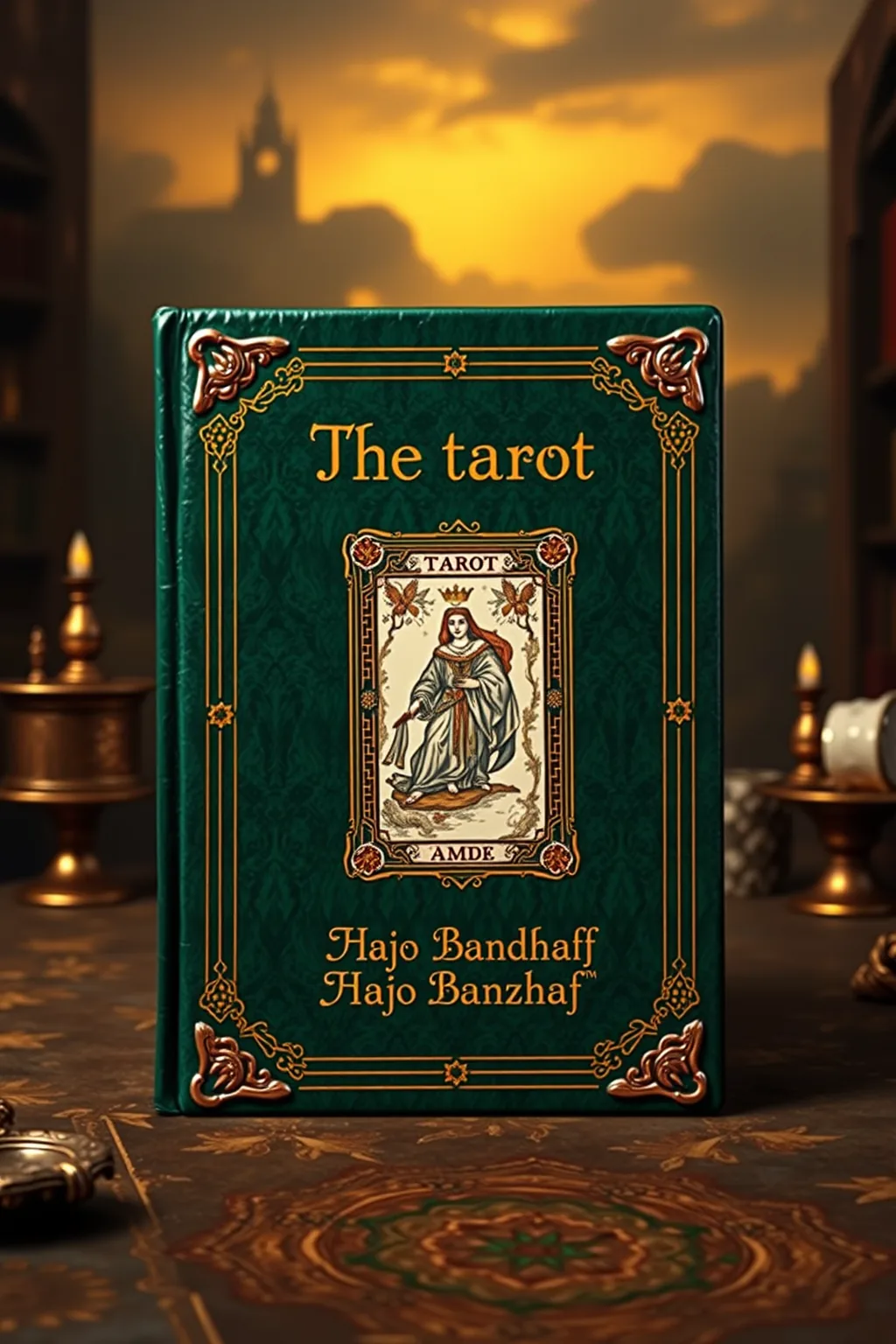
The tarot handbook
 63
63

The tarot handbook



Sophia Crane (Associate Editor) — Hajo Banzhaf's 'The Tarot Handbook' is an authoritative and deeply insightful exploration into the esoteric heart of the Tarot. Banzhaf masterfully demystifies the complex symbolism, presenting a coherent and profound understanding of each card's archetypal significance and its role within the greater narrative of the Major and Minor Arcana. His approach bridges the gap between practical divination and deep psychological and spiritual insight, making this work invaluable for both seasoned practitioners and serious newcomers. The book’s strength lies in its clear exposition of complex ideas, offering a pathway to understanding the Tarot not just as a predictive tool, but as a profound mirror of the soul and a map of consciousness. It is a cornerstone for anyone seeking authentic Tarot knowledge.
📝 Description
63
Embark on a profound journey into the arcane wisdom of the Tarot with Hajo Banzhaf's seminal work, 'The Tarot Handbook.' This meticulously crafted volume transcends mere cartomancy, unveiling the Tarot as a potent key to unlocking the hidden chambers of the psyche and the cosmic tapestry of existence. Banzhaf, a seasoned cartomancer and scholar, guides readers through the labyrinthine symbolism of the Major and Minor Arcana, revealing their deep connections to ancient esoteric traditions, archetypal psychology, and the very currents of fate. Each card becomes a mirror reflecting the reader's inner landscape and the subtle energies that shape their path. This handbook is an indispensable companion for the sincere seeker, the aspiring occultist, and anyone yearning to decipher the profound dialogues of the soul with the universe. It promises not just divination, but a transformative encounter with the profound mysteries that lie at the heart of human experience, illuminated by the luminous language of the Tarot.
✍️ Author
Hajo Banzhaf
The Book of Thoth: A Short Essay on the Tarot of the Egyptians is the title of The Equinox, volume III, number 5, by English occult writer Aleister Crowley. The publication date is recorded as the vernal equinox of 1944 (an Ixviii Sol in 0° 0' 0" Aries, Ma…
💡 Why Read This Book?
This book is essential for anyone who views the Tarot as more than just a deck of cards, but as a profound system of wisdom and self-discovery. It's ideal for seekers wishing to deepen their intuitive understanding, scholars exploring the esoteric traditions, and practitioners aiming to elevate their readings beyond simple fortune-telling to profound psychological and spiritual insight. Unlock the ancient secrets and personal guidance held within each card.
⭐ Reader Reviews
Honest opinions from readers who have explored this book.
❓ Frequently Asked Questions
What makes this Tarot handbook unique?
Banzhaf's handbook distinguishes itself by deeply exploring the psychological and esoteric dimensions of the Tarot, linking card symbolism to archetypal patterns and ancient wisdom traditions, offering profound insights beyond simple prediction.
Is this book suitable for beginners?
Yes, while rich in depth, Banzhaf's clear explanations and structured approach make it accessible for beginners eager to learn the core meanings and esoteric connections of the Tarot cards.
How does this book approach the Minor Arcana?
The book meticulously details the Minor Arcana, revealing their narrative progression and connection to the Major Arcana, providing a comprehensive understanding of their symbolic language and practical application in readings.
What is the philosophical significance of the Tarot as presented here?
The Tarot is presented as a mirror to the human psyche and a map of consciousness, offering a framework for understanding life's journey, personal growth, and the interplay of spiritual and material realms.
Can this book help with personal growth?
Absolutely. By understanding the archetypal energies and lessons within each card, readers can gain profound self-awareness, identify patterns, and navigate personal challenges with greater clarity and wisdom.
🔮 Key Themes & Symbolism
Archetypal Symbolism and the Collective Unconscious
This book delves into the profound archetypal symbolism embedded within the Tarot, positing that each card represents fundamental human experiences and universal patterns of consciousness. Banzhaf connects these symbols to the collective unconscious, suggesting that the Tarot acts as a bridge between individual awareness and the vast reservoir of shared human knowledge and instinct. Understanding these archetypes allows for a deeper comprehension of oneself and the intricate tapestry of life, transforming the Tarot from a mere divinatory tool into a powerful instrument of psychological exploration and spiritual awakening.
The Tarot as a Mirror of the Soul's Journey
Banzhaf presents the Tarot not just as a predictor of external events, but as a sacred map charting the inner landscape of the soul. The progression through the Major Arcana, in particular, is illuminated as a metaphor for the human journey of initiation, growth, and self-realization. Each card reflects specific challenges, lessons, and transformative potentials inherent in our lives. This perspective encourages introspection, enabling readers to use the Tarot to gain profound self-awareness, understand their karmic patterns, and consciously navigate their personal evolution towards wholeness.
Esoteric Traditions and Hermetic Philosophy
The foundation of Banzhaf's work is deeply rooted in venerable esoteric traditions, including Hermeticism, Kabbalah, and Gnosticism. He meticulously traces the lineage of Tarot symbolism back to these ancient streams of wisdom, revealing how the cards encapsulate profound philosophical concepts about creation, consciousness, and the divine order. This handbook offers a gateway into understanding these complex metaphysical frameworks through the accessible and visually rich language of the Tarot, providing a potent means to engage with and integrate this hidden knowledge into one's spiritual practice.
💬 Memorable Quotes
“The Tarot is a mirror that reflects the hidden depths of the soul.”
— This quote emphasizes the Tarot's role as a tool for introspection and self-discovery, suggesting that its imagery and symbolism reveal our subconscious thoughts, feelings, and motivations.
“Each card is a gateway to a cosmic truth.”
— This highlights the profound, universal nature of Tarot symbolism, implying that every card holds a piece of the greater cosmic order and can unlock insights into fundamental aspects of existence.
“The journey of the Fool is the journey of us all.”
— This poignant statement underscores the archetypal nature of the Major Arcana, particularly the Fool's journey, as a metaphor for the universal human experience of venturing into the unknown and embracing life's adventures.
“Symbolism is the language of the unconscious mind.”
— This asserts the deep connection between symbols and our inner psychological world, positioning the Tarot's visual language as a direct channel for understanding the messages and wisdom of our subconscious.
“To read the Tarot is to read the universe within.”
— This profound statement suggests that by understanding the Tarot, one gains access to the universal principles and energies that govern both the external cosmos and our internal being, fostering a sense of interconnectedness.
🌙 Esoteric Significance
Tradition
This work is deeply steeped in Hermetic and Kabbalistic traditions, drawing parallels between Tarot imagery and the Tree of Life, the four elements, and alchemical processes. Banzhaf frames the Tarot as a mystical map of consciousness, aligning its archetypes with universal spiritual principles and the journey of the soul towards enlightenment, offering a profound esoteric interpretation.
Symbolism
The book meticulously unpacks the rich symbolism of the Tarot, from the elemental associations of the Minor Arcana to the archetypal figures of the Major Arcana. Banzhaf explores how each symbol, number, and image serves as a key to understanding cosmic laws, psychological states, and the unfolding of destiny, revealing a complex and interconnected symbolic language.
Modern Relevance
In an age often characterized by disconnection and a search for meaning, Banzhaf's handbook provides a timeless system for self-awareness, psychological insight, and spiritual guidance. The Tarot's ability to illuminate hidden patterns and offer perspectives on life's challenges makes it an enduring tool for personal growth and navigating the complexities of the modern world with wisdom.
👥 Who Should Read This Book
This handbook is a treasure for a diverse audience. For the **beginner** eager to grasp the Tarot's foundational meanings and esoteric connections, it offers clear guidance. **Scholars** of esotericism will appreciate its deep dives into historical traditions and symbolic analysis. **Seekers** of spiritual truth will find it a profound tool for introspection and understanding life's greater patterns. For **practitioners**, it provides a sophisticated framework to deepen their readings and connect with the Tarot on a more profound, transformative level.
📜 Historical Context
Published during a period of resurgence in esoteric interest and a growing appreciation for psychological depth in spiritual practices, Hajo Banzhaf's 'The Tarot Handbook' emerged as a significant contribution to the field. The late 20th and early 21st centuries saw a move away from purely predictive or superficial interpretations of the Tarot towards a more integrated understanding that embraced its psychological, philosophical, and spiritual dimensions. Banzhaf’s work reflects this shift, drawing heavily on Jungian psychology and established esoteric traditions, offering a scholarly yet accessible approach that resonated with a generation seeking meaning and self-understanding through ancient wisdom systems. Its influence lies in providing a robust, well-researched framework for interpreting the Tarot as a complex symbolic language.
📔 Journal Prompts
Reflect on the Fool's journey; what 'leap of faith' are you currently contemplating in your life, and what fears or excitements surround it?
Choose a card from the Major Arcana that resonates with a current challenge. How might its archetypal energy offer guidance or a new perspective?
Consider the four suits of the Minor Arcana (Wands, Cups, Swords, Pentacles) as representing different life energies. Which suit feels most dominant or neglected in your current experience?
Meditate on the symbolism of The High Priestess. What hidden knowledge or intuition is she urging you to acknowledge within yourself?
If you were to create a 'personal Tarot spread' based on the principles in this book, what cards would you include to explore your current life path and potential?
🗂️ Glossary
Archetype
A universal, archaic pattern or image that is part of the collective unconscious, representing fundamental human experiences and motifs, such as the Hero, the Mother, or the Trickster.
Major Arcana
The 22 trump cards of a Tarot deck, often representing significant life lessons, spiritual journeys, and archetypal forces that shape destiny and personal transformation.
Minor Arcana
The 56 cards of a Tarot deck divided into four suits (Wands, Cups, Swords, Pentacles), which typically represent the everyday events, challenges, and circumstances of life.
Cartomancy
The practice of divination using a deck of cards, most commonly the Tarot, to gain insight into the past, present, and future, or to explore psychological states.
Esoteric
Intended for or likely to be understood by only a small number of people with a specialized knowledge or interest, particularly concerning spiritual or mystical subjects.