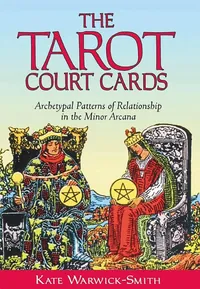
The Tarot Court Cards

 80
80

The Tarot Court Cards
Kate Warwick-Smith's "The Tarot Court Cards" provides a welcome, granular examination of the deck's most anthropomorphic figures. The author's strength lies in her ability to move beyond rote interpretations, particularly in her discussion of the Knights, whom she characterizes not just as messengers but as active agents of change, sometimes disruptive. A limitation, however, is the book's dense prose, which occasionally can feel academic rather than intuitively accessible, especially when discussing the Page cards as nascent potentials. The section detailing the Queen of Swords as embodying intellectual clarity tempered by emotional detachment offers a particularly sharp insight into this often-misunderstood archetype. For those willing to engage with its detailed analysis, the book offers a refined perspective on Tarot's human element.
📝 Description
80
Kate Warwick-Smith's 2003 book focuses solely on the four Royal figures of the Tarot's Minor Arcana.
Published in 2003, "The Tarot Court Cards" by Kate Warwick-Smith concentrates on the King, Queen, Knight, and Page. This work moves past general Tarot interpretations to examine the psychological depth and archetypal roles these specific cards embody. Warwick-Smith analyzes how each Court Card reflects a unique approach to its suit's element: Fire for Wands, Water for Cups, Air for Swords, and Earth for Pentacles. The book details how these figures can represent people in a querent's life, aspects of the querent's own personality, or developmental stages within a given situation.
This text is suited for Tarot students who have moved beyond basic meanings and wish to understand the narrative and character development within the deck. Readers interested in psychological archetypes, symbolic representation, and the construction of character in storytelling will also find value here. It is particularly useful for those seeking to enrich their interpretation of the Court Cards beyond common divinatory assignments.
Kate Warwick-Smith's study, released in 2003, arrived during a period of expanding interest in esoteric studies. While many contemporary works addressed broader Tarot systems or new deck designs, this book offered a detailed analysis of the Minor Arcana's Royal figures. It builds upon earlier scholarship, including the foundational work of A.E. Waite's "The Pictorial Key to the Tarot" (1910), which was instrumental in defining the imagery of the Rider-Waite-Smith deck. Warwick-Smith's contribution lies in its concentrated examination of these specific archetypes.
💡 Why Read This Book?
• Gain a nuanced understanding of the four Court Card archetypes (King, Queen, Knight, Page) beyond basic meanings, as Warwick-Smith details their specific elemental associations and psychological roles, offering insights unavailable in generalized Tarot guides. • Discover how the Court Cards function as dynamic elements in a reading, representing not just people but also internal states and developmental stages, a concept elaborated upon in the book's analysis of their narrative function. • Explore the symbolic language of the Court Cards through Warwick-Smith's meticulous dissection, particularly her insights into the Queen of Swords, providing a concrete example of how to interpret complex archetypes more deeply than superficial readings allow.
⭐ Reader Reviews
Honest opinions from readers who have explored this book.
❓ Frequently Asked Questions
What is the primary focus of Kate Warwick-Smith's "The Tarot Court Cards"?
The book's primary focus is an in-depth exploration of the four Court Cards—King, Queen, Knight, and Page—within the Tarot deck. It examines their individual archetypal roles, psychological significance, and how they function within readings, moving beyond superficial interpretations.
When was "The Tarot Court Cards" by Kate Warwick-Smith first published?
The book "The Tarot Court Cards" by Kate Warwick-Smith was first published in 2003, positioning it within the contemporary wave of esoteric literature that began to offer more specialized studies.
Does this book cover all 78 Tarot cards?
No, "The Tarot Court Cards" specifically dedicates its content to the 16 Court Cards of the Minor Arcana. It does not provide a comprehensive interpretation of the entire deck, but rather a deep dive into these particular archetypes.
What makes the interpretation of Court Cards in this book unique?
Warwick-Smith's approach is unique in its emphasis on the psychological depth and narrative function of the Court Cards. She treats them not just as static representations but as dynamic forces and character archetypes within a reading.
Is "The Tarot Court Cards" suitable for beginners?
While accessible, the book is best suited for intermediate to advanced Tarot students. Beginners might find the detailed analysis more beneficial after gaining a foundational understanding of the Tarot deck as a whole.
What elemental associations are explored for the Court Cards?
The book systematically explores the elemental associations for each Court Card, linking the King, Queen, Knight, and Page to the four suits and their corresponding elements: Wands (Fire), Cups (Water), Swords (Air), and Pentacles (Earth).
🔮 Key Themes & Symbolism
Archetypal Personalities
The core of Warwick-Smith's work is the detailed exploration of the King, Queen, Knight, and Page as distinct archetypal personalities. Each card is presented not merely as a representation of a person, but as embodying a specific mode of interaction with the world and with the element of its suit. The book explores how these archetypes manifest in our lives, offering insights into our own character structures and the roles we play in various situations. The focus is on understanding their inherent qualities and how they drive narrative within a Tarot spread.
Elemental Dynamics
Warwick-Smith thoroughly examines how the four Court Cards interact with their corresponding elements: Fire (Wands), Water (Cups), Air (Swords), and Earth (Pentacles). This elemental framework is crucial for understanding the nuanced expressions of each archetype. For instance, a Knight of Wands will possess a different energetic drive than a Knight of Pentacles. The book illustrates how these elemental forces shape the personality and actions of the Court Cards, providing a structured way to interpret their influence in a reading.
Narrative Function in Readings
Beyond static symbolism, the book emphasizes the dynamic and narrative role of the Court Cards in a Tarot reading. They are presented as active agents that can signify not only people but also specific stages of development, psychological states, or the unfolding of events. The work explores how the interplay between Court Cards, and between Court Cards and other cards in a spread, constructs a story or offers guidance on navigating a particular circumstance. This perspective enriches the interpretative process significantly.
Psychological Depth
"The Tarot Court Cards" moves towards a psychological interpretation of the archetypes. Warwick-Smith investigates the internal landscape associated with each card, suggesting they can represent facets of the querent's own psyche. The book encourages readers to see the Court Cards as mirrors reflecting internal dynamics, motivations, and potential growth areas. This psychological lens offers a powerful tool for self-reflection and personal development, moving Tarot beyond simple prediction.
💬 Memorable Quotes
Direct passages from the work, attributed to the author.
“The Knight is often the most active and potent of the royal figures, representing the energetic thrust of the suit.”
— This highlights the dynamic, action-oriented nature of the Knight archetype. It suggests that when this card appears, it signifies a powerful impulse or force driving the situation forward, often with a decisive impact.
“Pages represent beginnings, messages, and undeveloped potential within the suit's element.”
— This interpretation emphasizes the Page's role as a nascent force. It signifies the initial spark of an idea, the arrival of news, or the early stages of learning and exploration related to the suit's energy.
“Queens embody the receptive, nurturing, and stabilizing aspects of their suit's element.”
— This points to the Queen's role as a mature and often internalized expression of the suit's energy. She represents the capacity to embody, manage, and manifest the element's qualities with wisdom and emotional intelligence.
“Kings represent the mastery and outward expression of the suit's element, often in a leadership capacity.”
— This emphasizes the King's position as an authority or established force within his domain. He signifies the outward projection of the suit's power and the ability to govern or direct its energies effectively.
“The Court Cards can represent people, but equally they can represent aspects of ourselves.”
— This crucial insight broadens the interpretation of Court Cards beyond external figures. It encourages self-reflection, suggesting that these archetypes can illuminate inner psychological states and personal characteristics we embody.
🌙 Esoteric Significance
Tradition
Warwick-Smith's work aligns with the Western Esoteric tradition, particularly its psychological and symbolic interpretation of Tarot, influenced by figures like Carl Jung. While not explicitly Hermetic or Kabbalistic in its primary framework, it draws upon the established symbolism of the Rider-Waite-Smith deck, which itself is rooted in these traditions. The book fits within a lineage of modern esotericists who aim to integrate Tarot with psychological understanding and personal development, moving beyond purely divinatory applications.
Symbolism
The book's symbolism centers on the four Royal figures and their elemental associations. The King represents mastery and outward authority, the Queen receptive wisdom and inner control, the Knight dynamic action and outward expression, and the Page nascent potential and messages. Each figure embodies a specific interaction with their suit's element (Fire, Water, Air, Earth), creating a rich symbolic language for understanding personality traits, motivations, and life stages within the Tarot system.
Modern Relevance
Contemporary Tarot practitioners and psychological counselors increasingly utilize the nuanced interpretations offered in works like Warwick-Smith's. The focus on archetypes and personality structures appeals to modern depth psychology and self-help movements. This book’s detailed exploration of the Court Cards serves as a valuable resource for those seeking to understand complex human dynamics through symbolic language, finding application in personal growth, coaching, and advanced Tarot study groups.
👥 Who Should Read This Book
• Tarot students seeking to move beyond beginner interpretations: This book offers a deep dive into the 16 Court Cards, providing nuanced psychological and archetypal insights that enrich understanding of these figures. • Individuals interested in Jungian psychology and archetypes: Readers fascinated by how symbolic figures represent personality structures and developmental stages will find the book’s approach highly relevant. • Experienced readers looking to refine their practice: Those who feel they have mastered basic Tarot meanings can use this text to add depth and specificity to their readings, particularly concerning character analysis and dynamic situations.
📜 Historical Context
Published in 2003, Kate Warwick-Smith's "The Tarot Court Cards" arrived during a period when esoteric scholarship was increasingly specializing. While the Rider-Waite-Smith deck, first published in 1909 and popularized by Arthur Edward Waite and Pamela Colman Smith, had long established the visual language for these archetypes, many books offered general interpretations. Warwick-Smith’s focused approach on the 16 Court Cards provided a deeper dive, building on the foundational symbolic system. This work emerged in contrast to more generalized Tarot guides and systems like the Golden Dawn’s complex magical orders. It offered a specific, analytical lens that catered to readers seeking a more profound understanding of these particular cards, contributing to a growing body of literature that dissected the Tarot into its constituent parts for in-depth study.
📔 Journal Prompts
The Knight's elemental drive: Analyze how the Knight of Wands' fire energy differs from the Knight of Swords' air energy in practical application.
Queenly introspection: Reflect on the Queen of Cups' emotional intelligence and how it might manifest in a challenging social scenario.
Page of Pentacles as potential: Consider the nascent energy of the Page of Pentacles and identify a small, practical skill you could begin developing.
Kingly authority: Explore the King of Pentacles' grounded leadership and how that archetype might be applied to a current project.
Court Card self-representation: Which Court Card currently best embodies your approach to a significant life situation, and why?
🗂️ Glossary
Court Cards
The four figures (King, Queen, Knight, Page) found in each of the four suits of the Minor Arcana in a Tarot deck. They are often interpreted as representing people, personality types, or stages of development.
Archetype
A fundamental, primal symbol or image that recurs across cultures and throughout history, representing universal patterns of human nature and experience, as explored in psychology and mythology.
Elemental Associations
The connection of Tarot suits and cards to the classical elements: Fire (Wands), Water (Cups), Air (Swords), and Earth (Pentacles), which informs their symbolic meaning and interpretation.
Minor Arcana
The 56 cards of a standard Tarot deck, divided into four suits, which typically represent the everyday events, challenges, and circumstances of life.
Page
The lowest-ranking Court Card, often symbolizing beginnings, messages, learning, innocence, or undeveloped potential within its suit's element.
Knight
A Court Card representing action, movement, and outward expression, often signifying the pursuit or delivery of the suit's energy with passion and drive.
Queen
A Court Card embodying mature mastery, receptive qualities, and internalized control of the suit's element, often representing wisdom, intuition, or nurturing.
🔮 Readers Also Liked
Browse all →









More by Kate Warwick-Smith
All books →
More Free Occult Philosophy Books
View all →