Kate Warwick-Smith
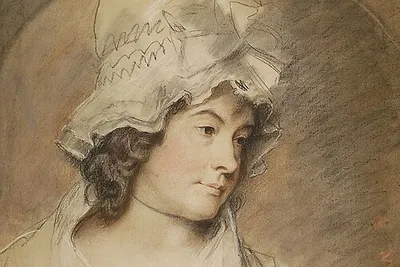
Charlotte Smith was an English poet and novelist whose work revived the sonnet form and influenced Gothic fiction.
Charlotte Smith (1749-1806) was an English writer who gained recognition for her poetry and novels, particularly her Elegiac Sonnets, which helped to revive the sonnet form in England. Despite her prolific output, which included eleven novels and four children's books, she primarily saw herself as a poet. Smith's personal struggles, including financial hardship and legal battles for independence as a woman, significantly influenced her writing, often appearing in her autobiographical prefaces and shaping the sentimental and political themes in her novels.
Her early novels were characterized by sentimentality, while later works like Desmond and The Old Manor House engaged with the ideals of the French Revolution. Smith's writing also contributed to the conventions of Gothic fiction. Facing destitution in her later years, she sold her book collection to cover debts and died in 1806, with her poem "Beachy Head" published posthumously. Though largely forgotten for a time, she is now recognized as a significant precursor to Romanticism.
Literary Contributions and Personal Struggles
Charlotte Smith's literary career was deeply intertwined with her personal life. Her Elegiac Sonnets, published in 1784, were instrumental in revitalizing the sonnet form in England, imbuing it with a tone of woeful sentiment. This success provided a foundation for her later prose work, lending her novels an aura of respectability. Smith's experiences as a woman navigating legal and financial difficulties, particularly after leaving her husband, heavily informed her writing. She used her novels and autobiographical prefaces to explore themes of female exploitation and advocate for legal reforms. Her works are noted for their development of sentimentality and their contributions to the Gothic fiction genre and political novels of sensibility, often reflecting her support for the French Revolution.
Poetry and Prose: A Dual Identity
While Charlotte Smith produced a substantial body of prose, including eleven novels, she consistently identified herself as a poet. She believed that poetry, more than her financially successful novels, would secure her lasting respectability. Her early novels, such as Emmeline, followed conventions of women's fiction, often featuring a heroine facing melodramatic distress. However, Smith frequently incorporated political commentary and explored female desire and suffering under despotism, challenging typical romantic narratives. Her novels often contained autobiographical elements, with characters and events mirroring her own life, including the deaths of children and her struggles against legal and economic constraints.
Later Life and Legacy
Smith's later years were marked by severe financial difficulties. By 1803, waning interest in her work left her destitute. She was forced to sell her personal book collection to settle her debts. Despite being physically weakened to the point where holding a pen was difficult, she continued to write. Her poem "Beachy Head" was published posthumously in 1807. Although her work fell into relative obscurity by the mid-19th century, modern scholarship has recognized Charlotte Smith as a crucial precursor to the Romantic movement, highlighting her innovative use of the sonnet and her significant contributions to the development of the novel.
Key Ideas
- Revival of the sonnet form
- Development of the novel of sensibility
- Contributions to Gothic fiction conventions
- Exploration of female legal and economic struggles
- Political commentary, including support for the French Revolution
- Use of autobiographical elements in fiction
Notable Quotes
“have been contented to reside in the same house with him”
“his temper been so capricious and often so cruel”
“life was not safe”
“a daring decision”
“She prized her verse for the role it gave her as a private woman whose sorrows were submitted only reluctantly to the public.”
Books by Kate Warwick-Smith
0 free public domain books · Read online or download