The Tarot Court Cards
 73
73

The Tarot Court Cards
Warwick-Smith's decision to dedicate an entire volume to the Tarot Court Cards is a bold, if niche, undertaking. The 2003 publication arrived at a time when many tarot books were broad surveys; this offered a laser focus that was, and remains, refreshing. The strength lies in its detailed breakdown of each court card's personality and function, moving beyond simple 'messenger' or 'authority figure' labels. For instance, the nuanced exploration of the Knights as figures of action and movement provides a more dynamic understanding than commonly found. However, the book's exclusivity can also be a limitation; readers seeking a general tarot introduction will find it too specialized. A particular passage discussing the interplay between a Queen's nurturing energy and a King's executive power offers a compelling lens for relationship analysis. The book's concentrated approach makes it a valuable resource for those specifically looking to master the court cards, though it requires prior foundational knowledge of the tarot system.
📝 Description
73
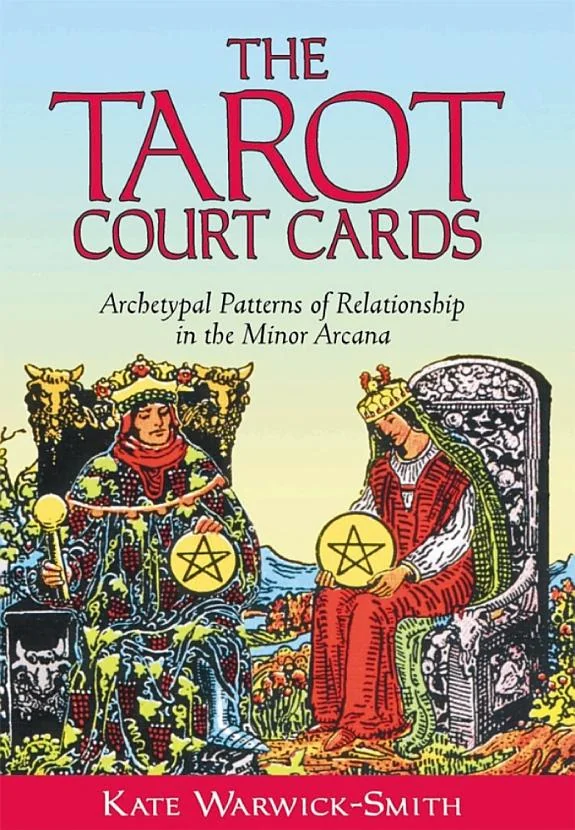
Kate Warwick-Smith's 2003 book focuses solely on the sixteen court cards of the tarot.
Kate Warwick-Smith's *The Tarot Court Cards*, published in May 2003, isolates the sixteen court cards (Page, Knight, Queen, King) for a detailed examination. Instead of treating them as secondary figures, the book presents them as distinct archetypes that represent specific energies and aspects of personality. It addresses their fundamental nature and their particular roles within a person's life story, moving past general interpretations.
This work is for tarot practitioners who want to gain a deeper understanding of the court cards, going beyond the Major and Minor Arcana. It is especially useful for those looking to analyze relationships, understand personal dynamics, or identify specific support or challenges shown by these cards. Readers who prefer specialized, in-depth guides over broad overviews will find this book beneficial. Warwick-Smith's approach emphasizes engaging directly with these archetypes through meditative practices and pathworking, suggesting this direct interaction can foster personal growth and insight.
Published in 2003, *The Tarot Court Cards* emerged during a time of renewed interest in practical esoteric applications. Its singular focus on the court cards set it apart. While many tarot books mention these figures, few dedicate an entire volume to their interpretation as central figures. This specialized approach contrasts with the more general interpretations found in earlier 20th-century tarot scholarship, such as that of A.E. Waite, who viewed the court cards within a broader system.
💡 Why Read This Book?
• Gain specialized insight into the 16 Court Cards, understanding them as distinct archetypal personalities and relational indicators, a depth not typically found in general tarot texts, as detailed in the book's core interpretive framework. • Learn practical techniques for engaging with these archetypes, including meditation and pathworking methods specifically outlined for contacting the energies of the Page, Knight, Queen, and King. • Discover how to identify specific support-based relationships and personal dynamics through the court cards, a unique interpretive angle championed by the book since its 2003 publication.
⭐ Reader Reviews
Honest opinions from readers who have explored this book.
❓ Frequently Asked Questions
What is the primary focus of Kate Warwick-Smith's "The Tarot Court Cards"?
The book's primary focus is an in-depth interpretive guide to the sixteen court cards of the tarot (Pages, Knights, Queens, and Kings), exploring their individual identities and roles in readings.
When was "The Tarot Court Cards" first published?
The book was first published on May 5, 2003, making it a focused exploration that emerged in the early 2000s.
Does the book offer practical exercises for working with the court cards?
Yes, it includes tarot spreads and specific techniques for contacting these powerful archetypes through meditation and pathworking.
How does this book differ from other tarot guides?
It is unique in its exclusive dedication to the court cards, treating them as central figures for revealing relational dynamics and personal support structures.
What kind of support dynamics can the court cards reveal according to the book?
The book suggests the court cards can clearly and accurately reveal the specific nature of support-based relationships and interactions in one's life.
Is prior tarot knowledge required to understand this book?
While not explicitly stated, the book's specialized nature implies a foundational understanding of tarot basics would be beneficial for readers.
🔮 Key Themes & Symbolism
Archetypal Personalities
The work posits that the Page, Knight, Queen, and King are not mere indicators of people, but distinct archetypal energies. Each card represents a particular mode of being, interacting, and processing information. Warwick-Smith elaborates on how these archetypes manifest in relationships, internal psychology, and life situations, offering a framework for identifying these energies within oneself and others. The book moves beyond simple personality typologies to explore the dynamic function of these archetypes.
Relational Dynamics
A central theme is the revelation of support-based relationships. The book argues that the court cards are outstanding in their ability to illustrate the specific nature of connections, whether they are nurturing, challenging, active, or foundational. By focusing on these 'face' cards, readers are guided to understand the quality of interactions, the roles people play in supporting or hindering endeavors, and the underlying currents within interpersonal dynamics.
Active Engagement
Beyond passive interpretation, Warwick-Smith encourages an active engagement with the court card energies. The inclusion of specific tarot spreads and techniques for meditation and pathworking underscores this. This approach suggests that by consciously connecting with the archetypes represented by the court cards, individuals can harness their power, gain deeper self-awareness, and potentially influence the dynamics they represent. This active element distinguishes the book from purely academic tarot studies.
Focused Interpretation
The book's defining characteristic is its singular focus on the sixteen court cards. This dedicated approach allows for a depth of exploration not typically found in broader tarot compendiums. By isolating these cards, Warwick-Smith provides a specialized lens through which to view tarot readings, asserting their crucial importance and revealing their full potential as interpretive tools for understanding the intricate web of human connection and personal development.
💬 Memorable Quotes
Direct passages from the work, attributed to the author.
“the "face" cards can clearly and accurately reveal the specific nature of the support-based relationships in one's life.”
— This core assertion highlights the book's unique contribution: using the court cards not just as descriptors of people, but as indicators of relational quality and supportive energies within a reading.
“Includes tarot spreads and potent techniques for contacting these powerful archetypes through meditation and pathworking.”
— This indicates the practical, experiential dimension of the book, moving beyond theory to offer methods for direct interaction with the archetypal energies of the court cards.
“The first tarot book to focus exclusively on the court cards.”
— This claim underscores the book's pioneering approach, setting it apart by dedicating its entire scope to a segment of the tarot often treated as secondary.
“Shows how the “face” cards can clearly and accurately reveal the specific nature of the support-based relationships in one's life.”
— This reiterates the practical application of the book's teachings, focusing on the court cards' utility in diagnosing and understanding the dynamics of support within human connections.
💡 Key Ideas
Editorial paraphrase of the work's core concepts — not direct quotes.
A detailed interpretive guide to the 16 “face” cards of the tarot that reveals their core identities and special purpose in a person's life.
This paraphrased concept emphasizes the book's comprehensive nature regarding the court cards, detailing their fundamental essence and unique contribution to individual life narratives.
🌙 Esoteric Significance
Tradition
This work fits within the Western Esoteric tradition, specifically drawing from and contributing to modern tarot scholarship. While not explicitly tied to a single lineage like Kabbalah or Hermeticism, it engages with the archetypal psychology and divinatory practices that have evolved within these broader currents. It departs from purely historical or strictly traditionalist interpretations by offering a contemporary, practical application focused on relational dynamics and personal development through accessible meditative techniques.
Symbolism
The primary symbols are the four court card suits (Wands, Cups, Swords, Pentacles) and their associated figures (Page, Knight, Queen, King). Within esoteric traditions, these often map to elements (Fire, Water, Air, Earth) and stages of development or action. The Page can symbolize beginnings and learning, the Knight represents movement and assertion, the Queen embodies mature reception and expression, and the King signifies mastery and leadership. The book interprets these not just as static roles but as dynamic energies influencing one's path.
Modern Relevance
Warwick-Smith's focused approach to the court cards continues to resonate with contemporary tarot practitioners seeking nuanced readings, particularly in areas of relationship counseling and personal coaching. Modern esoteric thinkers and practitioners interested in archetypal psychology, as popularized by figures like Carl Jung, find value in the book's detailed exploration of these personality archetypes. Its emphasis on pathworking and direct engagement with card energies aligns with current trends in experiential spirituality and embodied occultism.
👥 Who Should Read This Book
• Tarot students seeking to master the often-underestimated court cards, moving beyond basic interpretations to understand their complex roles in readings, as detailed in this specialized 2003 guide. • Individuals interested in relationship dynamics and interpersonal psychology who want to use the tarot as a tool for analyzing support structures and personal interactions. • Esoteric practitioners looking for practical methods, such as meditation and pathworking, to connect with and actively utilize archetypal energies for personal growth, as presented in the book's techniques.
📜 Historical Context
Published in May 2003, Kate Warwick-Smith's *The Tarot Court Cards* emerged during a period of significant expansion in esoteric literature, particularly within practical occultism and self-help applications of divination. The early 2000s saw a continued interest in specialized approaches to established systems like the tarot, moving beyond the broad survey texts popular in the mid-to-late 20th century. This book distinguished itself by its singular focus on the court cards, a subject often treated as supplementary in works by contemporaries or earlier figures like A.E. Waite and Pamela Colman Smith, whose Rider-Waite-Smith deck, first published in 1910, remains a foundational influence. While not a response to overt censorship or a specific academic debate, its focused methodology offered a counterpoint to more syncretic or psychologically-oriented tarot interpretations that were also gaining traction. The work’s reception was likely within the dedicated tarot community, appreciated for its detailed analysis of a commonly overlooked aspect of the deck.
📔 Journal Prompts
The Page's initial spark of inspiration, as detailed in Warwick-Smith's analysis.
The Knight's directed energy and its manifestation in your pursuits.
The Queen's capacity for nurturing or expressing elemental qualities.
The King's role as an authority or master in a specific context.
Identifying the dominant court card archetypes in significant relationships.
🗂️ Glossary
Court Cards
The sixteen numbered cards in the Minor Arcana of a tarot deck: the Pages, Knights, Queens, and Kings, often representing people or distinct energies in a reading.
Archetype
A fundamental, universal pattern of thought, behavior, or symbolic image that recurs across cultures and time, often seen as primal models of human experience.
Pathworking
An esoteric practice involving guided visualization or imaginative journeying through symbolic landscapes or conceptual realms, often to access specific energies or knowledge.
Tarot Spread
A specific arrangement of tarot cards laid out in a pattern designed to address a particular question or area of inquiry, with each position holding a defined meaning.
Support-based relationships
Interactions or connections where individuals provide emotional, practical, or spiritual assistance to one another, as interpreted through the lens of the court cards.
Core Identities
The fundamental essence or intrinsic nature of the court cards, representing their primary purpose and function beyond superficial appearances.
Minor Arcana
The suit cards of the tarot deck (Wands, Cups, Swords, Pentacles), typically numbering 56 cards, which often relate to the events and circumstances of daily life.
This book appears in 1 collection
🔮 Readers Also Liked
Browse all →









From the “Minor Arcana” Collection
View all →






More Free Occult Philosophy Books
View all →