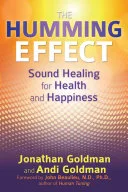
The Humming Effect
 71
71

The Humming Effect
Jonathan and Andi Goldman's "The Humming Effect" presents a compelling case for the therapeutic and spiritual power of conscious humming. The strength of the book lies in its accessible presentation of complex scientific findings alongside practical exercises. The Goldmans effectively bridge the gap between esoteric understanding and empirical research, detailing how simple vocalizations can impact everything from blood pressure to neural pathways. A notable limitation, however, is the occasional tendency to overstate the scientific evidence, presenting potential benefits as definitive outcomes. For instance, the chapter discussing the creation of new neural pathways could benefit from more nuanced language regarding ongoing research. Despite this, the inclusion of online audio examples is a significant asset, allowing readers to immediately engage with the practices described. The section on spiritual applications, while brief, hints at deeper potentials that could have been further explored. Ultimately, "The Humming Effect" is a valuable, if sometimes overly optimistic, guide to harnessing the power of one's own voice for personal transformation.
📝 Description
71
Published in May 2017, The Humming Effect offers a practical guide to using conscious humming for well-being.
The Humming Effect, by Jonathan and Andi Goldman, presents humming as a practical tool for improving physical and mental health. The book details various humming and breathing exercises, ranging from basic techniques to more complex practices. Audio examples are available online to support the user's learning. It also discusses the physiological benefits of humming, referencing current scientific research. This book is for anyone looking for simple ways to boost their health through sound, whether for stress relief, better sleep, or increased vitality. Those interested in esoteric practices will find its applications in meditation and spiritual work. The authors aim to show the connection between sound, consciousness, and the body's functions.
The Goldmans' work provides a clear method for individuals to integrate humming into their daily routines. They explain how intentional humming can affect bodily processes, such as lowering stress hormones and improving circulation. The book is structured to be accessible to newcomers while also offering depth for those already familiar with sound healing or mindfulness. It serves as a guide to unlock the potential of the human voice for personal transformation.
The use of vocal tones for healing and spiritual growth has a long history, appearing in traditions like Vedic chants and Tibetan Buddhist mantras. The Goldmans' work is part of a modern revival of interest in sound therapy and vibrational medicine. Their approach connects with earlier research on how sound affects the mind and body, drawing parallels with contemporary studies on resonance and frequency. This book places conscious humming within this lineage, presenting it as a accessible method for spiritual development and personal well-being.
💡 Why Read This Book?
• Learn specific, scientifically-supported techniques for stress reduction and improved sleep through conscious humming, as detailed in the book's practical exercises, which can be accessed online. • Understand the physiological mechanisms by which humming enhances lymphatic circulation and releases endorphins, as explored through the research presented in the book. • Discover how to utilize humming for spiritual development, building upon ancient practices as outlined in the book's exploration of sound for altered states of consciousness.
⭐ Reader Reviews
Honest opinions from readers who have explored this book.
❓ Frequently Asked Questions
What are the primary physiological benefits of conscious humming mentioned in "The Humming Effect"?
The book details how conscious humming can help reduce stress levels, improve sleep quality, lower blood pressure, increase lymphatic circulation, and stimulate the release of endorphins.
Does "The Humming Effect" provide practical exercises for readers?
Yes, the book offers a range of conscious humming and breathing exercises, from simple to advanced, with online access to audio examples to guide the user.
What scientific studies are referenced regarding the effects of humming?
The work examines studies showing humming's impact on stress, sleep, blood pressure, lymphatic circulation, endorphin release, neural pathway creation, and blood platelet production.
How does "The Humming Effect" explore the spiritual uses of humming?
It discusses humming as a practice for meditation, accessing altered states of consciousness, and as a tool for spiritual connection and awareness.
Who are the authors of "The Humming Effect"?
The book was authored by Jonathan Goldman and Andi Goldman, with its first publication date on May 25, 2017.
Is "The Humming Effect" suitable for beginners in sound healing?
Yes, the book is designed to be accessible, starting with simple exercises and gradually introducing more advanced techniques, making it suitable for those new to the practice.
🔮 Key Themes & Symbolism
Vibrational Physiology
The book posits that the physical act of humming generates specific vibratory frequencies within the body. These vibrations are presented as having direct impacts on physiological systems, influencing hormonal balance, circulation, and cellular activity. It connects the esoteric concept of resonance to tangible health outcomes, suggesting that sustained vocal tones can entrain bodily rhythms towards states of greater coherence and well-being. The authors detail how specific hum frequencies can promote relaxation responses and stimulate healing processes.
Sound and Consciousness
Central to "The Humming Effect" is the idea that sound, particularly intentional vocalization, serves as a direct conduit to consciousness. The authors explore how the practice of humming can shift mental states, facilitating deeper meditation, enhanced focus, and access to subtle energetic fields. This links to ancient contemplative traditions that use mantra and vocalization to alter awareness. The work suggests that by consciously directing the energy of sound through humming, individuals can cultivate greater self-awareness and explore non-ordinary states of perception.
Bio-Acoustic Healing
This theme focuses on the application of sound and vibration for therapeutic purposes. "The Humming Effect" presents humming as an accessible form of bio-acoustic healing, emphasizing its capacity to modulate the autonomic nervous system and promote parasympathetic dominance, thereby counteracting stress. The book details scientific findings that support humming's role in boosting the immune system, aiding in pain management, and fostering the release of beneficial neurochemicals like endorphins, grounding esoteric practices in empirical observation.
The Energetics of Breath
The synergy between breath and vocalization is a critical element. The authors explain how conscious breathing techniques, integrated with humming, amplify the energetic effects of the practice. This is tied to yogic pranayama and other breath-focused traditions that recognize breath as a life force (prana). By controlling the exhalation through sustained humming, practitioners are guided to manage and direct their vital energy, enhancing both physical vitality and spiritual connection, creating a holistic approach to well-being.
💬 Memorable Quotes
Direct passages from the work, attributed to the author.
“Conscious humming is a powerful technique for shifting your physical and mental state.”
— This expresses the core premise: that the intentional act of humming is not passive but an active tool for altering one's internal experience and well-being.
“The sound you make affects the energy you create and radiate.”
— This highlights the energetic and vibrational aspect of sound production, suggesting that vocalizations have a tangible impact on both the individual and their environment.
“Humming stimulates the vagus nerve, promoting relaxation and reducing stress.”
— This is an interpretation of the book's discussion on how humming directly influences the nervous system, leading to physiological benefits like stress reduction.
“Sound can create new neural pathways, enhancing brain function.”
— This is an interpretation of the book's exploration into the neuroplastic effects of sound, suggesting that practices like humming can lead to cognitive improvements.
“Integrating humming into your routine can unlock profound personal transformation.”
— This is an interpretation of the book's broader promise, suggesting that consistent practice of conscious humming leads to significant and deep-seated changes in an individual's life.
🌙 Esoteric Significance
Tradition
The work draws implicitly from traditions valuing sonic mysticism and vibrational energy, such as certain schools of Hermeticism and Neoplatonism that explore the power of divine names and vocalization for spiritual attainment. It also reflects the principles found in yogic traditions that utilize mantra (like "Om") for consciousness expansion. While not strictly adhering to a single lineage, "The Humming Effect" interfaces with the esoteric understanding of sound as a fundamental creative force and a means of direct energetic manipulation.
Symbolism
The primary symbol is the "hum" itself – representing the primordial sound, the creative vibration from which all existence arises, a concept found in many creation myths. The "breath" symbolizes life force (prana/chi) and the conscious control over it, a central to many esoteric disciplines. The "frequency" is symbolic of specific energetic states and their tangible effects, linking the unseen energetic realm to observable physical phenomena, suggesting that precise vibrations can unlock specific transformations.
Modern Relevance
Contemporary thinkers and practitioners in sound healing, mindfulness, and bioenergetics frequently cite or are influenced by the Goldmans' accessible research and practical guidance. Schools teaching sound therapy, breathwork, and meditation often incorporate concepts presented in "The Humming Effect." Its principles are also relevant to the growing field of neurosonics and the exploration of sound's impact on brainwave states and cognitive function, bridging esoteric sound practices with modern neuroscience.
👥 Who Should Read This Book
• Individuals experiencing stress or sleep disturbances seeking natural, self-administered remedies, who will learn practical humming exercises with online audio support. • Practitioners of meditation and mindfulness looking to deepen their practice, who will gain insights into using vocal vibration to enhance focus and cultivate altered states. • Students of sound healing and vibrational medicine interested in the scientific and spiritual underpinnings of sonic therapies, who will find a bridge between esoteric concepts and empirical research.
📜 Historical Context
Published in May 2017, "The Humming Effect" entered a cultural landscape increasingly receptive to holistic health and mindfulness practices. The late 20th and early 21st centuries saw a significant revival of interest in sound healing, yoga, and meditation, moving these disciplines from fringe topics to mainstream wellness. The Goldmans' work aligns with this trend, building upon decades of research into psychoacoustics and vibrational medicine. Contemporaries like Dr. Mitchell Gaynor, author of "The Healing Power of Sound" (2000), were also exploring similar themes. The book's accessible approach, however, differentiated it from more academic or purely esoteric texts. While not facing overt censorship, works exploring sonic therapies often navigate skepticism from conventional medical establishments, a dynamic that has persisted for decades.
📔 Journal Prompts
The specific physiological effects of conscious humming, such as endorphin release.
The practice of conscious breathing integrated with humming.
Spiritual applications of humming as a meditative tool.
The potential for humming to create new neural pathways in the brain.
The concept of sound as a fundamental creative force.
🗂️ Glossary
Conscious Humming
The intentional and sustained production of a vocal hum, used as a practice for well-being and spiritual development.
Vibrational Medicine
A field that explores the use of sound, light, and electromagnetism for therapeutic purposes, based on the principle that the body has inherent resonant frequencies.
Endorphins
Neurochemicals produced by the body that act as natural painkillers and mood elevators, often released during physical activity or stress.
Lymphatic Circulation
The movement of lymph fluid through the body, which plays a central role in the immune system by removing waste and toxins.
Neural Pathways
Connections between neurons in the brain that are formed through experience and learning, allowing for the transmission of signals.
Autonomic Nervous System
The part of the nervous system that controls involuntary bodily functions, such as heart rate, digestion, and breathing, divided into the sympathetic and parasympathetic branches.
Psychoacoustics
The scientific study of the effects of sound on the human mind and behavior.