Tarot
 62
62

Tarot



Silas Hawthorne (Hermetic Studies Editor) — Tracey's exploration of the Tarot is a beacon for those seeking authentic esoteric knowledge. Eschewing superficial interpretations, this work plunges into the profound symbolic language of the cards, revealing their deep resonance with hermetic principles and ancient wisdom traditions. The author masterfully connects the archetypal imagery of the Tarot to the cyclical nature of existence and the journey of the soul. Tracey's prose is both scholarly and evocative, making complex concepts accessible without sacrificing their inherent mystery. This book is an indispensable companion for serious students of divination, offering insights that will enrich any practice and deepen one's understanding of the visible and invisible worlds. A truly illuminating contribution.
📝 Description
62
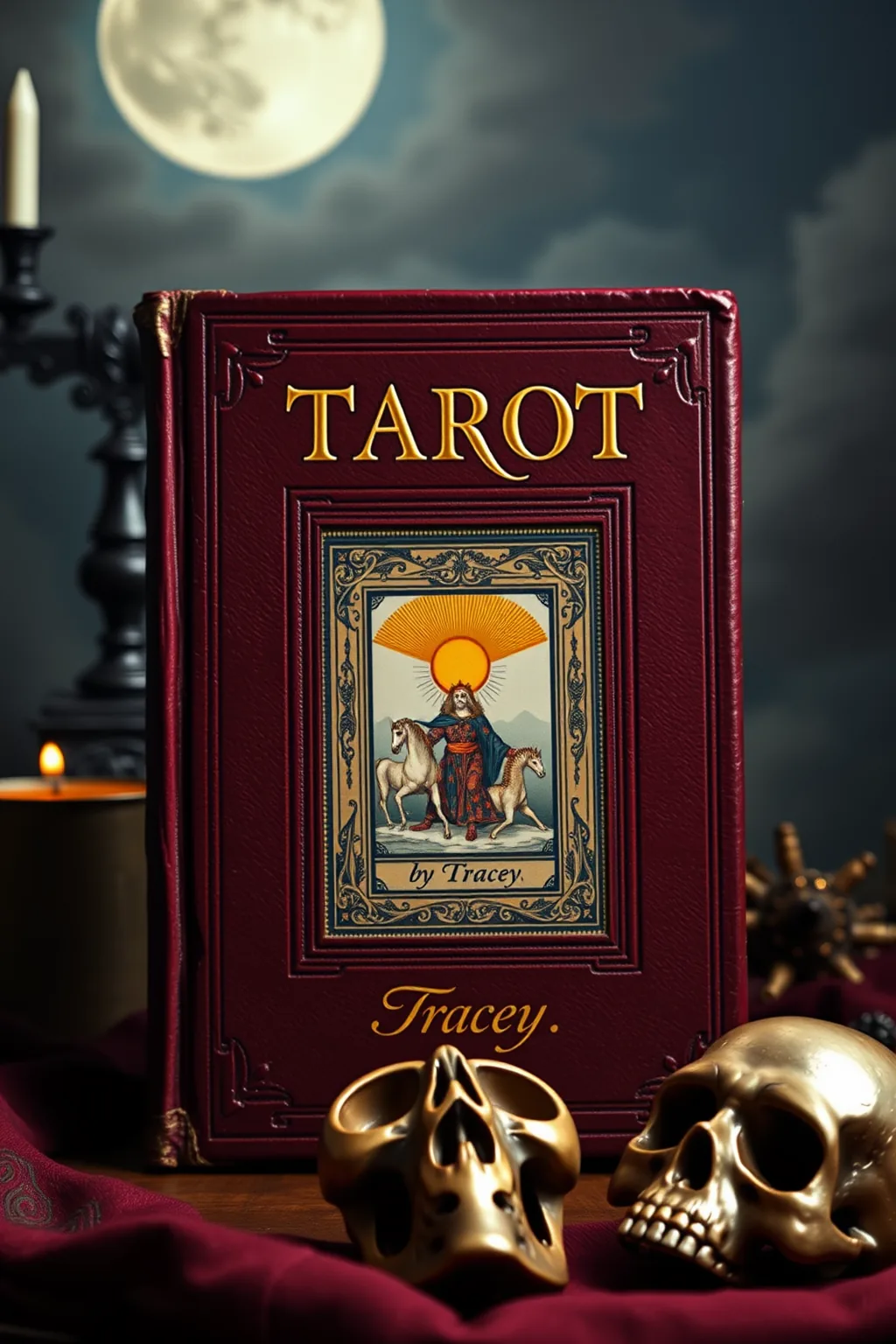
Tracey's 1998 book unpacks the Tarot's symbolism and its links to mystical traditions.
Tracey's book examines the Tarot beyond its use as a divination tool. It presents the cards as a system for understanding psychological patterns and the forces that shape perception. The author details the symbolism within both the Major and Minor Arcana, tracing connections to Western esotericism, alchemy, and even scriptural references.
The text aims to guide readers toward self-awareness through an engagement with Tarot imagery. It describes how each card can serve as a point of reflection, revealing hidden structures in personal experience and the wider world. The book's approach is designed to be accessible to those new to the subject as well as those with prior occult studies.
This work situates the Tarot within a broader context of Western esoteric thought. It connects the imagery and structure of the cards to traditions such as Hermeticism, Kabbalah, and alchemy, which often employ symbolic systems to map spiritual and psychological realities. The book views the Tarot as a method for accessing deeper levels of consciousness and understanding universal principles, aligning with the esoteric pursuit of hidden knowledge and self-transformation.
💡 Why Read This Book?
Uncover the hidden language of the soul through the timeless wisdom of the Tarot. This book offers a profound journey into esoteric symbolism, archetypal energies, and the interconnectedness of all things. Ideal for seekers yearning for deeper self-understanding, practitioners looking to elevate their divination skills, and scholars fascinated by the mystical dimensions of human consciousness. Discover how the cards can illuminate your path and reveal the cosmic blueprint guiding your life's journey.
⭐ Reader Reviews
Honest opinions from readers who have explored this book.
❓ Frequently Asked Questions
What is the primary focus of this Tarot book?
This book focuses on the esoteric and mystical dimensions of the Tarot, exploring its rich symbolism, historical connections, and profound philosophical significance as a tool for self-discovery and divination.
Is this book suitable for beginners?
Yes, while rich in depth, Tracey's approach is designed to be accessible to beginners, guiding them through the foundational symbolism and offering clear pathways to understanding.
What makes this Tarot book unique?
Its unique strength lies in its deep dive into the esoteric correspondences, linking Tarot imagery to alchemical processes, scriptural undertones, and universal archetypes, offering a more profound and integrated understanding.
How does the book connect Tarot to the Bible?
The book explores potential allegorical and symbolic links between Tarot imagery and narratives or concepts found within biblical texts, viewed through an esoteric lens.
Can this book enhance my existing Tarot practice?
Absolutely. For experienced practitioners, this book offers new perspectives, deeper symbolic interpretations, and a richer philosophical framework to enhance and refine their readings and intuitive connection to the cards.
🔮 Key Themes & Symbolism
The Archetypal Journey
This theme examines the Major Arcana as a representation of the soul's pilgrimage through life's stages, from the Fool's leap into the unknown to the World's ultimate attainment. It explores how these archetypal figures embody universal human experiences, challenges, and transformations, offering a blueprint for personal growth and spiritual evolution. Understanding these core archetypes provides a powerful lens through which to interpret life events and one's own inner landscape.
Symbolic Language of the Arcana
The Minor Arcana are explored not merely as sequential events but as intricate expressions of the elemental forces and their interplay in the material and spiritual realms. Tracey elucidates the symbolic language embedded within each suit (Wands, Cups, Swords, Pentacles) and the numerical progression, revealing how they map onto different aspects of human experience, emotion, intellect, and material manifestation. This section emphasizes how to read the nuanced dialogue between the cards.
Tarot as a Mirror of the Divine
This theme examines the Tarot's potential as a sacred text, a divinely inspired system for understanding cosmic order and humanity's place within it. It explores the esoteric connections between Tarot imagery and ancient wisdom traditions, including potential allegorical interpretations found in scriptural texts. The focus is on viewing the Tarot not just as a predictive tool, but as a profound philosophical and spiritual map that reflects the underlying order of creation and the journey of the soul towards enlightenment.
💬 Memorable Quotes
Direct passages from the work, attributed to the author.
“Within each card lies a universe of meaning, waiting to be unveiled by the discerning eye.”
— This highlights the depth and complexity of Tarot imagery, suggesting that true understanding requires focused attention and intuitive insight.
“The Fool's leap is not an act of recklessness, but a courageous surrender to the unfolding mystery.”
— This reinterprets the initial Tarot card, framing the unknown not as something to fear, but as an opportunity for growth through trust and faith.
“The Hermit's lantern illuminates not only the path ahead, but also the shadows within.”
— This emphasizes the introspective nature of Tarot wisdom, indicating that self-knowledge and confronting inner darkness are integral to spiritual progress.
“To read the Tarot is to engage in a dialogue with the soul of the universe.”
— This elevates the act of Tarot reading to a sacred communion, suggesting a profound connection between the individual and the cosmic consciousness.
💡 Key Ideas
Editorial paraphrase of the work's core concepts — not direct quotes.
The Tarot is not a map of where you are, but a compass pointing to where you can go.
This quote suggests the Tarot's primary function is guidance and empowerment, emphasizing potential and future possibilities rather than fixed outcomes.
🌙 Esoteric Significance
Tradition
This work deeply engages with Hermeticism and Western Esotericism, drawing parallels between Tarot symbolism and alchemical processes, Qabalistic Tree of Life principles, and astrological correspondences. It posits the Tarot as a microcosm of the macrocosm, a symbolic language that reveals the hidden mechanisms of creation and spiritual evolution, aligning with traditions that seek to understand divine order through symbolic representation.
Symbolism
The core symbolism revolves around the archetypal figures of the Major Arcana and the elemental energies represented by the Minor Arcana. Key symbols include the Fool's journey, the transformative power of the High Priestess, the structure of the Emperor, the balance of Justice, the cycle of Death and Rebirth, and the ultimate integration represented by the World card. Each symbol is presented as a gateway to deeper psychological and spiritual truths.
Modern Relevance
In an era often characterized by fragmentation and a disconnect from deeper meaning, the Tarot, as explored in this book, offers a powerful tool for integration and self-awareness. Its archetypal narratives resonate with contemporary psychological theories, providing a visual language for exploring the subconscious, navigating life's transitions, and fostering personal growth. The book highlights the Tarot's enduring capacity to provide guidance, foster intuition, and connect individuals to a sense of universal purpose.
👥 Who Should Read This Book
This comprehensive exploration of the Tarot is a valuable resource for a diverse audience. **Beginners** will find a clear and insightful introduction to the foundational symbolism and interpretive techniques, presented in an accessible yet profound manner. **Serious seekers** and those on a path of spiritual development will discover a body of esoteric wisdom, offering useful insights into the human condition and the nature of reality. **Practitioners of divination** will find new layers of understanding and sophisticated interpretive frameworks to deepen their readings. **Scholars of mysticism and occultism** will appreciate the meticulous research and the book's contribution to understanding the historical and philosophical underpinnings of Tarot study.
📜 Historical Context
The Tarot, emerging from the vibrant intellectual and artistic milieu of Renaissance Italy, has a history steeped in mystery and evolving interpretations. Initially conceived as a complex card game, its esoteric potential was gradually recognized and developed by occultists and mystics from the 18th century onwards. Figures like Antoine Court de Gébelin and Etteilla began to attribute deep symbolic meanings to the cards, linking them to ancient Egyptian mysteries, Kabbalah, and astrology. This period saw the birth of modern Tarotology, transforming the deck from a mere game into a profound tool for divination, psychological exploration, and spiritual insight. The subsequent centuries witnessed a proliferation of decks and interpretations, each reflecting the philosophical and spiritual currents of their time, solidifying the Tarot's place as a central to esoteric literature and practice.
📔 Journal Prompts
Meditate on the archetype of The Fool. What 'leap of faith' is being called for in your life right now?
Choose a card from the Minor Arcana that speaks to a current challenge. How does its symbolic imagery offer guidance or perspective?
Reflect on the concept of 'as above, so below' in relation to the Tarot. How do the 'higher' meanings of the cards manifest in your daily life?
Consider The Hierophant. What traditional wisdom or established structures are you currently questioning or seeking to understand?
Explore the relationship between the Major and Minor Arcana. How do the overarching archetypal themes influence the more granular experiences represented by the suits?
🗂️ Glossary
Arcana
Referring to the cards of the Tarot deck, divided into the Major Arcana (22 cards representing spiritual and life-altering events) and the Minor Arcana (56 cards representing daily life and lesser events).
Cartomancy
The practice of divination using cards, most commonly referring to the use of Tarot cards or playing cards to gain insight and foretell future events.
Esoteric
Intended for or likely to be understood by only a small number of people with a specialized knowledge or interest; relating to occult or mystical subjects.
Archetype
A universal, archaic pattern or image that is part of the collective unconscious, often appearing in mythology, folklore, and the symbolism of the Tarot.
Kabbalah
A system of Jewish mysticism that deals with the divine nature of God and the creation of the universe, often represented by the Tree of Life, with which Tarot symbolism is sometimes correlated.
This book appears in 3 collections
🔮 Readers Also Liked
Browse all →
From the “Tarot” Collection
View all →
More Free Divination & Tarot Books
View all →