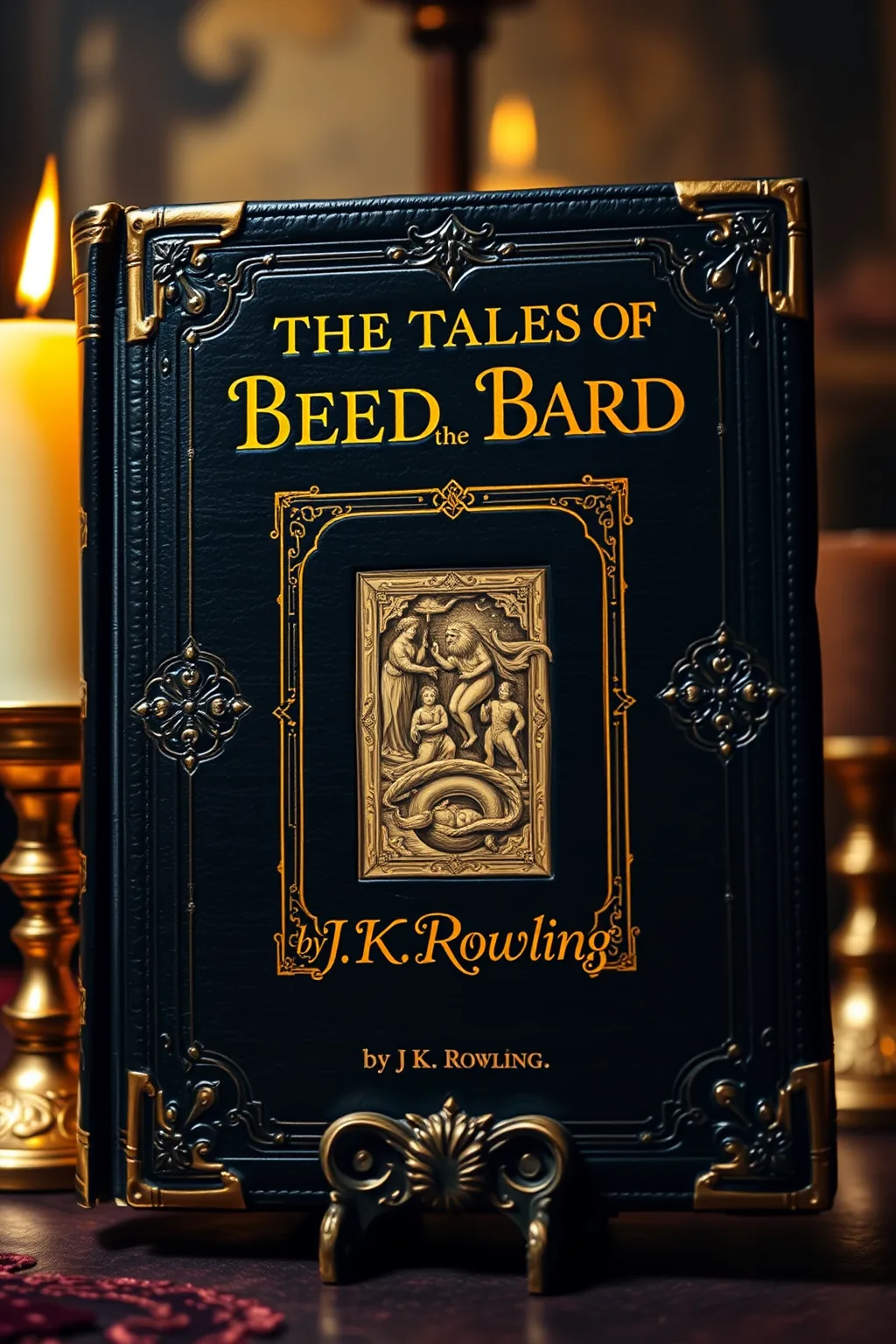
The Tales of Beedle the Bard
 76
76

The Tales of Beedle the Bard
Rowling's foray into presenting fictional folklore offers a curious blend of childlike wonder and adult cynicism. The framing device, positing these as genuine wizarding texts, adds a layer of meta-narrative that fans will appreciate, but the stories themselves possess an independent charm. "The Tale of the Three Brothers", in particular, is a masterclass in concise, impactful storytelling, laying the groundwork for the later complexities of the Harry Potter series. However, the prose, while charmingly simple, occasionally leans towards the didactic, particularly in the moralizing interludes provided by Professor Dumbledore. The strength lies in the clever subversion of typical fairy tale tropes; the weakness, perhaps, is that without the context of the wizarding world, some allegorical nuances might be lost on a reader unfamiliar with Rowling's broader universe. The story of Barnaby the Boggart, while amusing, feels somewhat less substantial than its companions. Ultimately, The Tales of Beedle the Bard serves as an enjoyable, if somewhat slight, expansion of a beloved fictional universe.
📝 Description
76
Published in 2007, J. K. Rowling's "The Tales of Beedle the Bard" presents five wizarding fairy tales.
This collection gathers five fairy tales purportedly translated from original runes, framed as a wizarding text from J. K. Rowling's fictional world. Originally released in a limited edition in 2007 for charity and then more widely in 2008, the book adds fictional historical context and commentary to the stories. Its narrative places the tales within the wizarding universe, making them a recognized piece of literature studied by characters like Hermione Granger.
The book appeals primarily to fans of Rowling's wizarding universe, particularly those interested in its lore and cultural artifacts. However, the stories also stand on their own, offering classic fairy tale structures with modern, morally complex twists. These tales touch on universal themes such as love, loss, courage, and the outcomes of one's decisions, providing allegorical narratives relevant to a wide audience.
Conceived as a companion to the Harry Potter series, "The Tales of Beedle the Bard" brings stories previously only hinted at in the novels to a broader readership. The initial limited release in 2007 supported Lumos, a children's charity.
While presented as a work of fiction within a magical world, "The Tales of Beedle the Bard" functions as a collection of allegorical narratives. The stories employ familiar fairy tale structures to examine moral and ethical dilemmas relevant to both the fictional wizarding society and the real world. Concepts like the consequences of magical shortcuts, the nature of sacrifice, and the perils of unchecked ambition are explored, mirroring the archetypal lessons found in many traditional folklore and wisdom traditions.
💡 Why Read This Book?
• You will learn about the origins of the Deathly Hallows, a crucial element in the Harry Potter series, as detailed in "The Tale of the Three Brothers." This offers a unique perspective on fate and power. • You will gain insight into wizarding society's values and moral debates, as presented through the allegorical structure of tales like "The Fountain of Fair Fortune." This provides a deeper understanding of magical ethics. • You will experience the distinct narrative voice of J. K. Rowling applied to classic fairy tale structures, offering a fresh, often subversive, take on familiar themes. This provides a unique literary pleasure.
⭐ Reader Reviews
Honest opinions from readers who have explored this book.
❓ Frequently Asked Questions
When was The Tales of Beedle the Bard first published?
The Tales of Beedle the Bard was first published in a limited edition in 2007 and then in a wider release in 2008, with proceeds benefiting J.K. Rowling's charity, Lumos.
What is the significance of the Deathly Hallows in The Tales of Beedle the Bard?
The Deathly Hallows are central to "The Tale of the Three Brothers," one of the five stories. This tale explains their origin and symbolic representation of mastery over death.
Who is the author of The Tales of Beedle the Bard?
J. K. Rowling, the author of the Harry Potter series, wrote The Tales of Beedle the Bard. It is presented as a collection of ancient wizarding fairy tales translated by her.
Are these stories meant to be taken as literal fairy tales or are they allegorical?
The stories function on multiple levels. They are presented as literal fairy tales within the wizarding world but also serve as allegories exploring themes of love, death, power, and morality relevant to human readers.
What is the main purpose of the commentary by Albus Dumbledore in the book?
Albus Dumbledore's extensive notes provide a scholarly, wizarding perspective on the tales, offering interpretations and historical context, thereby enhancing the fictional depth of the book.
How does The Tales of Beedle the Bard connect to the Harry Potter books?
The book is intrinsically linked to the Harry Potter series. "The Tale of the Three Brothers" is referenced directly, and Hermione Granger is shown reading it, making it a canonical artifact within the wizarding world.
🔮 Key Themes & Symbolism
The Nature of Death
The collection grapples with mortality, not as an ending, but as a natural transition. "The Tale of the Three Brothers" is the primary vehicle for this exploration, presenting death as a personified entity and examining different approaches to its inevitability. The story posits that true wisdom lies not in conquering death, but in accepting it with grace and living a full life. This perspective offers a counterpoint to the fear of death often prevalent in human narratives, suggesting that understanding and acceptance are the keys to peace, a concept explored through the Peverell brothers' fates.
Love and Sacrifice
True love, in its most selfless form, is depicted as a powerful magical force capable of overcoming immense obstacles. "The Thirteenth Tale" highlights this, where a father's love and sacrifice for his daughter, even in the face of a cruel curse, ultimately prevails. This contrasts with superficial affections or self-serving relationships. The narrative suggests that genuine love requires a willingness to give without expectation, positioning it as a potent, almost divine, force within the wizarding moral framework.
The Perils of Ambition
Several tales caution against unchecked ambition and the pursuit of power at any cost. "The Warlock's Hairy Heart" is a stark example, illustrating how the desire for eternal life and dominance leads to a monstrous transformation, both physical and moral. The story serves as a potent warning about the corrupting influence of extreme ambition, suggesting that such pursuits lead to isolation and a loss of humanity. The warlock's fate underscores the idea that true fulfillment comes not from power, but from connection and integrity.
Moral Choice and Consequence
The collection consistently emphasizes that choices have ramifications, and morality is not always black and white. "The Fountain of Fair Fortune" explores the idea that seeking happiness through magical means can have unforeseen negative consequences, highlighting the importance of ethical decision-making. The characters are often faced with dilemmas that test their integrity, and the outcomes serve as lessons about the complexities of life and the responsibility that comes with agency. The tales encourage readers to consider the ethical dimensions of their own desires and actions.
💬 Memorable Quotes
Direct passages from the work, attributed to the author.
““It is the unknown we fear when we look upon death and darkness, nothing more.””
— This statement, attributed to Albus Dumbledore in his notes, suggests that the primary source of fear regarding death is not the act itself, but the lack of understanding or familiarity with it. It reframes death as a mystery rather than an inherent terror.
““So, wishing to be loved when you are dead is a foolish wish indeed.””
— This observation from Dumbledore's commentary critiques the vanity of seeking posthumous affection. It implies that true love is experienced and expressed in life, and such desires after death are misplaced or indicative of a life not fully lived.
““For the wise man knows that to be loved, he must be worthy of love.””
— This interpretation highlights a core moral tenet presented within the tales. It posits that genuine affection is earned through one's character and actions, rather than being an entitlement or a right. Worthiness, therefore, is a prerequisite for receiving love.
💡 Key Ideas
Editorial paraphrase of the work's core concepts — not direct quotes.
“Every man has his day, and his work is done.”
This line, reflecting the Peverell brothers' understanding of mortality, signifies acceptance of one's life span. It suggests a natural conclusion to existence and the completion of one's purpose or allotted time.
“But the greatest of these is love.”
This paraphrase of a biblical concept, applied within the context of the wizarding world, elevates love above other potent forces or desires. It suggests that love possesses a unique power and significance, possibly even surpassing magical abilities or the pursuit of immortality.
🌙 Esoteric Significance
Tradition
While not directly aligned with a single historical esoteric tradition like Hermeticism or Kabbalism, The Tales of Beedle the Bard draws heavily on archetypal themes common across many such lineages. Its exploration of fate, the nature of death, the power of love, and the consequences of ambition echoes motifs found in Gnostic narratives, medieval morality plays, and even alchemical allegories. The framing device, presenting a text translated from ancient runes by a revered wizard, implies a lineage of hidden knowledge, a common trope in esoteric literature seeking to connect contemporary readers to ancient wisdom.
Symbolism
The most prominent symbols are the Deathly Hallows themselves: the Elder Wand, the Resurrection Stone, and the Cloak of Invisibility, as detailed in "The Tale of the Three Brothers." These represent mastery over death, the temptation to reclaim the lost, and the ability to evade mortality, respectively. The Wand symbolizes power and dominion, the Stone represents the desire to undo death's finality, and the Cloak signifies evasion and perhaps a form of spiritual invisibility or transcendence. These symbols function as potent archetypes representing humanity's deepest desires and fears concerning life and death.
Modern Relevance
Contemporary readers and practitioners of various spiritual paths find relevance in Beedle the Bard's allegorical depth. Those interested in Jungian psychology might analyze the archetypal characters and their journeys. Similarly, modern Stoics or existentialists can find parallels in the tales' emphasis on accepting mortality and focusing on virtuous action. The book's exploration of the corrupting nature of power and the enduring strength of love continues to resonate with discussions on ethics and personal growth in the 21st century, making it a touchstone for understanding timeless human struggles.
👥 Who Should Read This Book
• Fans of the Harry Potter series: Readers who want to deepen their understanding of the wizarding world's lore and explore canonical texts mentioned within the books. • Students of comparative mythology and folklore: Individuals interested in how classic fairy tale structures are adapted and subverted to explore complex moral and philosophical themes. • Readers seeking allegorical narratives: Those who appreciate stories that offer deeper meanings about life, death, love, and power, presented in an accessible, engaging format.
📜 Historical Context
The Tales of Beedle the Bard emerged in 2007-2008, a period when J. K. Rowling's Harry Potter series had concluded, leaving a vast audience eager for further engagement with her universe. While presented as an ancient wizarding artifact, its publication was a deliberate act of world-building and charitable endeavor, with the initial limited edition raising funds for Lumos, Rowling's own charity. This dual nature – a fictional in-world text with real-world philanthropic aims – marked a unique moment in contemporary literature. The book was released into a cultural landscape saturated with Pottermania, but also one where literary fairy tales and their reinterpretation were gaining academic and popular traction, exemplified by works like Marina Warner's scholarship. Unlike earlier, more traditional fairy tale collections, Beedle the Bard’s significance was tied directly to its parent series, generating significant buzz and sales, though it did not face the kind of critical literary analysis typically afforded to canonical fairy tale scholarship.
📔 Journal Prompts
The Peverell brothers' differing attitudes towards death and the Hallows.
The "warlock's hairy heart" and the true cost of immortality.
The concept of "fair fortune" and its ethical implications.
Barnaby the Boggart's transformation and the nature of fear.
Hermione Granger's insights into the tales and their lessons.
🗂️ Glossary
Deathly Hallows
Three legendary magical artifacts said to have been created by Death himself. They consist of the Elder Wand, the Resurrection Stone, and the Cloak of Invisibility, granting immense power or the ability to conquer death.
Muggle
A non-magical person in J. K. Rowling's wizarding world. The tales sometimes feature interactions or contrasts between magical and non-magical individuals.
Runes
An ancient alphabet, often associated with magical or divinatory purposes. The book is presented as being translated from original wizarding runes, adding to its mystique.
Warlock
A male magic-user, often depicted as powerful or sometimes sinister. The term is used in "The Warlock's Hairy Heart" to describe a sorcerer obsessed with eternal life.
Curse
A malevolent magical spell intended to cause harm or misfortune. Various curses and their consequences are explored within the narrative of the tales.
Sorcerer
A person who practices magic, often implying a high level of skill or power. It is used interchangeably with 'wizard' or 'warlock' in some contexts within the stories.
Fairy Tale
A story, typically for children, featuring fantastical elements like magic, mythical creatures, and often a moral lesson. These tales are presented as canonical examples within the wizarding world.
🔮 Readers Also Liked
Browse all →






More by J. K. Rowling
All books →


More Free Witchcraft & Paganism Books
View all →