The Symbolism of the Tarot
 75
75

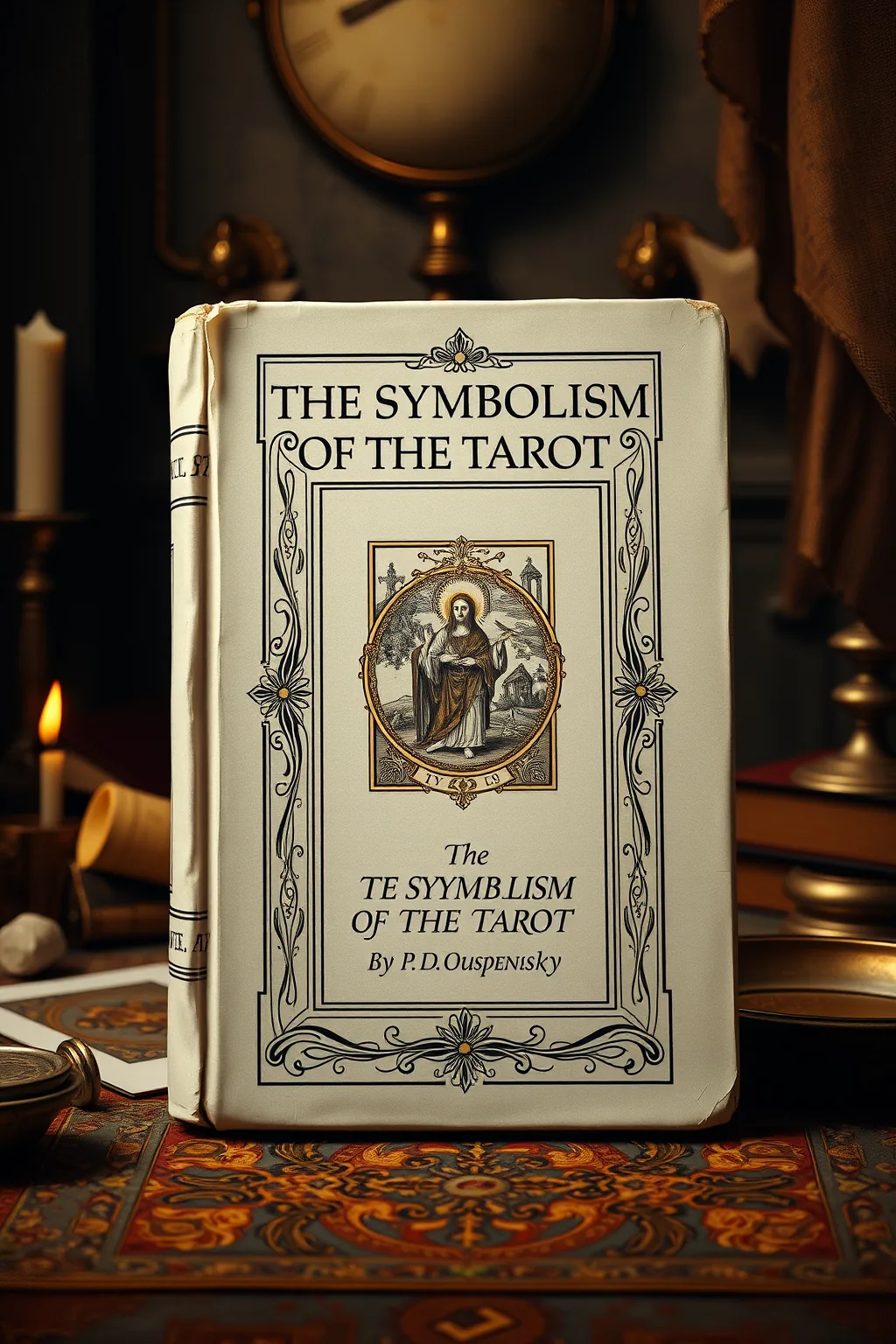
The Symbolism of the Tarot



Cassian Rothmann (Senior Critic, Ancient Wisdom) — P.D. Ouspensky's 'The Symbolism of the Tarot' is a cornerstone text for serious students of esoteric symbolism. Moving beyond mere cartomancy, Ouspensky meticulously dissects the Major Arcana, unveiling their profound philosophical and psychological dimensions. His approach is rigorous, drawing parallels to spiritual disciplines and unveiling the Tarot as a potent tool for self-transformation. The book's strength lies in its depth and intellectual clarity, making complex ideas accessible without sacrificing their inherent mystery. It is an indispensable resource for those seeking to understand the Tarot not just as a divinatory tool, but as a symbolic language of the soul and the cosmos. Highly recommended for practitioners and scholars alike.
📝 Description
75
In 1913, P.D. Ouspensky published 'The Symbolism of the Tarot,' analyzing its esoteric structure.
P.D. Ouspensky's 1913 book, 'The Symbolism of the Tarot,' moves beyond simple card meanings to examine the system's philosophical and psychological underpinnings. Ouspensky presents the Tarot not just as a divinatory tool, but as a symbolic representation of cosmic order and human consciousness. He connects the cards to a symbolic language that can illuminate the structure of reality.
Each Major Arcana card is treated as a distinct symbol, a piece in a larger symbolic puzzle. Ouspensky aims to guide the reader toward a contemplative understanding of these symbols, encouraging a move away from superficial interpretations. The text focuses on developing an 'alchemical' perspective, suggesting a transformative approach to the material. It is intended for those interested in a serious study of occult symbolism and its connection to deeper philosophical currents.
Published in 1913, Ouspensky's work is situated within the early 20th-century resurgence of interest in esoteric traditions, particularly those influenced by figures like Eliphas Levi and later Helena Blavatsky. Ouspensky himself was a student of G.I. Gurdjieff, and this book predates their most famous collaborations, yet it shows an early engagement with systems of symbolic understanding that would influence later esoteric thought. It reflects a period where occultism sought to integrate with psychological and philosophical inquiry, attempting to find universal laws within symbolic systems.
💡 Why Read This Book?
Delve into the profound, hidden meanings of the Tarot beyond simple divination. Uncover the philosophical underpinnings and psychological insights woven into each card. This book is ideal for serious seekers, students of esoteric traditions, and practitioners who wish to deepen their understanding and integrate the Tarot into a holistic spiritual path.
⭐ Reader Reviews
Honest opinions from readers who have explored this book.
❓ Frequently Asked Questions
What makes Ouspensky's approach to the Tarot unique?
Ouspensky transcends common divinatory interpretations, viewing the Tarot as a philosophical and psychological map of the universe and the human psyche, rooted in ancient esoteric traditions and spiritual evolution.
Is this book suitable for beginners in Tarot?
While challenging, it offers profound insights. Beginners may benefit from foundational Tarot knowledge first, but the depth of Ouspensky's analysis provides immense value for those willing to engage deeply.
What is the philosophical significance of the Tarot according to Ouspensky?
He links Tarot symbolism to cosmic laws, human consciousness, and the path of spiritual development, presenting it as a key to understanding the hidden order of existence and the nature of reality.
Does the book cover the Minor Arcana?
Ouspensky primarily focuses on the profound symbolism and philosophical implications of the Major Arcana, viewing them as the foundational archetypes of the Tarot system.
How can this book enhance my Tarot practice?
It encourages a shift from superficial readings to a deeper, contemplative understanding of the cards as symbolic keys to self-awareness, spiritual growth, and cosmic principles.
🔮 Key Themes & Symbolism
Archetypal Language of the Soul
Ouspensky posits the Tarot's Major Arcana as a profound archetypal language, a cosmic blueprint reflecting the fundamental forces and stages of human spiritual evolution. Each card is not a mere image, but a potent symbol representing universal principles, psychological states, and the journey of consciousness from the mundane to the divine. This theme invites readers to see the Tarot as a mirror to their inner landscape and a guide to understanding the deeper currents of existence, encouraging introspection and the recognition of these archetypes within their own lives and the collective unconscious.
The Tarot as a Philosophical Map
Beyond mere fortune-telling, 'The Symbolism of the Tarot' presents the cards as a sophisticated philosophical system, a symbolic representation of cosmic laws, and the structure of reality. Ouspensky meticulously links the imagery and sequence of the Major Arcana to concepts of creation, destiny, free will, and the intricate interplay of forces that govern the universe. This perspective elevates the Tarot from a divinatory tool to a profound instrument for contemplation, offering insights into the perennial philosophy and the hidden order that underlies all phenomena, guiding the reader toward a more enlightened understanding of life's mysteries.
Esoteric Psychology and Self-Transformation
Ouspensky reveals the Tarot's capacity to illuminate the hidden workings of the human psyche, acting as a powerful tool for self-discovery and spiritual transformation. By exploring the symbolic journey of the Fool through the Major Arcana, readers gain a framework for understanding their own internal processes, challenges, and potential for growth. This theme emphasizes the Tarot's role in awakening consciousness, fostering self-awareness, and providing the keys to unlocking inner potential, thereby guiding the individual towards a more conscious and integrated existence on their path of spiritual evolution.
💬 Memorable Quotes
Direct passages from the work, attributed to the author.
“The Tarot is a book of symbols.”
— This fundamental statement underscores the book's core premise: that the Tarot's power lies not in literal interpretation but in its collection of symbolic representations.
“Each card is a picture of a truth.”
— This highlights the profound, inherent wisdom embedded within each Tarot card, suggesting they offer distilled insights into universal principles and human experience.
“The Tarot is a way of understanding the world.”
— This emphasizes the Tarot's function as a philosophical and cosmological framework, offering a lens through which to comprehend the intricate workings of existence.
“The journey of the Fool is the journey of life.”
— This iconic quote expresses the idea that the Major Arcana represent the stages of human spiritual and psychological development, mirroring the universal life path.
“Symbolism is the language of the soul.”
— This profound statement positions symbolic understanding as the direct means of connecting with one's inner essence and the deeper, unspoken truths of existence.
🌙 Esoteric Significance
Tradition
Ouspensky's work is deeply rooted in the Western Esoteric Tradition, particularly drawing from Hermeticism, Kabbalah, and his own Gurdjieffian teachings on the Four Ways. He views the Tarot not just as a divinatory tool, but as a profound symbolic system reflecting cosmic laws, the structure of consciousness, and the path of spiritual development. The Major Arcana are presented as keys to understanding these fundamental principles and the stages of inner transformation required for spiritual awakening.
Symbolism
The book meticulously unpacks the strong symbolism of the Tarot's Major Arcana, interpreting each card as a potent archetype and a stage in the soul's journey. Ouspensky focuses on the numerological, astrological, and philosophical associations of each card, revealing them as visual representations of universal forces, psychological states, and the challenges and triumphs encountered on the path of spiritual evolution. The symbolism is presented as a coherent language for understanding the hidden order of the cosmos.
Modern Relevance
In an age often characterized by superficiality and disconnection, 'The Symbolism of the Tarot' offers a profound antidote. Ouspensky's insights into archetypal psychology and the spiritual journey remain remarkably relevant, providing seekers with a timeless framework for self-understanding and personal growth. The book encourages a contemplative approach to life, fostering a deeper connection to oneself and the universe, making its esoteric wisdom an invaluable guide for working through the complexities of modern existence.
👥 Who Should Read This Book
This book is essential for the serious Tarot student, the occult scholar, and the dedicated spiritual seeker. Beginners seeking a basic understanding of card meanings might find it advanced, but it is useful for anyone looking to move beyond superficial interpretation. Practitioners aiming to deepen their intuitive connection and integrate the Tarot into a more profound philosophical practice will find it clear. Those interested in Gurdjieff's teachings or the intersection of psychology and esotericism will also discover significant value.
📜 Historical Context
P.D. Ouspensky's 'The Symbolism of the Tarot,' published in the early 20th century, emerged during a vibrant period of occult revival and philosophical exploration. This era saw a surge of interest in ancient wisdom traditions, esoteric psychology, and the symbolic languages of various cultures. Ouspensky, a devoted student of G.I. Gurdjieff, brought a unique perspective to the Tarot, integrating its symbolism with his teachings on consciousness, spiritual evolution, and the mechanics of the universe. The book reflects the intellectual currents of its time, seeking to bridge the gap between mystical traditions and modern scientific and psychological thought, offering a sophisticated interpretation that resonated with seekers of deeper knowledge.
📔 Journal Prompts
Reflect on a Major Arcana card that strongly speaks to your current life situation. What specific symbolic elements speak to you, and how do they offer guidance?
How does Ouspensky's interpretation of the Tarot as a 'map of the soul' challenge or affirm your understanding of your own inner journey?
Consider the concept of 'symbolism as the language of the soul.' What personal symbols have appeared in your life, and what might they be communicating?
If the Tarot is a philosophical system, what fundamental cosmic laws or principles do you believe the Major Arcana represent?
How can the structured progression of the Major Arcana, from The Fool to The World, serve as a model for personal transformation and spiritual evolution in your own life?
🗂️ Glossary
Archetype
A universal, archaic pattern or image that derives from the collective unconscious and is inherited across generations. In the Tarot, the Major Arcana represent profound archetypal forces and stages of development.
Esoteric
Intended for or likely to be understood by only a small number of people with a specialized knowledge or interest; relating to or dealing with the occult.
Perennial Philosophy
A term coined by Aldous Huxley to describe the concept that all religions and spiritual traditions share a common, underlying metaphysical truth or wisdom.
Major Arcana
The 22 trump cards of the Tarot deck, representing significant life events, spiritual lessons, and archetypal journeys, as opposed to the Minor Arcana which deal with more mundane matters.
Gurdjieffian Teachings
The philosophical and practical system developed by George Ivanovich Gurdjieff, focusing on conscious evolution, self-awareness, and the transformation of human consciousness.
This book appears in 3 collections
🔮 Readers Also Liked
Browse all →
From the “Tarot” Collection
View all →
More Free Divination & Tarot Books
View all →