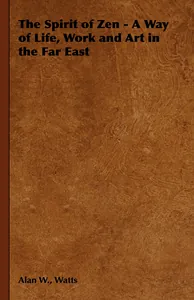
The Spirit of Zen

 74
74

The Spirit of Zen
Alan Watts’s The Spirit of Zen, appearing posthumously in 1986, offers a compelling distillation of Zen Buddhist thought for a Western readership. Watts masterfully unpacks concepts like emptiness and no-mind, not as abstract theological points, but as pathways to immediate experience. His strength lies in translating the often elusive nature of Zen into relatable language, demystifying its practices without trivializing them. The book excels in its exploration of how Zen’s focus on the present moment can dissolve the anxieties born from past regrets and future worries. However, for those already deeply immersed in Zen scholarship, Watts’s interpretation might feel somewhat generalized, prioritizing broad accessibility over intricate sectarian distinctions. A particularly effective passage describes the koan not as a puzzle to be solved, but as a mirror reflecting the limitations of discursive thought. Ultimately, The Spirit of Zen remains a potent introduction to a profound tradition, expertly bridging Eastern wisdom and Western curiosity.
📝 Description
74
Alan Watts's 1986 book, The Spirit of Zen, interprets Zen Buddhism as an experiential path, not a doctrine.
First published in 1986, The Spirit of Zen by Alan Watts interprets Zen Buddhism as an experiential path rather than a strict doctrine. Watts, known for making Eastern philosophy accessible to Westerners, guides readers through the paradoxical aspects of Zen thought. He emphasizes direct experience over intellectual understanding, showing how Zen principles can inform daily life. This approach aims to foster presence and reduce conventional anxieties. The book is for anyone wanting to grasp the core of Zen beyond surface-level explanations. It will attract those interested in Eastern philosophies, mindfulness, and different views on consciousness. Readers who enjoy philosophical inquiry that questions common assumptions will appreciate Watts's perspective. It serves as a clear introduction for newcomers to Zen and offers a fresh viewpoint for experienced practitioners.
The Spirit of Zen reflects a period in the late 20th century when Western interest in Eastern spiritual traditions was growing. Following figures like D.T. Suzuki, who introduced Zen to the United States, Alan Watts was instrumental in popularizing Zen and other Eastern philosophies for a Western audience starting in the 1950s. The book emerged from a cultural dissatisfaction with materialism and rationalism, as many sought alternative ways to find meaning. It arrived as Zen began to integrate with Western psychology and contemplative practices.
💡 Why Read This Book?
• Understand the essence of "no-mind" (mushin) as described by Watts, learning how to temporarily suspend ego-driven thought for clearer perception, a concept central to his 1986 work. • Grasp the practice of zazen not as a goal-oriented discipline but as a direct expression of being, a core tenet Watts elucidated, offering a unique perspective on meditation. • Explore the function of koans as tools to dismantle intellectual barriers, a specific pedagogical method Watts explains, providing insight into Zen's paradoxical approach to enlightenment.
⭐ Reader Reviews
Honest opinions from readers who have explored this book.
❓ Frequently Asked Questions
When was Alan Watts's The Spirit of Zen first published?
The Spirit of Zen by Alan Watts was first published in 1986, several years after the author's passing, consolidating his lectures and writings on the subject.
What is the primary focus of The Spirit of Zen?
The book primarily focuses on explaining the experiential and philosophical core of Zen Buddhism, emphasizing direct perception and the dissolution of egoic thought.
Is The Spirit of Zen suitable for beginners to Buddhism?
Yes, Watts's accessible style makes it an excellent starting point for individuals new to Zen or Eastern philosophies, offering clear explanations of complex ideas.
What does 'no-mind' mean in the context of Watts's book?
'No-mind' (mushin) refers to a state of consciousness free from the constant chatter of the ego and discursive thinking, allowing for spontaneous and direct awareness.
Does the book discuss specific Zen meditation techniques?
Yes, it touches upon zazen (seated meditation) and the use of koans, presenting them not merely as techniques but as integral aspects of the Zen path to understanding.
Who was Alan Watts and why is he significant for Zen in the West?
Alan Watts was a British philosopher and writer who became a leading interpreter of Eastern philosophies, including Zen Buddhism, for Western audiences from the 1950s onwards.
🔮 Key Themes & Symbolism
The Nature of 'No-Mind'
Watts elucidates the Zen concept of 'mushin,' or no-mind, as a state of unconditioned awareness. This is not an absence of thought, but a liberation from the ego's incessant commentary and self-identification. The book explores how this state allows for a more direct and spontaneous interaction with reality, free from the distortions of conceptualization and attachment. Watts posits that by understanding the illusory nature of the fixed self, one can begin to experience the world as it is, moment by moment, a key insight for practitioners seeking liberation from mental habitual patterns.
Experiential Understanding of Emptiness
The Spirit of Zen emphasizes Zen's understanding of emptiness (sunyata), not as nihilism, but as the fundamental lack of inherent, independent existence in all phenomena. Watts explains that this realization is not achieved through intellectual assent but through direct, intuitive apprehension. By recognizing the interdependent and impermanent nature of all things, including the self, individuals can overcome the illusion of separateness. This perspective challenges the Western tendency to seek solid, unchanging essences, promoting instead an acceptance of flux and interconnectedness.
Zazen as Direct Experience
Central to the book is the practice of zazen, or seated meditation. Watts presents zazen not as a method to achieve a future state of enlightenment, but as the very expression of enlightenment itself. It is the practice of being fully present, without agenda or expectation. The book guides readers to understand that the act of sitting, of simply being aware, is the realization of Zen principles in action. This approach reframes meditation from a disciplined effort to a natural unfolding of consciousness, a core teaching Watts conveyed.
The Role of Koans
Watts addresses the function of koans within Zen, particularly in the Rinzai school. These paradoxical riddles or questions are not meant to be solved through logic but are designed to exhaust the analytical mind, forcing a breakthrough into intuitive understanding. The book interprets koans as catalysts for shifting consciousness, breaking down habitual patterns of thought that create a sense of separation and limitation. By confronting the unanswerable, practitioners are invited to experience reality beyond the dualistic framework of subject and object.
💬 Memorable Quotes
Direct passages from the work, attributed to the author.
“The only way to make sense of change is to plunge into it, move with it, and join the dance.”
— This interpretation captures Watts's view on embracing the impermanence of existence. Instead of resisting change, Zen encourages participation, seeing it as a natural and dynamic process of the universe.
“When you are only aware of your own mind, you are aware of nothing.”
— This statement points towards the limitations of self-referential thinking. Watts implies that true awareness transcends the isolated ego, connecting to a broader, non-dual reality.
“The sound of one hand clapping is not a riddle, it is an invitation to see beyond duality.”
— This interpretation frames the famous koan not as a logical puzzle but as a device to break down conventional, dualistic perception, encouraging a direct experience of non-duality.
💡 Key Ideas
Editorial paraphrase of the work's core concepts — not direct quotes.
Trying to manage things, trying to force things to conform to your will, is the way to lose them.
This quote highlights the Zen principle of non-interference and letting go. Watts suggests that our attempts to control outcomes often lead to the opposite result, emphasizing instead a receptive and spontaneous approach to life's events.
Zen does not confuse spirituality with thinking about God while chopping wood. Zen asks you to be completely present with the chopping.
This paraphrased concept emphasizes Zen's focus on practical, present-moment awareness. It differentiates Zen from intellectualized or devotional religious practices by highlighting the importance of full engagement with everyday activities.
🌙 Esoteric Significance
Tradition
The Spirit of Zen aligns with the broader tradition of Mahayana Buddhism, specifically its Zen (Ch'an) school. While not strictly Western esotericism, Zen's emphasis on direct experience, the illusory nature of the ego, and non-dual consciousness has significant overlap with Hermetic and Gnostic currents that seek gnosis (direct knowledge) beyond dogma. Watts's work bridges this Eastern contemplative tradition with a Western philosophical and psychological lens, making its esoteric insights accessible to a broader audience interested in mind-body integration and altered states of consciousness.
Symbolism
The book frequently invokes the symbol of the "empty cup," representing the mind cleared of preconceptions, ready to receive direct experience. The "mirror" is another potent symbol, illustrating the mind’s capacity for clear reflection without distortion or attachment. The act of "clapping with one hand" serves as a paradoxical symbol intended to shatter dualistic thinking and point towards a non-conceptual understanding of reality, a common motif in Zen teachings Watts explores.
Modern Relevance
Watts's interpretations of Zen continue to influence contemporary mindfulness movements, secular Buddhist practices, and psychological approaches to well-being. Thinkers and practitioners in fields like positive psychology, contemplative neuroscience, and even some branches of design thinking draw upon Watts's accessible explanations of presence, non-duality, and the dissolution of the ego. His work remains a touchstone for those seeking practical applications of Eastern philosophy in everyday life and personal development, offering an antidote to the hyper-rational and often fragmented modern condition.
👥 Who Should Read This Book
• Individuals curious about the fundamental principles of Zen Buddhism seeking a clear, non-dogmatic introduction, particularly those unfamiliar with Eastern philosophies. • Students of comparative religion and philosophy interested in understanding the unique experiential approach of Zen as distinct from other Buddhist schools or Western religions. • Practitioners of mindfulness and meditation looking to deepen their understanding of presence, non-attachment, and the nature of consciousness, as illuminated by Watts's accessible explanations.
📜 Historical Context
Published in 1986, The Spirit of Zen by Alan Watts arrived at a time when Western engagement with Eastern philosophies, particularly Buddhism, had gained considerable momentum. Watts himself, a British philosopher who began lecturing extensively on Zen in the United States in the 1950s, had already established himself as a key popularizer of these ideas. His work followed and often built upon the foundational introductions provided by scholars like D.T. Suzuki, who was instrumental in bringing Zen to American intellectual and spiritual circles. The book emerged in an era where counter-cultural movements and a growing critique of Western materialism fostered a search for alternative modes of consciousness and meaning. While Zen was gaining traction, it coexisted with other burgeoning interests in Hinduism, Taoism, and various forms of Western esotericism. The reception of Watts's work generally underscored his skill in making complex philosophical concepts accessible, though some academic circles might have found his interpretations less rigorous than those of dedicated scholars.
📔 Journal Prompts
The concept of 'no-mind' as described in The Spirit of Zen.
The function of koans in breaking intellectual barriers.
Applying the idea of the 'empty cup' to your own preconceptions.
Experiencing zazen as direct being, not future achievement.
The symbol of the mirror in reflecting reality without distortion.
🗂️ Glossary
Mushin
A Japanese Zen term, often translated as 'no-mind' or 'mind without mind.' It signifies a state of consciousness characterized by spontaneity, freedom from ego-driven thoughts, and direct, unhindered awareness.
Zazen
The seated meditation practice central to Zen Buddhism. It is typically performed in a specific posture, focusing on breath awareness or simply being present, understood not as a means to an end but as an expression of enlightenment itself.
Sunyata
A core concept in Mahayana Buddhism, often translated as 'emptiness.' It refers to the lack of inherent, independent existence in all phenomena, emphasizing interdependence and impermanence rather than nihilism.
Koan
A paradoxical anecdote or riddle used in Zen Buddhism, particularly in the Rinzai school, to provoke doubt, challenge rational thinking, and stimulate intuitive understanding or enlightenment.
Ego
In the context of Zen philosophy as presented by Watts, the 'ego' refers to the constructed sense of self, the 'I' that is perceived as a separate and permanent entity, which Zen seeks to deconstruct.
Duality
The conceptual framework that divides reality into opposing pairs, such as subject/object, good/evil, self/other. Zen aims to transcend this dualistic perception through direct experience.
Gnosis
A Greek term meaning 'knowledge,' particularly intuitive or spiritual knowledge. In esoteric traditions, it refers to direct, experiential insight into the divine or ultimate reality, often contrasted with propositional knowledge.
🔮 Readers Also Liked
Browse all →









More by Alan Watts
All books →




More Free Occult Philosophy Books
View all →