Baopuzi
 83
83

Baopuzi
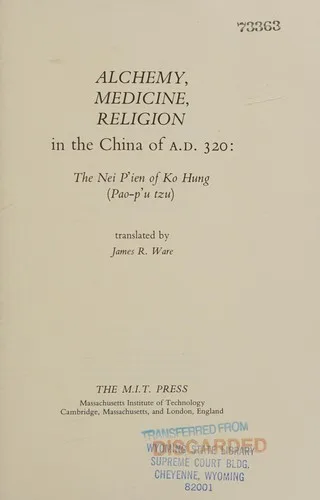
Ge Hong’s *Baopuzi* presents a formidable, if occasionally uneven, compendium of 4th-century Taoist thought. Its strength lies undeniably in the *Neipian*, where the intricate details of *waidan* (external alchemy) are laid bare with a specificity that feels almost like a laboratory manual from antiquity. The recipes for elixirs, the descriptions of furnaces, and the warnings about dangerous ingredients offer a rare window into the practical, experimental side of Taoist immortality pursuits. However, the *Waipian*, while providing valuable social commentary and philosophical arguments, can feel less cohesive and at times strident in its critiques. A passage detailing the precise temperature control required for a specific elixir, juxtaposed with Ge Hong’s dismissive remarks about Confucian scholars, exemplifies this duality. The book’s limitation is its sheer density; navigating the technical alchemical jargon and dense philosophical arguments requires significant prior knowledge or dedicated study. Despite this, *Baopuzi* remains a singular achievement, an indispensable resource for understanding the complex fusion of science, spirituality, and philosophy in early China. It is a foundational text that demands serious engagement from anyone studying the esoteric traditions of the East.
📝 Description
83
Ge Hong compiled *Baopuzi* around the 4th century CE, a key text in Taoist alchemy and philosophy.
Ge Hong's *Baopuzi*, completed around the 4th century CE, is a collection of writings divided into inner and outer chapters. The inner chapters focus on Taoist alchemy, detailing methods for achieving immortality through practices like ingesting elixirs and disciplined spiritual cultivation. These sections describe specific techniques and the theoretical basis for transcending the physical body.
The outer chapters address broader societal and political issues. Here, Ge Hong offers commentary on contemporary Chinese society, its intellectual trends, and ethical concerns, often contrasting them with Taoist ideals. This division reflects a dual concern: the personal pursuit of longevity and the individual's role within the community and the state.
The work emerged during the Jin Dynasty, a period of intellectual change in China. Ge Hong aimed to consolidate Taoist teachings, particularly those concerning the pursuit of immortality, or *xian*. His writings provide insight into the alchemical and cosmological views of his time.
As a central text in Taoist esotericism, *Baopuzi* details alchemical practices aimed at achieving immortality, a core concern in this tradition. It codifies methods for refining cinnabar elixirs and discusses the spiritual discipline required for transcendence. The work places these practices within a broader Taoist cosmology, connecting individual transformation to universal principles. Ge Hong's synthesis of practical alchemy with philosophical discourse situates *Baopuzi* as a crucial link between early Taoist thought and later developments in hermetic and alchemical traditions.
💡 Why Read This Book?
• Gain insight into historical *waidan* (external alchemy) practices, including specific recipes and methodologies for elixirs as detailed in the *Neipian*, offering a direct look at ancient chemical experimentation for longevity. • Understand the Taoist concept of *xian* (immortality) as pursued through a multi-faceted approach, encompassing alchemical ingestion, internal cultivation, and ethical living, as articulated by Ge Hong in the 4th century. • Explore Ge Hong’s critical perspective on societal and intellectual trends of the Jin Dynasty, contrasting Confucianism and Buddhism with his Taoist ideals presented in the *Waipian*.
⭐ Reader Reviews
Honest opinions from readers who have explored this book.
❓ Frequently Asked Questions
What is the primary focus of the *Neipian* section of Baopuzi?
The *Neipian* (Inner Chapters) of *Baopuzi* concentrates on esoteric Taoist practices, particularly the pursuit of immortality through *waidan* (external alchemy). It details methods for creating elixirs from minerals and herbs, internal cultivation techniques, and cosmological theories relevant to achieving longevity.
Who was Ge Hong and when did he write Baopuzi?
Ge Hong was a scholar, alchemist, and Taoist adept living during the Eastern Jin Dynasty in China. He compiled *Baopuzi*, which translates to 'Master Who Embraces Simplicity', around the 4th century CE (circa 317–322 CE is often cited for the *Neipian*).
What is the significance of 'waidan' in Baopuzi?
*Waidan* refers to external alchemy, the practice of preparing elixirs by combining and refining substances like cinnabar, gold, and other minerals. Ge Hong's work provides some of the most detailed surviving accounts of these ancient alchemical processes and their purported effects on achieving immortality.
How does the 'Waipian' differ from the 'Neipian'?
While the *Neipian* delves into esoteric spiritual and alchemical practices for immortality, the *Waipian* (Outer Chapters) addresses more conventional philosophical and social issues. It includes Ge Hong's critiques of contemporary society, governance, and other schools of thought, offering a broader view of his intellect.
Is Baopuzi considered a religious or scientific text?
*Baopuzi* is best understood as a text bridging early science and religion. It contains detailed alchemical recipes and observations that reflect ancient scientific inquiry, intertwined with Taoist spiritual goals of achieving *xian* (immortality), making it a key text in the history of esotericism and proto-chemistry.
What does the term 'xian' refer to in the context of Baopuzi?
'Xian' translates to immortal or transcendent being. Ge Hong's *Baopuzi* extensively explores the methods, both alchemical and ethical, by which a human being can achieve this state of perfected existence, free from the limitations of mortality.
🔮 Key Themes & Symbolism
The Pursuit of Xian (Immortality)
Central to *Baopuzi* is the concept of *xian*, the transcendent immortal. Ge Hong presents immortality not as a mere metaphor but as an achievable state through rigorous practice. This involves the careful preparation and ingestion of potent elixirs derived from minerals like cinnabar (*waidan*), alongside internal cultivation methods, ethical conduct, and specific dietary regimes. The text meticulously details the requirements, potential pitfalls, and spiritual understanding necessary for this ultimate Taoist goal, positioning it as the pinnacle of human aspiration and attainment.
Waidan: Esoteric Alchemy
The *Neipian* provides an exceptional glimpse into the world of *waidan*, or external alchemy. Ge Hong dedicates significant space to the practicalities of creating life-extending elixirs. This includes detailed descriptions of required ingredients (often potent minerals and herbs), the specific apparatus needed (furnaces, crucibles), precise heating and cooling processes, and purification techniques. He emphasizes the importance of diligence, correct procedure, and avoiding contamination, reflecting a sophisticated, albeit ancient, approach to chemical manipulation aimed at achieving profound physiological and spiritual transformation.
Cosmology and the Human Microcosm
*Baopuzi* integrates Taoist cosmology, viewing the human body as a microcosm that mirrors the macrocosm of the universe. Ge Hong explains how elements, energies (qi), and principles governing the cosmos are also present within the individual. This interconnectedness is fundamental to understanding the efficacy of both alchemical and internal cultivation practices. By harmonizing the body's internal energies with universal forces, practitioners could influence their physical and spiritual state, facilitating the journey towards *xian* and demonstrating a holistic worldview prevalent in ancient Chinese thought.
Social Critique and Taoist Ethics
The *Waipian* section of *Baopuzi* reveals Ge Hong not only as a mystic but also as a keen social critic. He contrasts the Taoist path of simplicity, naturalness, and spiritual cultivation with the perceived artificiality, corruption, and intellectual vanity of contemporary society, particularly the Confucian establishment. He argues for the practical superiority of Taoist principles in achieving true well-being and societal harmony, often expressing frustration with those who prioritize superficial learning or political maneuvering over genuine self-cultivation and understanding of the Dao.
💬 Memorable Quotes
Direct passages from the work, attributed to the author.
“The superior person takes the elixir and becomes an immortal; the middling person takes it and becomes an immortal; the inferior person takes it and becomes an immortal.”
— This statement, though possibly apocryphal or a simplified interpretation, highlights Ge Hong's conviction in the power of the elixir. It suggests that the substance itself is potent, but the text implies varying degrees of success and understanding among practitioners, underscoring the need for proper knowledge and application.
“When a man has achieved the Way, he is free from all constraints; when he has not, he is bound by them.”
— This captures the essence of Taoist liberation. Ge Hong suggests that true freedom, both spiritual and potentially physical (in the sense of transcending mortal limitations), comes only through aligning oneself with the fundamental principles of the Dao. Without this alignment, one remains subject to the limitations of the mundane world and one's own ignorance.
“The methods of the immortals are not easily obtained.”
— This interpretation emphasizes the dedication and difficulty involved in achieving Taoist immortality. Ge Hong implies that the knowledge and practices required are esoteric and demanding, not readily accessible or easily mastered, reflecting the serious commitment necessary for the pursuit of *xian*.
“To value life and hate death is the greatest error of man.”
— This seemingly paradoxical statement points towards a deeper understanding of existence within Taoism. Ge Hong suggests that an excessive attachment to physical life and a fear of death can hinder spiritual progress. True mastery involves transcending these basic attachments by understanding the cyclical nature of existence and the possibility of a perfected, immortal state.
“The Way is without name, yet it nourishes all things.”
— This reflects a core Taoist concept, echoing the *Dao De Jing*. Ge Hong uses this to underscore the fundamental, ineffable nature of the Dao, the ultimate reality. It is the source and sustainer of all existence, operating naturally and without needing labels or forms, providing a philosophical basis for his practical alchemical and spiritual pursuits.
🌙 Esoteric Significance
Tradition
Baopuzi is a core part of the philosophical and practical traditions within Taoism, particularly concerning the pursuit of *xian* (immortality). It bridges early Taoist cosmology and ethics with the development of complex alchemical practices. While drawing from earlier texts like the *Dao De Jing*, Ge Hong systematized and elaborated on the practical, material aspects of spiritual cultivation, especially *waidan* (external alchemy), distinguishing it from purely meditative or ethical paths and influencing later religious Taoist schools.
Symbolism
The primary symbolic element is **cinnabar** (*dān*), a key ingredient in *waidan*. Symbolically, it represents vitality, transformation, and the potential for immortality, often associated with the elixir of life. The **furnace** (*lú*) symbolizes the transformative crucible where base matter is refined into a higher state, mirroring the practitioner's own spiritual purification. The concept of **qi** (vital energy) pervades the text, representing the fundamental life force that connects the microcosm of the body to the macrocosm of the universe, and which alchemical processes aim to manipulate and enhance.
Modern Relevance
Contemporary practitioners of Taoist internal arts (Neidan) and Qigong often reference *Baopuzi* for its foundational principles on energy cultivation and the body's relationship to the cosmos. Scholars of Chinese history, religion, and the history of science continue to engage with Ge Hong's detailed alchemical accounts. Furthermore, its exploration of longevity and self-transformation appeals to modern interests in wellness, holistic health, and the philosophical underpinnings of achieving a fulfilling, extended life.
👥 Who Should Read This Book
• Students of Taoism seeking to understand its historical development and practical esoteric traditions, particularly the alchemical dimension, will find Baopuzi indispensable. • Scholars of comparative religion and the history of science interested in ancient chemical practices and cosmological views will benefit from its detailed descriptions. • Individuals exploring philosophies of longevity, self-cultivation, and the pursuit of transcendence beyond ordinary human limitations can gain profound perspectives.
📜 Historical Context
Ge Hong's *Baopuzi* emerged in the 4th century CE, a period marked by the Eastern Jin Dynasty and the gradual integration of Buddhism into Chinese intellectual life. While Buddhism offered a sophisticated philosophical framework and monastic structure, Ge Hong championed a distinctly indigenous Taoist path, emphasizing practical methods for achieving physical immortality (*xian*). He was active during a time when aristocratic families often patronized arts and philosophy, but also amidst societal upheaval and intellectual debate. His work can be seen as a response to, and a defense of, older Taoist traditions against both the perceived superficiality of Confucianism and the foreign doctrines of Buddhism. Contemporaries like Guo Pu, a scholar and commentator on classical texts, were active during this era, reflecting a broader scholarly environment. Ge Hong's detailed alchemical recipes, however, set his work apart, providing a mix of empirical observation and spiritual aspiration that would influence later Taoist practitioners and proto-scientific inquiry.
📔 Journal Prompts
Ge Hong's distinction between *Neipian* and *Waipian* content.
The practical requirements for preparing an elixir as described by Ge Hong.
The ethical and social critiques presented in the *Waipian*.
The role of *qi* in both alchemy and the human body.
The concept of *xian* as a tangible goal.
🗂️ Glossary
Baopuzi
Literally 'Master Who Embraces Simplicity'. The title of Ge Hong's major work, reflecting his Taoist ideals of naturalness and detachment from worldly complexities.
Xian
A transcendent being or immortal in Taoism. Achieving the state of *xian* is often depicted as the ultimate goal of spiritual cultivation and alchemical practice.
Waidan
External alchemy. Refers to the practice of creating elixirs from minerals, metals, and herbs, often ingested to achieve longevity or immortality, as detailed in the *Neipian*.
Neipian
The 'Inner Chapters' of *Baopuzi*, focusing on esoteric Taoist practices, alchemy, immortality techniques, and spiritual cultivation.
Waipian
The 'Outer Chapters' of *Baopuzi*, containing Ge Hong's philosophical essays, social commentary, and critiques of other schools of thought.
Cinnabar
A bright red mineral (mercuric sulfide). A crucial ingredient in many *waidan* elixirs described by Ge Hong, believed to possess potent properties for longevity and transformation.
Qi
Vital energy or life force. Considered the fundamental substance and animating principle of the universe in Taoist philosophy, essential for both physical health and spiritual attainment.
🔮 Readers Also Liked
Browse all →









More by Ge, Hong
All books →
More Free Occult Philosophy Books
View all →