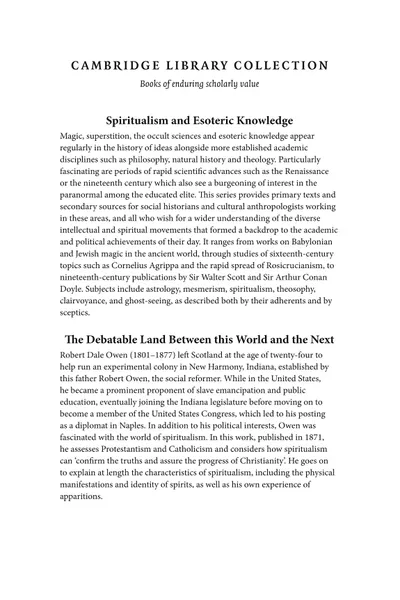
The Spirit Encyclopedia

 74
74

The Spirit Encyclopedia
Sagar Sharma's "The Spirit Encyclopedia" tackles a vast and often nebulous subject with commendable rigor. The book's strength lies in its systematic approach, dissecting categories of spectral entities from Djinn to what it terms 'dimensional intelligences.' Sharma avoids simplistic supernatural pronouncements, instead offering a framework that integrates esoteric lore with modern concepts of energy and consciousness. I found the section on 'energy residues' particularly compelling, presenting a plausible, albeit speculative, scientific-adjacent explanation for phantom presences. However, the work occasionally strains to connect disparate theories, and some sections feel more like extended hypotheses than established fact. The attempt to map ancient demonic hierarchies onto contemporary energy models, while ambitious, can feel forced. Ultimately, "The Spirit Encyclopedia" offers a structured, if sometimes speculative, guide to the unseen.
📝 Description
74
Published in 2023, The Spirit Encyclopedia categorizes spectral phenomena and non-corporeal intelligences.
This book examines ghosts, Djinn, angels, and demons, drawing on historical accounts, consciousness studies, and occult traditions. It proposes origins for these entities, considering them as residual energy, conscious echoes, or beings from other dimensions. The author aims to create a structured understanding of the invisible realms that interact with our reality.
The encyclopedia classifies spirit types based on how they appear and where they supposedly come from. It discusses ideas like 'energy residues,' 'conscious echoes,' and 'dimensional intelligences' as possible reasons for hauntings and apparitions. The book also looks at the energetic signs linked to different entities and what these signs mean for how humans interact with them.
The Spirit Encyclopedia situates its research within the history of spirit investigation, referencing early demonological texts and the late 19th-century psychical research movement. It acknowledges figures like Helena Blavatsky and the Theosophical Society's popularization of non-physical planes and elemental beings. The work contrasts these historical perspectives with current theories in consciousness research, highlighting a persistent human interest in the spectral and unseen.
💡 Why Read This Book?
• Understand the diverse classifications of spectral entities, from 'energy residues' to 'dimensional intelligences,' providing a structured vocabulary absent in general ghost lore. • Explore the historical lineage of spirit inquiry, specifically referencing the influence of Theosophy and psychical research from the late 19th century, offering context beyond anecdotal accounts. • Gain practical perspectives on interpreting unexplained phenomena by examining the proposed energetic signatures of various spirit types, aiding personal discernment.
⭐ Reader Reviews
Honest opinions from readers who have explored this book.
❓ Frequently Asked Questions
What is the primary difference between 'energy residues' and 'conscious echoes' as described in The Spirit Encyclopedia?
The Spirit Encyclopedia posits 'energy residues' as imprints left by strong emotions or events, akin to psychic stains. 'Conscious echoes,' conversely, are presented as more autonomous entities or fragments of consciousness that retain a degree of awareness and interaction capability.
Does The Spirit Encyclopedia offer practical methods for interacting with spirits?
While the book focuses on understanding the nature and classification of spirits, it implies that comprehending their energetic makeup and origin can inform safer and more effective interaction strategies, though it does not provide explicit rituals.
What historical figures or movements influenced the ideas presented in The Spirit Encyclopedia?
The work acknowledges influences from figures like Helena Blavatsky and movements such as Theosophy, which explored non-physical planes. It also touches upon the broader context of 19th-century psychical research and earlier demonological traditions.
How does The Spirit Encyclopedia bridge consciousness research and esoteric wisdom?
It attempts to bridge these fields by interpreting esoteric descriptions of spirits through the lens of modern consciousness theories, such as the idea of consciousness as an emergent property of complex energy fields or informational systems.
Is The Spirit Encyclopedia a scientific text or an occult one?
The Spirit Encyclopedia functions as a synthesis, integrating concepts from consciousness research and parapsychology with established esoteric traditions and occult philosophies. It aims for a comprehensive overview rather than strict adherence to empirical scientific methodology.
What is the proposed origin of Djinn according to The Spirit Encyclopedia?
The book suggests Djinn might be understood as a specific category of 'dimensional intelligence,' distinct from human-like ghosts or angelic beings, possibly originating from or interacting with planes of existence separate from our own.
🔮 Key Themes & Symbolism
Nature of Spectral Entities
The work systematically categorizes spectral phenomena, moving beyond simple 'ghost' classifications. It introduces concepts like 'energy residues' and 'conscious echoes,' suggesting distinct origins and levels of sentience. This allows for a more nuanced understanding of apparitions, differentiating between psychic imprints and potentially independent non-corporeal intelligences, thereby challenging simplistic supernatural explanations.
Consciousness and Energy
A central theme is the exploration of consciousness not merely as a product of the brain, but as a fundamental energetic or informational field. The book posits that spirits, in various forms, are manifestations of this field, interacting with our reality through energetic resonance. This perspective attempts to reconcile esoteric beliefs with contemporary scientific inquiry into consciousness.
Dimensional Interactivity
The encyclopedia theorizes about multiple planes of existence or dimensions from which spirits might originate or interact. It frames phenomena like Djinn and angels not just as mythological figures but as intelligences native to these other dimensions, capable of influencing or being perceived within our own reality through specific energetic conduits.
Historical Esoteric Frameworks
The book situates its contemporary analysis within a historical context, referencing ancient texts and occult traditions. It examines how figures like Helena Blavatsky and movements like Theosophy have historically categorized and understood spiritual entities, providing a lineage for the concepts explored and contrasting them with earlier demonological or angelic hierarchies.
💬 Memorable Quotes
Direct passages from the work, attributed to the author.
“Spirits are not necessarily remnants of the dead, but can also be elements of potent experiences or intelligences from adjacent realities.”
— This statement expresses the book's core argument: that spectral phenomena encompass more than just human souls. It broadens the definition to include energetic imprints and beings from other dimensions, suggesting a complex ecosystem of unseen forces.
“The energetic signature of a Djinn differs fundamentally from that of an angelic manifestation.”
— This highlights the book's focus on classifying spirits by their energetic properties. It implies that distinct types of entities possess unique vibrational frequencies or energetic patterns that differentiate them, allowing for identification and understanding.
“Consciousness may persist as a field, independent of biological form.”
— This interpretation of consciousness as a potentially independent field is crucial for the book's premise. It provides a theoretical basis for the existence of spirits as non-corporeal entities that retain or exhibit consciousness.
“Early psychical research laid groundwork for understanding residual energies.”
— This acknowledges the historical contribution of early paranormal investigators. It suggests that their observations, even if lacking modern scientific validation, provided foundational concepts for understanding phenomena like hauntings as energetic imprints.
“Dimensional intelligences interact with our world through specific energetic resonances.”
— This suggests a mechanism for how beings from other dimensions might manifest or influence our reality. It implies that these interactions are not random but occur when specific energetic frequencies align between dimensions.
🌙 Esoteric Significance
Tradition
The work draws heavily from Hermetic and Theosophical traditions, attempting to synthesize their classifications of spiritual hierarchies with modern concepts of energy and consciousness. It departs from strict adherence by integrating findings from contemporary consciousness research, framing spiritual entities less as purely supernatural beings and more as phenomena explainable through advanced energetic or dimensional principles.
Symbolism
Key symbols explored include the concept of 'energy residues,' visualized as lingering psychic imprints left by intense emotional events or prolonged presence. Another motif is the 'dimensional gateway,' representing points or states where interaction between our reality and other planes of existence becomes possible, often associated with specific locations or altered states of consciousness.
Modern Relevance
Contemporary thinkers in fields like consciousness studies, parapsychology, and transpersonal psychology find resonance in Sharma's work. Practices involving energy healing, remote viewing, and explorations of altered states of consciousness can draw upon the book's frameworks for understanding the entities and forces encountered. It informs discussions on non-local consciousness and the potential for interaction with non-biological intelligence.
👥 Who Should Read This Book
['• Students of comparative religion and mythology seeking structured explanations for diverse spiritual entities mentioned across cultures.', '• Researchers in parapsychology and consciousness studies interested in theoretical frameworks that bridge empirical inquiry with esoteric lore.', '• Individuals experiencing unexplained phenomena who desire a conceptual toolkit for understanding potential spectral or energetic interactions.']
📜 Historical Context
Published in 2025, Sagar Sharma's "The Spirit Encyclopedia" emerges in an era saturated with both renewed interest in esoteric traditions and advancements in consciousness studies. Its intellectual lineage traces back to the late 19th century, a period marked by fervent psychical research and the rise of movements like Theosophy, spearheaded by Helena Blavatsky. These earlier explorations into spiritualism and non-physical realms provided foundational concepts Sharma builds upon. The work implicitly contrasts its approach with the more rigidly materialistic scientific paradigms that dominated much of the 20th century, while also engaging with contemporary theoretical physics and neuroscience. The reception of such works in the mid-2020s is often divided, with some finding synthesis, others seeing pseudoscience, but its engagement with previously disparate fields positions it as a significant text for contemporary esoteric discourse.
📔 Journal Prompts
The energetic signature of Djinn versus angelic manifestations.
Personal experiences with 'energy residues' or psychic imprints.
The concept of consciousness persisting as an independent field.
Interactions with perceived 'dimensional intelligences'.
Reconciling historical spirit classifications with modern theories.
🗂️ Glossary
Energy Residue
A concept describing psychic imprints or energetic echoes left in an environment by significant events, emotions, or prolonged presence, often perceived as hauntings.
Conscious Echo
A more autonomous form of spectral entity than a simple residue, suggesting a fragment of consciousness or awareness that persists after physical death or originates from non-human sources.
Dimensional Intelligence
Entities theorized to originate from or exist within planes of reality separate from our own, capable of interacting with our physical or energetic space.
Energetic Signature
The unique vibrational frequency or energetic pattern associated with a specific entity, place, or phenomenon, used for identification and understanding.
Psychical Research
The investigation of purported psychic phenomena and other paranormal claims, often employing methods adapted from the natural sciences, prominent in the late 19th and early 20th centuries.
Theosophy
A spiritual movement founded in the late 19th century, seeking to understand the underlying unity of all religions and the hidden nature of the universe, significantly influencing esoteric thought.
Djinn
Supernatural creatures in Arabian and Islamic mythology, often described as beings made of smokeless fire, possessing free will and capable of interacting with humans.
This book appears in 1 collection
🔮 Readers Also Liked
Browse all →









From the “Aura Cleansing” Collection
View all →



More Free Occult Philosophy Books
View all →