Chartres
 75
75

Chartres
Gordon Strachan’s "Chartres" approaches its subject with a commendable intellectual rigor, treating the cathedral as a philosophical text. The book excels in its detailed analysis of the stained-glass windows, particularly those depicting the liberal arts, and its exploration of how these visual narratives might have been understood by medieval cognoscenti. Strachan persuasively argues for a richer symbolic reading than commonly accepted. However, the work occasionally feels overly dense, with extended discussions on Neoplatonic philosophy that, while relevant, can sometimes overshadow the architectural focus. A passage discussing the "Labyrinth" on the floor of the nave, and its potential as a pilgrimage path or meditative tool, stands out for its evocative power. While it requires a reader willing to engage with complex ideas, "Chartres" offers a rewarding perspective on one of Europe's most significant sacred sites.
📝 Description
75
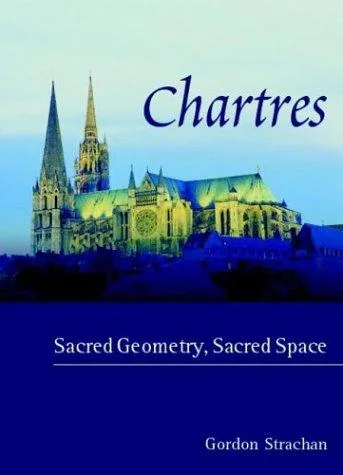
Gordon Strachan's 2003 book examines Chartres Cathedral not just as architecture, but as a symbolic and esoteric system.
Gordon Strachan's "Chartres" approaches the famed medieval cathedral as more than a mere building. Published in 2003, the book investigates the complex symbolic meanings and esoteric thought that shaped its construction and design. Strachan argues that the cathedral served as a center for a sophisticated spiritual cosmology, integrating Christian theology with older pagan motifs and philosophical traditions.
This work is for readers seriously interested in the history of ideas, medieval esotericism, and sacred geometry. It will appeal to students of religious studies, art historians, and those who seek the philosophical roots of Western mysticism. Individuals wishing to understand the symbolic language of Gothic architecture, especially at Chartres, will find this a useful resource. It is not a simple introduction but a detailed study for the dedicated reader.
Published in 2003, Strachan's "Chartres" positions the cathedral within a tradition of esoteric thought that often operated beneath the surface of mainstream medieval culture. The book suggests that the cathedral's design and iconography reveal Neoplatonic ideas and alchemical principles, concepts that were present in learned circles. This perspective aligns with a broader esoteric understanding of medieval European intellectual life, where classical philosophy and pre-Christian symbolism continued to inform spiritual cosmology, even within a Christian framework. The cathedral itself is presented as a physical manifestation of these complex intellectual currents.
💡 Why Read This Book?
• Gain an understanding of the symbolic language embedded within the Chartres Cathedral's architecture and art, particularly its stained glass depicting the liberal arts, offering a perspective often missed by casual observation. • Explore the potential integration of Neoplatonic philosophy and older pagan motifs within a Christian framework, as evidenced by the cathedral's construction between 1194-1220, revealing layered meanings. • Appreciate the cathedral's function as a 'Living Bible' and a nexus of esoteric knowledge, learning about concepts like sacred geometry and the Black Madonna's symbolism as presented by Strachan.
⭐ Reader Reviews
Honest opinions from readers who have explored this book.
❓ Frequently Asked Questions
What is the primary focus of Gordon Strachan's book 'Chartres'?
The book focuses on the Chartres Cathedral not just as architecture, but as a repository of symbolic meaning and esoteric thought, exploring its integration of Christian theology with older philosophical traditions and pagan motifs.
When was the Chartres Cathedral primarily constructed?
The primary construction phase of Chartres Cathedral occurred between 1194 and 1220, a period Strachan uses to contextualize the intellectual and spiritual currents influencing its design.
Does the book discuss the stained glass of Chartres?
Yes, a significant part of the book examines the stained-glass windows, particularly those illustrating the liberal arts, and interprets them as conveying complex theological narratives and esoteric knowledge.
What role does sacred geometry play in the book's analysis?
Strachan investigates the purported use of sacred geometry in Chartres' planning, suggesting its dimensions and proportions were intended to reflect cosmic order and divine harmony, a concept explored in the book.
Is 'Chartres' by Gordon Strachan suitable for beginners?
The book is more suited for readers with a serious interest in medieval esotericism and the history of ideas. It offers a deep scholarly examination rather than a simple introduction.
What connection does the book make between Chartres and older traditions?
Strachan explores how the cathedral's design and symbolism may have integrated elements from Neoplatonic philosophy and pre-Christian traditions, including potential links to earth-goddess archetypes and the Black Madonna.
🔮 Key Themes & Symbolism
Sacred Geometry and Cosmic Order
Strachan examines the hypothesis that the Chartres Cathedral's dimensions and proportions were deliberately chosen to reflect principles of sacred geometry, aligning the earthly structure with divine cosmic order. This concept, rooted in ancient traditions and revived during the medieval period, suggests the cathedral was intended as a physical manifestation of universal harmonies. The book studies how these mathematical relationships were believed to imbue the structure with spiritual power and intelligibility, serving as a visual map of the heavens and a microcosm of creation.
The Liberal Arts as Symbolic Curriculum
A central theme is the detailed analysis of the stained-glass windows depicting the Seven Liberal Arts. Strachan interprets these not merely as decorative elements but as a sophisticated curriculum for the medieval mind, blending classical education with Christian theology. This section explores how Grammar, Rhetoric, Logic, Arithmetic, Geometry, Music, and Astronomy were understood in the 12th and 13th centuries and how their visual representation in Chartres served to educate and enlighten viewers about both worldly knowledge and divine wisdom.
Integration of Pagan and Christian Motifs
The work investigates the subtle yet significant ways older pagan symbolism and philosophical ideas, particularly Neoplatonism, were integrated into the Christian framework of Chartres Cathedral. Strachan suggests that motifs associated with pre-Christian deities, such as earth goddesses or fertility symbols, may have been reinterpreted or assimilated within the veneration of the Virgin Mary. This layered approach, including discussions around the Black Madonna, highlights the complex syncretism present in medieval spirituality and its expression in sacred architecture.
The Cathedral as a 'Living Bible'
Strachan presents Chartres as functioning as a 'Living Bible' for its congregants. In an era where literacy was limited, the cathedral's architecture, sculptures, and vibrant stained glass served as powerful didactic tools. The book explores how these visual and structural elements conveyed complex theological doctrines, biblical narratives, and esoteric teachings, making the sacred accessible and comprehensible to a wider audience through symbolic representation and spatial design.
💬 Memorable Quotes
Direct passages from the work, attributed to the author.
“The cathedral's proportions may have been intended to mirror the harmony of the spheres.”
— This interpretation points to the medieval belief in a musically ordered cosmos. Strachan suggests the architects of Chartres consciously employed sacred geometry, aligning the building's dimensions with celestial harmonies, thereby making the cathedral a physical embodiment of divine order.
“The stained glass served as a visual curriculum for the medieval mind.”
— This highlights the didactic function of the cathedral's windows. Beyond mere decoration, they presented complex theological and philosophical concepts, particularly the Liberal Arts, in an accessible visual format for a largely illiterate populace.
“Older earth-mother archetypes potentially found new expression in Marian devotion.”
— This concept explores the syncretic nature of medieval spirituality. Strachan suggests that elements of pre-Christian fertility cults and earth goddesses might have been subtly incorporated or reinterpreted within the veneration of the Virgin Mary at Chartres.
“The labyrinth offered a path for both physical and spiritual pilgrimage.”
— This refers to the famous labyrinth on the floor of Chartres Cathedral. The interpretation suggests it served a dual purpose: a symbolic journey representing a pilgrimage to Jerusalem, and a tool for meditation and spiritual contemplation.
“Chartres functioned as a 'Living Bible' through its integrated symbolism.”
— This overarching idea emphasizes the cathedral's role as a comprehensive source of spiritual and intellectual knowledge. Strachan argues that every element, from architecture to art, was designed to communicate sacred truths and esoteric wisdom.
🌙 Esoteric Significance
Tradition
This work engages with the Western Esoteric Tradition, particularly its Hermetic and Neoplatonic streams, as they manifested in medieval Europe. It positions Chartres Cathedral as a key historical site where these currents, often operating beneath the surface of orthodox theology, found architectural and symbolic expression. Strachan explores how principles of cosmic harmony, divine proportion, and symbolic language, central to Hermeticism, may have informed the cathedral's design and its function as a locus of spiritual knowledge.
Symbolism
Central symbols examined include the Seven Liberal Arts, depicted in the stained glass, representing the structure of knowledge necessary for spiritual ascent. The labyrinth on the nave floor is explored as a symbol of the spiritual journey and the path to enlightenment. Furthermore, the book studies the symbolism of the Black Madonna figures, suggesting their connection to older, pre-Christian earth-goddess archetypes and their integration into a Christianized esoteric framework.
Modern Relevance
Contemporary practitioners of sacred geometry, sacred architecture, and Western esoteric traditions frequently reference Chartres Cathedral as a prime example of a spiritually aligned built environment. Thinkers and groups exploring the integration of science, spirituality, and art draw upon Strachan's analysis to understand how ancient wisdom traditions can be expressed in tangible forms. The book's exploration of symbolism remains relevant for modern spiritual seekers interested in uncovering deeper layers of meaning within historical sacred sites and architectural masterpieces.
👥 Who Should Read This Book
• Students of medieval history and architecture seeking to understand the symbolic and philosophical underpinnings of Gothic cathedrals beyond their structural elements. • Practitioners and scholars of Western Esotericism interested in how Hermetic, Neoplatonic, and Gnostic ideas may have been expressed in medieval sacred spaces. • Art historians and symbolists looking for in-depth analysis of the Chartres Cathedral's stained glass and sculpture as carriers of complex theological and philosophical narratives.
📜 Historical Context
Gordon Strachan's "Chartres," published in 2003, arrived at a time when academic and popular interest in medieval symbolism and esoteric traditions was robust. The cathedral itself, primarily built between 1194 and 1220, emerged during the High Middle Ages, a period marked by the intellectual synthesis of scholasticism, a resurgence of interest in Neoplatonism, and the burgeoning cult of the Virgin Mary. While the dominant intellectual current was Aristotelian scholasticism, championed by thinkers like Thomas Aquinas, a counter-current of mystical and symbolic interpretation persisted. Strachan engages with scholars like Erwin Panofsky, who explored iconographical traditions, but pushes further into less conventional interpretations. The reception of such works often navigates a delicate balance between scholarly acceptance and the esoteric community's embrace, with some critics finding Strachan's symbolic readings speculative, while others see them as essential to understanding the cathedral's deeper purpose.
📔 Journal Prompts
The symbolism of the Seven Liberal Arts as depicted in Chartres' stained glass.
Reflect on the concept of the cathedral as a 'Living Bible'.
How might sacred geometry have been intended to influence the experience of the Chartres Cathedral?
Consider the potential integration of older archetypes with Marian devotion at Chartres.
The labyrinth's role as a spiritual path within the cathedral space.
🗂️ Glossary
Neoplatonism
A philosophical system originating with Plotinus in the 3rd century AD, heavily influenced by Plato. It emphasizes the existence of a supreme, transcendent 'One' from which all reality emanates. It was influential in medieval thought and esoteric traditions.
Hermeticism
A religious, philosophical, and esoteric tradition based on writings attributed to Hermes Trismegistus. It stresses the unity of all things, the correspondence between the macrocosm (universe) and microcosm (human), and the pursuit of gnosis (knowledge).
Sacred Geometry
The study of geometric shapes and patterns considered divine or sacred. It posits that these forms hold symbolic meaning and are fundamental to the structure of the universe, often applied in the design of religious architecture.
Liberal Arts
In classical antiquity and the Middle Ages, a set of seven subjects considered essential for a well-rounded education: the trivium (grammar, logic, rhetoric) and the quadrivium (arithmetic, geometry, music, astronomy).
Archetype
In psychology and mythology, a primordial image, symbol, or theme that recurs in the collective unconscious of humanity. Carl Jung extensively explored archetypes in his work.
Gnosis
Greek for 'knowledge,' particularly intuitive or spiritual insight. In Gnosticism, it refers to a special, often secret, knowledge required for salvation and spiritual liberation.
Syncretism
The merging or blending of different religions, cultures, or schools of thought. In a religious context, it often involves combining elements from various traditions into a new synthesis.
🔮 Readers Also Liked
Browse all →








More Free Occult Philosophy Books
View all →