The Holy Grail and the Eucharist
 84
84

The Holy Grail and the Eucharist
Bulgakov’s examination of the Holy Grail and the Eucharist offers a compelling, if dense, theological perspective rooted in Eastern Christianity. His "dogmatic exegesis" of John 19:34, linking the pierced side of Christ to the sacramental chalice, is particularly striking, presenting the Grail not as a mere artifact but as a profound symbol of divine presence. The integration of his sophiological framework provides a unique lens, though it can sometimes obscure the direct scriptural analysis. A limitation might be the highly specialized nature of his thought, which requires significant theological background. However, the essay's strength lies in its sustained effort to connect the historical event of the crucifixion with the ongoing mystical life of the Church through the Eucharist. Bulgakov’s work here is a valuable, albeit challenging, contribution to the esoteric interpretation of Christian doctrine.
📝 Description
84
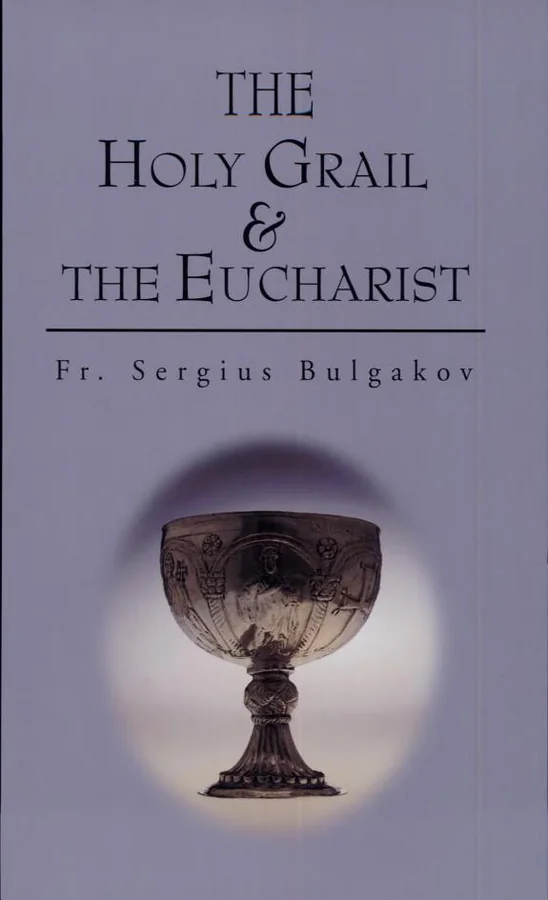
Published in 1997, this volume contains two theological essays by Sergiĭ Bulgakov.
This book presents two theological essays by Sergiĭ Bulgakov, a significant figure in 20th-century Orthodox thought. Originally published in 1997, the work offers a distinct Eastern Christian perspective on the Holy Grail and a detailed examination of the Eucharist. Bulgakov, known for his sophiology, employs his unique theological framework to address these sacred subjects. He moves beyond common devotional interpretations to consider their metaphysical implications.
The essays focus on specific biblical passages, particularly John 19:34, which describes the blood and water from Christ's side. Bulgakov views the Holy Grail not simply as a relic but as a symbol of the Eucharistic chalice. He links the physical event of the crucifixion to the ongoing sacramental life of the Church. His doctrine of Sophia, or Divine Wisdom, as a unifying principle, shapes his understanding of these themes.
Sergiĭ Bulgakov (1871-1944) developed sophiology, a controversial doctrine of Divine Wisdom, within Russian Orthodox theology. This book draws on his later theological work from the 1930s and 1940s. It engages with a 20th-century intellectual current that sought to connect faith, philosophy, and mystical experience. His ideas were part of a dialogue with contemporaries like Pavel Florensky and Nikolai Berdyaev, who also explored the relationship between spiritual realities and intellectual inquiry.
💡 Why Read This Book?
• Gain a distinct Eastern Christian interpretation of the Holy Grail, understanding it as a symbol intrinsically linked to the Eucharist, as explored in Bulgakov's "dogmatic exegesis" of John 19:34. • Grasp the foundational role of Sergiĭ Bulgakov's sophiology in interpreting Christian sacraments, learning how Divine Wisdom (Sophia) is seen as a mediating principle in the Church's liturgical life. • Explore the theological significance of the blood and water from Christ's pierced side, as detailed in the book, and its connection to the sacramental blood and wine of the Eucharist.
⭐ Reader Reviews
Honest opinions from readers who have explored this book.
❓ Frequently Asked Questions
What is Sergiĭ Bulgakov's primary theological contribution discussed in this book?
Bulgakov's central theological concept explored here is sophiology, the doctrine of Divine Wisdom (Sophia), which he uses to interpret the mystical and sacramental dimensions of Christianity, particularly the Eucharist and the symbolism of the Holy Grail.
How does Bulgakov interpret the Holy Grail?
Bulgakov views the Holy Grail not just as a relic but as a profound symbol of the chalice used in the Eucharist, directly connecting the blood and water from Christ's pierced side (John 19:34) to the sacramental offering.
What biblical passage is central to Bulgakov's analysis of the Grail and Eucharist?
The primary passage is John 19:34, which describes the blood and water flowing from Jesus' side after being pierced by the spear of Longinus. Bulgakov undertakes a "dogmatic exegesis" of this moment.
When was Sergiĭ Bulgakov's work on the Holy Grail and Eucharist first published?
The original publication date for these essays by Sergiĭ Bulgakov is cited as 1997, though Bulgakov himself was active as a theologian in the mid-20th century.
What is the 'dogmatic exegesis' approach Bulgakov employs?
A 'dogmatic exegesis' involves interpreting biblical texts through the lens of established Church doctrine and theological principles. Bulgakov uses this method to reveal the deeper, symbolic meaning of scriptural events for Christian faith and practice.
Is this book suitable for beginners in Orthodox theology?
While valuable, the book delves into complex theological concepts like sophiology, making it more suitable for readers with some background in Orthodox theology or esoteric Christian thought rather than absolute beginners.
🔮 Key Themes & Symbolism
The Eucharist as Cosmic Event
Bulgakov elevates the Eucharist beyond a mere memorial or symbolic act. He presents it as a cosmic event, the continuation of Christ's salvific act on the Cross, made present through the Church. The blood and water from Christ's side, central to his analysis, are not just historical details but the very source of the sacramental life, embodying the union of divine and human, the shedding of blood for redemption and the outpouring of the Spirit and grace.
Sophiology and Sacramental Symbolism
The doctrine of sophiology is Bulgakov's interpretive key. He understands Sophia (Divine Wisdom) as the principle through which creation is united with God. In this book, he applies this to the Grail and Eucharist, seeing them as manifestations of Sophia's presence in the world. The chalice becomes a vessel not just for wine but for divine wisdom and grace, connecting the liturgy to the very structure of God's creative and redemptive plan.
The Grail as a Eucharistic Symbol
Bulgakov’s most distinctive contribution is his reinterpretation of the Holy Grail legend. He argues that the Grail, particularly its association with Joseph of Arimathea catching Christ's blood, is not a separate mystical object but a profound prefiguration and symbol of the Eucharistic chalice. This connection anchors the Grail's spiritual significance directly within the central sacrament of Christianity, viewed through an Orthodox lens.
Eastern Christian Dogmatic Exegesis
The essays exemplify Bulgakov's method of "dogmatic exegesis." This involves a meticulous, scholarly interpretation of scripture (like John 19:34) that is deeply informed by and in service to the dogmatic teachings of the Eastern Orthodox Church. It seeks to uncover the hidden theological truths within biblical narratives, revealing how they speak to the Church's faith and practice, particularly concerning Christology and the sacraments.
💬 Memorable Quotes
Direct passages from the work, attributed to the author.
“The Holy Grail is the chalice of the Eucharist.”
— This interpretation posits Bulgakov's view that the Grail legend, in its essence, points towards and is fulfilled by the Church's central sacrament, the Eucharist, rather than being an independent mystical artifact.
“Sophia is the unifying principle between God and creation.”
— This represents Bulgakov's sophiological doctrine, suggesting that Divine Wisdom acts as the bridge or medium through which God interacts with and sustains the created order, a concept he applies to understanding the sacraments.
“The moment of the pierced side is the beginning of the Church's sacramental life.”
— This interpretation frames the crucifixion event as the foundational moment for Christian sacraments, linking the historical event directly to the ongoing spiritual reality experienced by believers through rites like the Eucharist.
“Dogmatic exegesis reveals the symbolic depth of scripture.”
— This interpretation captures Bulgakov's method, emphasizing that careful scriptural analysis, guided by Church dogma, unveils profound symbolic meanings relevant to faith and theology.
💡 Key Ideas
Editorial paraphrase of the work's core concepts — not direct quotes.
The blood and water from Christ's side are the source of the Eucharist.
This paraphrased concept highlights Bulgakov's core argument: the physical effusion from the crucified Christ is the origin of the sacramental wine and grace, making the Eucharist a direct continuation of the sacrifice.
🌙 Esoteric Significance
Tradition
Bulgakov's work fits within the esoteric Christian tradition, particularly its Eastern Orthodox stream, though heavily influenced by his unique development of sophiology. Sophiology itself draws from Neoplatonic, Kabbalistic, and Theosophical currents in its concept of divine wisdom as a mediating principle, yet Bulgakov firmly anchors it within Orthodox dogmatics. It represents a distinct approach to Christian metaphysics, seeking to bridge the gap between the divine and the created through the concept of Sophia, offering a framework for understanding the cosmos as imbued with divine presence.
Symbolism
The primary symbols are the Holy Grail and the Eucharist. For Bulgakov, the Grail is not merely a legendary artifact but a potent symbol of the Eucharistic chalice, representing the vessel that contains the "blood and water" from Christ's side. This blood symbolizes redemption and the sacrifice of Christ, while the water signifies divine grace and the Holy Spirit. Together, they point to the life-giving power of the sacrament and the union of the divine and human realms achieved through Christ's sacrifice and the Church's liturgy.
Modern Relevance
Contemporary thinkers in Orthodox, Catholic, and even some Protestant circles continue to engage with Bulgakov's sophiological concepts for their insights into divine immanence and the sacramental nature of reality. His reinterpretation of the Grail within a Eucharistic framework influences modern discussions on Christian symbolism and mysticism. Practices in contemplative prayer and liturgical theology sometimes draw upon his ideas concerning the role of Divine Wisdom in spiritual experience and the cosmic significance of the Church's sacraments.
👥 Who Should Read This Book
• Students of Eastern Orthodox theology seeking to understand sophiology and its application to core Christian doctrines like the Eucharist. • Scholars of comparative religion and mythology interested in esoteric interpretations of the Holy Grail legend and its connection to Christian sacraments. • Mystically inclined readers exploring the metaphysical dimensions of Christian liturgy and symbolism, particularly those interested in the concept of Divine Wisdom (Sophia).
📜 Historical Context
Sergiĭ Bulgakov penned these essays during a period of intense theological synthesis in the mid-20th century, following his emigration from Russia in 1922. His work emerged amidst a broader intellectual climate in European theology and philosophy that sought to reconcile Christian dogma with existential concerns and metaphysical inquiry. While figures like Karl Barth were re-emphasizing divine transcendence, Bulgakov, alongside contemporaries such as Pavel Florensky (though Florensky died in 1937), was developing sophiology, a doctrine of divine wisdom that offered a different path for understanding God's immanence and the structure of reality. This was a departure from more scholastic or neo-patristic approaches prevalent in some Orthodox circles, and his ideas faced scrutiny, notably from Patriarch Athenagoras of Constantinople, who questioned the orthodoxy of sophiology. Bulgakov's engagement with the Grail and Eucharist can be seen as an attempt to ground these potent symbols within a rigorously conceived, yet mystically oriented, dogmatic framework.
📔 Journal Prompts
The concept of sophiology as a bridge between divine and created realms.
The symbolic meaning of the blood and water from Christ's pierced side.
The Holy Grail as a prefiguration of the Eucharistic chalice.
The Eucharist as a cosmic event, not just a historical memorial.
Connecting John 19:34 to the liturgy of the Church.
🗂️ Glossary
Sophiology
A theological doctrine, primarily developed by Sergiĭ Bulgakov, positing Divine Wisdom (Sophia) as a unifying principle between God and creation, and as the soul of the Church and the cosmos.
Dogmatic Exegesis
An approach to biblical interpretation that analyzes scripture through the lens of established Church doctrines and theological principles, seeking to reveal the dogmatic truths embedded within the text.
Eucharist
The central Christian sacrament, also known as Holy Communion or the Lord's Supper, commemorating Jesus Christ's Last Supper and his sacrifice; involves consecrated bread and wine.
Holy Grail
In Christian legend, the cup used by Jesus at the Last Supper, or the vessel used by Joseph of Arimathea to collect Christ's blood during the crucifixion. Its interpretation varies widely.
John 19:34
A specific verse from the Gospel of John describing a soldier piercing Jesus' side with a spear, from which "blood and water" flowed, a passage central to Bulgakov's analysis.
Joseph of Arimathea
A biblical figure credited in Christian tradition with providing the tomb for Jesus' burial and, in some legends, with possessing the Holy Grail.
Eastern Christianity
Refers to the traditions of Christianity originating in the Eastern Roman (Byzantine) Empire, primarily the Eastern Orthodox Church, known for its distinct theological and liturgical practices.
This book appears in 1 collection
🔮 Readers Also Liked
Browse all →








From the “Holy Grail” Collection
View all →







More Free Occult Philosophy Books
View all →